

Black wasps may look scary at first glance, but many of them are gentle, solitary insects that play a vital role in pollination and natural pest control. Found in gardens, forests, fields, and even near homes, these wasps display a wide range of sizes, body shapes, and behaviors—but all share one thing in common: their dark, often shiny black appearance.
In this guide, you’ll explore 8 types of black wasps, each described with detailed identification tips, habitat information, and their unique behaviors. Whether you’re a curious gardener, a nature enthusiast, or someone trying to identify a buzzing visitor in your yard, this list will help you better understand and appreciate these important insects.
1. Great Black Wasp

The Great Black Wasp (Sphex pensylvanicus) is a large, solitary wasp native to North America and commonly found in gardens, fields, and meadows. It’s easily recognized by its all-black body, shimmering wings, and intimidating size, often measuring over an inch in length. Despite its fierce appearance, this wasp is not aggressive and usually avoids human contact.
This species is a member of the digger wasp family, meaning females dig burrows in the ground to create nests for their young. They hunt live insects—especially katydids and grasshoppers—paralyze them with their sting, and place them in the nest as food for their larvae. Adults, however, feed on nectar and are often seen visiting flowers like milkweed and goldenrod.
Identification
- Color: Entirely black with a metallic-blue or violet sheen
- Size: Around 1 to 1.3 inches (25–35 mm)
- Wings: Dark and slightly smoky, often showing iridescence
- Antennae: Long and slightly curved, completely black
- Body Shape: Slender with a narrow waist (typical of wasps)
Habitat and Nesting Behavior
The Great Black Wasp prefers sunny, open areas with loose or sandy soil. Females dig tunnels that can be several inches deep, each ending in a chamber that holds paralyzed prey. These nests are often hidden and go unnoticed unless closely observed.
Sting and Human Interaction
Though the sting can be painful if the wasp is provoked or handled, Great Black Wasps are generally docile. They rarely sting humans and focus on hunting prey or collecting nectar. Their presence in gardens should be welcomed due to their role in pollination and natural pest control.
2. Steel Blue Cricket Hunter

The Steel Blue Cricket Hunter (Chlorion aerarium) is a striking solitary wasp known for its shimmering metallic blue-black body. Found across much of the United States, including Texas and the southeastern states, it often surprises people with its size and vibrant sheen. Despite its bold appearance, this wasp is not aggressive and plays an important role in natural pest control.
Females of this species specialize in hunting crickets. After paralyzing them with a sting, they drag the prey to underground burrows and lay a single egg on it. The larvae feed on the immobilized cricket, ensuring a fresh food supply. Adults are nectar-feeders and frequently visit flowers like goldenrod and milkweed.
Identification
- Color: Shiny steel-blue or blue-black
- Size: Typically 0.8 to 1 inch (20–25 mm)
- Wings: Transparent with a bluish tinge
- Legs: Slender and dark-colored
- Antennae: Medium-length and curved slightly forward
Habitat and Nesting Behavior
These wasps prefer dry, sandy soils for nesting and are often found in gardens, along roadsides, or near open fields. Females dig shallow tunnels to house the cricket prey and eggs.
Sting and Human Interaction
Steel Blue Cricket Hunters are not aggressive and rarely sting unless handled roughly. They’re beneficial garden visitors, helping manage cricket populations and supporting pollination through flower visits.
3. Blue Mud Wasp

The Blue Mud Wasp (Chalybion californicum) is another iridescent, blackish-blue wasp species admired for its metallic shine and slender form. Commonly found throughout North America, it’s known for its unique behavior of reusing old mud dauber nests rather than building its own from scratch.
This wasp preys mostly on spiders, especially black widows, making it a welcomed sight around homes and sheds. After paralyzing the spider, the female places it in a reused mud chamber and lays her egg on it. The larva then feeds on the spider until it matures.
Identification
- Color: Metallic blue or blue-black with no markings
- Size: Around 0.5 to 1 inch (12–25 mm)
- Wings: Clear to dark-tinted
- Body: Long and narrow with a pinched waist
- Antennae: Slender and slightly curved
Habitat and Nesting Behavior
Blue Mud Wasps are commonly seen near human structures, especially old sheds, walls, or eaves, where they repurpose abandoned mud nests. They are also found in fields, woodlands, and gardens.
Sting and Human Interaction
They are non-aggressive and rarely sting. Because they help reduce dangerous spider populations and contribute to pollination, Blue Mud Wasps are considered highly beneficial in home gardens.
4. Black Spider Wasp
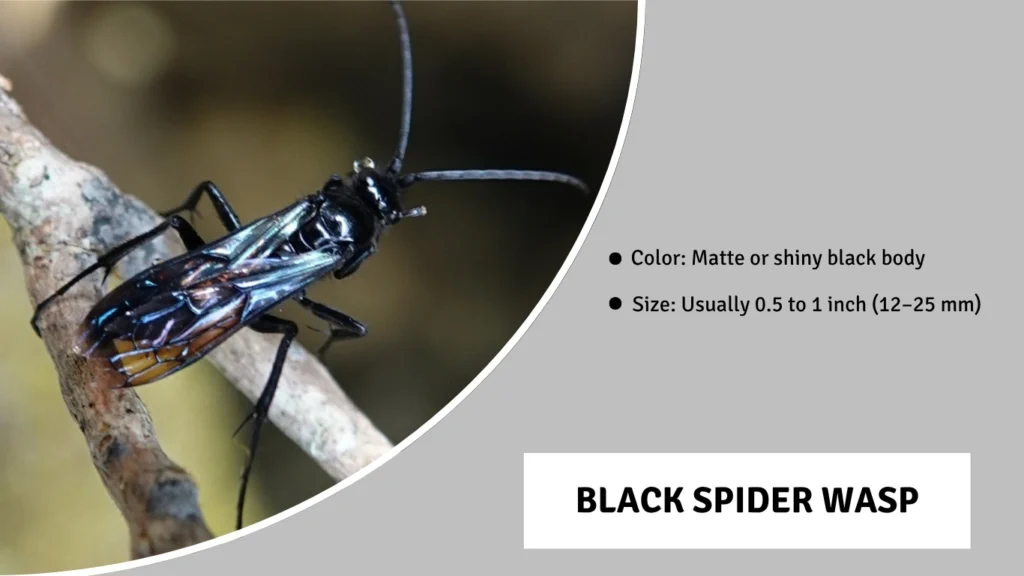
The Black Spider Wasp (Anoplius spp.) is a sleek, solitary predator known for its jet-black body and relentless hunting of spiders, especially wolf spiders. These wasps are widespread across North America and often seen walking on the ground rather than flying, searching for prey.
Once a spider is found, the wasp stings and paralyzes it, then drags it to a burrow or crevice. An egg is laid on the immobilized spider, serving as food for the developing larva. While their behavior may look aggressive, they rarely show interest in humans.
Identification
- Color: Matte or shiny black body
- Size: Usually 0.5 to 1 inch (12–25 mm)
- Wings: Often dark or smoky-colored
- Legs: Long and spindly, adapted for walking and grappling
- Antennae: Thin and often slightly bent
Habitat and Nesting Behavior
Black Spider Wasps prefer open, dry areas like fields, gardens, or forest edges. They often build nests in the soil or use natural cavities to stash their spider prey.
Sting and Human Interaction
While they can sting if provoked, these wasps are not aggressive. Their habit of preying on large spiders like wolf spiders makes them beneficial for pest control.
5. Four-toothed Mason Wasp

The Four-toothed Mason Wasp (Monobia quadridens) is a predominantly black wasp with subtle white markings and a strong, cylindrical body. It gets its name from the small “tooth-like” projections on its mandibles, which are used for nest building and prey capture.
This solitary wasp uses preexisting cavities like old beetle holes or hollow stems to construct its nests. It provisions each chamber with caterpillars, on which the larvae will feed. Adults are frequent flower visitors and important pollinators.
Identification
- Color: Mostly black with white or ivory markings on the thorax or abdomen
- Size: Around 0.5 to 0.75 inches (13–20 mm)
- Wings: Clear to smoky
- Body: Thick and robust with a narrow waist
- Antennae: Strong, black, and slightly curved
Habitat and Nesting Behavior
These wasps are often found in wooded areas, gardens, or near wooden structures where natural cavities exist. They seal nest entrances with mud or plant material.
Sting and Human Interaction
Four-toothed Mason Wasps are not aggressive and sting only if threatened. Their presence in gardens helps keep caterpillar populations under control while aiding pollination.
6. Black and Yellow Mud Dauber
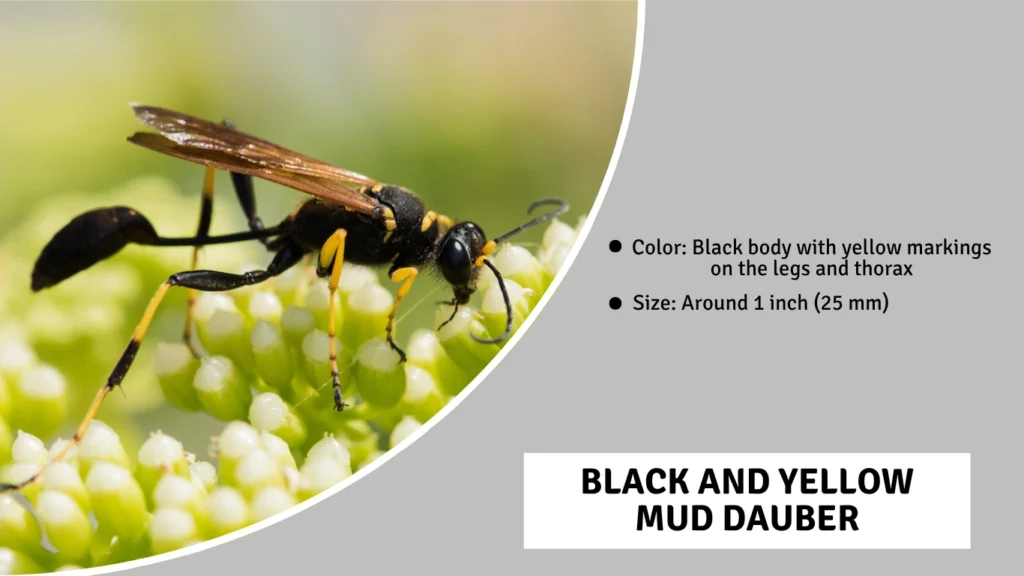
The Black and Yellow Mud Dauber (Sceliphron caementarium) is a slender, solitary wasp known for its narrow “thread-waisted” body and contrasting black and yellow coloration. Despite having yellow markings, its dark body and intimidating appearance often lead people to think of it as a fully black wasp. It’s commonly found across North America, especially around homes and outbuildings.
This wasp is best known for building mud nests on walls, under eaves, and in barns or garages. Each mud chamber is stocked with paralyzed spiders, providing fresh food for the developing larva. Adults primarily feed on flower nectar and help with pollination.
Identification
- Color: Black body with yellow markings on the legs and thorax
- Size: Around 1 inch (25 mm)
- Wings: Dark and clear
- Waist: Extremely narrow and elongated
- Antennae: Long and slightly curved
Habitat and Nesting Behavior
Black and Yellow Mud Daubers prefer man-made structures for nesting. They gather mud from nearby sources and build cylindrical tubes in sheltered spots.
Sting and Human Interaction
They are very docile and rarely sting. Their spider-hunting behavior and gentle nature make them beneficial insects, especially near homes.
7. Thread-waisted Wasp (Black Species)

Thread-waisted Wasps belong to the family Sphecidae, and several black-colored species are commonly mistaken for other types of black wasps due to their slim appearance. They’re named for their extremely narrow waist connecting the thorax and abdomen.
These wasps are ground-nesting and solitary. Females often dig tunnels to store paralyzed insects like caterpillars or beetles. Unlike social wasps, they don’t live in colonies and have minimal interaction with humans.
Identification
- Color: Solid black or dark gray
- Size: Ranges from 0.75 to 1.2 inches (19–30 mm)
- Waist: Extremely narrow and elongated
- Wings: Transparent or dark-tinted
- Antennae: Long, straight, and thin
Habitat and Nesting Behavior
They prefer dry, open areas with loose soil. You’ll find them near gardens, meadows, and paths, where females dig nest burrows and hunt prey.
Sting and Human Interaction
Though they can sting, they rarely do so unless provoked. Their role in pest control and pollination makes them a beneficial presence in natural and landscaped environments.
8. Black Ichneumon Wasp

The Black Ichneumon Wasp belongs to the family Ichneumonidae, a group of parasitic wasps known for their slender, often intimidating appearance. While not all ichneumon wasps are black, many species—especially in wooded or garden areas—are entirely black or dark-colored. These wasps are non-aggressive and do not sting humans, despite their sharp-looking ovipositor (egg-laying organ), which is often mistaken for a stinger.
These wasps are parasitoids, meaning their larvae feed on or inside a host insect. The female uses her ovipositor to deposit eggs into or near the body of a host—often beetle larvae, caterpillars, or other insects. Once hatched, the larva consumes the host from within, playing a vital role in controlling pest populations naturally.
Identification
- Color: Glossy or matte black body
- Size: Typically 0.5 to 1.5 inches (12–38 mm), depending on species
- Antennae: Very long and thread-like
- Ovipositor: Often long and needle-like (females only)
- Body: Slender with a wasp-like waist and narrow wings
Habitat and Nesting Behavior
They are most commonly seen in forests, gardens, and near woodpiles, especially during spring and summer. They don’t build nests but seek out hosts to lay eggs directly into them.
Sting and Human Interaction
Ichneumon wasps do not sting humans. Even though they may appear intimidating, they are harmless to people and extremely beneficial for natural pest control in the environment.
FAQs
1. Are black wasps dangerous to humans?
Most black wasps, including the Great Black Wasp and Black Spider Wasp, are not dangerous to humans. They are solitary and non-aggressive. Stings are rare and usually occur only if the wasp feels directly threatened or is handled.
2. Do black wasps sting?
Yes, black wasps can sting, but most solitary species rarely do. Their sting is mainly used for hunting prey like spiders, crickets, or caterpillars, not for defense against humans.
3. What do black wasps eat?
Adult black wasps usually feed on flower nectar and help with pollination. Their larvae, however, feed on paralyzed insects such as spiders, grasshoppers, or caterpillars that the female wasp provides.
4. Where do black wasps build their nests?
It depends on the species. Some dig tunnels in the ground (like the Great Black Wasp), while others reuse existing holes or build mud nests on buildings (like Mud Daubers).
5. Should I remove black wasps from my garden?
Not necessarily. Black wasps are beneficial insects. They control pests and assist in pollination. Unless they’re nesting in a problematic area, it’s best to leave them alone and let them work naturally.
