
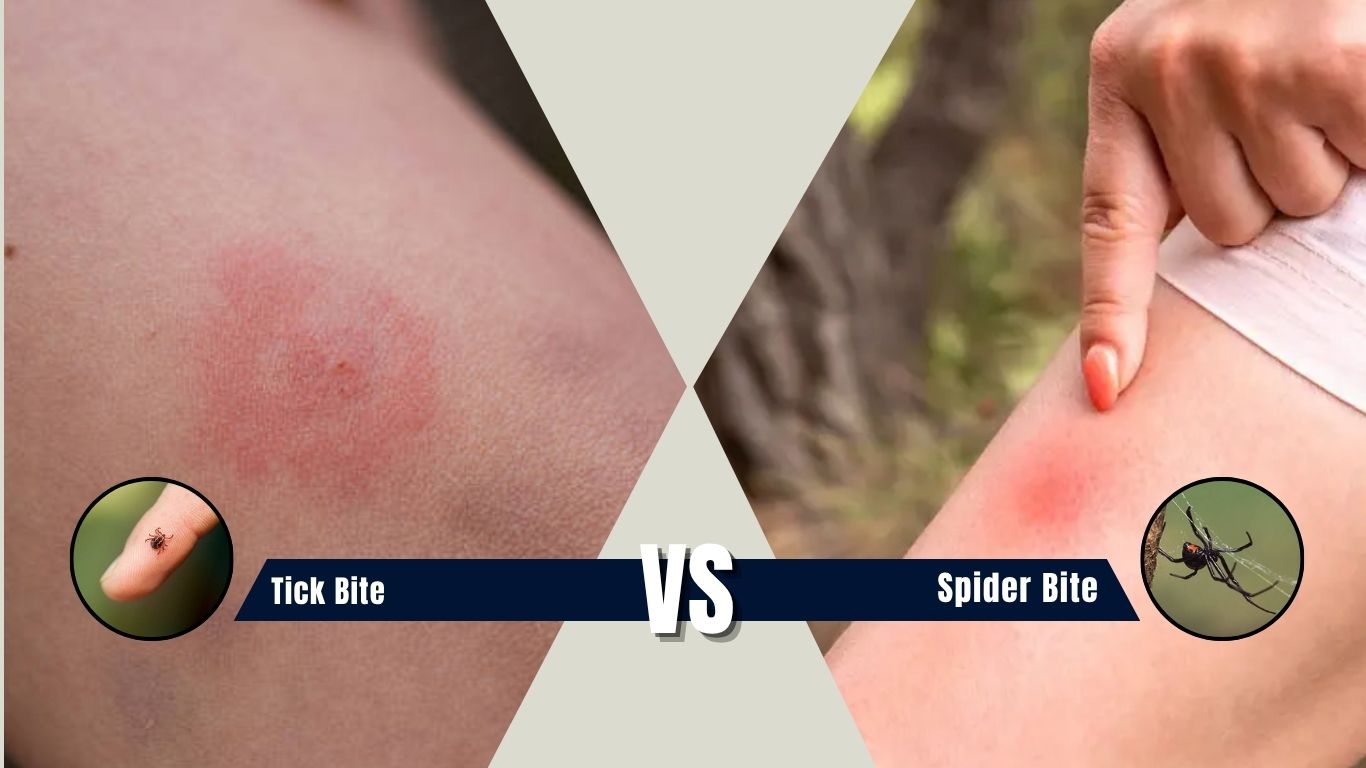
Tick bites and spider bites are often confused because both can cause red marks, irritation, and swelling on the skin. However, they are very different in how they happen, how symptoms develop, and the risks involved. A spider bite is usually a quick defensive reaction, while a tick bite involves the insect attaching and feeding over time. Knowing the difference is important, especially because tick bites can transmit diseases like Lyme disease.
Tick Bite vs Spider Bite: Quick Comparison
| Feature | Tick Bite | Spider Bite |
| Cause | Tick attaches and feeds on blood | Spider injects venom |
| Pain | Usually painless at first | Often immediate pain |
| Appearance | Small bump, may expand | Red, swollen, sometimes blister |
| Rash | Bullseye possible | Localized redness |
| Itching | Common | Mild to moderate |
| Risk | Can transmit diseases | Rarely serious |
| Duration | Can last longer | Usually heals quickly |
Tick Bite vs Spider Bite Pictures (What It Looks Like)
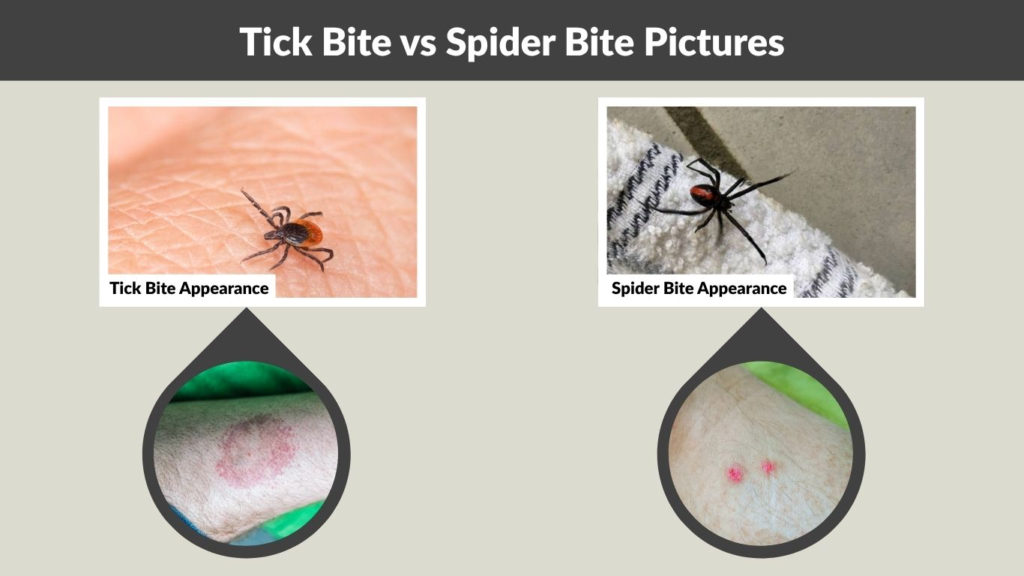
Tick Bite Appearance
A tick bite often goes unnoticed at first because it does not usually cause pain. Initially, it may appear as a small red bump that looks similar to a minor insect bite. Over time, the appearance can change, especially if the tick carries bacteria.
In some cases, the redness begins to expand outward, forming a circular rash. This rash may develop into a bullseye pattern with a clear center. Not all tick bites cause this reaction, but when it does occur, it is an important sign that should not be ignored.
Spider Bite Appearance
A spider bite usually becomes noticeable quickly. The bite area may feel painful or tender shortly after it happens. Visually, it often appears as a red, slightly swollen spot on the skin.
In some cases, you may notice two tiny puncture marks where the spider’s fangs made contact. The area can remain localized, and in certain situations, it may develop into a small blister or sore. Unlike tick bites, spider bites do not expand in a circular pattern.
Tick Bite vs Spider Bite Symptoms
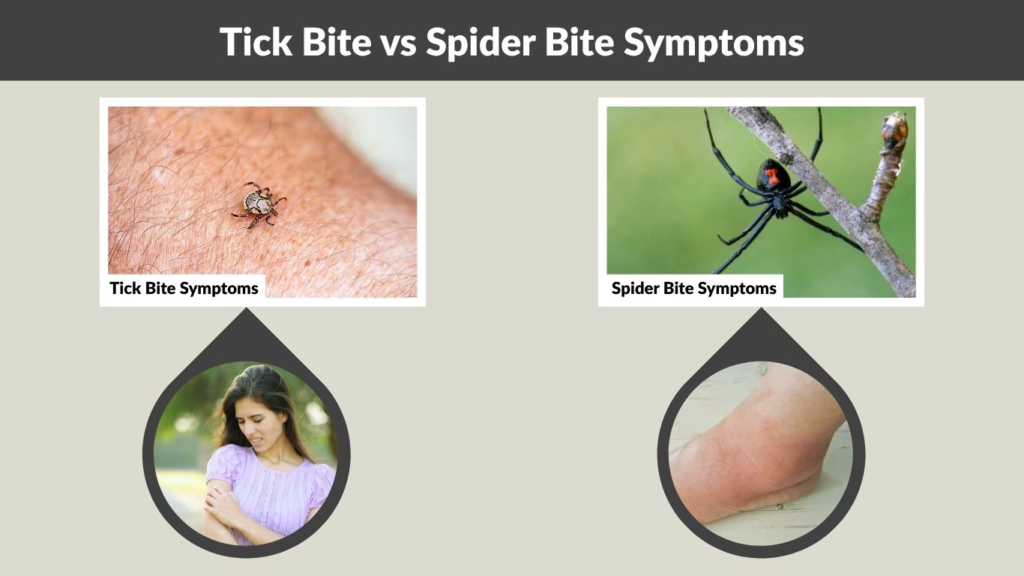
Tick Bite Symptoms
Tick bite symptoms are often delayed, which makes them harder to identify right away. Many people do not feel anything when the bite happens, allowing the tick to remain attached for hours or even days.
As time passes, mild itching or irritation may develop around the bite. In some cases, a rash may appear and gradually spread. If the tick carries disease, additional symptoms such as fatigue, fever, or muscle aches may occur days or weeks later.
Spider Bite Symptoms
Spider bite symptoms usually appear quickly after the bite occurs. The most common sign is immediate pain or a burning sensation at the bite site. This is often followed by redness and slight swelling.
Some bites may cause mild itching, but pain is usually more noticeable than itchiness. In most cases, the symptoms remain localized and improve within a few days without complications.
Tick Bite Bullseye vs Spider Bite Rash
Tick Bite (Bullseye Rash)
The bullseye rash is one of the most recognizable signs of a tick bite, especially from a deer tick. It typically starts as a small red spot and gradually expands outward, forming a ring-like shape with a lighter center.
This rash does not always cause pain or itching, but it is medically important because it is strongly associated with Lyme disease. If this pattern appears, it should be taken seriously.
Spider Bite Rash
A spider bite rash behaves differently. It usually stays confined to the area around the bite and does not spread in a ring shape. The redness may increase slightly, and in some cases, a blister can form.
Unlike tick bites, spider bite rashes are localized and do not expand over time. This makes the shape and growth of the rash a key factor in identifying the type of bite.
Tick Bite vs Spider Bite: Which Is More Dangerous?
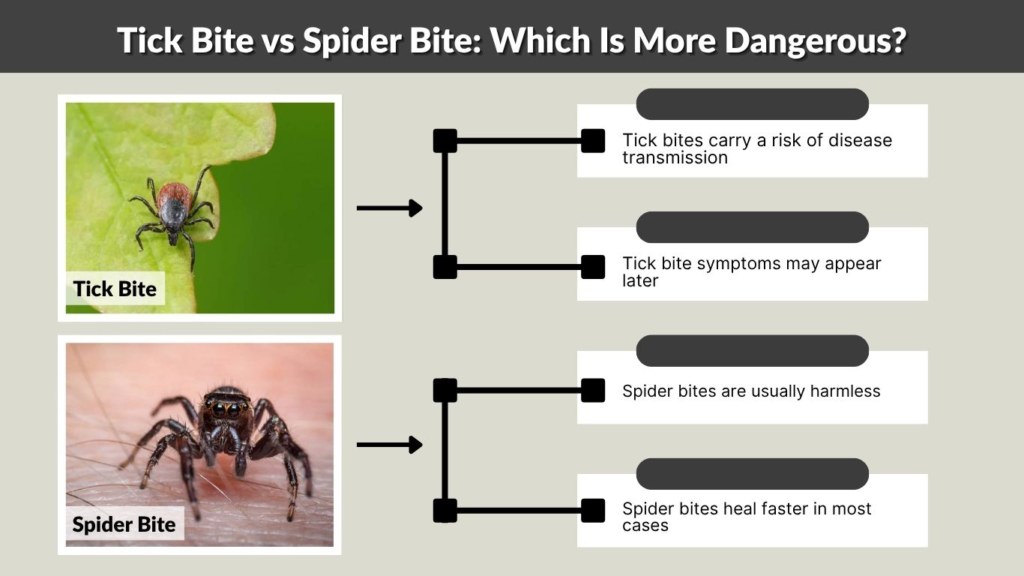
Key Points:
- Tick bites carry a risk of disease transmission
- Spider bites are usually harmless
- Tick bite symptoms may appear later
- Spider bites heal faster in most cases
Although spider bites may seem more alarming at first due to pain or swelling, tick bites are generally considered more dangerous because of the potential for infection and long-term health effects.
Deer Tick Bite vs Spider Bite
Deer Tick Bite
Deer ticks are very small and often difficult to notice. Their bites usually do not cause immediate pain, which allows them to stay attached longer. This increases the risk of transmitting Lyme disease.
Over time, a rash may appear and gradually expand. Other symptoms, such as fatigue or fever, may develop later if infection occurs.
Spider Bite
Spider bites are typically easier to detect because they cause immediate discomfort. The reaction usually stays limited to the skin and does not lead to disease transmission.
Most spider bites heal on their own without causing serious health problems.
How to Tell the Difference Between Tick Bite and Spider Bite
Simple Identification Tips:
- Immediate pain → likely a spider bite
- No pain at first → likely a tick bite
- Bullseye rash → tick bite
- Blister or sore → spider bite
These differences in timing and appearance are the most reliable ways to identify the bite correctly.
Where Do These Bites Usually Appear?
Tick Bites
Tick bites are more likely to appear in hidden or warm areas of the body. Ticks tend to attach where the skin is softer and less noticeable.
Common areas include behind the knees, under the arms, around the waist, or near the scalp. Because ticks stay attached for a period of time, the bite location often reflects where they can remain undetected.
Spider Bites
Spider bites can occur anywhere on the body. They usually happen when a spider is accidentally pressed against the skin, such as inside clothing, shoes, or bedding.
Because of this, the location is often random and not limited to exposed areas. This unpredictability makes spider bites different from tick bites in terms of placement.
When Should You Be Concerned?
Seek medical help if:
- A bullseye rash appears
- You develop fever or flu-like symptoms
- The bite becomes very swollen or painful
- Signs of infection develop
Tick bites require more attention because symptoms may appear later. Early medical care can help prevent complications.
Treatment Differences
Tick Bite Treatment
Tick bite care focuses on removing the tick and monitoring symptoms. The tick should be removed carefully using tweezers, making sure not to leave any parts behind. After removal, the area should be cleaned thoroughly.
It is important to watch for changes over the next few days or weeks. If a rash or illness develops, medical advice should be sought.
Spider Bite Treatment
Spider bites are usually easier to manage. Cleaning the bite area with soap and water helps prevent infection. Applying a cold compress can reduce swelling, and mild creams may relieve itching or irritation.
Most spider bites heal on their own without the need for medical treatment unless symptoms worsen.
Tick vs Spider vs Mosquito Bite
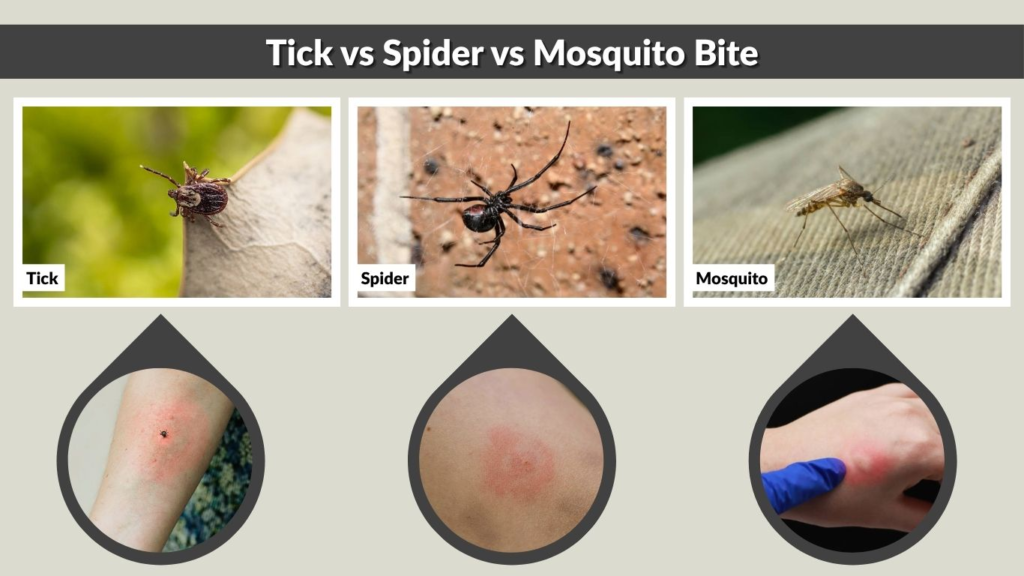
Key Differences:
- Mosquito bites are itchy and short-term
- Spider bites are often painful and localized
- Tick bites may lead to delayed symptoms and illness
This comparison can help rule out other common causes when identifying a bite.
Why These Bites Are Often Confused
Common Reasons
Many people confuse tick bites and spider bites because they can look similar in the early stages. A small red bump does not clearly indicate the cause, especially if the insect was not seen.
Another reason is symptom timing. Spider bites cause immediate reactions, while tick bites may take hours or days to show visible signs. This delay makes it harder to identify the source.
Environmental overlap also plays a role. Both ticks and spiders can be found in outdoor areas, increasing the chances of confusion.
Are Tick Bites and Spider Bites the Same?
Final Answer
Tick bites and spider bites are not the same. They differ in how they occur, how symptoms develop, and the risks involved. Tick bites involve prolonged attachment and potential disease transmission, while spider bites are usually quick, localized, and harmless.
FAQ
What is the difference between a tick bite and a spider bite?
A tick bite is usually painless at first and may lead to a spreading rash or illness later. A spider bite often causes immediate pain and stays localized. Tick bites carry a higher risk due to disease transmission, while most spider bites are harmless and heal quickly.
Does a tick bite look like a spider bite?
At the beginning, both can look like small red bumps. However, tick bites may develop into a bullseye rash that spreads over time, while spider bites remain localized and may form a blister. The change in appearance over time helps distinguish them.
How do I know if it’s a tick bite or spider bite?
You can identify the difference based on timing and symptoms. Immediate pain usually indicates a spider bite, while no pain followed by a rash suggests a tick bite. A bullseye rash is a strong sign of a tick bite.
Which is worse, tick bite or spider bite?
Tick bites are generally worse because they can transmit diseases like Lyme disease. Spider bites may appear more severe at first but are usually harmless and heal without complications. Tick bites require monitoring for delayed symptoms.
Can a spider bite look like a bullseye rash?
No, spider bites do not typically form a bullseye rash. This type of rash is strongly associated with tick bites, especially those linked to Lyme disease. If a bullseye pattern appears, it is important to seek medical advice.
