
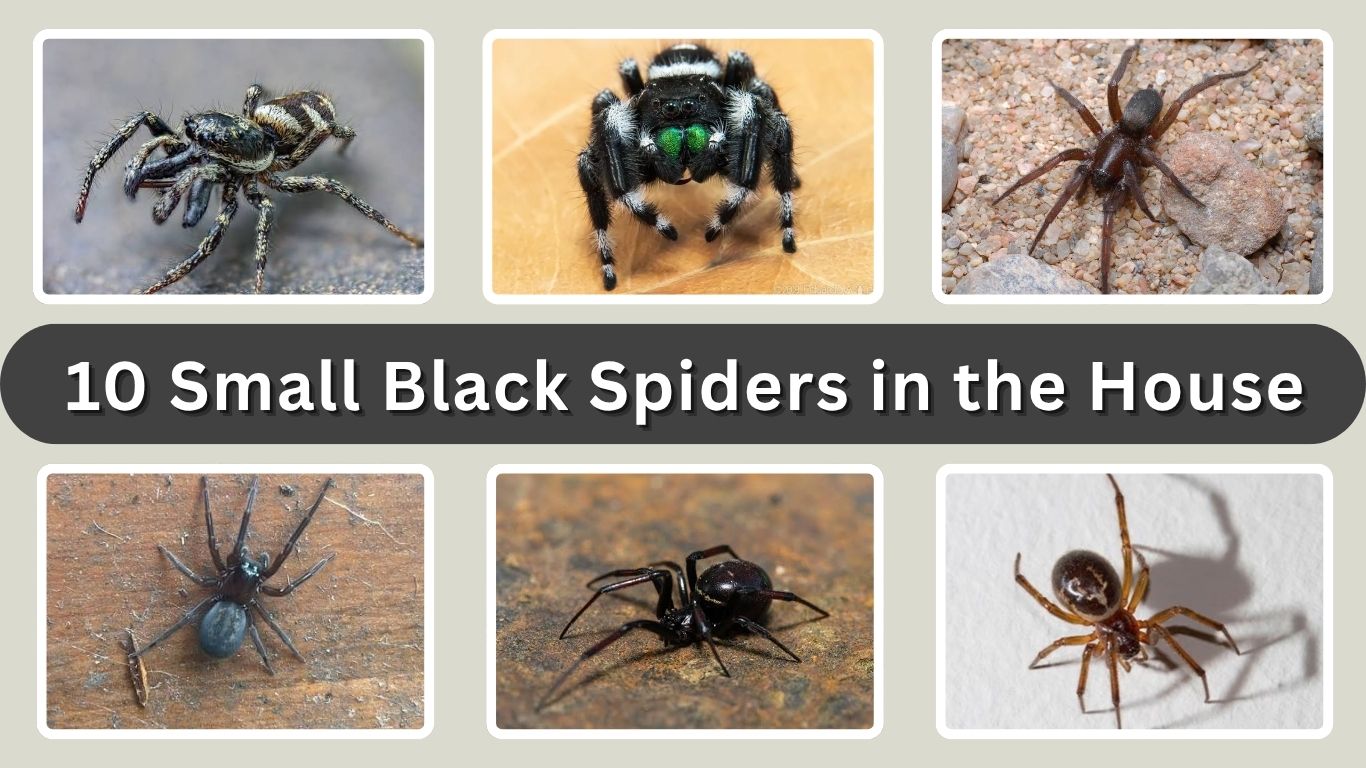
Finding a small black spider in the house can be surprising, especially when it moves quickly or has unusual white, brown, or red markings. Many small dark spiders are harmless hunters that enter homes while searching for insects, shelter, or warmth. Common examples include jumping spiders, ground spiders, false widows, and dark-colored wolf spiders. In this guide, you’ll learn about 10 common small black spiders found indoors, how to identify them, where they hide, and whether they pose any real danger.
1. Bold Jumping Spider
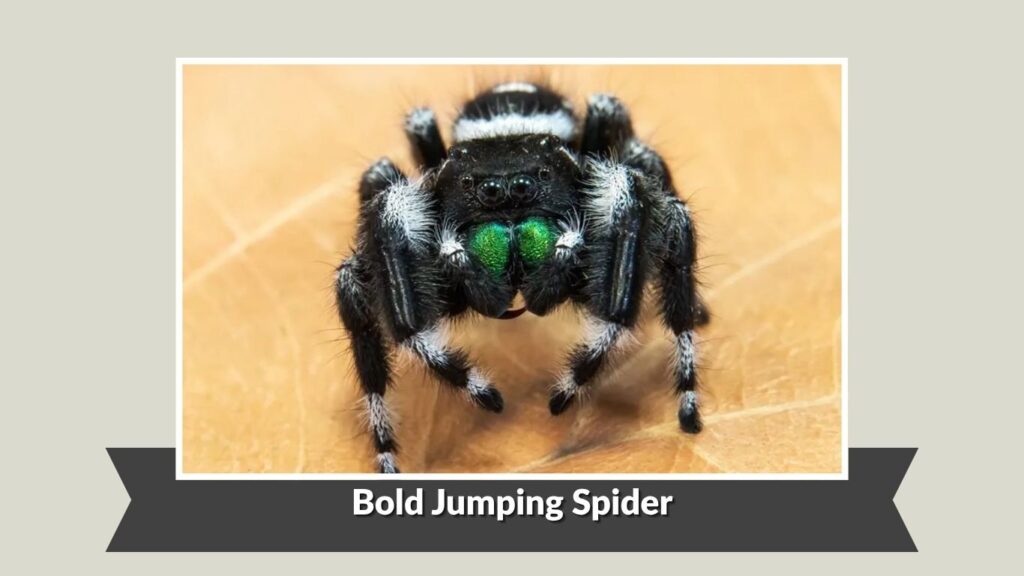
The Bold Jumping Spider is one of the most common species people notice when they find a small black spider in the house. Its compact body, quick movements, and distinctive markings make it relatively easy to recognize. This spider does not build a traditional prey-catching web. Instead, it actively hunts small insects and may appear on walls, windows, furniture, or other bright indoor areas.
Identification
- Usually black or very dark brown
- Compact, thick-bodied appearance
- Often has white spots or markings on the abdomen
- Young individuals may show orange or reddish spots
- Eight eyes, including two noticeably large front eyes
- Short, sturdy, somewhat hairy legs
- Often looks like a small black fuzzy spider in the house
- Moves quickly and can suddenly jump
- Adults are generally small, often under an inch including the legs
Why This Small Black Jumping Spider Enters Houses
Bold Jumping Spiders usually enter homes while searching for insects, shelter, or warmer conditions. They may slip through gaps around windows, doors, siding, or screens.
Inside, they are frequently seen near windows because these areas attract flies and other small insects. Unlike web-building spiders that remain in one location, jumping spiders actively walk around while hunting. This explains why someone may suddenly notice a small fast black spider in the house moving across a wall or windowsill.
Behavior and Hunting Style
The Bold Jumping Spider relies heavily on excellent eyesight. It watches prey carefully, slowly approaches, and then jumps onto the insect from a short distance.
Its active hunting behavior is also why it may appear curious around people. A jumping spider sometimes turns toward movement and appears to watch a person rather than immediately running away.
A small black spider with white spots in the house is especially likely to be a jumping spider if it has a chunky body and moves in short bursts rather than sitting inside a large web.
Is a Bold Jumping Spider Dangerous?
Bold Jumping Spiders are not considered aggressive toward people. They usually retreat or jump away when disturbed. Bites are uncommon and typically occur only when a spider is trapped against the skin or handled roughly.
Finding one indoors does not normally indicate a serious infestation. In fact, these spiders can catch small flies and other household insects.
If you prefer not to keep one indoors, placing a cup over the spider, sliding a piece of paper underneath, and releasing it outside is usually an easy way to remove it without touching it directly.
2. Zebra Jumping Spider
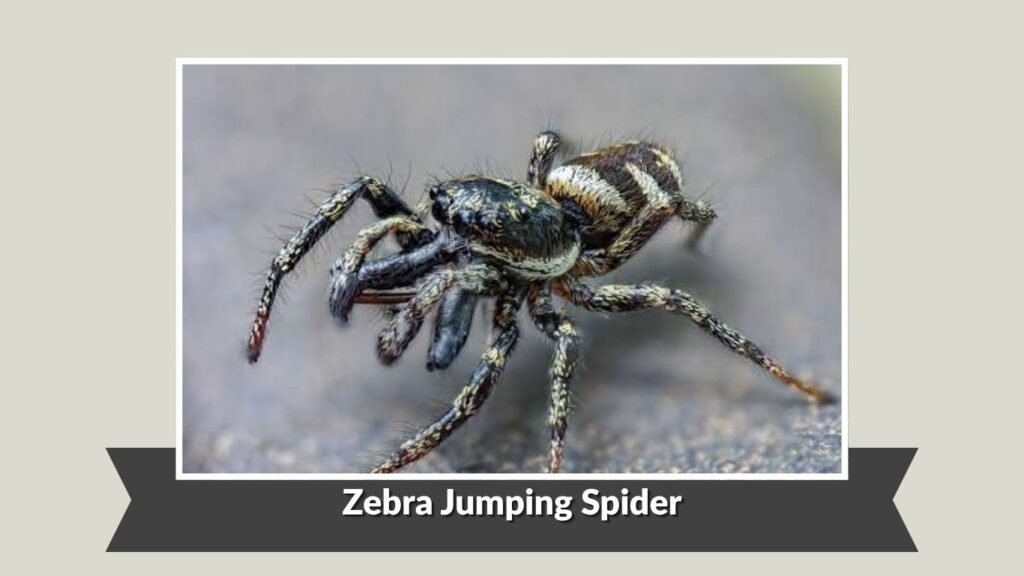
The Zebra Jumping Spider is a small black-and-white spider commonly noticed on walls, windowsills, fences, and occasionally inside homes. Its contrasting markings and quick, jerky movements make it fairly distinctive. Like other jumping spiders, it does not depend on a large web to catch prey. Instead, it actively stalks flies and other tiny insects.
Identification
- Small, compact body
- Black or dark brown coloration
- Distinct white stripes or bands
- Short, sturdy legs
- Large forward-facing eyes
- Often appears slightly hairy
- Moves rapidly in short bursts
- Capable of jumping several times its body length
- May resemble a small black spider with white stripes found in the house
Why Zebra Jumping Spiders Enter Houses
These spiders commonly wander indoors through doors, windows, screens, and small exterior gaps. They are especially likely to appear around sunny windows because light attracts many of the insects they hunt.
If you notice a small black and white spider in the house, particularly one moving actively across a wall rather than sitting in a web, a Zebra Jumping Spider is one possibility.
Behavior and Hunting Habits
Zebra Jumping Spiders are daytime hunters with excellent eyesight. They carefully approach insects before making a sudden leap.
They may occasionally stop and turn toward nearby movement, which can make them appear unusually curious. Their diet includes small flies, mosquitoes, and other tiny arthropods.
Is a Zebra Jumping Spider Dangerous?
Zebra Jumping Spiders generally avoid people and are not considered a significant household threat. They are more interested in hunting insects than interacting with humans.
A spider found indoors can usually be captured with a container and released outside. Reducing small insect populations and sealing gaps around windows can also make indoor encounters less frequent.
3. Black House Spider
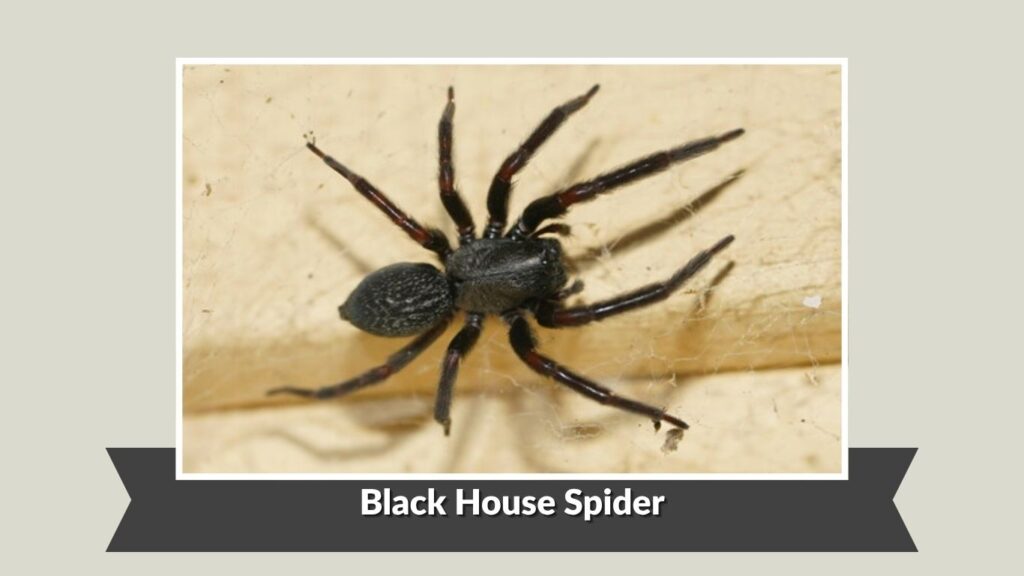
The Black House Spider is a dark-colored web-building spider commonly associated with sheltered structures. It may establish its web around windows, door frames, wall corners, sheds, garages, and other protected locations. Its dark body and relatively robust appearance can lead people to describe it as a small thick black spider in the house.
Identification
- Dark brown to nearly black body
- Relatively robust appearance
- Legs may be dark brown
- Abdomen often has subtle gray markings
- Usually found near a messy web
- Females are typically larger than males
- Prefers cracks, corners, and sheltered spaces
- May resemble an all-black house spider at first glance
Where Black House Spiders Live Indoors
Black House Spiders favor places where they can establish a permanent web close to insect traffic. Window frames are particularly attractive because lights and openings frequently bring insects nearby.
They may also occupy garages, sheds, exterior siding, and dark corners around buildings.
Unlike jumping spiders, they usually remain close to their web rather than wandering continuously through rooms.
Web and Feeding Behavior
Their webs are generally irregular and somewhat funnel-like, with the spider retreating into a sheltered opening when disturbed.
When an insect becomes caught, the spider moves out to capture it. Common prey can include flies, moths, mosquitoes, and other small insects.
Should You Remove a Black House Spider?
Most indoor encounters can be handled by removing the spider and its web if it is in an inconvenient location. Gloves or a container can help avoid direct handling.
Cleaning old webs, reducing insects around windows, and sealing exterior cracks can discourage additional spiders from settling indoors.
4. Eastern Parson Spider
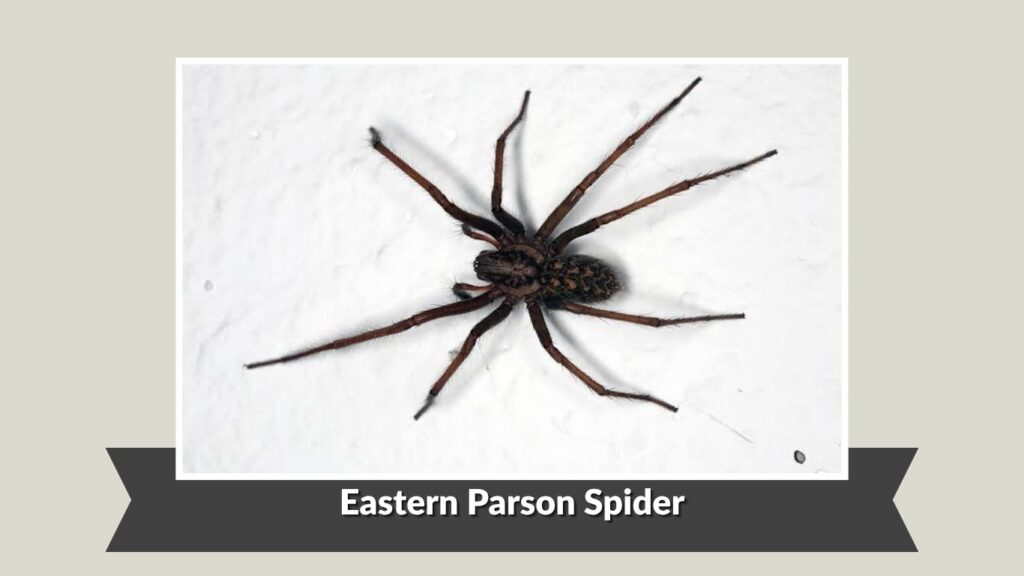
The Eastern Parson Spider is a fast-moving ground spider that frequently wanders into homes. It has a dark body with a distinctive pale marking along the abdomen. People sometimes encounter it running quickly across floors at night, making it a possible match for searches involving a small fast black spider in the house.
Identification
- Dark brown to black body
- Pale or white stripe on the abdomen
- Medium-small, elongated shape
- Legs are relatively long and strong
- Often seen running rather than sitting in a web
- Usually active at night
- Markings may resemble a white necktie
- Can appear black and white from a distance
Why Eastern Parson Spiders Appear Indoors
Eastern Parson Spiders are active hunters rather than permanent indoor web builders. They may enter houses accidentally while searching for prey or shelter.
Ground-level gaps beneath doors, cracks around foundations, basements, and garages provide potential entry points.
Their speed often attracts attention. A homeowner may see a small black fast spider in the house suddenly dart across the floor before disappearing beneath furniture.
Hunting and Daily Behavior
During the day, these spiders commonly hide beneath objects or inside cracks. At night, they emerge to search for insects.
They do not create large prey-catching webs. Instead, they actively pursue small arthropods on the ground.
Is an Eastern Parson Spider Harmful?
Eastern Parson Spiders usually attempt to escape when disturbed. Bites can occur if one becomes trapped against the skin, so direct handling is best avoided.
An isolated spider indoors generally does not indicate an infestation. Sealing floor-level gaps and reducing insect prey can decrease repeat encounters.
5. Black Lace-Weaver Spider
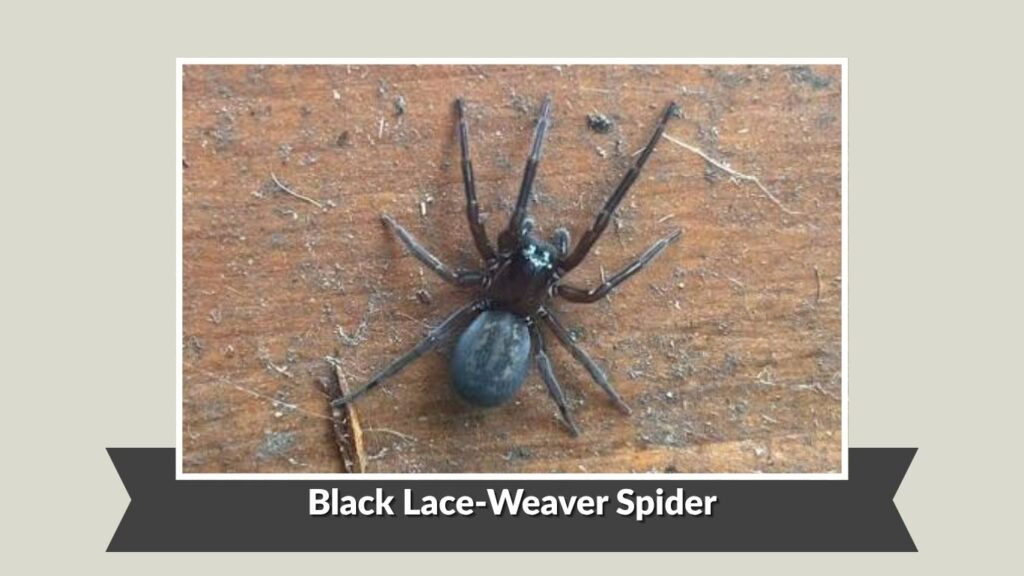
The Black Lace-Weaver is a dark, sturdy spider that may occur around buildings, basements, sheds, and other sheltered spaces. Its relatively thick body and dark coloration can make it look intimidating, particularly when discovered unexpectedly indoors. It may match descriptions such as a small thick black spider in house or a small black spider with thick legs.
Identification
- Dark brown, charcoal, or almost black coloration
- Thick, robust body
- Strong-looking legs
- Abdomen may have faint lighter patterns
- Often appears slightly velvety or hairy
- Builds dense, woolly-looking webs
- Frequently hides in cracks near its web
- Usually more robust than a typical house spider
Typical Indoor Locations
Black Lace-Weavers favor dark, protected areas where they can build their webs without frequent disturbance. Basements, garages, sheds, window frames, and gaps around masonry are common locations.
They often remain hidden during daylight hours and emerge when prey becomes caught in the web.
Web and Feeding Behavior
The species produces a dense, somewhat tangled web. Small insects entering the web become trapped, allowing the spider to rush from its retreat.
This hunting strategy makes the Black Lace-Weaver less likely to wander openly around a room compared with jumping or ground spiders.
Should You Be Concerned?
A Black Lace-Weaver found around the home is generally more interested in insects than people. However, any spider should be left alone rather than handled directly.
Removing clutter, vacuuming unused webs, and sealing gaps can reduce suitable hiding places. If the spider is indoors, it can usually be captured with a container and moved outside.
6. Cupboard Spider
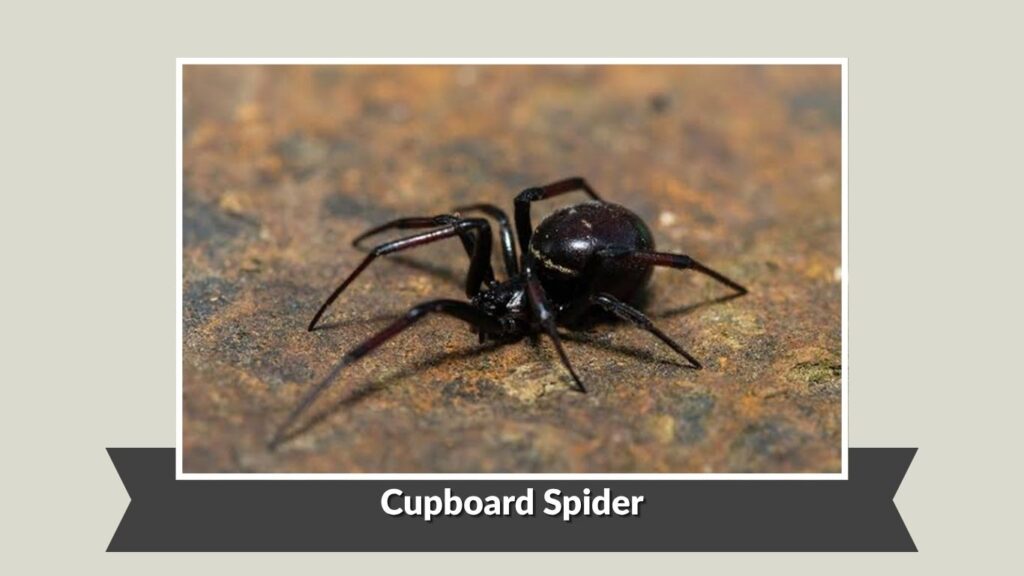
The Cupboard Spider is a small, dark cobweb spider that commonly lives inside houses and other buildings. Its rounded abdomen and brown-to-black coloration can cause confusion with several other dark house spiders. It typically prefers quiet corners, cupboards, garages, basements, and spaces underneath furniture.
Identification
- Dark brown to nearly black body
- Rounded or bulbous abdomen
- Relatively slender legs
- Smooth or slightly glossy appearance
- Builds an irregular cobweb
- Usually hides near the edge of its web
- May have faint lighter abdominal markings
- Often found in dark indoor spaces
Why Cupboard Spiders Live Inside Homes
Unlike some spiders that enter accidentally, Cupboard Spiders can live successfully inside buildings. Homes provide stable temperatures, protected hiding places, and a regular supply of small insects.
They may establish webs behind cabinets, underneath furniture, inside garages, or around storage areas that are rarely disturbed.
Feeding and Web Behavior
Cupboard Spiders construct tangled webs rather than organized circular webs. The sticky threads capture small insects walking or flying through the area.
The spider generally remains hidden until prey becomes trapped. It then moves out quickly to secure its meal.
Identifying It Among Other Black Spiders
A small all-black spider in the house with a round abdomen may be difficult to identify based on color alone. Web style, body shape, markings, and geographic location are more reliable clues.
Avoid identifying any dark cobweb spider as a medically significant species based only on appearance. When identification matters, a clear photograph can help distinguish similar-looking spiders.
7. False Widow Spider
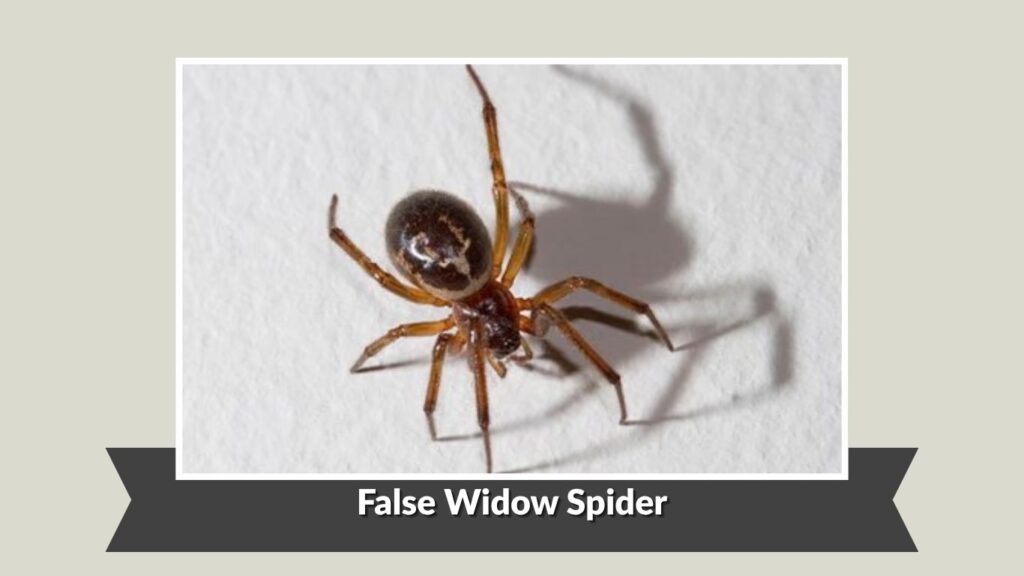
False Widow Spiders belong to the genus Steatoda and are common around buildings in many regions. They are usually dark brown, reddish-brown, or almost black and have rounded abdomens. Because of their body shape, people sometimes mistake them for black widows, although the two groups are different.
Identification
- Dark brown, reddish-brown, or black body
- Smooth, rounded abdomen
- Relatively slender legs
- Some species have pale abdominal patterns
- Builds a tangled cobweb
- Usually occupies dark sheltered locations
- Abdomen can appear glossy
- Generally lacks the classic red hourglass associated with adult female black widows
Where False Widows Hide Indoors
False Widow Spiders tend to choose undisturbed places such as cupboards, garages, sheds, window frames, storage areas, and gaps around walls.
They spend much of their time in or close to an irregular web. This differs from a small black jumping spider in the house, which typically moves around actively during the daytime.
Behavior Around People
False Widows generally remain in sheltered retreats unless disturbed or responding to trapped prey. Their webs catch flies and other insects.
They are not spiders that actively pursue people. Bites are uncommon and are more likely when a spider becomes trapped against the skin.
How to Handle an Indoor False Widow
Avoid picking up an unidentified dark spider with bare hands. If removal is necessary, use a container or other no-contact method.
Regular cleaning, removing unused webs, reducing clutter, and sealing small entry gaps can make indoor locations less attractive to cobweb spiders.
8. Mouse Spider
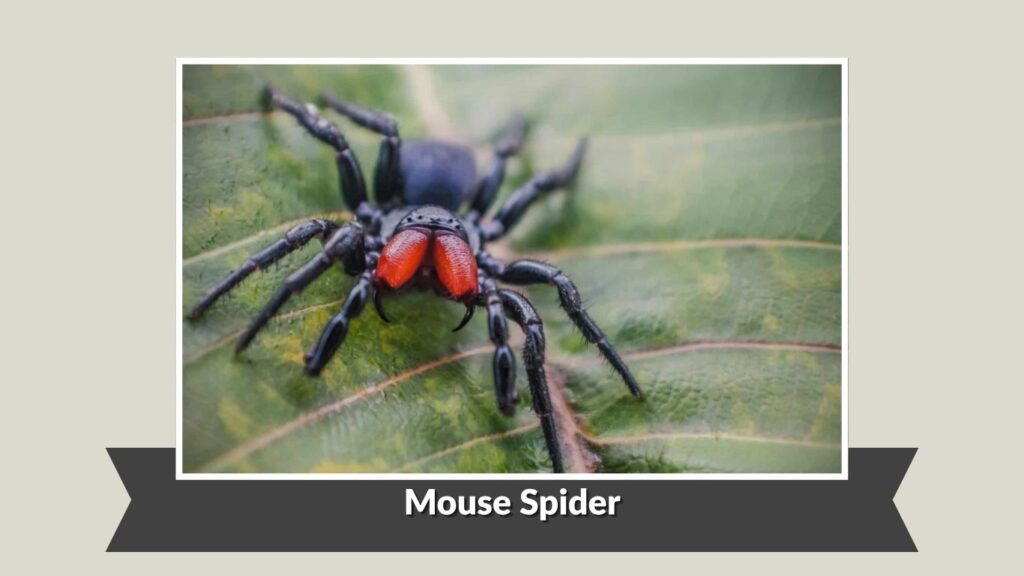
The European Mouse Spider, Scotophaeus blackwalli, is a dark ground spider that is sometimes found wandering indoors. Despite its common name, it is not the same as the medically significant Australian spiders in the genus Missulena, which are also called mouse spiders. The household species has a dark, somewhat velvety body and is an active nighttime hunter.
Identification
- Dark brown to nearly black coloration
- Velvety or slightly furry appearance
- Elongated oval abdomen
- Strong brownish legs
- Does not rely on a large prey-catching web
- Usually active at night
- Often runs across floors and walls
- Can resemble a small black furry spider in the house
Why It May Be Found Inside
This spider can wander indoors while searching for insects and sheltered resting places. It may appear in bedrooms, basements, hallways, or other quiet parts of a home.
Its dark, fuzzy appearance can lead to descriptions such as a small black hairy spider in the house.
Hunting Behavior
The European Mouse Spider hunts on foot rather than waiting in an exposed web. During daylight hours, it tends to remain hidden in cracks, behind furniture, or beneath objects.
After dark, it becomes more active and searches for small insects and other arthropods.
What to Do If You Find One
An isolated Mouse Spider indoors can usually be captured and released outside. Avoid handling it directly because accurately identifying dark ground spiders can be difficult without close examination.
Reducing indoor insects and closing cracks around doors and foundations can help prevent wandering spiders from entering.
9. Ground Spider
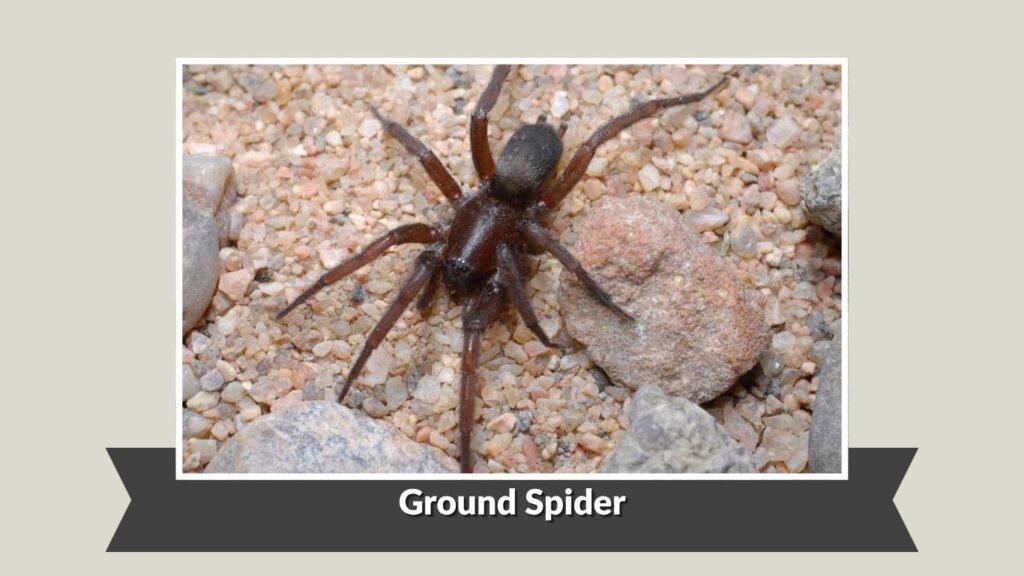
Ground spiders include numerous species in the family Gnaphosidae. Many are dark brown, gray, or black and are commonly found beneath rocks, leaves, logs, and occasionally inside buildings. Because they are active hunters, a ground spider may suddenly race across a floor, leading people to describe it as a very small black spider in the house.
Identification
- Usually dark brown, gray, or black
- Elongated or oval abdomen
- Relatively sturdy legs
- Often has a smooth or slightly hairy body
- Does not make a large prey-catching web
- Typically runs quickly along surfaces
- Mostly active at night
- Often found close to floors or ground level
Why Ground Spiders Wander Indoors
Ground spiders may enter through door gaps, cracks in foundations, garages, or basement openings. They usually come inside accidentally while hunting or searching for shelter.
Most remain close to floor level, although some can climb walls.
Speed and Hunting Behavior
Ground spiders actively chase insects rather than waiting for prey in webs. Their sudden movements often make them more noticeable than stationary web-building species.
A small black fast spider in the house that races across the floor and immediately seeks shelter underneath furniture could belong to this group.
Are Ground Spiders a Household Problem?
Finding an occasional ground spider usually does not mean the house has a spider infestation. These predators generally follow insect prey into suitable areas.
Reducing clutter along floors, sealing exterior cracks, installing door sweeps, and controlling household insects can help reduce indoor activity.
10. Wolf Spider
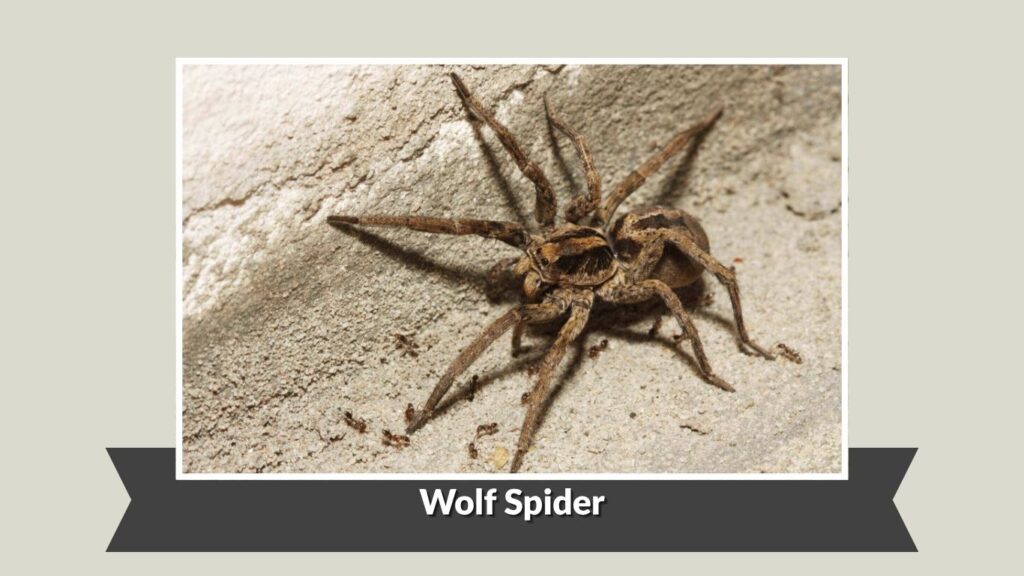
Wolf Spiders are active hunters known for their speed and sturdy build. Although many are brown or gray, some species can appear extremely dark and may initially look like a small black thick spider in the house. They do not use a traditional web to capture prey and are frequently encountered running across floors, particularly at night.
Identification
- Brown, gray, or very dark coloration
- Robust, somewhat hairy body
- Strong legs built for running
- Prominent eyes
- Often has stripes or subtle body markings
- Does not build a prey-catching web
- Fast-moving ground hunter
- Can resemble a small black fuzzy or hairy spider
Why Wolf Spiders Come Into Houses
Wolf Spiders normally live outdoors in grass, leaf litter, gardens, and sheltered ground-level environments. They may enter homes accidentally through doors, foundation cracks, garages, and basement openings.
Cooler weather or abundant indoor insect prey can increase the chance of seeing one indoors.
Behavior and Hunting Style
Rather than constructing a web and waiting, Wolf Spiders actively search for prey. They use speed and vision to capture insects and other small arthropods.
This explains why homeowners often notice one suddenly sprinting across a room. A small fast black spider in the house with a thick, hairy body may sometimes be a dark-colored Wolf Spider.
Female Wolf Spiders are also unusual because they carry their egg sacs attached to their spinnerets and later carry newly hatched spiderlings on their backs.
Is a Wolf Spider Dangerous in the House?
Wolf Spiders generally try to escape rather than confront people. Bites are uncommon and are most likely if a spider is trapped or handled.
If one appears indoors, use a container to relocate it outside rather than picking it up. Sealing exterior gaps, installing door sweeps, and reducing household insect populations can help prevent additional Wolf Spiders from wandering inside.
FAQs
1. What is the most common small black spider found in houses?
Common possibilities include jumping spiders, ground spiders, false widows, cupboard spiders, and dark-colored wolf spiders. The exact species depends on location, body shape, markings, and behavior. A clear photo is usually more useful for identification than color alone.
2. Are small black spiders in the house dangerous?
Most small black spiders found indoors are not considered dangerous to people. Many are harmless insect predators that enter homes accidentally. However, avoid handling unidentified spiders with bare hands, especially if you are unsure of the species.
3. Why do I keep seeing small black spiders in my house?
Spiders may enter through gaps around doors, windows, foundations, vents, or screens while searching for food or shelter. Homes with plenty of small insects can also attract spiders because they provide a steady food source.
4. What is a small black spider with white spots in the house?
A small black spider with noticeable white spots may be a Bold Jumping Spider. These spiders often have compact bodies, strong legs, large front-facing eyes, and quick jumping movements. Zebra Jumping Spiders can also appear black and white but usually have more obvious stripes or bands.
5. How can I get rid of small black spiders in my house?
Remove individual spiders with a cup and paper, vacuum unused webs, seal cracks around doors and windows, install door sweeps, reduce clutter, and control indoor insects. Limiting prey and blocking entry points usually helps reduce repeated spider activity.
