

Sawflies are fascinating yet destructive insects often mistaken for wasps or flies. These small insects belong to the order Hymenoptera—the same group as bees and ants—but are entirely harmless to humans. What makes sawflies notorious is their larvae, which resemble caterpillars and can cause extensive leaf damage to plants and trees. Understanding their appearance, behavior, and life cycle is key to preventing infestations in gardens and landscapes.
What Is a Sawfly Insect?
The sawfly is a type of non-stinging wasp known for its unique reproductive tool—a saw-like ovipositor—that females use to cut slits in leaves for laying eggs. These insects are part of the suborder Symphyta, within the family Tenthredinidae. Unlike their stinging relatives, sawflies focus on feeding, mating, and laying eggs.
Adult sawflies are usually small, fly-like insects with two pairs of clear wings and smooth bodies. They live short lives, often lasting only a few days to weeks, but their larvae are the true culprits behind plant damage.
Habitat and Distribution
Sawflies are found worldwide, especially in temperate regions of North America, Europe, and Asia. They prefer environments rich in vegetation—gardens, forests, farms, and parks—where host plants are abundant. Because each sawfly species targets specific plants, infestations are often limited to certain shrubs or trees, such as pines, roses, or hibiscus.
Identification

Size and Shape
Adult sawflies typically measure 6–10 millimeters (¼–½ inch) in length. Their bodies resemble small wasps, with a thick waist rather than the narrow one found in true wasps. The larvae, however, are much larger, growing up to 2.5 centimeters (1 inch) as they mature.
Sawfly larvae often resemble caterpillars but differ in structure. While caterpillars have up to five pairs of prolegs, sawfly larvae have six or more, giving them a smoother, less “looping” movement when crawling.
Color and Appearance
Sawflies and their larvae vary widely in color:
- Adults: Black, brown, or metallic green with shiny bodies and transparent wings.
- Larvae: Green, yellow, or white, sometimes with black spots or stripes depending on the species.
Some common examples include: - Pine sawfly larvae: Green with dark spots and a black head.
- Rose sawfly larvae: Small, green, and slug-like with a translucent skin.
- Dogwood sawfly larvae: White and waxy when young, turning yellow and spotted later.
Do Sawflies Sting?
Despite their wasp-like appearance, sawflies do not sting or bite. Their ovipositor—often mistaken for a stinger—is used solely for cutting leaf tissue to deposit eggs. Sawflies are harmless to humans and pets, making them a nuisance only to plants.
They do not pose health risks or structural threats, unlike termites or hornets. Their danger lies purely in their capacity to defoliate plants rapidly when larvae emerge in large numbers.
Sawfly Eggs
Description and Placement
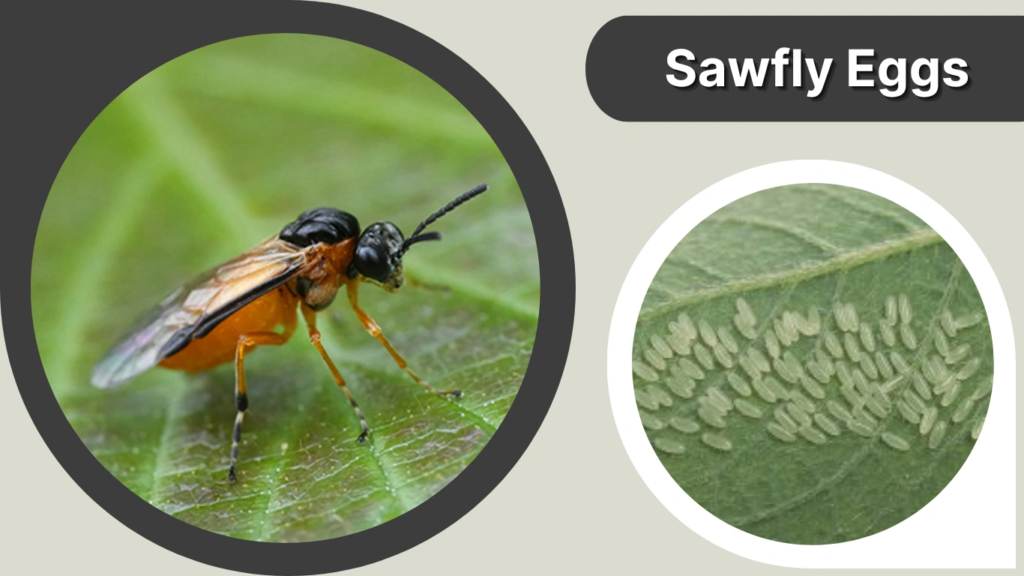
The sawfly’s name originates from the female’s saw-edged ovipositor, which she uses to slice into leaves and insert her eggs. These eggs are tiny, oval, and translucent, often invisible without close inspection. They are typically laid in neat rows along the veins or edges of leaves.
Depending on temperature, the eggs hatch within 5–14 days, releasing small larvae that immediately begin feeding on leaf tissue. A single female can lay dozens of eggs, allowing populations to explode quickly during warm months.
Signs of Egg-Laying
Plants infested with sawfly eggs show small raised ridges or blister-like bumps on leaves. These marks often precede visible larval feeding damage. If caught early, removing these leaves can prevent an entire generation of larvae from emerging.
Sawfly Larvae
Appearance and Behavior
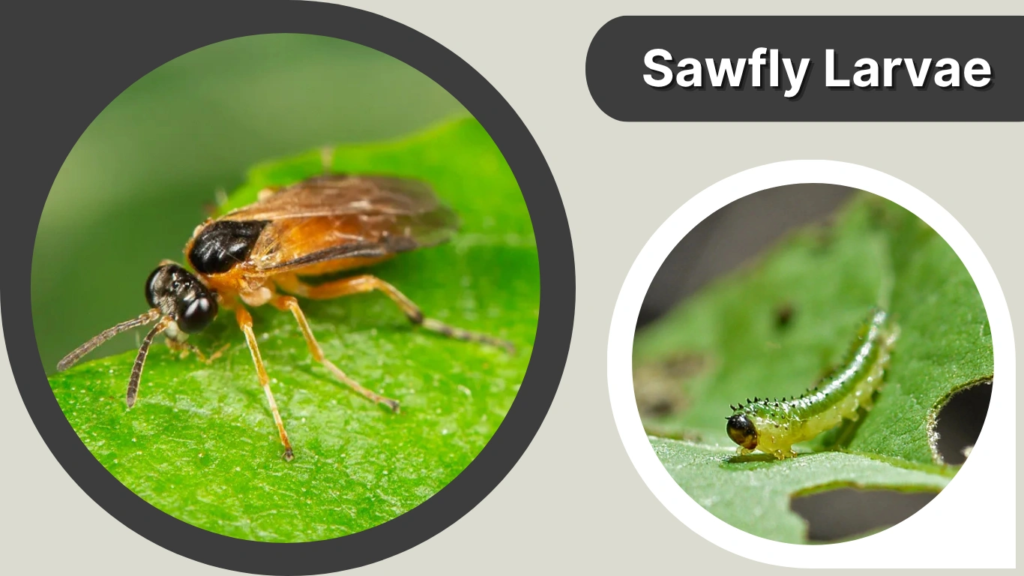
Sawfly larvae are the most recognizable stage of the insect’s life cycle. At first glance, they look like caterpillars but can be distinguished by their number of legs and smooth movement. Young larvae feed in colonies, consuming the soft tissue between leaf veins, leaving a skeletonized appearance.
As they grow, older larvae may consume entire leaves, leaving only veins or midribs. Feeding typically occurs during the day, especially in sunny weather. When disturbed, they often curl their bodies defensively or drop to the ground.
Common Host Plants
Different sawfly species specialize in specific plants:
- Roses: Attacked by the rose sawfly, causing skeletonized leaves.
- Pines: Infested by pine sawfly larvae that feed on needles.
- Dogwood and birch: Targeted by leaf-mining sawflies that chew irregular holes.
- Hibiscus: Fed upon by the mallow or hibiscus sawfly, common in warm climates.
Because sawfly larvae feed in clusters, damage becomes noticeable very quickly—often within days.
Sawfly Damage

Types of Damage
Sawfly larvae are notorious for their leaf-feeding habits, which can weaken plants and ruin their appearance. Early feeding creates skeletonized leaves where only the veins remain. As larvae mature, they eat entire leaves, leaving plants bare. In trees and shrubs, repeated infestations may cause dieback, reduced photosynthesis, and stunted growth.
Common damage signs include:
- Transparent or lace-like patches on leaves
- Ragged edges or missing sections of foliage
- Leaf drop and overall thinning of the plant canopy
- Sluggish plant growth due to nutrient loss
Severe infestations may cause complete defoliation, especially in young or stressed plants.
Commonly Affected Plants
Sawflies are highly host-specific, meaning each species prefers certain plants.
- Rose Sawfly: Skeletonizes rose leaves, making them brown and papery.
- Pine Sawfly: Strips pine needles, leading to thinning and yellowing.
- Gooseberry Sawfly: Rapidly defoliates fruit bushes, affecting yield.
- Birch and Elm Sawflies: Create windowpane-like holes in leaves.
- Hibiscus and Dogwood Sawflies: Feed on ornamental shrubs, causing aesthetic damage.
Sawfly Life Cycle
Stages of Development
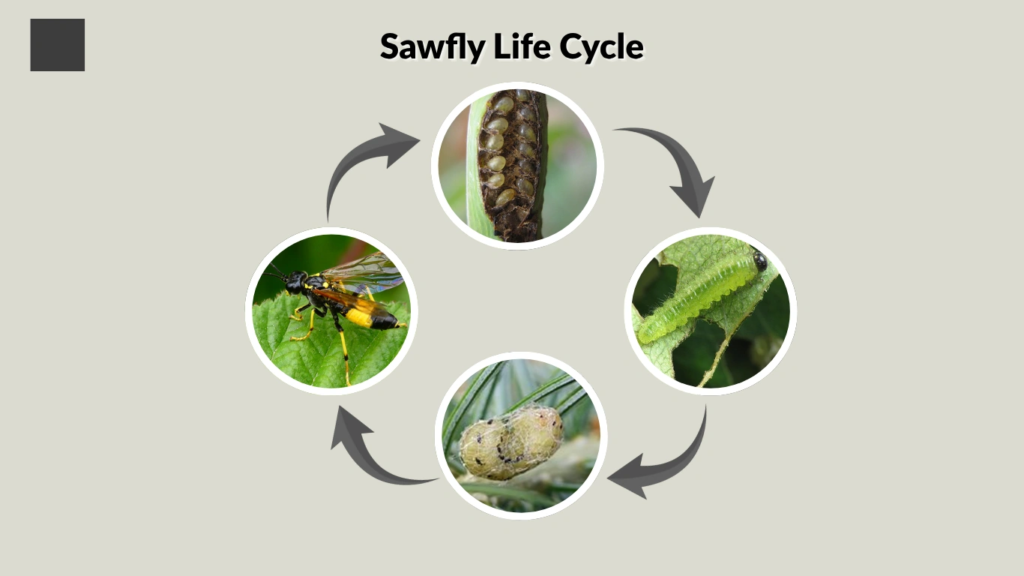
Sawflies undergo a complete metamorphosis consisting of four distinct stages:
- Egg Stage:
Females deposit eggs inside leaves in spring. Each species targets a specific plant type. - Larval Stage:
Eggs hatch within 1–2 weeks, releasing larvae that feed for 3–4 weeks. This stage causes the most damage. - Pupal Stage:
Fully grown larvae drop to the soil or hide in bark crevices, spinning cocoons where they overwinter as pupae. - Adult Stage:
Adults emerge in late spring or early summer to mate and restart the cycle.
Most species have one to two generations per year, but warmer climates can produce more.
Seasonal Activity
- Spring: Adults emerge and lay eggs.
- Summer: Larvae feed actively, causing visible leaf damage.
- Fall: Larvae pupate in the soil.
- Winter: Pupae remain dormant until temperatures rise again.
Understanding these stages allows gardeners to target the most vulnerable phase—young larvae—for control.
Control and Prevention
Manual and Physical Control
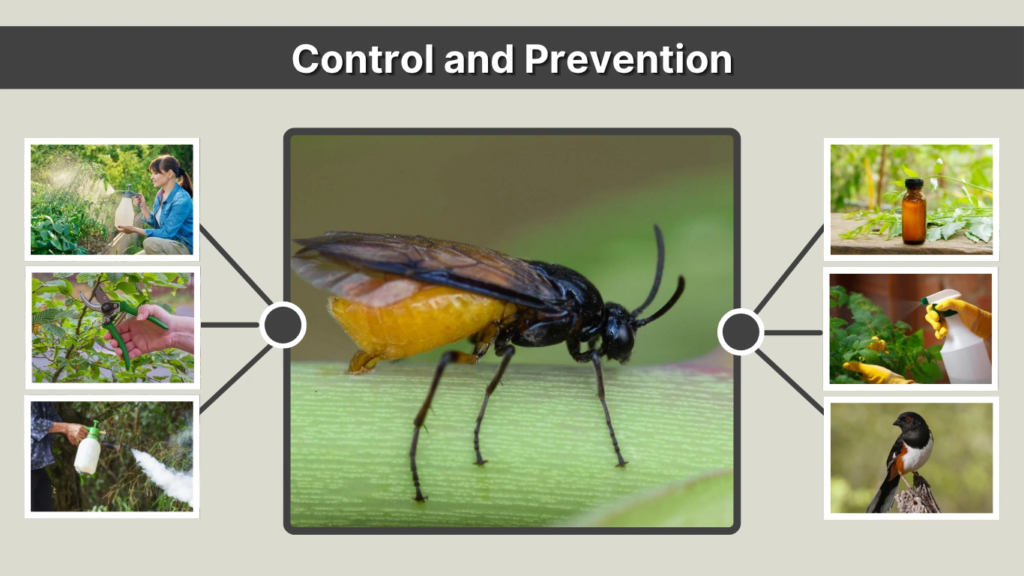
Manual control is effective for small infestations:
- Handpick larvae and drop them into soapy water.
- Prune and destroy heavily infested branches.
- Use a strong jet of water to wash larvae off foliage.
- Rake up fallen leaves to remove overwintering pupae.
Frequent inspection, especially in spring, helps catch infestations early before serious damage occurs.
Natural and Organic Control
Eco-friendly methods are safe for beneficial insects and effective against sawflies:
- Neem oil: Disrupts larvae feeding and growth; spray weekly during outbreaks.
- Insecticidal soap: Kills young larvae on contact; coat both leaf surfaces thoroughly.
- Diatomaceous earth: Sprinkle lightly over leaves to deter feeding.
- Encourage predators: Birds, ladybugs, and parasitic wasps naturally reduce sawfly populations.
Avoid broad-spectrum pesticides, as they can harm pollinators and natural predators.
Chemical Control
For severe infestations, chemical insecticides can be used:
- Choose products labeled specifically for sawfly larvae, not caterpillars.
- Effective active ingredients include spinosad, pyrethrin, or carbaryl (Sevin).
- Apply when larvae are young and actively feeding for best results.
- Always spray in early morning or evening to protect pollinators.
Repeat applications may be necessary if new larvae hatch later in the season.
Prevention Tips
- Inspect plants weekly during spring and summer for early signs of eggs or larvae.
- Keep gardens clean by removing fallen leaves and pruning debris.
- Till soil in late fall to expose pupae to winter cold and predators.
- Fertilize wisely—avoid over-fertilizing, as soft new growth attracts sawflies.
- Plant diversity: Mix different species in your garden to discourage large infestations.
Healthy plants with strong growth are naturally more resistant to sawfly damage.
FAQs
What is the size of a sawfly insect?
Adult sawflies measure between 6 and 10 millimeters, while larvae can reach up to 2.5 centimeters long. Their size varies by species, with pine and birch sawflies among the largest.
What color are sawflies and their larvae?
Adult sawflies are usually black, brown, or metallic green, while larvae range from green to yellow or white. Some have black spots or stripes depending on the host plant species.
Do sawflies sting humans or pets?
No. Sawflies are harmless to humans and animals. Their “saw-like” organ is used for laying eggs, not stinging. They do not bite or carry diseases.
What kind of damage do sawflies cause?
Sawfly larvae chew on leaves, creating skeletonized, transparent, or ragged foliage. Severe infestations can lead to full defoliation, weakening plants and reducing their ability to photosynthesize.
How can I get rid of sawflies naturally?
Use neem oil, insecticidal soap, or diatomaceous earth to control sawflies. Handpicking larvae and pruning infested leaves are also effective. Encourage natural predators such as birds and ladybugs for long-term prevention.
