
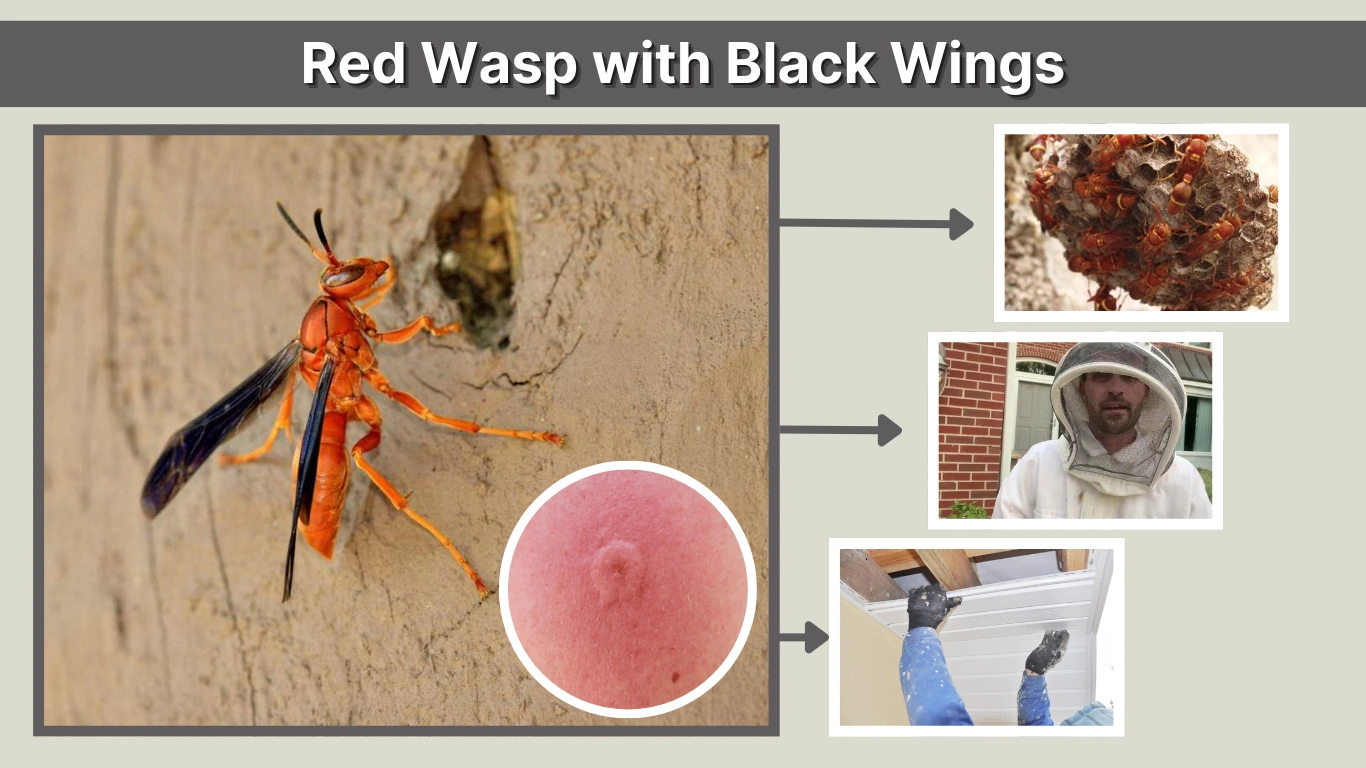
If you live in Texas or the southeastern United States, chances are you’ve spotted a red wasp with black wings hovering near a porch ceiling, barn, or low-hanging tree branch. These striking insects are members of the paper wasp family, most commonly Polistes carolina, and are instantly recognizable by their reddish-brown bodies and dark, almost black wings. While they play an important role in ecosystems by controlling pests and even helping with pollination, they are also notorious for their painful stings and their habit of nesting close to human activity. Understanding their appearance, behavior, and risks is key to staying safe while respecting their place in nature.
What is a Red Wasp with Black Wings?
The “red wasp with black wings” usually refers to Polistes carolina, one of the most widespread paper wasps in the southern United States. They are often confused with other paper wasps, but their unique combination of a reddish-brown body and darker wings makes them easier to identify.
These wasps are not solitary; they live in social colonies where a single queen lays eggs and workers maintain the nest. Colonies can range from just a handful of wasps in early spring to several dozen by late summer. Unlike hornets, which build large enclosed nests, red wasps build open comb nests that resemble small umbrellas.
Identification
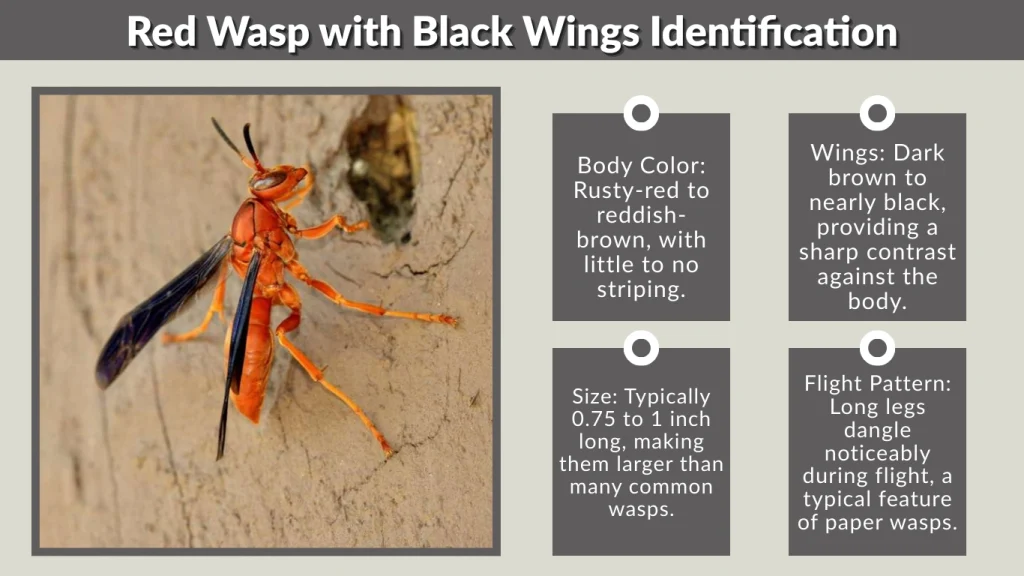
The red wasp with black wings has a distinct appearance that separates it from other wasps and hornets.
- Body Color: Rusty-red to reddish-brown, with little to no striping.
- Wings: Dark brown to nearly black, providing a sharp contrast against the body.
- Size: Typically 0.75 to 1 inch long, making them larger than many common wasps.
- Flight Pattern: Long legs dangle noticeably during flight, a typical feature of paper wasps.
Their nests are also easy to recognize. Made from chewed wood fibers mixed with saliva, the nest is umbrella-shaped with open hexagonal cells. Unlike enclosed hornet nests, the brood is visible inside these open cells.
Common nesting sites include:
- Under eaves and porch ceilings
- Barn rafters and sheds
- Low tree branches and shrubs
- Mailboxes, farm tools, and outdoor equipment
This tendency to nest close to human activity is what makes them both familiar and feared across Texas and the South.
Distribution and Habitat
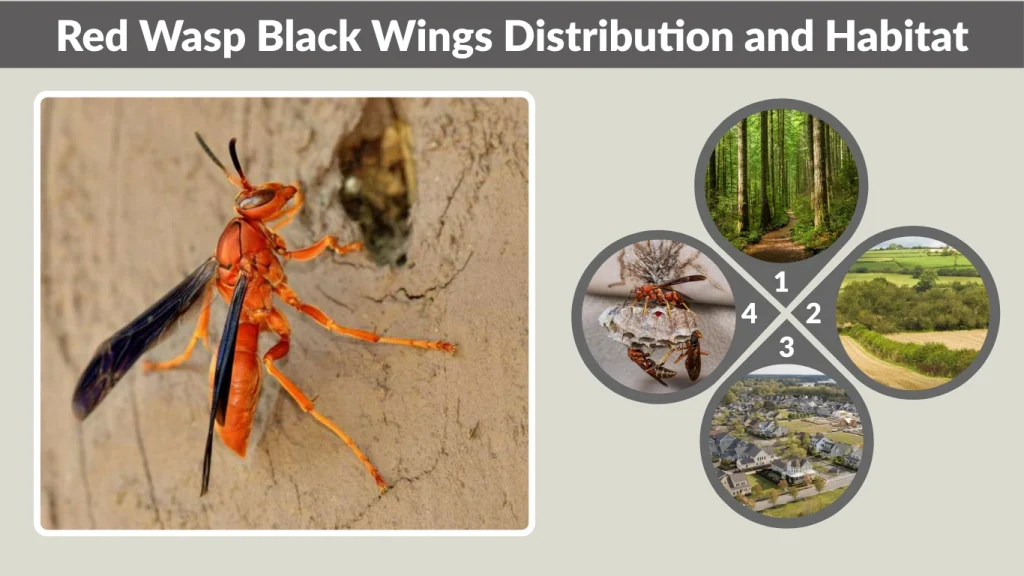
Red wasps with black wings thrive in warm climates, which is why they are most abundant in Texas, Louisiana, Georgia, and throughout the southeastern U.S. Their distribution also extends north into parts of the Midwest during warmer months, though they are far less common in colder regions.
They prefer habitats that provide both food and nesting opportunities. Wooded areas, farmlands, and suburban neighborhoods all offer suitable conditions. In rural Texas, they are especially common around barns, pastures, and equipment sheds, while in cities, they often appear in gardens and backyards.
These wasps are seasonal insects, with activity beginning in early spring when queens emerge from hibernation. Colonies grow throughout the summer, reaching peak numbers by August and September. By late fall, most of the colony dies off, leaving only fertilized queens to overwinter and begin the cycle again the following spring.
Behavior and Colony Life
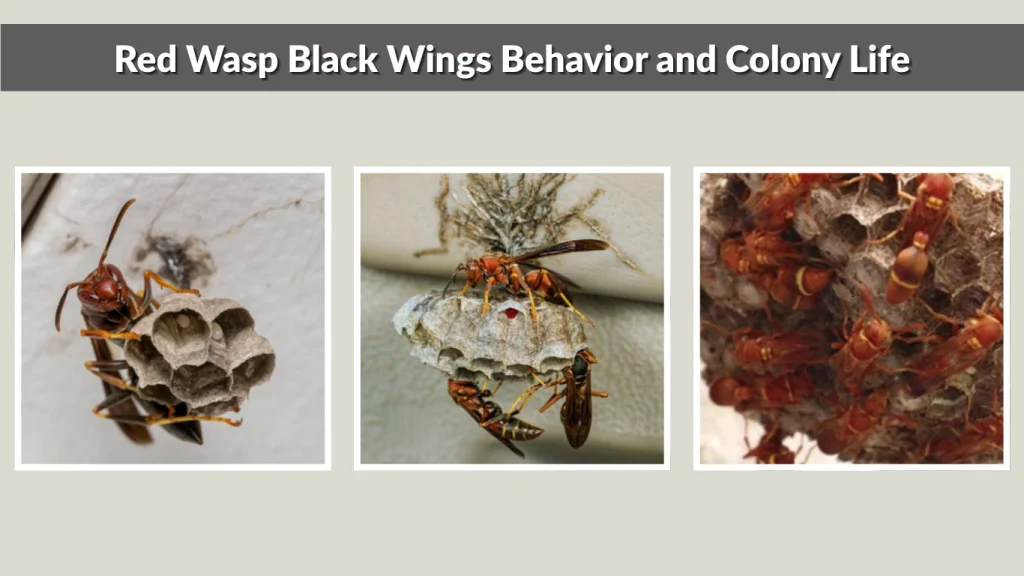
Red wasps with black wings live in organized social colonies with a clear hierarchy. At the top is the queen, who founds the nest in spring and lays eggs. Workers, which are sterile females, take over nest building, foraging, and defense. Males appear later in the season, their sole purpose being to mate with new queens before winter.
These wasps are primarily predators of caterpillars and soft-bodied insects, which they chew up and feed to their larvae. Adults themselves feed on nectar, making them occasional pollinators when visiting flowers. This combination of predation and pollination makes them ecologically important, even if they are often unwelcome near homes.
In terms of behavior, red wasps are not naturally aggressive. However, they are highly defensive when their nest is disturbed. Even minor vibrations, loud noises, or a person passing too close can trigger an attack. Once one wasp stings, it releases a pheromone that alerts others to join in, leading to multiple painful stings in a matter of seconds.
Red Wasp Sting and Risks
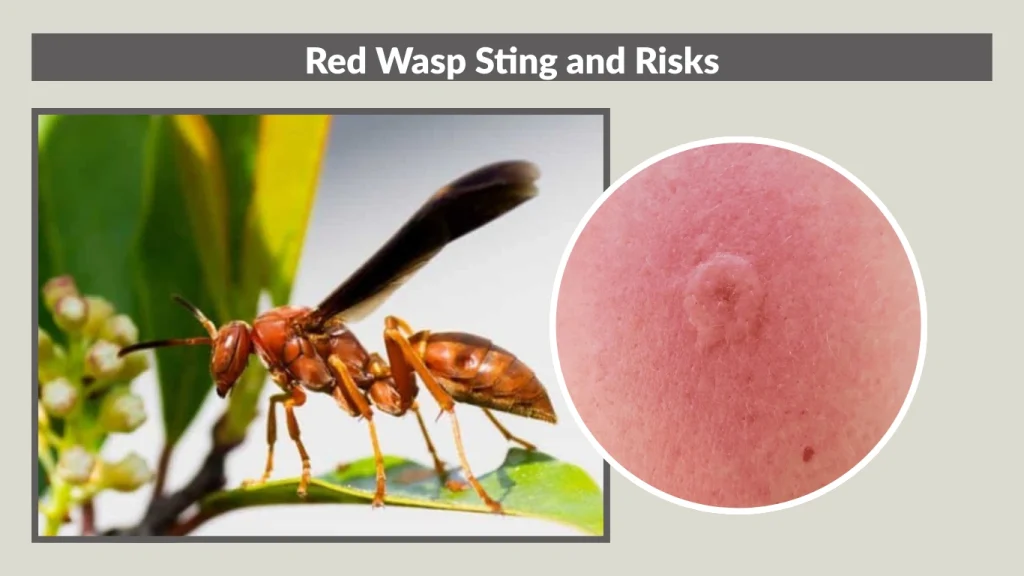
The sting of a red wasp with black wings is one of the main reasons people fear them. Their venom causes intense pain, burning, and swelling, which can last several hours. Unlike honeybees, which die after a single sting, wasps can sting multiple times.
Most people experience only localized pain and redness, but those with allergies can suffer severe reactions such as difficulty breathing, dizziness, or even anaphylaxis. In Texas, emergency rooms treat numerous cases of wasp stings each summer, especially among children, outdoor workers, and those with known allergies.
Because nests are often close to porches, barns, and garages, the risk of accidental encounters is high. Disturbing a nest, even unintentionally, can result in dozens of stings, making red wasp colonies particularly dangerous when established near homes or schools.
Treatment for Red Wasp Stings
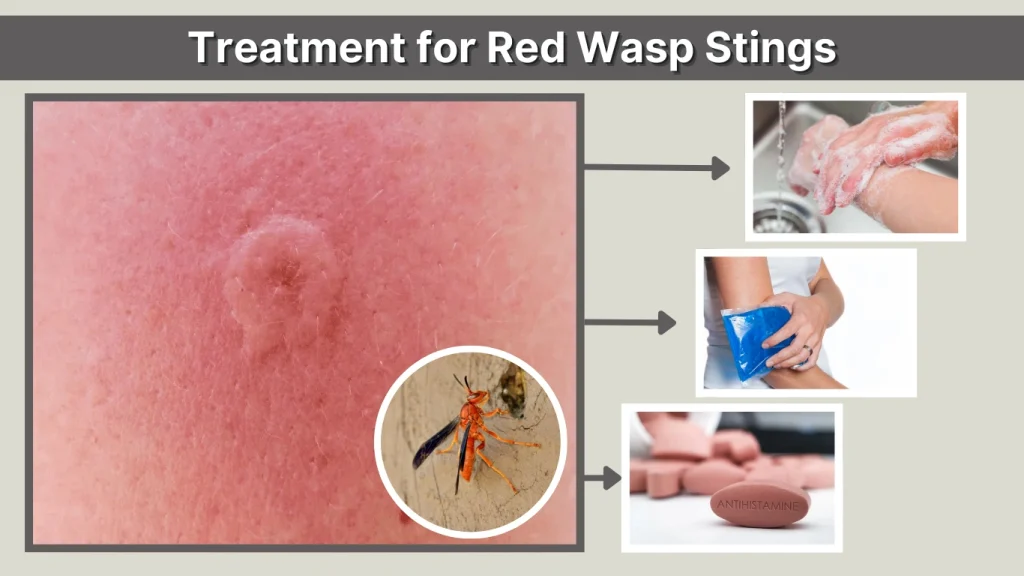
If stung by a red wasp with black wings, the first step is to stay calm and move away from the nest area to prevent further attacks. Immediate care can reduce pain and swelling.
- Clean the area with soap and water to lower infection risk.
- Apply a cold compress or ice pack to minimize pain and inflammation.
- Take an antihistamine or pain reliever if swelling or itching increases.
For people allergic to wasp venom, stings can be life-threatening. Symptoms such as hives, dizziness, throat swelling, or difficulty breathing require immediate medical care. Carrying an epinephrine auto-injector (EpiPen) is essential for anyone with a history of severe reactions.
Why They Build Nests Near Homes
Red wasps with black wings often choose human structures for nesting because they provide shelter from rain, wind, and predators. Porches, barns, attics, and even mailboxes mimic natural shelters like hollow logs and tree branches. The smooth surfaces of wood and metal are perfect for anchoring their papery nests.
Food availability is another factor. Gardens, farmland, and trash bins provide nectar, fruits, and insects for foraging. As long as Texas summers remain warm and resources abundant, homeowners will continue to encounter these wasps in and around their living spaces.
Prevention and Control
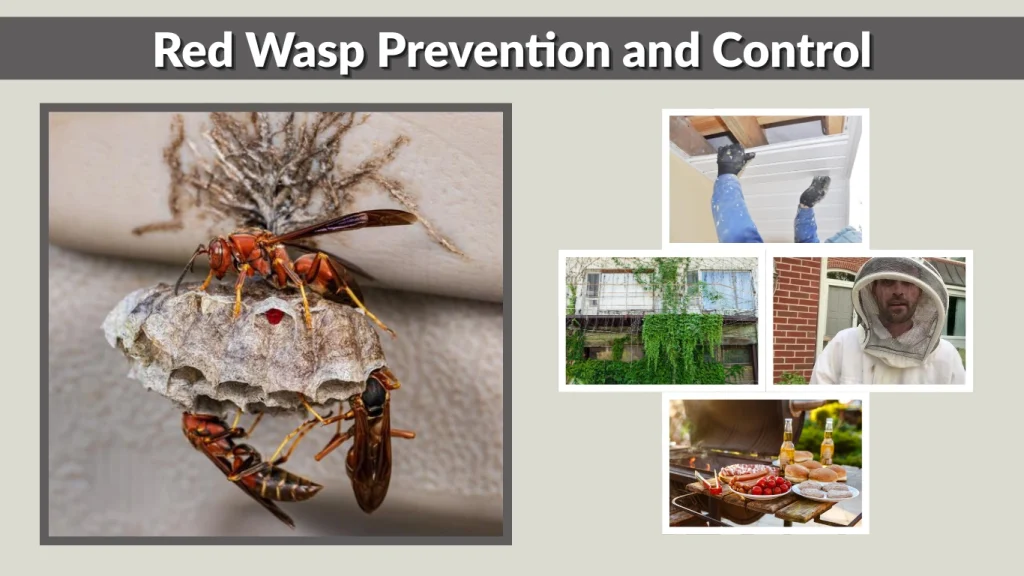
Preventive Measures
Stopping nests before they become established is the most effective strategy.
- Seal entry points around eaves, vents, and cracks.
- Inspect regularly in spring for small starter nests.
- Reduce attractants such as uncovered food, sugary drinks, and open trash bins.
- Trim vegetation near buildings that could provide cover.
Nest Removal
For small nests, removal may be possible without professional help, but it requires timing and caution.
- Remove nests at night when wasps are less active.
- Wear protective clothing, gloves, and eyewear.
- Use a wasp spray labeled for paper wasps, standing at a safe distance.
- Dispose of the comb and clean the site with soapy water to erase pheromone trails.
Large nests, or those in risky locations, should be handled by professional pest control to avoid dangerous swarming.
Ecological Importance
Despite their painful stings, red wasps with black wings are not just pests—they are valuable to the ecosystem.
- Natural pest controllers: They hunt caterpillars, beetles, and other crop-damaging insects, reducing the need for pesticides.
- Pollinators: By feeding on nectar, they transfer pollen between flowers, contributing to plant reproduction.
- Biodiversity role: As prey, they also support bird and insect-eating species.
Their presence in natural and agricultural environments is beneficial, but managing colonies near human activity is necessary for safety.
Red Wasp with Black Wings vs Other Wasps
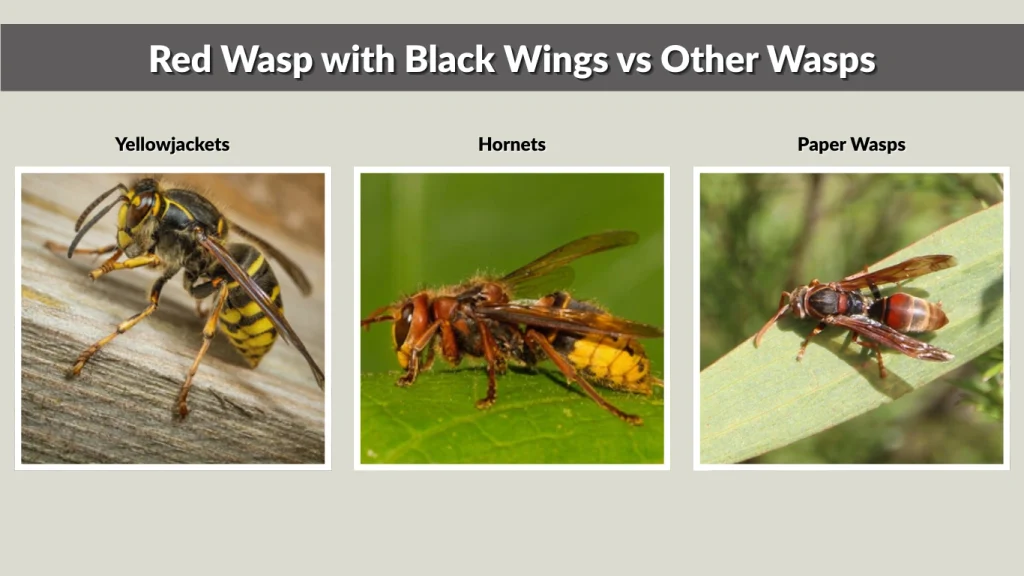
It’s easy to confuse different wasps in Texas, but knowing the differences helps in identification.
- Yellowjackets: Smaller, black-and-yellow striped, more aggressive, and often nest underground.
- Hornets: Build large, enclosed football-shaped nests; bigger and stockier than paper wasps.
- Other Paper Wasps: Brown or black body colors with lighter wings, unlike the reddish-brown and black-winged appearance of Polistes carolina.
These comparisons make the red body + black wing combination a quick way to identify the species.
FAQs
What species is the red wasp with black wings?
The red wasp with black wings is most often Polistes carolina, a paper wasp native to the southeastern United States, especially Texas.
How dangerous are red wasps compared to yellowjackets?
Red wasps are less aggressive than yellowjackets but will sting fiercely if their nest is threatened. Yellowjackets often attack unprovoked, while red wasps usually only defend their colony.
Can red wasps sting multiple times?
Yes. Unlike honeybees, red wasps do not lose their stinger and can sting repeatedly, which makes a swarm especially painful and dangerous.
Do red wasps reuse their nests?
No. Old nests are abandoned each winter. However, new queens may build in the same spot if the conditions remain favorable, which is why prevention and cleaning are important.
What’s the safest way to get rid of a red wasp nest?
Small nests can sometimes be removed at night using protective gear and wasp spray. For larger or hard-to-reach nests, professional pest control is the safest solution to avoid swarms and multiple stings.
