
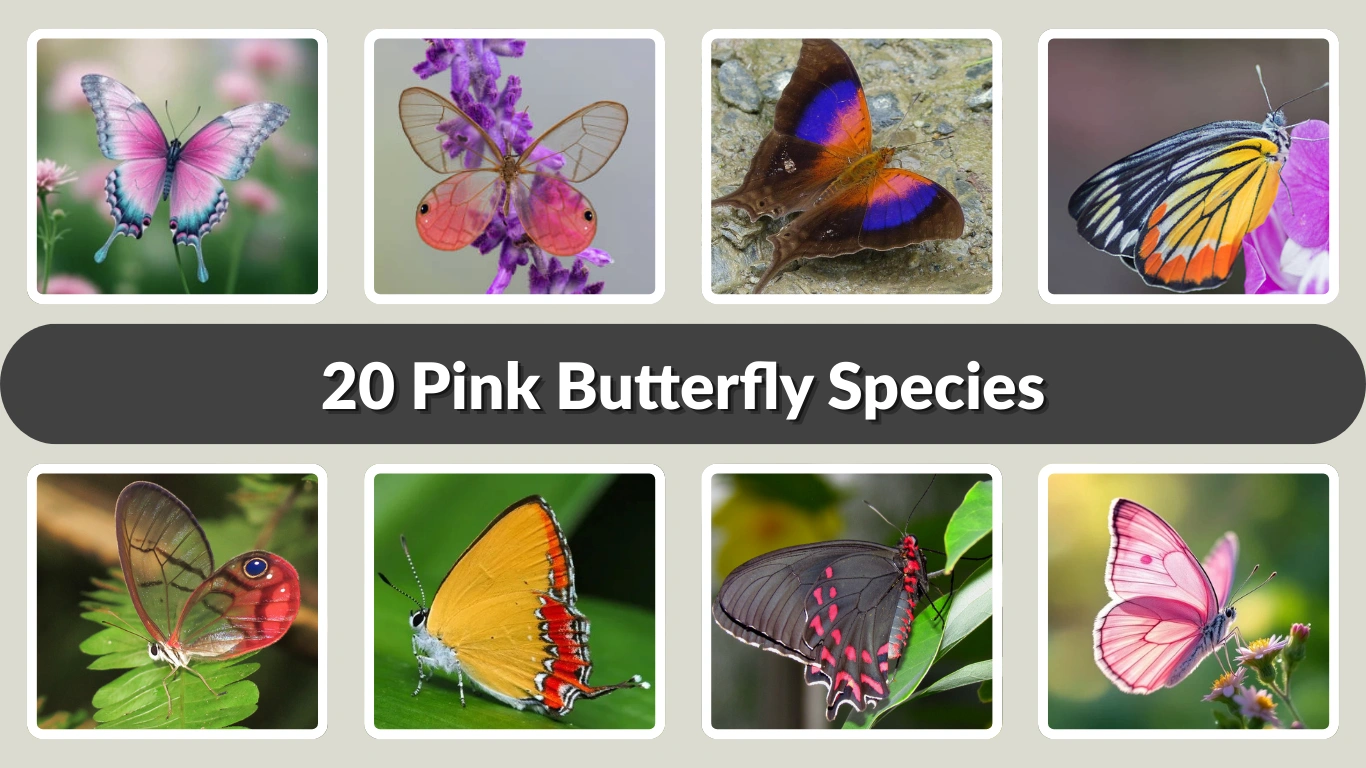
Pink butterflies are some of the rarest and most enchanting insects in the natural world. Whether naturally pink, iridescent with rosy highlights, or displaying soft blush tones along their wings, these species stand out with their delicate beauty. This collection showcases 20 pink and pink-tinted butterfly species, focusing on their identification, signature color patterns, habitats, and lifecycles to help you recognize and understand these uniquely vibrant butterflies.
1. Pink Glasswing Butterfly (Cithaerias pireta)

The Pink Glasswing Butterfly is one of the most delicate and ethereal butterflies in the world. Known for its nearly transparent wings that glow with a soft rose-pink hue, this species is native to the tropical rainforests of Central and South America. Its gentle appearance, shimmering translucence, and pink tint make it a standout among naturally occurring pink butterflies.
Identification
- Transparent wings with soft pink or rose-tinted edges
- Thin brown or dark maroon borders
- Small, rounded wings with smooth curves
- Slender body with pale brown coloring
- Wingspan typically 2–2.5 inches
Color Pattern
The Pink Glasswing Butterfly features crystal-clear wings that appear like delicate stained glass. The edges shimmer with a subtle pink or rose tone, especially in females. In certain lighting, the transparent wings reflect iridescent pink highlights. This faint blush color gives the butterfly a magical appearance as it floats through sunlit forest edges.
Habitat
This species thrives in tropical rainforests, cloud forests, shaded riverbanks, and moist understory vegetation. It prefers humid environments with dense foliage, often staying close to the forest floor. Regions where it is most common include Colombia, Ecuador, Peru, and parts of Central America, where it blends seamlessly with dappled forest light.
Lifecycle
Eggs are laid on low-growing host plants in shaded forest areas. Caterpillars are camouflaged green or brown, feeding on understory plants. Pupation occurs in a pale green or transparent chrysalis that mimics leaf structure. Adults emerge with delicate wings and spend much of their life gliding gently through humid forests, feeding on rotting fruit, tree sap, and nectar from small tropical flowers.
2. Blushing Phantom Butterfly (Cithaerias menander)

The Blushing Phantom Butterfly is known for its ghostly transparent wings with a soft pink blush along the edges. Found in Central and South American rainforests, it glides quietly through dim, humid forest floors, giving it an almost mystical presence.
Identification
- Nearly transparent wings with pink-blushed edges
- Dark brown borders outlining the wings
- Rounded, delicate wing shape
- Slender pale-brown body
- Wingspan typically 2–2.75 inches
Color Pattern
The Blushing Phantom’s wings glow with a gentle pink tint that intensifies along the margins. The transparency creates a floating, airy effect as the butterfly moves. Depending on the light, the wings may appear slightly lavender or rose, adding to its ghostlike beauty.
Habitat
This butterfly inhabits humid rainforests, especially shaded understories and river-edge vegetation. It prefers low light, remaining close to the forest floor where moisture is high. It is commonly found in Panama, Colombia, Brazil, and other Amazonian regions.
Lifecycle
Eggs are laid on low-lying host plants in shaded forest zones. Caterpillars blend in with leaf colors and feed slowly on understory plants. Pupation occurs in a fragile, lightly tinted chrysalis. Adults feed on rotting fruits, tree sap, and moisture-rich minerals rather than large nectar flowers.
3. Pink Tip Butterfly (Colotis danae)
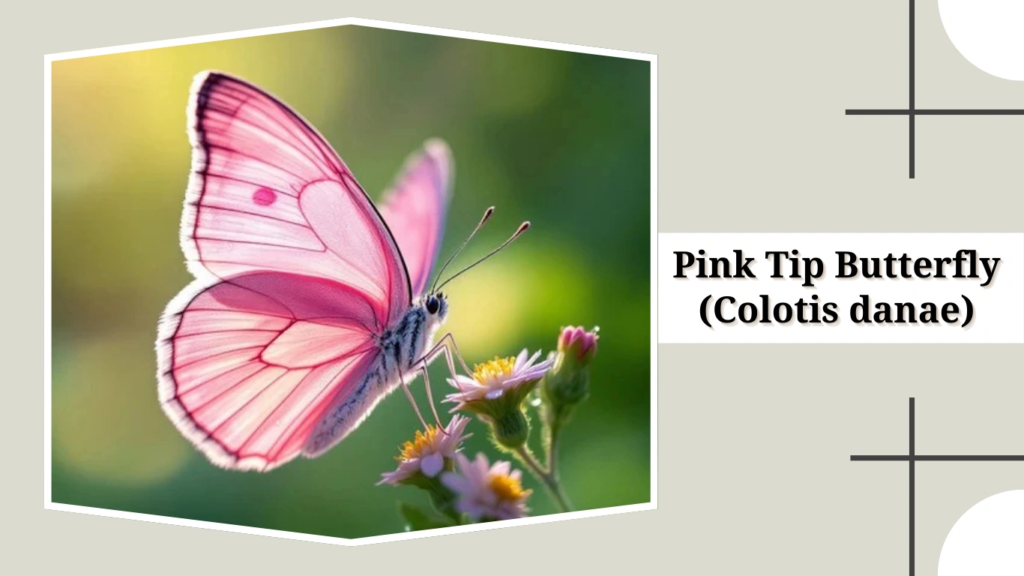
The Pink Tip Butterfly is a brightly marked species from Africa and South Asia, instantly recognized by its bold pink-tinted forewing tips, especially in males. Its crisp contrast of white and pink makes it visually striking.
Identification
- White wings with bright pink or rosy tips (males)
- Females show darker edges with faint pink washes
- Underside pale yellow or cream with speckles
- Distinctive triangular forewing shape
- Wingspan typically 1.75–2.5 inches
Color Pattern
The Pink Tip Butterfly displays a radiant splash of pink on the forewing tips that blends into the white upper wings. Females have darker, more muted tones but still show a faint rosy wash. The underside is yellowish with light brown speckling, providing camouflage in dry grassy areas.
Habitat
This species thrives in dry grasslands, desert edges, savannas, bushlands, and open scrub regions. It is common across India, Africa, and parts of the Middle East. It prefers areas where caper plants—the primary hosts—are abundant.
Lifecycle
Eggs are laid singly on caper shrubs. Caterpillars are green and well-camouflaged among leaves. Pupation occurs in a small green chrysalis attached to stems. Adults appear throughout warm seasons and feed on nectar from small wildflowers such as caper blossoms and roadside blooms.
4. Rosy Peruvian Butterfly (Actinote anteas)
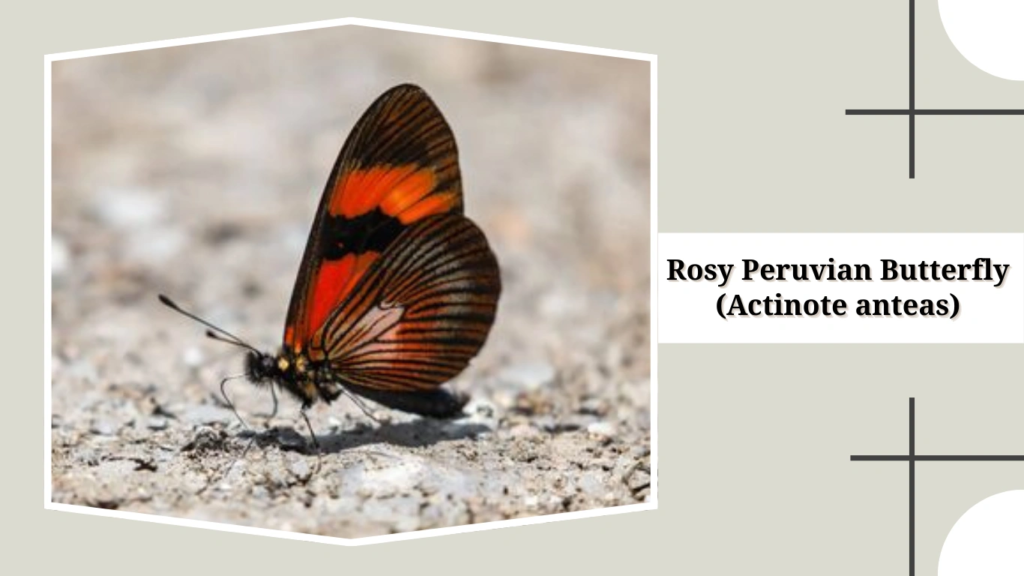
The Rosy Peruvian Butterfly is a soft pink-washed species native to South America, especially Peru and surrounding regions. Its wings carry gentle rose and peach tones, giving it a warm, delicate appearance in flight.
Identification
- Soft pink or peach-tinted wings
- Dark brown or black veins and borders
- Slightly rounded wings with semi-translucent areas
- Slender dark body with fine hairs
- Wingspan typically 2–2.75 inches
Color Pattern
The Rosy Peruvian Butterfly features subtle pink or rosy tones across the wings, blending with light orange or cream. Dark veining adds contrast, while the semi-translucent patches create a soft, glowing appearance. The pink hues become stronger in bright sunlight or during warm seasons.
Habitat
This butterfly inhabits tropical forests, highland valleys, and open secondary growth areas in Peru, Ecuador, and Bolivia. It is often seen near forest clearings, sunny trails, and moist vegetation where host plants grow abundantly.
Lifecycle
Eggs are laid in small clusters on host plants. Caterpillars are dark with fine hairs and feed on specific tropical shrubs. Pupation occurs in a lightly colored chrysalis attached to stems or leaves. Adults emerge during warm, humid months and feed on nectar, minerals, and rotting fruit.
5. Lilac Lacewing (Cethosia leschenaultii)
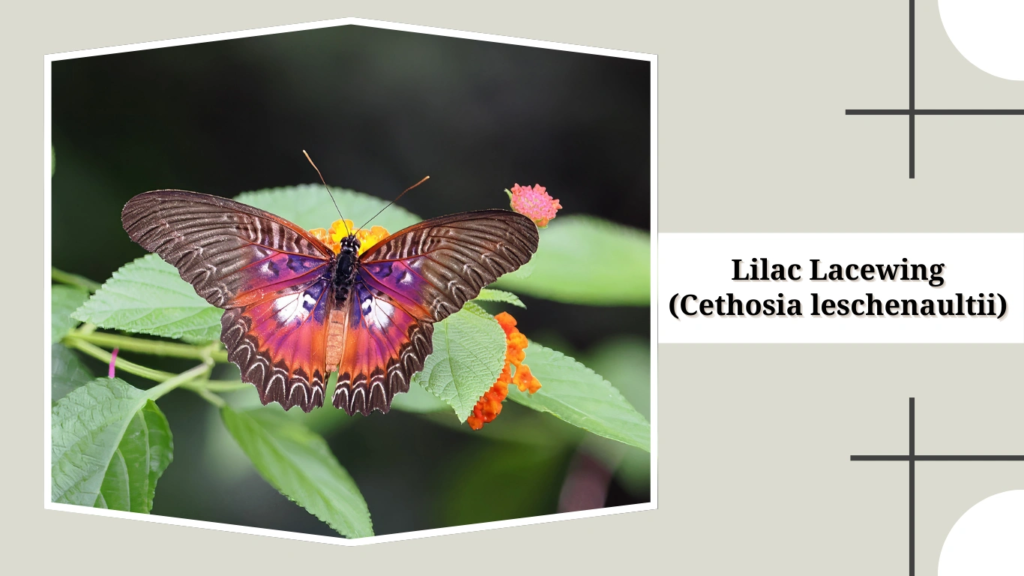
The Lilac Lacewing is a vibrant butterfly found in South and Southeast Asia. Its wings display shades of lilac, pink, and purple combined with intricate lace-like patterns.
Identification
- Lilac-pink wings with black and white lace patterns
- Scalloped wing edges
- Brightly patterned underside with orange, pink, and cream
- Medium-sized slender body
- Wingspan typically 3–3.5 inches
Color Pattern
The Lilac Lacewing’s upper wings show striking lilac-pink tones bordered with black and decorated with white patches. The underside is even more elaborate, featuring warm orange, pink, and cream hues with lace-like markings. The blend of purple and pink makes this species particularly eye-catching.
Habitat
This species thrives in tropical forests, plantations, gardens, and flowering shrub areas across India, Sri Lanka, Thailand, and Indonesia. It prefers sunny forest edges and places rich in nectar sources, especially where host plants from the Passiflora family grow.
Lifecycle
Eggs are laid on passionflower vines. Caterpillars are dark with long spines and feed exclusively on Passiflora leaves. Pupation occurs in a golden-tinted chrysalis that resembles metal foil. Adults fly throughout the year in warm climates and feed on nectar from lantana, ixora, and forest blossoms.
6. Rosy Maple Moth (Dryocampa rubicunda)

Although technically a moth, the Rosy Maple Moth is one of the most iconic pink-winged insects, often included in pink-butterfly lists because of its bright bubblegum-pink coloration and soft yellow accents. It is native to North America and beloved for its toy-like appearance.
Identification
- Bright pink wings with yellow bands
- Fuzzy pink-and-yellow body
- Small rounded wings with soft edges
- Feathered antennae
- Wingspan typically 1.25–2 inches
Color Pattern
This species displays a candy-colored blend of pink and lemon yellow. The forewings are often half yellow and half pink, while the body is coated in plush, fuzzy scales. The pastel colors vary from pale blush to hot pink, making it one of the most visually striking pink-toned insects.
Habitat
Rosy Maple Moths inhabit deciduous forests, suburban neighborhoods, parks, and areas rich in maple trees. They prefer temperate woodlands and are commonly found in the eastern United States and parts of Canada.
Lifecycle
Eggs are laid in clusters on maple leaves. Caterpillars, known as “green-striped mapleworms,” feed on maple foliage until they pupate in soil or leaf litter. Adults emerge during warm months and do not feed, living only to mate and reproduce.
7. Pink-spotted Cattleheart (Parides photinus)
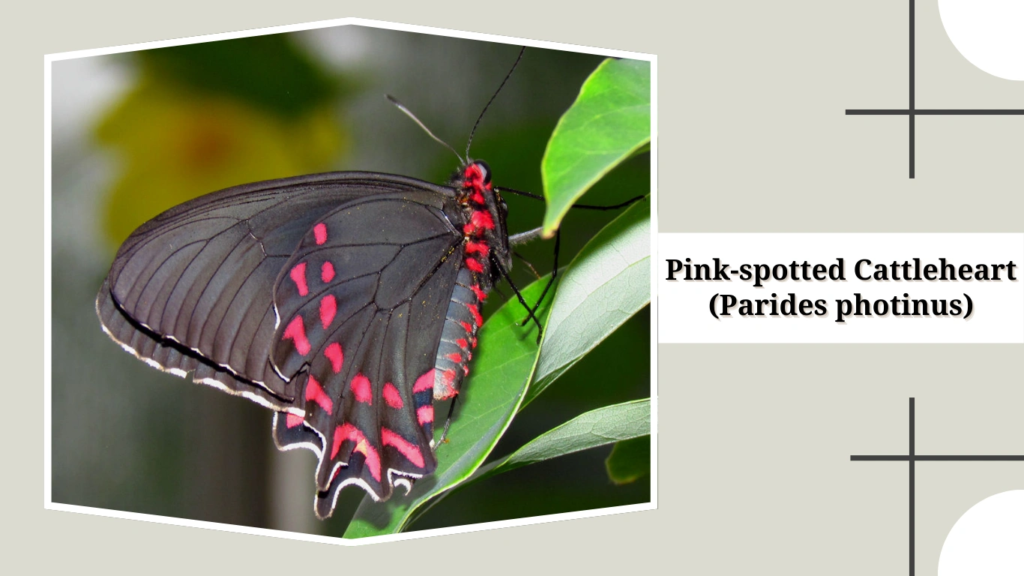
The Pink-spotted Cattleheart is a striking black-and-pink butterfly native to Central and South America. Its bold pink spots and velvety wings give it a dramatic and elegant appearance.
Identification
- Black wings with bright pink or red spots
- Hindwings with a curved row of pink markings
- Slightly scalloped wing edges
- Dark body with pink side patches
- Wingspan typically 3–3.5 inches
Color Pattern
This species features a deep, velvety black background accented by vivid pink spots along the hindwings. The contrast between the dark wings and bright rosy patches makes it highly recognizable. Some individuals show subtle white speckling or faint pink washes near the base.
Habitat
The Pink-spotted Cattleheart inhabits tropical forests, riverbanks, cloud forests, and mountain foothills. It is most common in Colombia, Ecuador, Peru, and Costa Rica. It prefers areas rich in pipevine plants, the primary host for its caterpillars.
Lifecycle
Eggs are laid singly on pipevine leaves. Caterpillars are often black or red with fleshy projections, feeding on toxic host plants that make the adults unpalatable to predators. Pupation occurs in a robust brown chrysalis. Adults feed on nectar from lantana, hibiscus, and forest-edge wildflowers.
8. Rosy Swallowtail (Papilio rogeri)
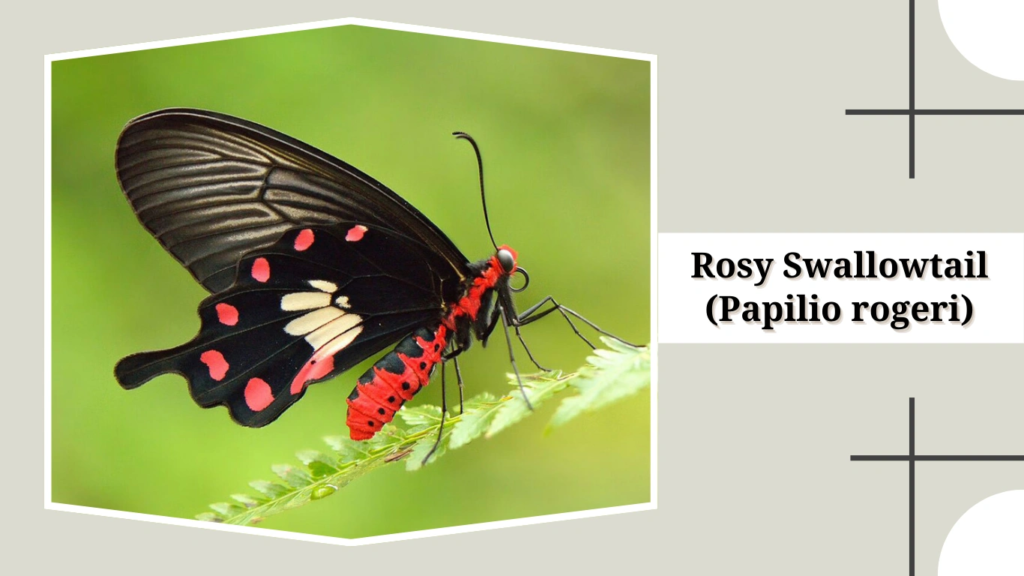
The Rosy Swallowtail is a rare and beautiful butterfly found in Central and parts of South America. It is admired for its soft pink shading and elegant swallowtail extensions, giving it a graceful and romantic appearance.
Identification
- Black or dark brown wings with rosy-pink washes
- Hindwings with curved pink bands and tails
- Blue and white spotting near wing margins
- Slender dark body with subtle pink tones
- Wingspan typically 3–4 inches
Color Pattern
The Rosy Swallowtail displays a deep black base color decorated with pastel pink bands across the hindwings. Some individuals show light pink gradients along the forewings as well. Delicate blue and white accents near the edges complete its soft, painterly color palette.
Habitat
This butterfly inhabits tropical forests, mountain valleys, and humid lowlands. It prefers shaded regions near streams or forest edges where host plants in the Rutaceae family grow. It is most commonly found in Costa Rica, Panama, and northern South America.
Lifecycle
Eggs are laid on citrus-related host plants. Caterpillars are usually green or brown with defensive markings. Pupation occurs in a camouflaged chrysalis attached to branches. Adults feed on nectar from flowering shrubs such as lantana, verbena, and passionflower blossoms.
9. Pink-banded Sister (Adelpha lycorias)
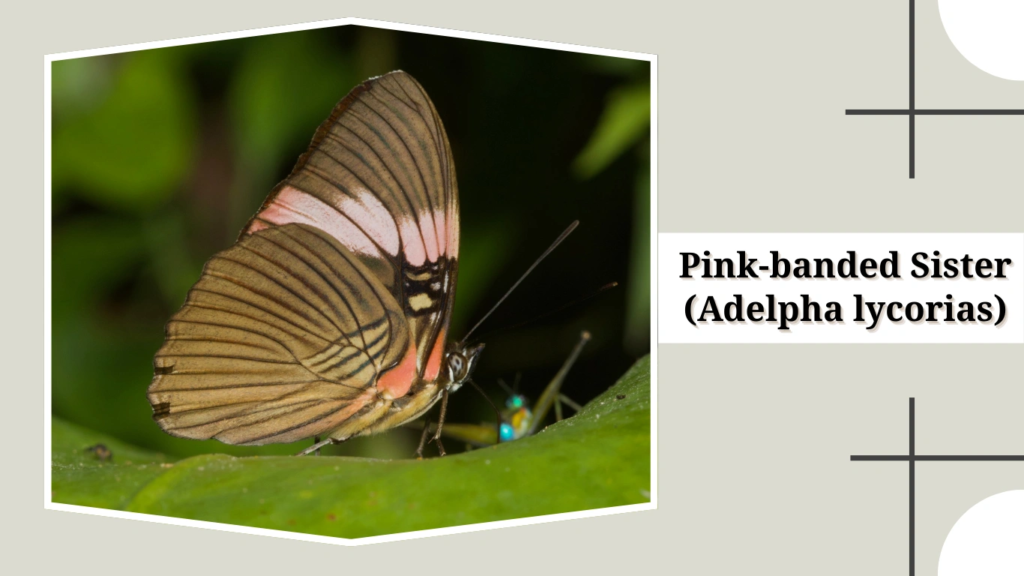
The Pink-banded Sister is a vibrant forest butterfly known for its bold black-and-white pattern accented by a distinctive rosy-pink band across the forewings.
Identification
- Black and white wings with a bright pink band
- Strong diagonal rosy stripe on upper forewing
- Slightly angular wing shape
- Dark brown body with white patches
- Wingspan typically 2.25–3 inches
Color Pattern
This butterfly carries a dramatic diagonal pink band across its otherwise black-and-white patterned wings. The contrast is sharp, giving it an almost graphic, painted appearance. The underside is paler with muted browns and soft pink shades.
Habitat
The Pink-banded Sister lives in humid tropical forests, forest edges, and shaded pathways across Central America and northern South America. It prefers areas with dense vegetation and host plants from the Alchornea genus.
Lifecycle
Eggs are laid on young leaves of host plants. Caterpillars are green or brown with small spines and excellent camouflage. Pupation occurs in a mottled chrysalis resembling a leaf bud. Adults feed on rotting fruit, tree sap, and occasionally nectar from low forest blossoms.
10. Pink-bordered Sulphur (Phoebis agarithe f. rubromarginata)
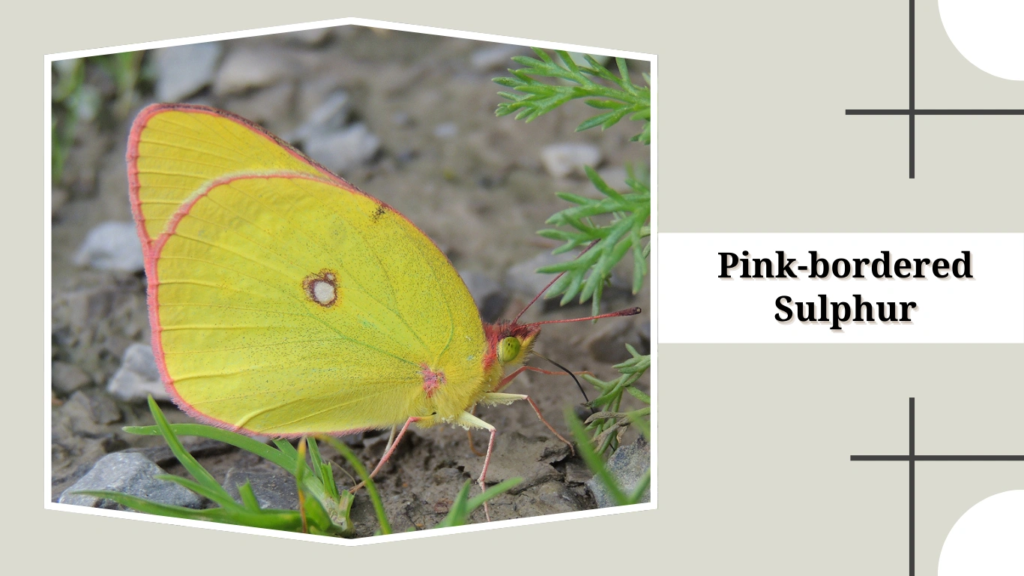
The Pink-bordered Sulphur is a vibrant color form of the Orange-barred Sulphur, distinguished by its striking pink edges. This butterfly is admired for its warm yellow wings trimmed with rosy margins.
Identification
- Bright yellow wings with vivid pink or rose-colored borders
- Females may show paler yellow with wider pink margins
- Underside mottled with soft brown speckles
- Smooth, rounded wings
- Wingspan typically 2.5–3.5 inches
Color Pattern
The Pink-bordered Sulphur showcases a bold contrast between sunny yellow wings and glowing pink edges. The rosy borders intensify during warm seasons and in females. The underside is more subdued, featuring pale yellows and small brown flecks that offer camouflage among vegetation.
Habitat
This butterfly inhabits tropical and subtropical regions, including Florida, the Caribbean, Mexico, and Central America. It thrives in open fields, gardens, coastal areas, and shrubby plains where host plants such as cassia and senna are plentiful.
Lifecycle
Eggs are laid on senna or cassia leaves. Caterpillars are green with faint stripes, feeding on tender foliage. Pupation occurs in a pointed green chrysalis suspended from stems. Adults emerge through most of the year in warm climates and feed on nectar from hibiscus, bougainvillea, and lantana.
11. Purple Sapphire Butterfly (Heliophorus epicles)
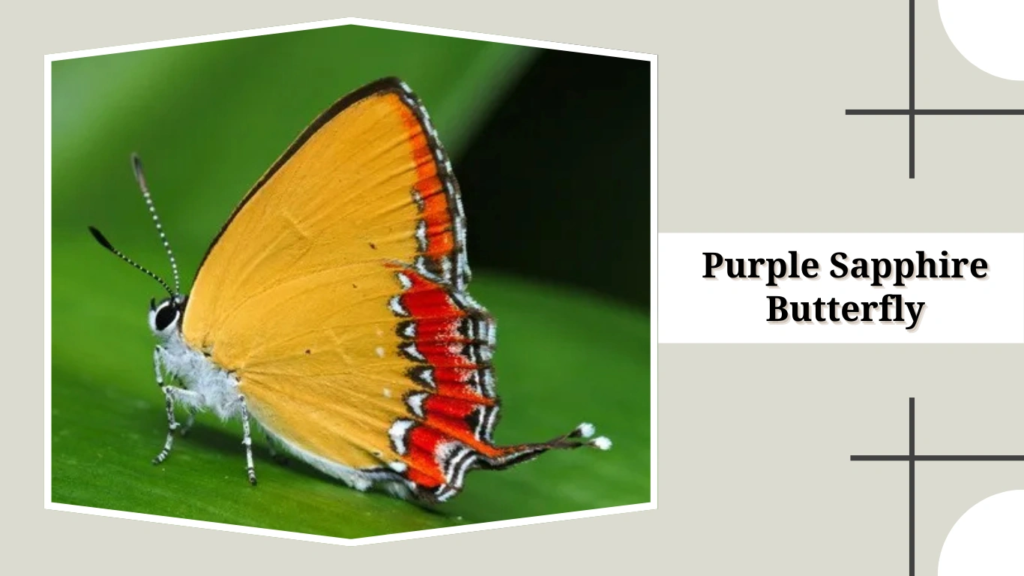
The Purple Sapphire is a small yet stunning butterfly found across South and Southeast Asia. Its wings shimmer with violet, pink, and reddish tones that change with light, giving it a dazzling jewel-like quality.
Identification
- Upper wings violet with pink or reddish reflections
- Hindwings feature orange spots near the tails
- Short tails on hindwings
- Dark brown underside with small white spots
- Wingspan typically 1.25–1.75 inches
Color Pattern
The Purple Sapphire’s upper wings gleam with shifting shades of purple, pink, and red. In sunlight, the iridescence can appear deep magenta or bright fuchsia. The hindwings display small orange markings and delicate tails that enhance its gem-like appearance. The underside is muted but patterned with fine details.
Habitat
This butterfly inhabits forest edges, gardens, hilly regions, and lightly wooded areas. It is common in India, Sri Lanka, Thailand, Myanmar, and other Asian regions. It prefers sunny clearings and areas where its host plants—species of Rhus and other shrubs—are found.
Lifecycle
Eggs are laid on young shoots of host plants. Caterpillars are small, green, and slug-like in shape, blending into foliage. Pupation occurs in a small brown or green chrysalis attached to leaves. Adults fly actively during warm months, feeding on nectar from small flowers and basking in sunlit patches.
12. Pink-etched Soldier Butterfly (Danaus erippus variant)

The Pink-etched Soldier Butterfly is a rare color morph of the South American Soldier butterfly. Its wings display warm orange tones lightly washed with pink along the edges and veins, giving it a soft rosy glow.
Identification
- Orange wings with soft pink edging and vein tint
- Black borders with white spotting, monarch-like
- Slight pink blush on hindwings
- Dark body with white dots
- Wingspan typically 3–4 inches
Color Pattern
This variant shows a warm blend of orange and dusty pink, especially toward the wing margins and along veins. The black borders carry white spots similar to monarch relatives, but the subtle pink wash distinguishes this morph. In bright sunlight, the wings may appear flushed with rose-gold undertones.
Habitat
Found in South America, particularly Brazil, Uruguay, and Argentina, it prefers open fields, forest edges, and areas with abundant milkweed species. It is also seen near gardens, roadsides, and meadows where nectar flowers are plentiful.
Lifecycle
Eggs are laid singly on milkweed leaves. Caterpillars are banded black, white, and yellow and feed exclusively on milkweed, gaining chemical protection. Pupation occurs in a green chrysalis with metallic gold spots. Adults feed on nectar from lantana, thistle, and wildflowers.
13. Blue-pink Morpho (Morpho peleides variant)
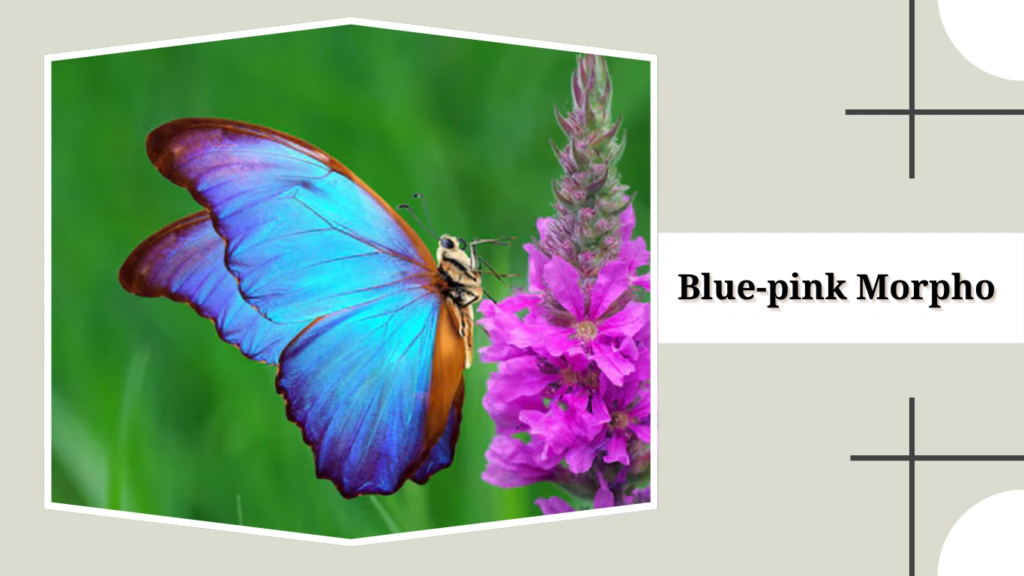
The Blue-pink Morpho is a rare, naturally occurring iridescent variant of the Blue Morpho. Its wings shimmer in bright blue with flashes of fuchsia or pink depending on the angle of light, creating an unreal, holographic appearance.
Identification
- Iridescent blue wings with pink or magenta highlights
- Underside brown with large eye spots
- Large rounded wings
- Thick brown body
- Wingspan typically 4–6 inches
Color Pattern
The Blue-pink Morpho’s signature trait is its structural iridescence. The wing scales reflect blue normally, but certain angles reveal vivid pink or magenta flashes. These shifting colors occur naturally due to microscopic scale structures, not pigment. The underside contrasts sharply with earthy browns and eye spots that provide camouflage.
Habitat
This morph appears in the same habitats as standard Blue Morphos—tropical rainforests of Central and South America. It favors humid understories, riverbanks, and canopy gaps where filtered sunlight enhances its iridescent colors.
Lifecycle
Eggs are laid on legume-family host plants. Caterpillars are reddish-brown with tufts of hair and feed on young leaves. Pupation occurs in a green chrysalis shaped like a leaf pod. Adults glide through forest light, feeding on fermenting fruit, tree sap, and occasional nectar.
14. Cithaerias Andromeda (Pink-tinted Glasswing)

The Cithaerias Andromeda is a graceful rainforest butterfly known for its translucent wings lightly brushed with pink and lavender tones. It belongs to the glasswing group and is admired for its soft, ethereal coloring.
Identification
- Transparent wings with pink or lavender-tinted edges
- Thin dark borders around wing margins
- Small rounded wings with a delicate shape
- Slender light-brown body
- Wingspan typically 2–2.5 inches
Color Pattern
This species shows faint pink staining along the wing edges, sometimes fading into purple or peach depending on light. The transparency of the wings creates a floating illusion, while the subtle coloration adds a romantic, watercolor-like glow.
Habitat
Cithaerias Andromeda inhabits tropical rainforests in Central and South America, especially lowland Amazonian regions. It stays near shaded forest floors, streamside vegetation, and humid understory plants where moisture is high.
Lifecycle
Eggs are laid on low forest vegetation. Caterpillars are camouflaged brown or green and feed slowly on delicate understory plants. Pupation occurs in a nearly transparent chrysalis. Adults feed on rotting fruit, tree sap, and moisture sources, gliding gently through dim forest light.
15. Pink Jezebel (Delias species)
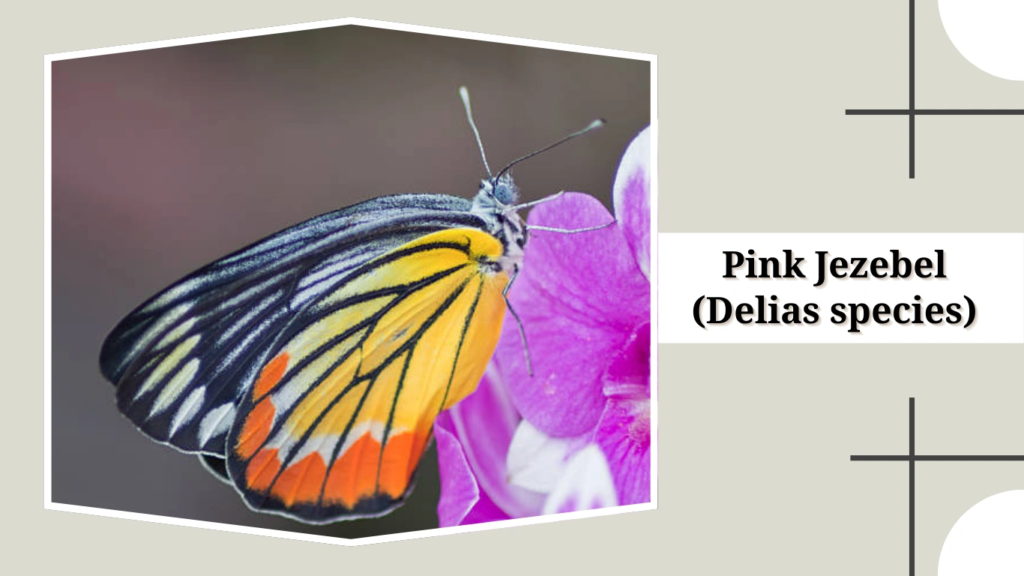
The Pink Jezebel refers to several Delias butterflies that display bright white wings with rosy or pink-tinted patches. These butterflies are found across Southeast Asia and are known for their striking, painterly colors.
Identification
- White wings with vivid pink, rose, or crimson patches
- Black borders outlining the wings
- Hindwings often display red or pink streaks
- Slightly pointed wing shape
- Wingspan typically 2–2.75 inches
Color Pattern
Delias butterflies in the Pink Jezebel group show strong pink or crimson coloration on the hindwings, contrasting beautifully with clean white uppersides and bold black margins. The pink tones may vary from soft blush to vibrant magenta, making each species visually dramatic.
Habitat
These butterflies inhabit montane forests, foothills, meadows, and high-altitude valleys throughout Indonesia, Malaysia, Papua New Guinea, and nearby regions. They prefer cooler tropical zones rich in flowering plants.
Lifecycle
Eggs are laid on mistletoe host plants. Caterpillars are striped or spotted and feed in groups. Pupation occurs in a small chrysalis attached under leaves or stems. Adults fly in open sunlight and feed on nectar from bouquets of highland flowers and shrubs.
16. Hecale Longwing – Pink Form (Heliconius hecale morph)

The Hecale Longwing – Pink Form is a naturally occurring color morph of the Hecale Longwing butterfly, known for its soft salmon-pink patches replacing the usual orange. This variant is cherished in butterfly conservatories for its gentle pink glow in flight.
Identification
- Black wings with soft pink or salmon-colored patches
- White spots across the forewings
- Long, narrow wings typical of Heliconius butterflies
- Slender black body with white markings
- Wingspan typically 3–4 inches
Color Pattern
In this morph, the usual orange wing patches appear in shades of pastel pink, peach, or rose. These soft colors blend beautifully with the deep black background. The forewings include white spotting, while the hindwings show warm pink or peach washes. The underside repeats the pattern but with slightly muted tones.
Habitat
The pink morph appears in the same habitats as the standard Hecale Longwing—tropical forests, river edges, and open sunny trails throughout Central and South America. It thrives in humid regions where passionflower vines grow, its primary host plants.
Lifecycle
Eggs are laid individually on the tips of passionflower leaves. Caterpillars are spiky and white with black markings. Pupation occurs in a delicate golden or brown chrysalis. Adults live longer than most butterflies and feed on nectar, pollen, and fruit juices.
17. Pink Daggerwing Butterfly (Marpesia petreus morphs)
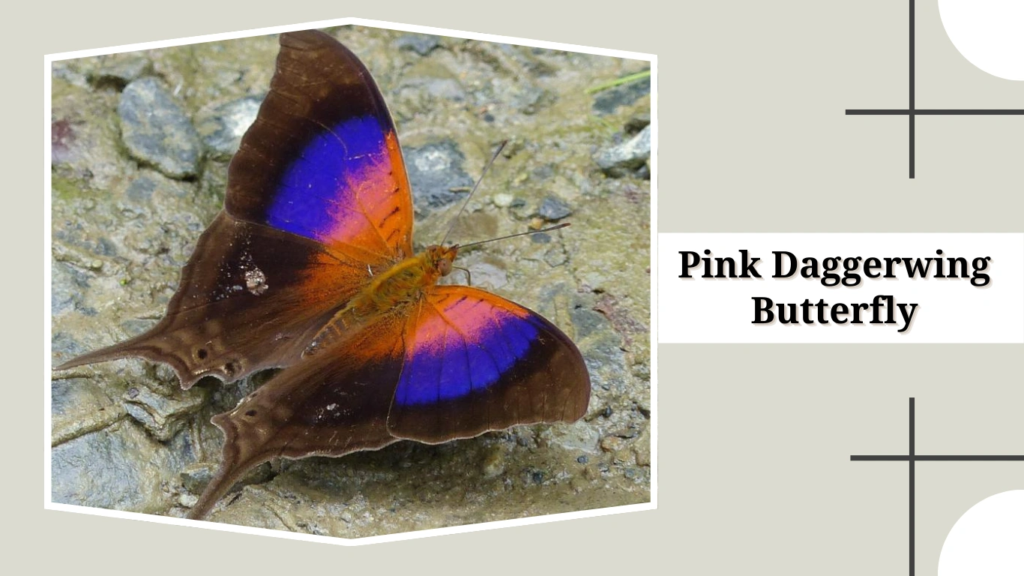
The Pink Daggerwing Butterfly is a rare color variation of the Ruddy Daggerwing. Its elongated, tail-like hindwings combined with rosy tones make it one of the most elegant pink butterflies observed in tropical America.
Identification
- Long, dagger-shaped hindwing tails
- Rosy or pinkish-orange upper wings
- Dark brown borders and veins
- Underside pale brown with leaf-like texture
- Wingspan typically 3.5–4.5 inches
Color Pattern
The pink morph displays a warm, rosy wash across the wings, replacing the typical amber-orange. The hindwings stretch into long, blade-like tails that give the species its “daggerwing” name. The underside mimics dried leaves, offering exceptional camouflage.
Habitat
This butterfly inhabits tropical forests, forest edges, riverbanks, and sunny clearings throughout South America, Central America, and parts of the Caribbean. It is often seen gliding gracefully near canopy gaps with filtered sunlight.
Lifecycle
Eggs are laid on fig and related host plants. Caterpillars have spiky bodies and feed on young leaves. Pupation occurs in a leaflike chrysalis that provides excellent camouflage. Adults feed on fermenting fruit, tree sap, and occasional nectar sources.
18. Pink Monarch Variant (Danaus plexippus – rare morph)

The Pink Monarch Variant is an extremely rare genetic color morph of the classic orange monarch butterfly. Instead of deep orange, the wings display a soft pink or rose-gold wash, making it one of the most visually unique monarch forms ever recorded.
Identification
- Soft pink or rose-tinted wings instead of orange
- Black veins and bold black borders
- White spots along wing edges
- Slightly larger appearance due to lighter coloration
- Wingspan typically 3.5–4 inches
Color Pattern
This rare morph replaces the monarch’s typical orange pigment with shades of blush pink, dusty rose, or peach. The black veining remains sharply defined, creating dramatic contrast. White spots along the black margins remain present, highlighting the natural monarch pattern but with a delicate pink glow.
Habitat
Pink monarchs occur in the same regions as normal monarchs—North America, Central America, and parts of South America. They migrate, breed, and feed in the same habitats, including meadows, fields, gardens, and milkweed-rich open spaces. Sightings are extremely rare and usually linked to pigment-expression mutations.
Lifecycle
Eggs are laid exclusively on milkweed plants. Caterpillars are striped in yellow, white, and black, feeding only on milkweed leaves. Pupation occurs in a jade-green chrysalis with metallic gold spots. Adults emerge with the rare pink coloration due to genetic variations affecting pigmentation.
19. Pink Daggerwing Glassy Form (Marpesia petreus var. translucent)

The Pink Daggerwing Glassy Form is a translucent, pink-washed variation of the Ruddy Daggerwing. This form shows lighter scaling, making parts of the wings semi-transparent with rosy undertones.
Identification
- Semi-transparent wings with soft pink washes
- Long dagger-shaped hindwing tails
- Thin brown borders and veins
- Pale underside with leaflike pattern
- Wingspan typically 3.5–4.5 inches
Color Pattern
This form features partially transparent wings with pastel pink shading that deepens near the tips. The hindwings extend into dramatic, blade-like tails. The pink tones appear more intense when sunlight passes through the thin wing membranes, giving it a glowing, ethereal look.
Habitat
It inhabits tropical forests, sunlit clearings, riverbanks, and canopy gaps across Central and South America. The translucent pink form is rare, usually appearing in areas with high humidity and consistent warmth.
Lifecycle
Eggs are laid on fig-family plants. Caterpillars are spiny and feed on tender leaves. Pupation occurs in a chrysalis shaped like a curled leaf. Adults glide slowly through forests, feeding on fermented fruits, tree sap, and minerals rather than large nectar flowers.
20. Blue-pink Butterfly (Morpho helenor – pink-iridescent morph)
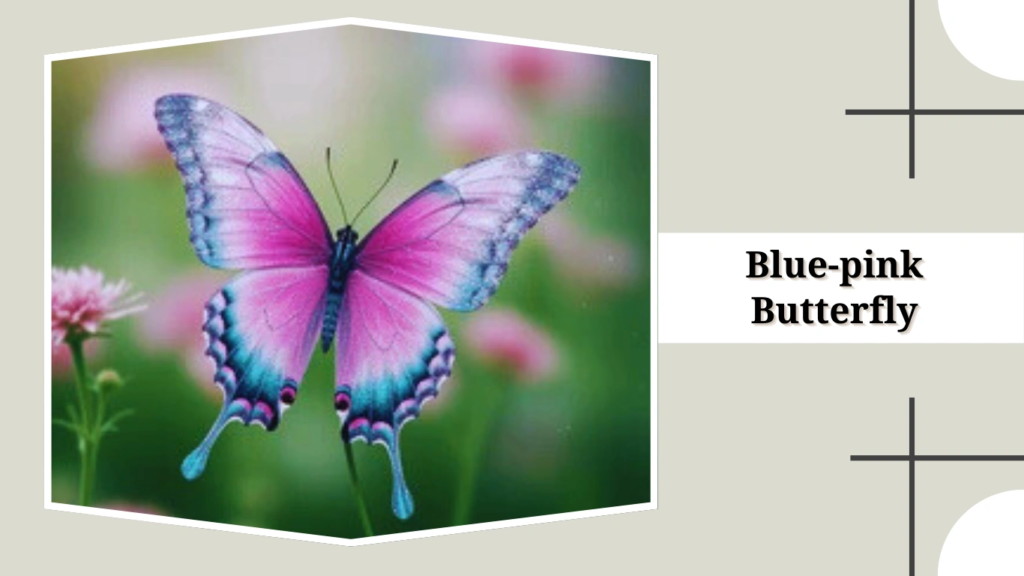
The Blue-pink Butterfly is a rare iridescent variation of the Morpho helenor species. Instead of displaying a pure electric blue, this morph reveals shimmering flashes of pink, lavender, and rose depending on the angle of sunlight. It is one of the most visually stunning blue-pink combinations found in nature.
Identification
- Iridescent blue wings with shimmering pink or lavender flashes
- Broad black wing borders
- Brown underside with large eye spots
- Wide, rounded wings typical of morpho species
- Wingspan typically 4–5.5 inches
Color Pattern
This morph’s color pattern is structural, meaning the pink and blue tones change based on light reflection. Most of the wing appears vivid blue, but certain angles ignite pink, fuchsia, or violet highlights. The underside remains brown with eye spots, offering camouflage against predators.
Habitat
The Blue-pink Butterfly inhabits tropical rainforests across Central and South America, especially in Brazil, Peru, Colombia, and Ecuador. It prefers humid understory zones, sunlit canopy openings, riverbanks, and forest trails where filtered light enhances its iridescence.
Lifecycle
Eggs are laid on legume-family host plants. Caterpillars are thick-bodied with tufts of hair, feeding on tender leaves. Pupation occurs in a green chrysalis resembling a leaf pod. Adults glide with slow, powerful wingbeats through rainforest light, feeding on rotting fruit, tree sap, and fermenting plant juices.
