
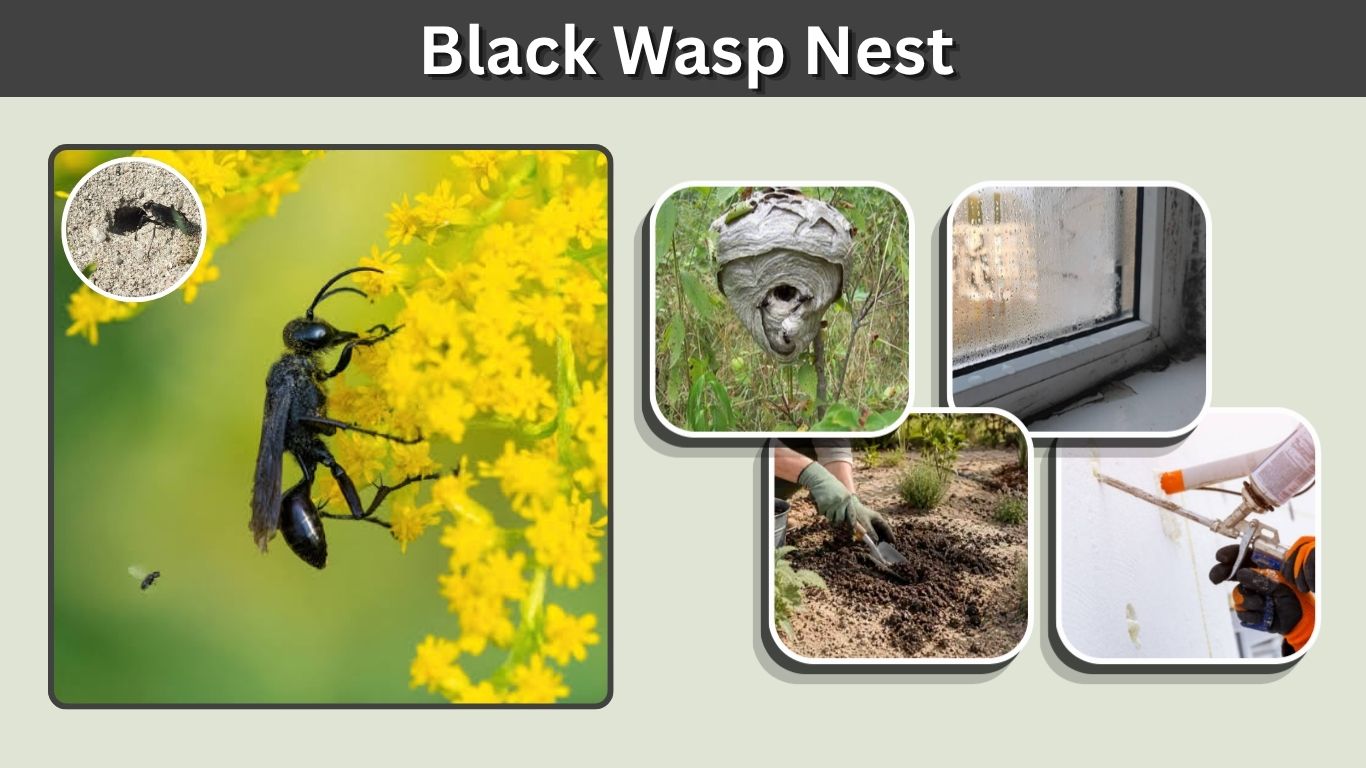
Finding a black wasp nest around your home or garden can be concerning, especially when large black wasps frequently appear nearby. However, not all black wasps build the same type of nest, and many species are relatively harmless unless disturbed. Some create underground burrows, while others construct mud chambers or paper nests in sheltered locations. Understanding what a black wasp nest looks like, where these insects build their homes, and how they behave can help you identify the species and choose a safe approach to nest management.
What Does a Black Wasp Nest Look Like?
A black wasp nest can look different depending on the species responsible for building it. Some black wasps dig small tunnels beneath the soil, while others create mud structures or papery colonies aboveground. Unlike the familiar hanging nests of social wasps, many solitary black wasps maintain hidden nesting chambers that are difficult to recognize without observing the insects entering and leaving.
Black Wasp Nest Identification
Common characteristics of black wasp nests include:
- Underground openings: Small holes surrounded by loose soil or sand.
- Mud structures: Hardened mud tubes or rounded cells attached to walls.
- Paper nests: Grayish structures containing multiple hexagonal cells.
- Hidden cavities: Nesting spaces inside wood, hollow stems, or existing crevices.
- Wasp activity: Repeated flights toward a particular entrance or sheltered location.
Great Black Wasp Nest Appearance
The great black wasp (Sphex pensylvanicus) creates underground burrows rather than hanging paper nests. A typical entrance appears as a small opening in loose soil.
Inside the burrow, the female constructs chambers where she deposits eggs alongside paralyzed katydids. These insects provide food for developing larvae.
Because the entire structure remains underground, homeowners usually notice the entrance rather than the nest itself.
Black Wasp Nest Pictures and Visual Differences
Pictures of black wasp nests often show soil openings, mud cells, or papery structures. However, a wasp’s black coloration does not necessarily mean its nest will also be black.
Identifying the nest material, entrance shape, and adult wasp is more reliable than looking at color alone.
Types of Black Wasp Nests
Several wasp species have black or predominantly black bodies, but their nesting habits differ considerably. Some are solitary hunters that construct individual chambers for their offspring. Others belong to social colonies containing numerous workers and a reproductive queen. Understanding these distinctions helps determine whether a nest presents a significant risk or provides beneficial insect control around your property.
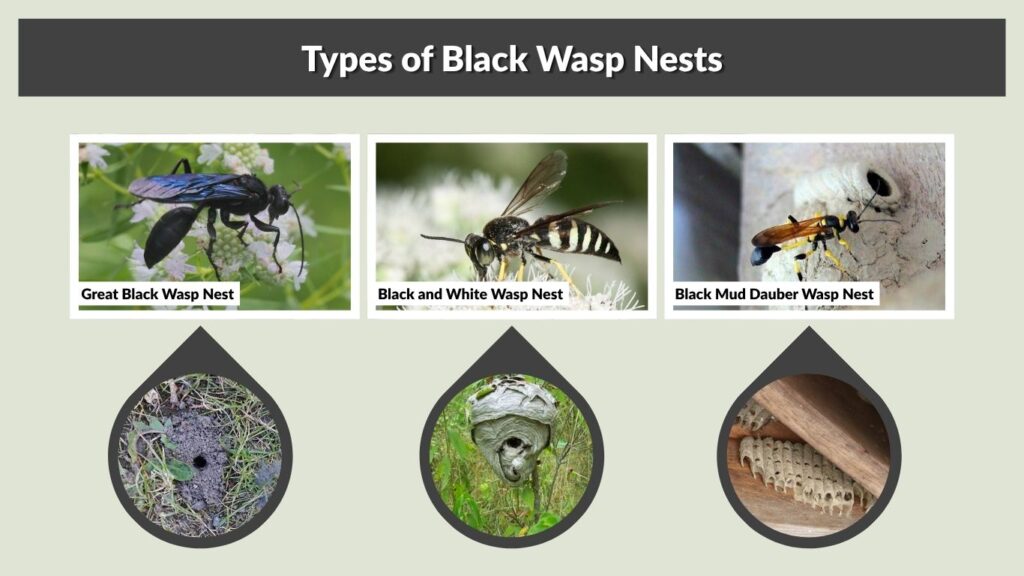
1. Great Black Wasp Nest
Great black wasps build nests in soft soil, including garden beds, fields, and areas with exposed ground. Females dig underground tunnels and supply the chambers with captured katydids.
These solitary wasps do not establish large defensive colonies. Although females can sting, they are generally not aggressive toward people.
2. Black and White Wasp Nest
Black and white wasps, particularly bald-faced hornets, construct large, enclosed paper nests.
These nests commonly hang from tree branches or appear beneath roof overhangs. Their gray outer coverings protect multiple internal brood combs.
Unlike solitary great black wasps, bald-faced hornets live in colonies and can aggressively defend their nests.
3. Black Mud Dauber Wasp Nest
Black or metallic-blue mud daubers may occupy mud nests attached to walls, ceilings, or other protected surfaces.
Some blue mud daubers reuse abandoned nests made by other mud daubers. Their larvae develop inside chambers supplied with paralyzed spiders.
These solitary wasps rarely defend their nests aggressively.
4. Other Black Wasp Nest Types
Other black or dark-colored wasps use different nesting structures:
- Black paper wasps: Build exposed, umbrella-shaped paper combs.
- Black mason wasps: Use existing cavities and partitions made from mud.
- Black potter wasps: Construct or occupy small mud chambers and cavities.
- Black spider wasps: Depending on the species, use soil burrows or existing cavities.
Where Do Black Wasps Build Their Nests?
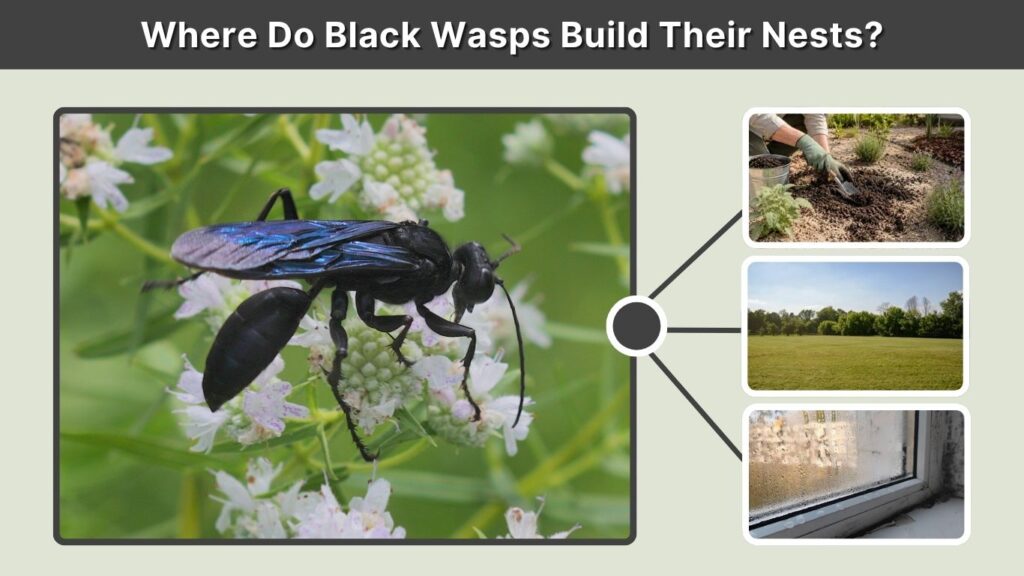
Black wasps select nesting locations based on soil conditions, shelter, food availability, and species-specific behavior. Some prefer sunny gardens with loose soil, while others use protected areas around buildings or vegetation. Identifying these preferred habitats can help homeowners recognize developing nests early and distinguish occasional visiting wasps from insects actively nesting on their property.
Black Wasp Nest in the Ground
Ground nests are especially common among great black wasps and other digger species.
Females typically prefer soil they can excavate easily. Gardens, open fields, and bare patches of ground may provide suitable nesting conditions.
An entrance may appear as a simple hole, sometimes accompanied by freshly displaced soil.
Black Wasp Nest in Siding, Walls, or Windows
Black wasps entering siding, window frames, or wall openings may be cavity-nesting species.
Mason wasps sometimes use existing holes, while social wasps may establish colonies inside structural voids.
A great black wasp normally nests in the ground, so repeated activity inside a wall suggests another species.
Black Wasp Nest in Trees
Trees may support hanging paper nests or contain cavities occupied by solitary wasps.
Black-and-white bald-faced hornets are particularly associated with enclosed aerial nests suspended from branches.
Other wasps may occupy hollow wood or natural openings rather than constructing visible hanging structures.
How to Find a Black Wasp Nest
You can identify potential nesting locations by observing these signs from a safe distance:
- Watch for repeated wasp flights toward one location.
- Look for freshly excavated soil around small ground openings.
- Examine exposed areas for paper or mud structures without approaching closely.
- Notice wasps repeatedly entering gaps beneath siding or around window frames.
- Observe whether several insects guard an entrance or a single wasp repeatedly visits it.
Avoid blocking entrances or disturbing suspected nests during identification.
Are Black Wasp Nests Dangerous?
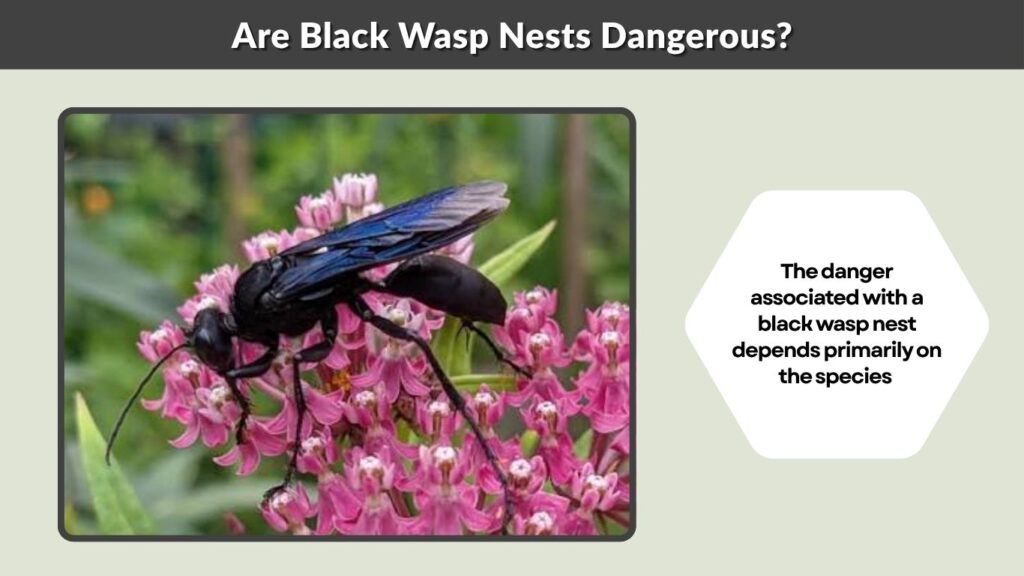
The danger associated with a black wasp nest depends primarily on the species and whether it lives alone or in a social colony. Solitary species generally avoid confrontations, whereas social wasps may defend their nests collectively. Understanding their behavior, colony size, and seasonal activity helps homeowners evaluate the risk without unnecessarily disturbing beneficial insects.
Great Black Wasp Nest Behavior
Great black wasps are solitary hunters. Individual females build and provision nesting chambers rather than relying on a large worker colony.
Although females possess stingers, they usually reserve them for capturing prey or defending themselves when threatened.
Their hunting activity also helps control certain insect populations.
How Many Black Wasps Live in a Nest?
A solitary great black wasp nest is primarily maintained by one female, although nearby females may establish separate burrows.
In contrast, social black-and-white wasps can have colonies containing hundreds of workers.
Bald-faced hornet colonies expand throughout the warmer months and are generally abandoned after the season ends in cold climates.
Black Wasp Nest Lifecycle
Solitary wasps lay eggs inside prepared nesting chambers and provide food for their developing larvae.
The larvae feed, grow, and eventually develop into adults.
Social species have a different cycle involving queens, workers, colony expansion, and seasonal reproduction.
How to Get Rid of a Black Wasp Nest Safely
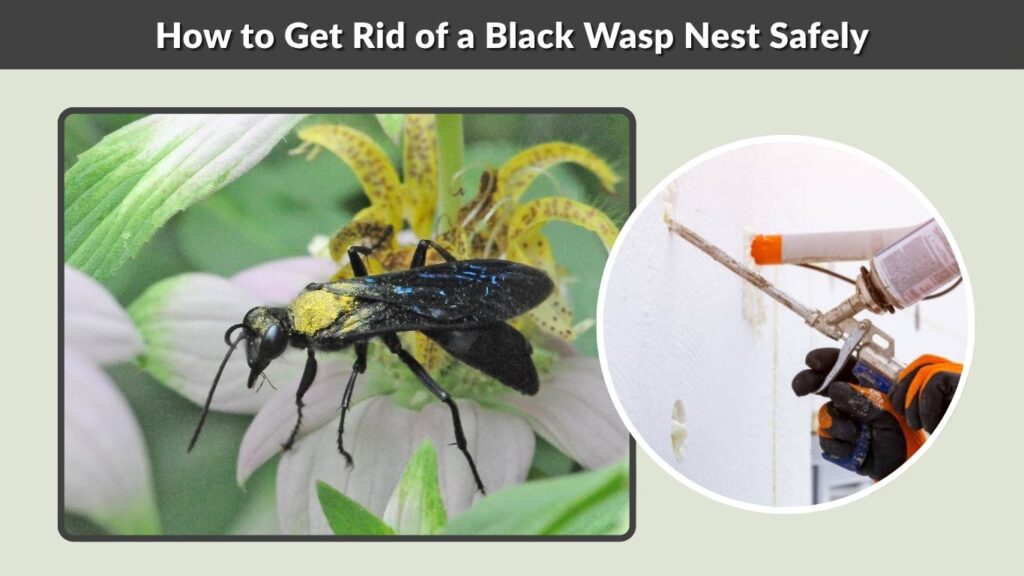
Removing a black wasp nest is not always necessary. Many solitary wasps contribute to pollination and naturally control insect populations without posing a significant threat. However, nests near entrances, playgrounds, or heavily used outdoor spaces may require management. The safest approach depends on correct identification, nest location, and whether the insects are actively defending the structure.
When Should You Leave a Nest Alone?
A great black wasp nest located away from frequently used areas can usually remain undisturbed.
These wasps do not form large defensive colonies and often provide environmental benefits.
Likewise, inactive nests generally present less immediate concern than occupied ones.
When Is Professional Nest Removal Necessary?
Professional assistance is recommended for large social wasp colonies, difficult-to-access nests, or nests inside walls.
Never seal an opening while wasps are actively using it, because trapped insects may find another exit, potentially into living spaces.
Avoid burning nests, pouring gasoline into burrows, or attempting removal without appropriate identification and protection.
How to Prevent Black Wasps From Nesting
Several preventive measures can reduce unwanted nesting opportunities:
- Seal structural gaps: Repair cracks and openings after confirming they are unoccupied.
- Maintain window screens: Replace damaged screens and inspect surrounding frames.
- Inspect sheltered surfaces: Check roof overhangs and outdoor structures periodically.
- Manage outdoor food waste: Keep garbage containers covered to reduce attraction for scavenging social wasps.
- Monitor recurring activity: Investigate repeated wasp flights before a large social colony develops.
FAQs
Black wasp nests frequently raise questions about their appearance, underground locations, removal, and potential danger. Because different species share similar dark coloration, identifying the actual nesting behavior is especially important. The following answers address common concerns about great black wasps, social black-and-white wasps, and the nests homeowners are most likely to encounter.
1. Do black wasps make nests?
Yes. Black wasps create nests for reproduction. Depending on the species, these may be underground burrows, mud chambers, paper combs, or existing cavities.
2. What does a great black wasp nest look like?
A great black wasp nest typically appears as a small opening in the soil. Underground tunnels connect to chambers containing eggs and food for developing larvae.
3. Are black wasp nests underground?
Some are. Great black wasps commonly nest underground, but black mud daubers, paper wasps, and other dark-colored species may nest aboveground.
4. How do you remove a great black wasp nest?
If the nest poses no immediate danger, leaving it undisturbed is usually preferable. For nests creating a significant safety concern, consult a qualified pest-control professional.
5. Do black wasps reuse their nests?
Nesting habits vary. Great black wasps construct and provision individual burrows, while some solitary species reuse existing cavities. Social wasps such as bald-faced hornets generally establish new colonies and nests each year.
