

Mud dauber wasps are well-known for their long, slender bodies and distinctive mud nests found on walls, ceilings, or under eaves. Unlike social wasps such as yellowjackets or hornets, mud daubers are solitary and non-aggressive. However, like all wasps, they are capable of stinging. But what happens if one stings you? Is it dangerous? What should you do? In this article, we’ll explore what a mud dauber sting feels like, the symptoms you might experience, and how to treat it effectively.
What Is a Mud Dauber Wasp?
Mud daubers are solitary wasps from the families Sphecidae and Crabronidae. They get their name from their habit of building nests from mud. Unlike aggressive wasps that live in colonies, mud daubers work alone and don’t defend their nests unless provoked.
These wasps are beneficial to the environment because they prey on spiders, especially black widows. They are commonly seen around homes, garages, barns, and sheds, where they attach their nests to walls or ceilings. Their long, thread-like waist and sleek body give them a unique and elegant look.
Do Mud Daubers Sting?
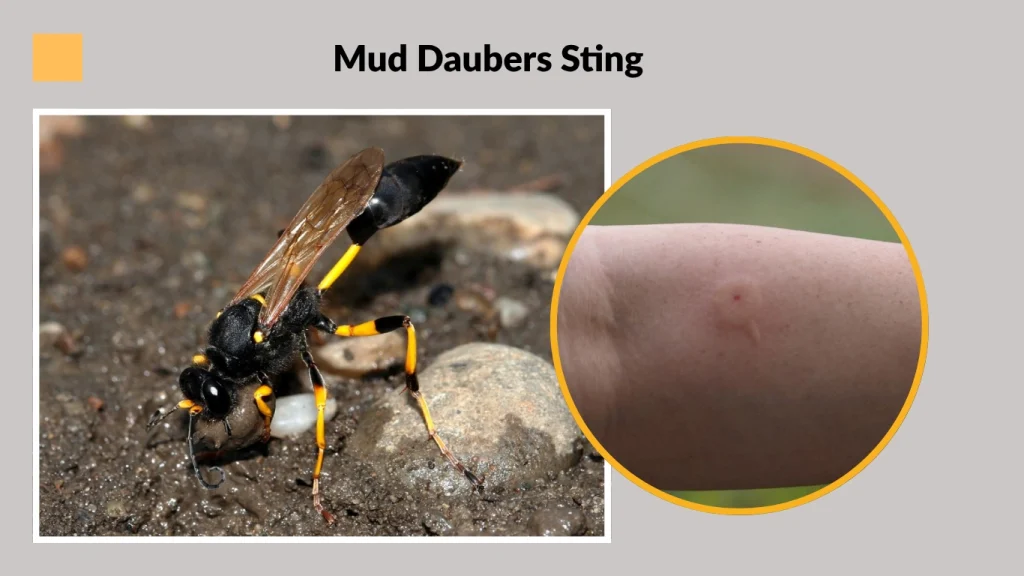
Yes, mud daubers can sting, but it’s extremely rare for them to sting humans. These wasps are non-aggressive and usually avoid confrontation. They use their sting to paralyze spiders, which they store in their mud nests as food for their larvae.
A mud dauber might sting only if:
- It’s trapped or crushed against the skin
- Its nest is disturbed while the female is nearby
- You attempt to handle it
In most cases, they fly away when disturbed and don’t retaliate.
What Happens If a Mud Dauber Stings You?

Sting Sensation and Pain Level
A mud dauber sting is usually mild compared to that of other wasps or bees. Most people describe it as a quick, sharp pain, followed by minor swelling or irritation. The pain may last only a few minutes to an hour, depending on your sensitivity.
If you’re used to bee stings or have been stung by yellowjackets, you’ll likely find the mud dauber’s sting much less painful and easier to manage.
Common Symptoms
Typical symptoms of a mud dauber sting include:
- A small red bump at the sting site
- Mild swelling around the area
- Itching or burning
- Tenderness or soreness
- A visible puncture mark at the center
These symptoms are usually localized and subside within a few hours.
Rare or Allergic Reactions
In very rare cases, some individuals may experience mild allergic reactions such as:
- Headache
- Dizziness
- Widespread swelling
- Mild nausea
Severe reactions like anaphylaxis are extremely uncommon with mud dauber stings but are possible if the person has a known insect sting allergy.
First Aid and Treatment for a Mud Dauber Sting

Immediate Home Remedies
If you’ve been stung by a mud dauber, don’t panic. Here’s what to do:
- Wash the area with soap and water
- This removes venom residue and prevents infection.
- This removes venom residue and prevents infection.
- Apply a cold compress or ice pack
- Helps reduce swelling and numb the pain.
- Helps reduce swelling and numb the pain.
- Use over-the-counter pain relievers
- Ibuprofen or acetaminophen can help ease pain.
- Ibuprofen or acetaminophen can help ease pain.
- Apply antihistamine cream or calamine lotion
- Reduces itching, redness, and swelling.
- Reduces itching, redness, and swelling.
- Avoid scratching the area
- Scratching can lead to irritation or infection.
- Scratching can lead to irritation or infection.
Most stings resolve on their own within a few hours to a day.
Medical Treatment (If Necessary)
You should seek medical attention if:
- Swelling spreads significantly beyond the sting site
- You experience shortness of breath or chest tightness
- There’s pus, extreme pain, or signs of infection
- You have a history of allergic reactions to insect stings
Doctors may prescribe antihistamines, corticosteroids, or in rare cases, epinephrine for severe reactions.
How to Prevent Mud Dauber Stings
While mud daubers are unlikely to sting, you can still take precautions, especially around nesting sites.
- Do not swat at them if they fly near you
- Avoid touching or disturbing nests, especially during the day when the female may be active
- Seal holes or crevices in walls, eaves, or attics where nests could be built
- Wear gloves and sleeves when cleaning old sheds or barns
- Use a broom or long object to remove nests after confirming no wasps are inside
For active nests near living spaces, consider professional pest control if removal is necessary.
Are Mud Dauber Stings Dangerous?

For most people, mud dauber stings are not dangerous. The venom is mild, and reactions are typically limited to slight irritation. They do not inject large amounts of venom like yellowjackets, and they don’t attack in swarms.
However, people with insect sting allergies should be cautious around all wasp species, including mud daubers. Even though the risk is low, it’s always wise to be prepared.
When to Seek Medical Attention
Contact a doctor or go to the emergency room if:
- You develop hives, difficulty breathing, or dizziness
- Swelling spreads to the face, tongue, or throat
- You feel faint, disoriented, or experience chest pain
- The sting site shows signs of infection (pus, heat, increasing redness)
These symptoms may indicate a severe allergic reaction, though they are extremely rare for this wasp.
Final Thoughts
Mud dauber wasps may look intimidating, but they are calm, beneficial insects that rarely sting. If you do happen to be stung, the effects are usually minor and easily treated with basic first aid. Their role in spider population control makes them valuable residents in gardens and around homes. By learning to recognize their behavior and nests, you can safely coexist with these helpful insects.
