
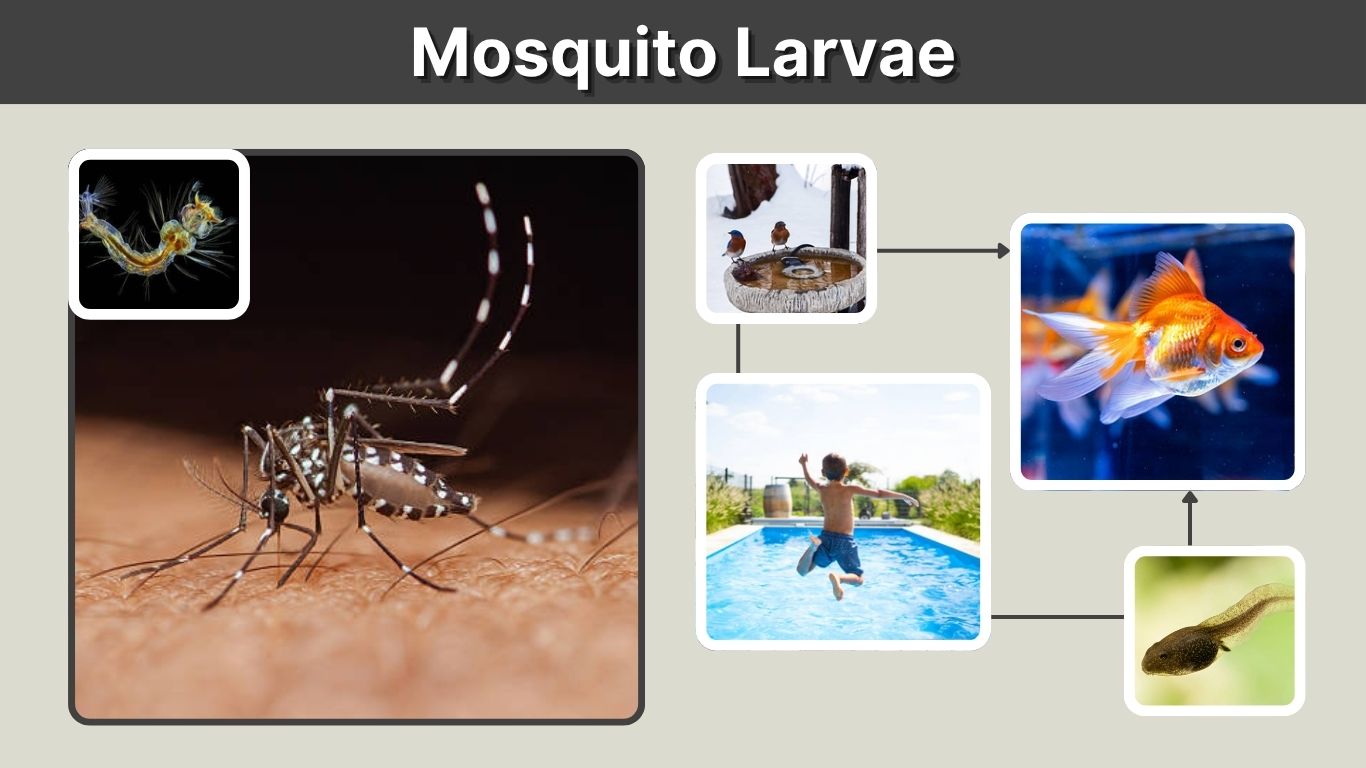
Mosquito larvae are the immature aquatic stage of mosquitoes and are commonly found in standing or slow-moving water. Identifying and removing them early can significantly reduce the number of adult mosquitoes around your home, garden, pond, or swimming pool. These tiny “wigglers” may appear in buckets, birdbaths, pet water bowls, gutters, and other water-holding containers. This guide explains what mosquito larvae look like, what they eat, where they live, how to kill mosquito larvae safely, and how to prevent them from returning.
What Are Mosquito Larvae?
Mosquito larvae develop after mosquito eggs hatch in or near water. They spend this stage feeding and growing before becoming pupae and eventually emerging as adult mosquitoes. Most larvae depend on water for survival, which is why eliminating standing water is one of the simplest ways to interrupt the mosquito life cycle around homes and outdoor spaces.
Mosquito Larvae Life Cycle
A mosquito begins as an egg, develops into a larva, then changes into a pupa before reaching adulthood. The larval stage can progress quickly when temperatures and environmental conditions are favorable.
Larvae generally molt several times as they grow. After the final larval stage, they transform into comma-shaped pupae. Adult mosquitoes later emerge from the surface of the water.
How long the process takes varies according to mosquito species, temperature, food availability, and water conditions. Warm weather can accelerate development considerably.
Can Mosquito Larvae Survive Out of Water?
Mosquito larvae are aquatic and normally require water to complete their development. Removing them from water usually prevents them from surviving for long.
However, simply scooping larvae out and leaving the breeding container full of water is not enough. More eggs may hatch afterward. Emptying the container, cleaning it, and preventing water from accumulating again provides much more effective long-term control.
What Do Mosquito Larvae Look Like?
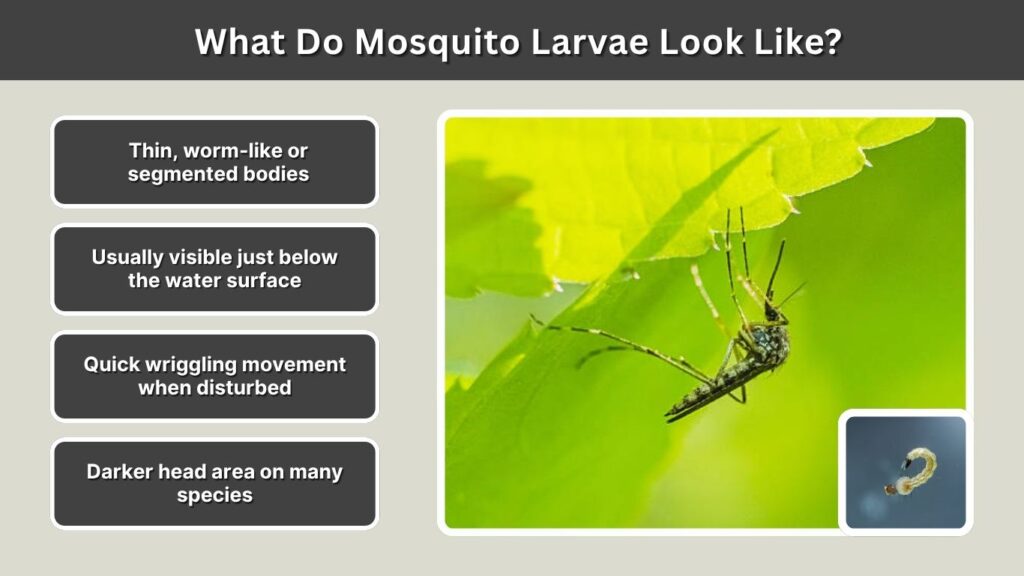
Mosquito larvae are tiny, elongated organisms that move actively through water. They are commonly called “wigglers” because of their distinctive twisting or wriggling motion. Their appearance can initially cause confusion with other aquatic organisms, particularly when they are observed in ponds, containers, pools, or pet water bowls.
Key Signs of Mosquito Larvae
- Thin, worm-like or segmented bodies
- Usually visible just below the water surface
- Quick wriggling movement when disturbed
- Frequent movement between deeper water and the surface
- Darker head area on many species
- Often present in groups in stagnant water
- Usually much smaller and thinner than tadpoles
What Do Mosquito Larvae Look Like in Water?
Many mosquito larvae hang close to the surface because they need access to air. Some species position their bodies at an angle beneath the surface, while others lie more parallel to it.
If the water is disturbed, they often rapidly wriggle downward before returning toward the surface.
Color varies. Larvae may appear translucent, brownish, gray, dark, or occasionally reddish depending on species, developmental stage, water conditions, and what can be seen through their bodies.
Where Are Mosquito Larvae Found?
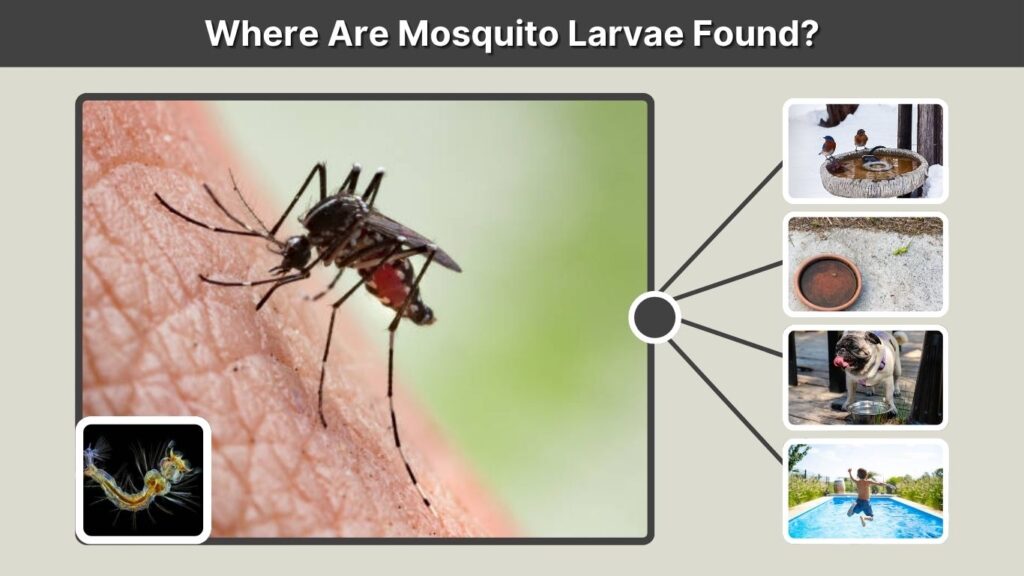
Female mosquitoes generally look for suitable water sources in which to lay eggs or places that will later flood. Even small amounts of standing water can become breeding sites. This means mosquito larvae are not limited to ponds or swamps; they may develop surprisingly close to homes when water remains undisturbed for several days.
Common Mosquito Larvae Habitats
- Buckets and unused containers
- Birdbaths
- Rain barrels
- Clogged gutters
- Flowerpot saucers
- Old tires
- Tarps holding rainwater
- Pet water bowls
- Children’s pools
- Swimming pools that are poorly maintained
- Decorative ponds
- Fish tanks or outdoor aquariums
- Drainage areas with stagnant water
Mosquito Larvae in Pools
Finding mosquito larvae in a swimming pool often suggests that the water has remained sufficiently calm or inadequately maintained for mosquitoes to reproduce.
Normal pool circulation, filtration, sanitation, and routine maintenance make a pool less suitable for mosquitoes. Pay particular attention to abandoned pools, covers containing rainwater, and small pools that are not regularly filtered.
Rather than treating only the visible larvae, correct the conditions that allowed mosquitoes to breed.
Mosquito Larvae in Fish Tanks and Water Bowls
Outdoor aquariums, fish tanks, and pet water containers can attract mosquitoes when water remains accessible and relatively still.
Pet bowls should be emptied, scrubbed, and refilled regularly. Aquariums require more careful management because treatments that kill mosquito larvae may also harm fish, invertebrates, plants, or beneficial microorganisms.
Never add household pesticides, bleach, or other chemicals to an inhabited aquarium without confirming that the treatment is specifically appropriate for that system.
How to Kill Mosquito Larvae in Water
The best control method depends on where the larvae are living. A disposable bucket of rainwater should be handled differently from a pond containing wildlife or an aquarium containing fish. Whenever practical, removing the breeding water completely is simpler and more reliable than repeatedly treating larvae after they appear.
Effective Mosquito Larvae Control Methods
- Empty unnecessary standing water
- Scrub containers before refilling them
- Keep swimming pools filtered and properly maintained
- Clean gutters so rainwater can drain
- Cover rain barrels with fine screening
- Replace water in birdbaths frequently
- Use mosquito-control products containing Bacillus thuringiensis israelensis (Bti) according to their label
- Improve water movement in suitable ornamental ponds
- Remove debris that creates stagnant pockets of water
Does Bleach Kill Mosquito Larvae?
Bleach can kill many small aquatic organisms, including mosquito larvae, but that does not make it the best routine mosquito-control method.
Adding bleach to ponds, animal drinking water, aquariums, or natural water features can create unnecessary risks. For household containers, emptying and cleaning the container is usually preferable.
For water that cannot be removed, use a control product specifically labeled for mosquito larvae and follow its instructions carefully.
Does Chlorine Kill Mosquito Larvae?
Proper swimming-pool sanitation combined with filtration and circulation makes pools much less favorable for mosquito development. However, simply adding extra chlorine after seeing larvae is not a substitute for correcting poor pool maintenance.
Test the water and restore the pool to appropriate operating conditions rather than randomly increasing chemical concentrations.
What Eats Mosquito Larvae?
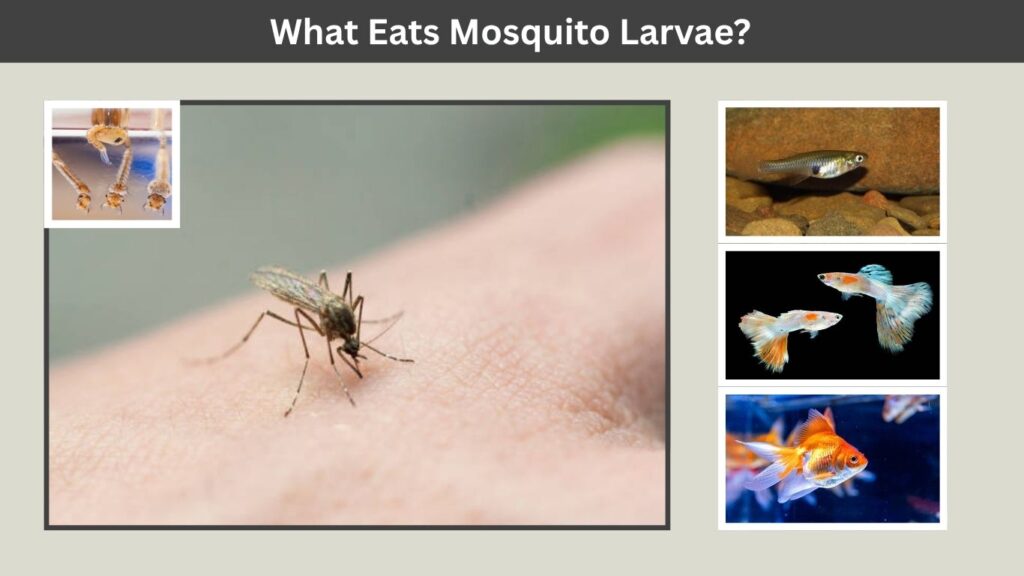
Mosquito larvae form part of aquatic food webs and are eaten by numerous predators. Biological control can therefore contribute to mosquito management in ponds and other suitable habitats. Predators alone, however, may not eliminate every larva, particularly when mosquitoes have access to many small containers where fish and other aquatic predators cannot reach them.
Animals That May Eat Mosquito Larvae
- Mosquitofish
- Guppies
- Minnows
- Goldfish
- Koi
- Certain other small fish
- Aquatic insect predators
- Some tadpoles
- Some frogs and other aquatic animals
- Waterfowl such as ducks
Do Goldfish Eat Mosquito Larvae?
Goldfish can consume mosquito larvae when they encounter them. This can help reduce larvae in suitable ponds or outdoor systems, although fish should never be introduced solely for mosquito control without considering their care requirements and ecological effects.
Fish also cannot solve mosquito problems occurring in gutters, buckets, tires, and other isolated water containers.
Do Tadpoles Eat Mosquito Larvae?
Some tadpoles may consume mosquito larvae, but feeding behavior varies widely among species and developmental stages. Many tadpoles primarily feed on algae, plant material, microorganisms, or organic matter.
Therefore, tadpoles should not automatically be considered reliable mosquito-control animals.
Mosquito Larvae vs Tadpoles: How to Tell the Difference
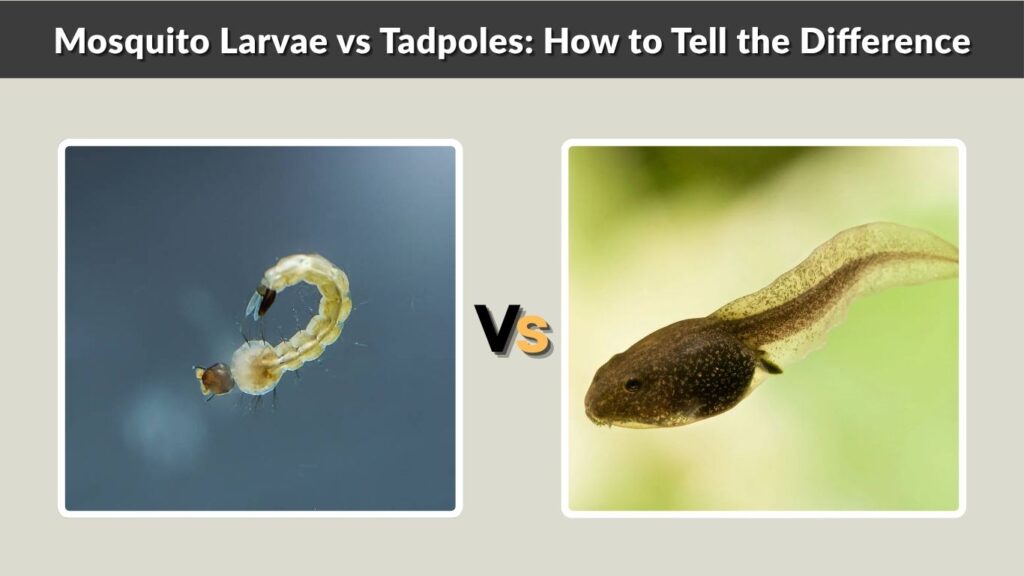
Tadpoles and mosquito larvae may occupy the same water, but they usually look and move very differently. Correct identification matters because tadpoles develop into frogs or toads and should not be destroyed simply because they are mistaken for mosquito larvae.
Body Shape and Movement
Mosquito larvae are typically small, narrow, and highly flexible. Their characteristic wriggling movement is one of the easiest identification clues. They frequently approach the water surface and quickly move downward when disturbed.
Tadpoles usually have a larger rounded head or body connected to a noticeable tail. Their movement resembles swimming rather than the sharp wriggling commonly seen in mosquito larvae.
Very young tadpoles can still be confusing, so observe their overall shape and movement before attempting control.
How to Prevent Mosquito Larvae Around Your Home
Preventing egg-laying and eliminating breeding water is easier than dealing with large numbers of larvae and adult mosquitoes later. A quick property inspection every few days during mosquito season can reveal surprisingly small water sources. Focus especially on containers that collect rainfall because mosquitoes may need only a small amount of water to reproduce.
Long-Term Prevention
Walk around your property after rain and check buckets, toys, plant saucers, gutters, covers, tires, and outdoor equipment. Empty water wherever possible and store unused containers upside down.
Keep birdbaths and pet bowls clean with regular water changes. Maintain pools and spas correctly, and cover rainwater-storage systems securely.
For ponds where standing water is intentional, improve circulation where appropriate and consider labeled biological mosquito-control products when needed.
FAQs
Mosquito larvae generate many questions because they can appear almost anywhere water remains standing. Identifying them correctly and choosing control methods appropriate to the water source are the most important steps. The following answers cover common concerns about survival, appearance, food, swimming pools, and the speed at which larvae become adult mosquitoes.
1. What do mosquito larvae eat?
Mosquito larvae generally feed on microorganisms, algae, bacteria, and small particles of organic material suspended in water. Their exact diet varies by species.
2. How long does it take mosquito larvae to become mosquitoes?
Development time varies with species and environmental conditions. During warm weather, mosquitoes can sometimes progress through their aquatic stages surprisingly quickly, which is why standing water should be addressed promptly.
3. Are mosquito larvae dangerous?
Mosquito larvae do not bite people. The main concern is that surviving larvae can eventually become adult mosquitoes, some species of which can bite and potentially transmit disease.
4. What kills mosquito larvae naturally?
Removing their water source is the simplest nonchemical method. In permanent aquatic habitats, natural predators and biological larvicides such as properly used Bti can help reduce populations.
5. How do I get rid of mosquito larvae permanently?
There is no one-time treatment that permanently prevents mosquitoes. Long-term control depends on repeatedly removing breeding sites, cleaning water containers, maintaining pools, improving drainage, and preventing water from standing long enough for mosquitoes to complete their aquatic development.
