
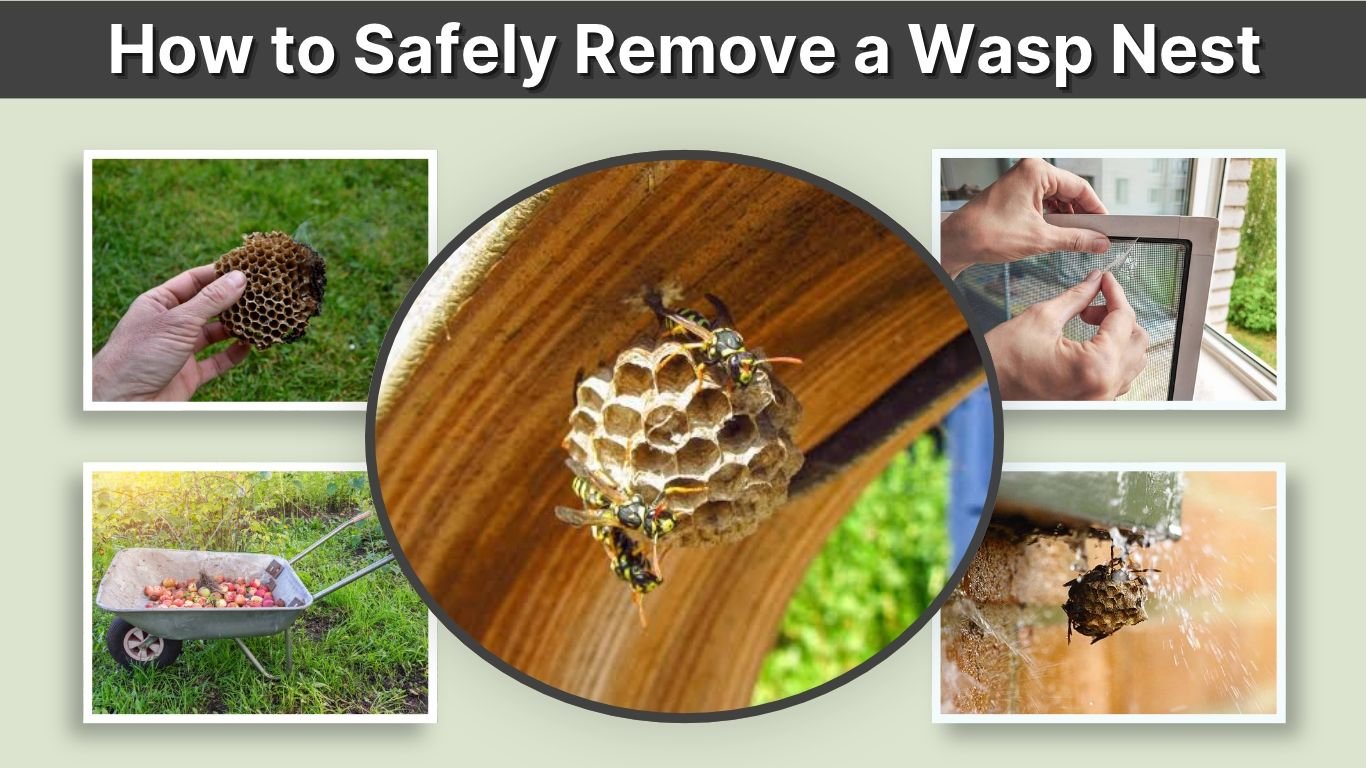
Finding a wasp nest around your home can be frightening, especially when it appears near doors, windows, patios, or children’s play areas. Knowing how to safely remove a wasp nest is important because disturbing an active colony can lead to multiple painful stings. Some nests can be removed after they become abandoned, while others require professional pest control. Before taking action, consider the nest’s size, location, and activity level. This guide explains safe removal methods, common mistakes, protective measures, and ways to prevent wasps from nesting again.
Is It Safe to Remove a Wasp Nest Yourself?
Removing a wasp nest yourself is not always safe, particularly when the colony is active. Wasps may become defensive when someone approaches or disturbs their nesting area. Small, abandoned nests are generally easier to handle, but large colonies require additional precautions. Before attempting removal, determine whether the nest presents an immediate threat to people or pets.
Safety Checks Before Removing a Wasp Nest
- Identify the wasp species: Determine whether the nest belongs to paper wasps, yellowjackets, hornets, or mud daubers.
- Check colony activity: Observe the nest from a safe distance for insects entering or leaving.
- Assess the nest location: Avoid nests inside walls, underground, or high above the ground.
- Keep people away: Restrict access for children, pets, and visitors.
- Consider sting allergies: Anyone with a history of severe allergic reactions should avoid approaching nests.
- Evaluate removal needs: Consider leaving nests undisturbed when they are far from frequently used areas.
How to Know If a Wasp Nest Is Empty
An abandoned nest typically shows no regular wasp movement. However, inactivity during cold weather or nighttime does not necessarily mean the colony has disappeared.
Observe from a safe distance on multiple suitable days. If activity remains uncertain, contact a pest control specialist.
How to Safely Remove a Small, Empty Wasp Nest
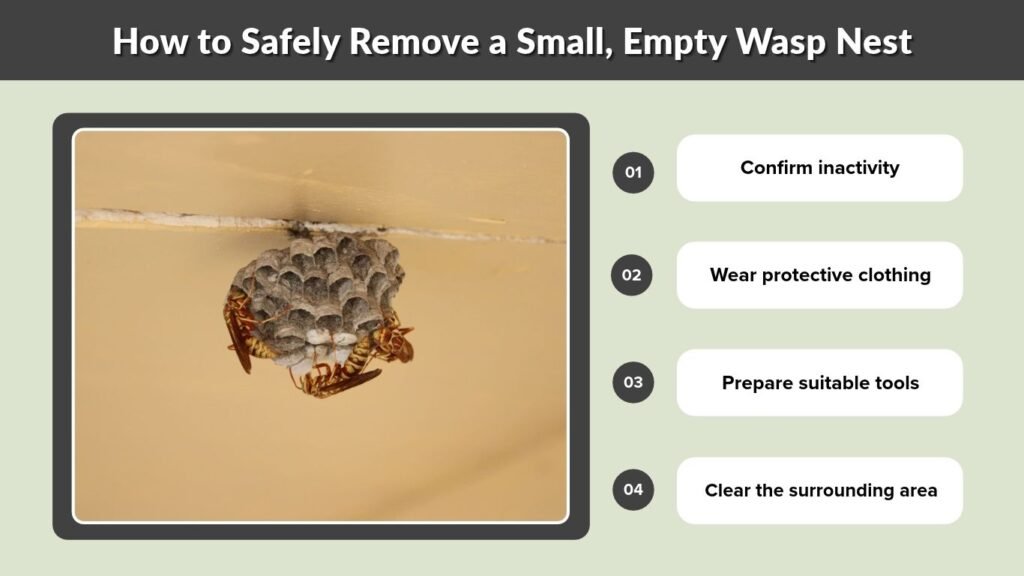
The safest way to remove a wasp nest depends on whether it is occupied. Small, abandoned nests that are accessible from the ground may be removed with basic precautions. Active nests should generally be handled by professionals, especially when the species is unknown. Never assume that protective clothing alone will prevent wasp stings.
Step-by-Step Removal Instructions
- Confirm inactivity: Check that the nest is abandoned before approaching.
- Wear protective clothing: Choose long sleeves, gloves, closed shoes, and eye protection.
- Prepare suitable tools: Use a scraper or small hand tool appropriate for the mounting surface.
- Clear the surrounding area: Make sure children and pets are safely away.
- Detach the empty nest: Carefully separate the structure without damaging the wall or supporting material.
- Dispose of the material: Place the nest in a bag and discard it appropriately.
- Clean the surface: Remove remaining debris and check for openings that may attract future colonies.
What If Wasps Appear During Removal?
If wasps emerge, stop immediately and move away from the area. Do not swat at them or attempt to finish removing the nest.
Seek professional assistance before returning to the structure.
How to Safely Remove Different Types of Wasp Nests
Different wasp species build nests using paper, mud, or underground cavities. Each nest type presents different challenges depending on its size, location, and occupants. Understanding these differences is essential before handling any structure. While solitary wasps generally present a lower sting risk, social wasps can defend their colonies aggressively when threatened.
How to Safely Remove a Paper Wasp Nest
Paper wasps create exposed, umbrella-shaped nests beneath roof eaves, decks, and outdoor structures. These nests contain visible hexagonal cells.
An abandoned paper nest can usually be removed carefully when accessible. Active colonies should be professionally assessed if removal is necessary.
How to Safely Remove a Mud Dauber Nest
Mud daubers construct hardened mud nests on walls, garages, and sheltered surfaces. These solitary wasps rarely defend their nests.
After confirming that the nest is no longer occupied, gently scrape away the mud using a putty knife. Clean the remaining residue without damaging the surface.
How to Handle a Large Wasp Nest
Large nests may contain hundreds of workers capable of defending their colony. Attempting to knock down an occupied nest can cause multiple stings.
Keep the surrounding area clear and contact a licensed pest control professional instead of attempting removal.
What About Underground Wasp Nests?
Yellowjackets commonly establish colonies in underground cavities. Their entrances may appear as small holes in lawns or gardens.
Avoid digging, flooding, or blocking these openings. Professional treatment is recommended because the colony’s size and exact location are difficult to assess.
Mistakes to Avoid During Wasp Nest Removal
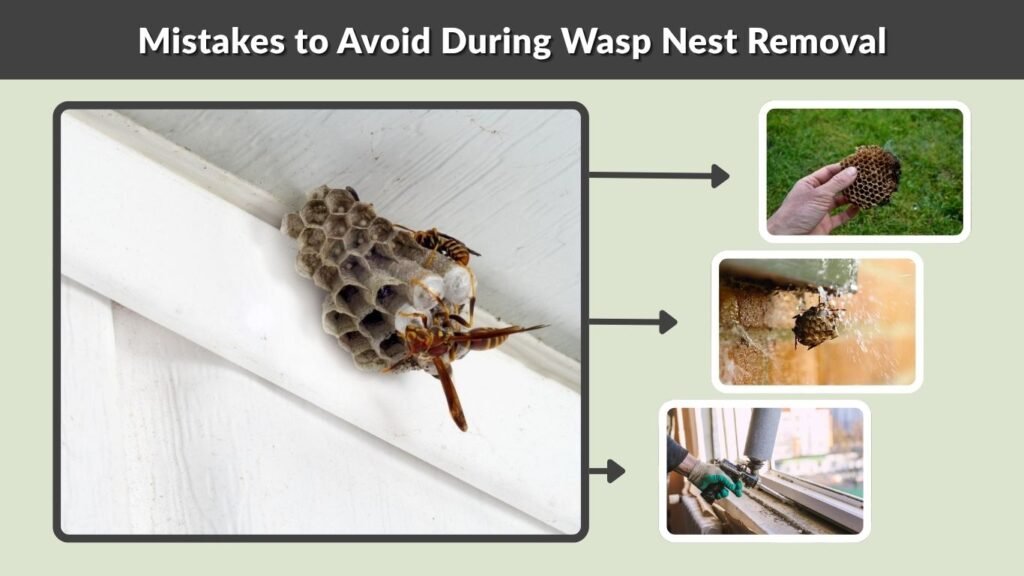
Unsafe removal methods can increase the risk of stings, fires, and property damage. Some homemade solutions may appear convenient but can provoke defensive wasps without effectively controlling the colony. Understanding what not to do is just as important as selecting a safe removal method. Avoid disturbing active nests unnecessarily.
Common Wasp Nest Removal Mistakes
- Burning the nest: Fire can spread to nearby structures or vegetation.
- Using gasoline: Flammable liquids create serious safety hazards.
- Spraying water: Water may disturb wasps without controlling the colony.
- Knocking down active nests: Striking a nest can trigger defensive attacks.
- Sealing active wall entrances: Trapped insects may enter indoor living spaces.
- Using unstable ladders: Elevated removal creates additional falling hazards.
When Should You Call a Wasp Removal Professional?
Professional assistance is recommended when a wasp nest is active, large, concealed, or located near frequently used spaces. Pest control specialists can identify the insects, evaluate the colony, and select appropriate treatment methods. Their equipment and experience reduce the risks associated with disturbing defensive wasps. Difficult nesting situations should not be treated as routine household cleaning tasks.
Nests Inside Walls and Roof Spaces
Colonies inside structural cavities are difficult to locate and treat. Blocking their exterior entrances can cause wasps to find alternative exits into the home.
A qualified professional can assess the nesting area and determine an appropriate removal strategy.
When Is the Best Time for Removal?
Early spring is a useful time to identify developing colonies before they become larger. Professional treatments may be scheduled during periods of reduced wasp activity.
In colder regions, abandoned nests are often easier to remove during winter, once inactivity has been confirmed.
What If You Get Stung?
Move away from the nest immediately. Wash the sting area and apply a cold compress to reduce discomfort.
Seek emergency medical assistance for breathing difficulty, throat swelling, faintness, or other signs of a severe allergic reaction. Use prescribed epinephrine promptly if indicated.
How to Prevent Wasps From Building Nests Again
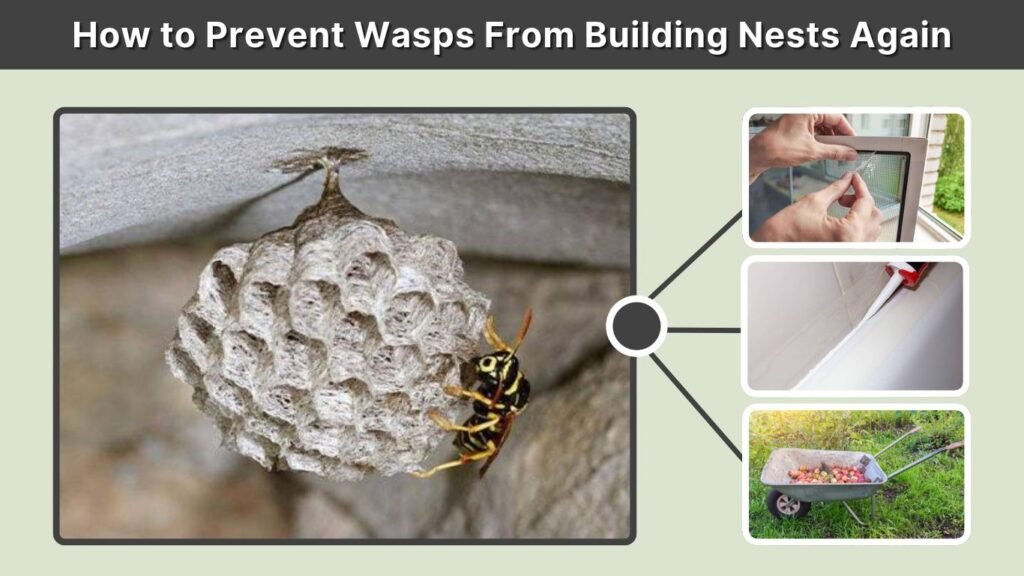
Preventing future wasp nests involves regular property inspections and limiting suitable nesting locations. Wasps often choose sheltered spaces protected from wind and rain. Food waste and exposed sugary drinks may also attract foraging wasps. Although complete prevention is difficult, simple maintenance practices can reduce nesting opportunities around your property.
Effective Wasp Nest Prevention Tips
- Inspect porches, sheds, garages, and roof eaves regularly.
- Repair damaged window screens and exterior vents.
- Seal structural gaps after confirming they contain no active nests.
- Keep outdoor garbage containers tightly closed.
- Clean up spilled drinks, food scraps, and fallen fruit.
- Monitor sheltered outdoor areas during spring and summer.
FAQs
1. Can I safely remove a wasp nest at night?
Wasps are generally less active at night, but they can still sting when disturbed. Darkness also increases the risk of accidents. Professional treatment is the safest option for active colonies, regardless of the time of day.
2. How do I remove a wasp nest without getting stung?
There is no guaranteed sting-free method for removing an active nest. The safest approach is to avoid disturbing the colony and hire a qualified professional. Small, confirmed abandoned nests are generally safer to handle.
3. Can I remove a wasp nest without killing the wasps?
Yes, leaving a nest undisturbed is often the safest nonlethal option when it poses little risk. In colder climates, many social wasp colonies naturally disappear during winter. Professional relocation may be possible in limited circumstances.
4. Is removing a wasp nest with water safe?
No. Spraying an active nest with water can disturb the colony and trigger defensive behavior. Water may also damage nearby surfaces without eliminating the nest. Avoid flooding underground colonies or directing high-pressure water at occupied nests.
5. Will wasps return after I remove their nest?
Most social wasps do not reuse old nests, but new colonies may develop nearby. Removing an abandoned nest does not guarantee permanent prevention. Regular inspections, sealing unoccupied openings, and reducing exposed food sources can discourage future nesting.
