
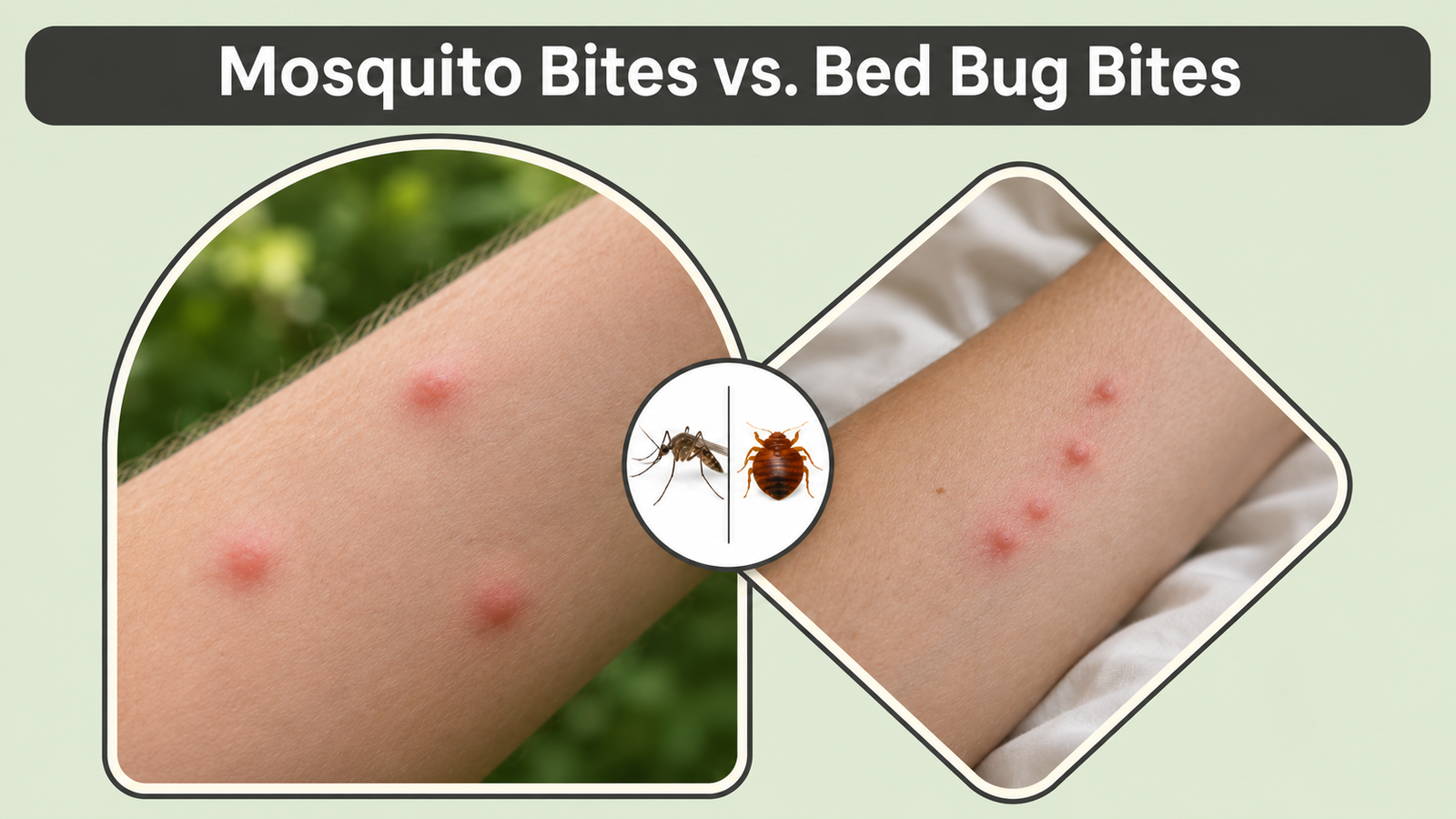
An itchy red bump can come from a mosquito or a bed bug, and the marks can look surprisingly similar. Timing and context offer useful clues: mosquito bites often become noticeable within minutes, while bed bug reactions may appear later. A cluster or line of marks can raise suspicion of bed bugs, but it does not prove their presence. This guide compares the appearance, timing, location, symptoms, and practical signs to check so you can decide what to do next.
Mosquito Bites vs. Bed Bug Bites: Main Differences
Both insects feed on blood, and both can leave itchy, raised marks. However, they feed in different settings and may cause reactions on different schedules. The comparison below can help you narrow down what may be happening, but a skin reaction alone cannot reliably identify the insect.
| Clue | Mosquito bites | Bed bug bites |
|---|---|---|
| When marks appear | Often within minutes; some reactions develop later | May take one or more days to appear, and sometimes longer |
| Common pattern | One or more scattered bumps | Often clustered or arranged in a line, but not always |
| Typical setting | Often after being outdoors or near open windows | Often noticed after sleeping in an infested room |
| Common locations | Any exposed skin | Skin exposed during sleep, such as the face, neck, arms, or hands |
| Best way to confirm | Consider mosquito exposure and look for mosquitoes nearby | Look for bed bugs and other signs around the bed |
What Do the Bites Look Like?
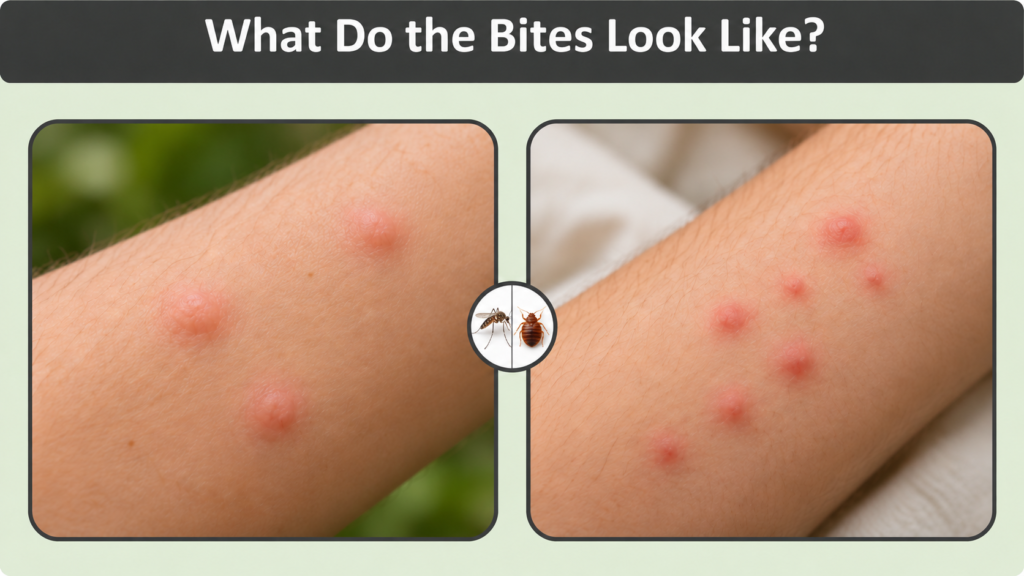
Mosquito and bed bug marks may both be red, swollen, and itchy. Their appearance varies by person, so a photo or bite pattern cannot provide a definite diagnosis. Look at the marks alongside when they appeared and whether there are signs of insects nearby.
Mosquito bite appearance
A mosquito bite commonly appears as a puffy, itchy bump. It may show up within minutes after the bite, though some people notice a hard, reddish-brown bump later. A bite may also blister or leave a darker spot, depending on the person’s reaction and skin tone.
Mosquito bites may be isolated or scattered across several exposed areas. Their pattern depends on where a person was bitten and how many mosquitoes were present. Several bumps do not automatically mean bed bugs, particularly after time outdoors, near standing water, or in a room without screens.
Bed bug bite appearance
Bed bug bites may look like small, swollen, itchy marks. Some people show no visible reaction, while others develop more noticeable irritation or swelling. The marks can appear in a line or cluster, but they may also be scattered. Because they can resemble mosquito and flea bites, their shape alone is not proof of bed bugs.
A person may not notice a bed bug bite as it happens. Bed bugs feed while people sleep, and their bite marks can take time to develop. Reactions differ even among people sleeping in the same room, so one person may have visible bumps while another has none.
Timing and Location: Useful Clues
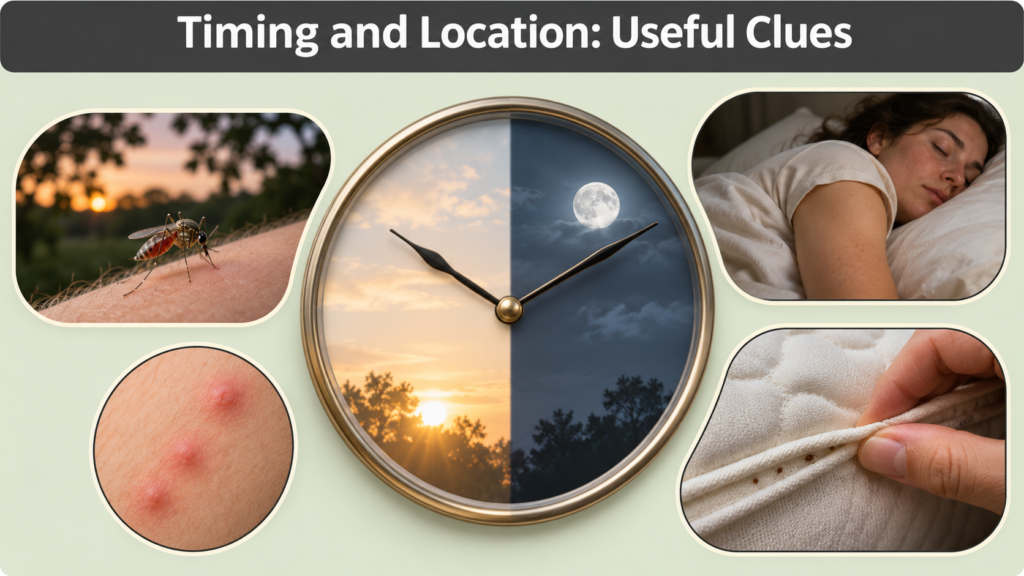
When a bump appears and where you find it can help you assess the situation. These clues are not conclusive: a mosquito can bite indoors, and bed bug marks do not always appear in a familiar pattern. Use timing and location as part of a broader check.
When the marks appear
Mosquito bites often become noticeable within minutes, as the body reacts to saliva introduced during feeding. A bump may become more itchy or prominent later. Bed bug reactions may be delayed by hours or days, and some people never develop visible marks.
If you wake up with a new itchy area, that timing alone does not identify the insect. Bed bug bites may not become visible until after you wake, while mosquitoes can also bite at night. Repeated marks after sleeping in the same room may justify checking the mattress and bed frame for other evidence.
Where the marks appear
Mosquitoes can bite any exposed skin, whether a person is sitting outdoors or sleeping indoors. Bed bugs also tend to bite uncovered skin, often around the face, neck, arms, and hands. The difference is the setting: bed bugs usually hide close to where people sleep and feed at night.
If marks are concentrated on skin exposed while sleeping and keep appearing after nights in the same bed, inspect the sleeping area. If bumps appear after spending time outside or in a room where mosquitoes are present, mosquito bites may be more likely. Neither pattern confirms the cause by itself.
How to Check for Bed Bugs
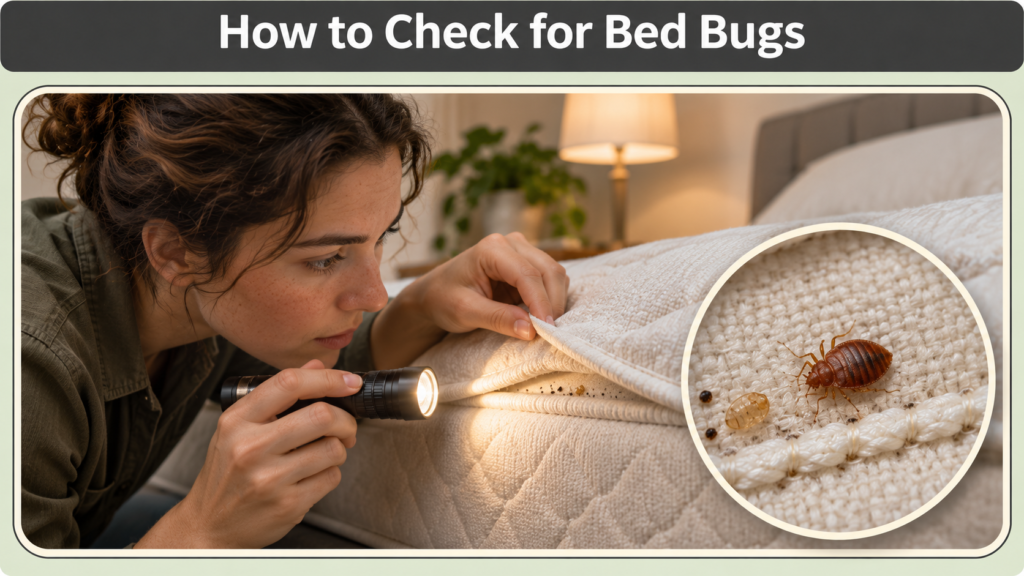
Bite marks are not enough to establish a bed bug infestation. Look for the insects or signs around the places where they hide. Bed bugs are small and flat, and may shelter in mattress seams, bed frames, headboards, furniture cracks, and nearby crevices.
Check carefully for:
- Live bed bugs or their shed skins around mattress seams and the bed frame
- Small rusty or reddish stains on bedding or nearby furniture
- Tiny dark spots on the mattress, sheets, or furniture
- Evidence in cracks, crevices, or around a headboard
A clean home can still have bed bugs; cleanliness does not determine whether they are present. If you find signs, avoid relying on the bites alone to judge how extensive the problem is. A pest professional experienced with bed bugs can help inspect and treat the affected area.
Itching, Health Risks, and Reactions
Both kinds of bites can itch, and scratching either one can damage the skin. Most reactions are mild, but swelling and sensitivity vary. Mosquitoes and bed bugs differ in the health risks associated with the insects themselves.
Bed bugs are not known to spread disease to people. Their bites can cause itching and disturbed sleep; scratching may lead to a secondary skin infection. Rarely, a person may have a more serious allergic reaction.
Mosquitoes can transmit germs, including viruses and parasites, but not every mosquito carries an infection and not every bite makes someone sick. Risk depends on the mosquito, location, and local disease activity. Seek medical advice if you develop concerning symptoms after a bite, especially fever or other signs of illness.
How to Treat Itchy Bites

For either type of bite, wash the area gently with soap and water and try not to scratch. A cold compress may help ease itching and swelling. Over-the-counter anti-itch products or antihistamines may help some people; follow the label and ask a pharmacist or clinician if you are unsure whether a product is suitable.
Bed bug bites usually need only basic symptom care and good skin hygiene. A clinician may recommend additional treatment if the reaction is extensive or severe. Mosquito bites can also be treated with cooling and anti-itch products. Avoid applying products in ways not allowed by their labels, especially on broken skin or young children.
Get medical help if the skin becomes increasingly painful, warm, or swollen, if redness spreads, or if you see pus or a red streak. Seek urgent care for signs of a severe allergic reaction, such as difficulty breathing or swelling of the face or throat. If you develop fever or feel unwell after possible mosquito exposure, contact a healthcare provider.
Preventing Future Bites
Prevention depends on which insect is causing the bites. For mosquitoes, reduce exposure with window screens, long sleeves and pants, and an appropriate insect repellent used according to its label. Remove or manage standing water where mosquitoes may breed. In Bangladesh, mosquitoes can spread disease, so bite prevention is especially useful when local health authorities report mosquito-borne illness.
For suspected bed bugs, inspect the bed and nearby furniture, especially after travel or staying somewhere new. Check luggage and clothing before bringing them into sleeping areas. If you confirm bed bugs, contact a pest-control professional with relevant experience; bed bugs can hide in small spaces and may be difficult to remove completely with casual cleaning.
FAQs
Can you tell mosquito bites from bed bug bites by appearance?
Not reliably. Both can cause itchy, raised bumps, and people react differently. Bed bug bites may appear in clusters or lines, but this pattern is not definitive. Look for insect evidence and consider where and when the marks appeared before drawing a conclusion.
Do bed bug bites always appear in a line?
No. Bed bug bites can appear in lines, clusters, or scattered groups, and some people have no visible reaction. A line of bumps can be a clue, but it cannot confirm bed bugs. Check the mattress, bed frame, and nearby furniture for other signs.
How soon do mosquito bites appear?
Many mosquito bites produce an itchy bump within minutes, although some reactions become more noticeable later. The timing varies between people and bites. If marks appear after sleeping, that does not rule out mosquitoes, particularly if one was in the room.
Do bed bugs spread disease through their bites?
Bed bugs are not known to spread disease to people. Their bites may cause itching, swelling, or sleep disruption, and scratching can sometimes lead to a skin infection. Mosquitoes, by contrast, can transmit germs in some places, though most bites do not necessarily result in illness.
When should I see a doctor about a bite?
Seek medical advice if a bite becomes increasingly painful or swollen, redness spreads, or signs of infection appear. Get urgent help for trouble breathing or swelling of the face or throat. After mosquito exposure, contact a healthcare provider if you develop fever or feel unwell.
