
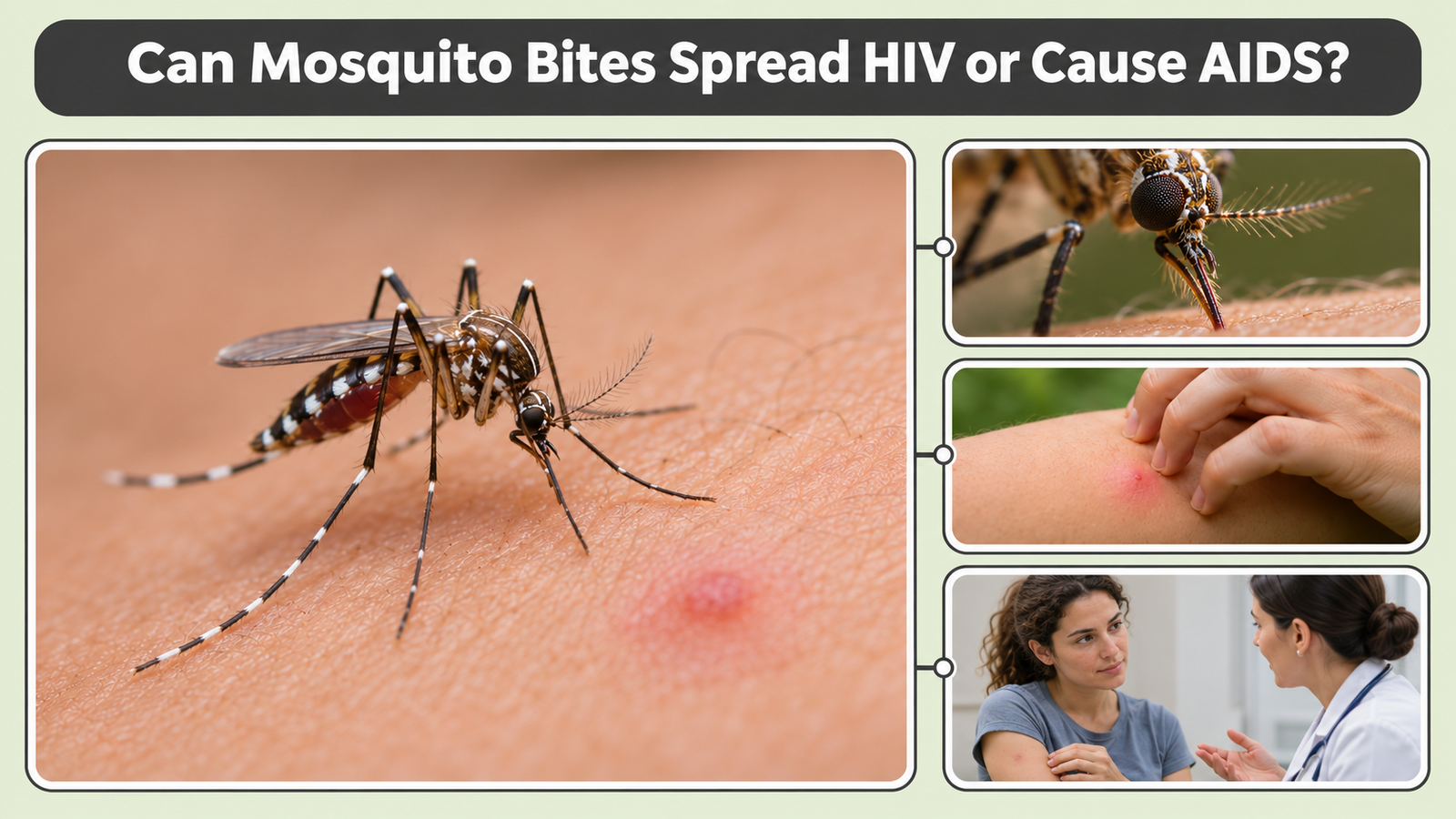
Mosquito bites do not spread HIV, the virus that can cause AIDS. A mosquito cannot pass HIV from one person to another through a bite, even if it has recently fed on someone living with HIV. Mosquitoes can spread certain other infections, but HIV is not one of them. This article explains why mosquito transmission does not happen, how HIV actually spreads, and whether a mosquito bite means you need testing or medical care. Knowing the difference can ease unnecessary worry and help you focus on real prevention.
Can Mosquito Bites Spread HIV?
No. You cannot get HIV from a mosquito bite. HIV.gov lists mosquitoes and other insects among things that do not transmit HIV. A mosquito bite is not considered an HIV exposure, even if the mosquito previously bit someone who has HIV.
A mosquito bite may cause an itchy, red bump or, in some people, a larger local reaction. Those symptoms are not evidence of HIV. HIV cannot be diagnosed by the appearance of a mosquito bite or by how much it swells.
What About “AIDS”?
People sometimes use “AIDS” when they mean HIV. HIV is the virus; AIDS is the most advanced stage of HIV infection. A mosquito cannot transmit HIV, so it cannot cause AIDS either. Effective HIV treatment can also help people living with HIV stay healthy and prevent sexual transmission when they maintain an undetectable viral load.
Why Mosquitoes Do Not Transmit HIV
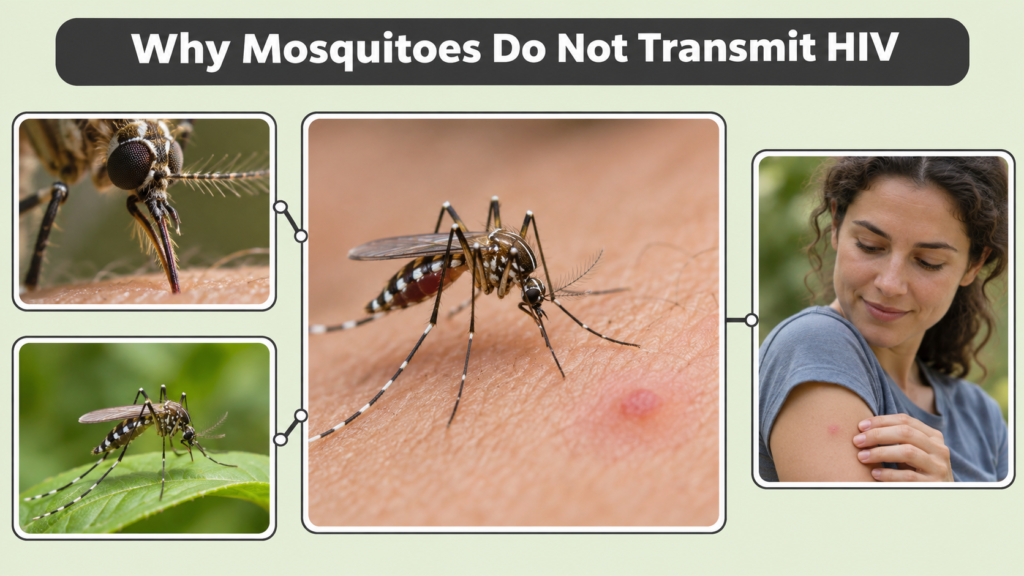
Mosquitoes can carry and spread some germs, but that does not mean they can spread every virus. HIV does not reproduce in a mosquito, and a mosquito bite does not transfer another person’s blood into your body. The insect’s feeding process is different from sharing a contaminated needle or syringe.
A Mosquito Does Not Inject Previous Blood
When a mosquito feeds, it draws blood from a person through one part of its mouthparts. It releases saliva through a separate channel to help it feed. The blood meal is processed inside the mosquito; it is not stored in a syringe-like mouth and injected into the next person.
Mosquitoes can spread certain pathogens through their saliva, but HIV does not work this way. The CDC explains that HIV is not transmitted through mosquito saliva or mosquito bites.
HIV Cannot Multiply Inside a Mosquito
HIV needs specific human cells to reproduce. It cannot multiply inside a mosquito and then build up to a level that the insect could transmit. HIV.gov also explains that HIV transmission requires certain body fluids from a person with HIV to reach another person’s bloodstream or vulnerable tissue. An ordinary mosquito bite does not create that kind of exposure.
How HIV Actually Spreads
HIV spreads through specific body fluids from a person who has HIV. For transmission to occur, the virus in those fluids must reach another person’s bloodstream or certain mucous membranes or damaged tissue. Casual contact, including mosquito bites, does not meet these conditions.
Common routes of HIV transmission include:
- Anal or vaginal sex without effective prevention measures
- Sharing needles, syringes, or other injection equipment
- Transmission during pregnancy, childbirth, or breastfeeding
HIV is not spread through hugging, touching, sharing food or drinks, using the same toilet, or being bitten by mosquitoes. It also does not spread through air, water, sweat, or saliva alone.
Mosquito Bite Symptoms Are Not HIV Symptoms
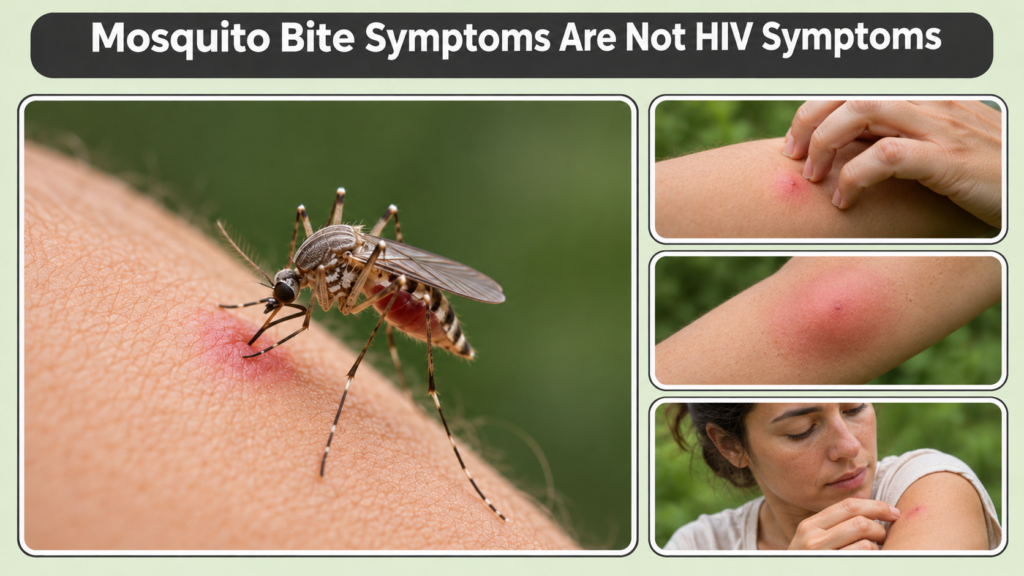
A mosquito bite usually causes a local skin reaction. You may see a small itchy bump, redness, or swelling near the bite. Some people develop a larger area of swelling, but that still does not indicate HIV. HIV symptoms, when they occur, are not specific enough to confirm infection and cannot be diagnosed by looking at a bite.
| Situation | What it may mean |
|---|---|
| Itchy bump where a mosquito bit | Common local bite reaction |
| Larger swelling around the bite | A stronger local reaction; not an HIV sign |
| Fever or feeling unwell after travel | Could have many causes; seek medical advice |
| Concern after a possible sexual or blood exposure | Ask a healthcare professional about testing and prevention |
When to Get Help for a Mosquito Bite
Seek medical advice if the bite becomes increasingly painful, warm, or swollen, if redness spreads, or if you feel unwell. These symptoms may need an assessment for infection or another cause. Get urgent help for severe allergic symptoms such as difficulty breathing or swelling of the throat or tongue.
Those concerns are separate from HIV. A mosquito bite by itself does not require HIV testing or HIV medication.
Do You Need an HIV Test or PEP After a Mosquito Bite?
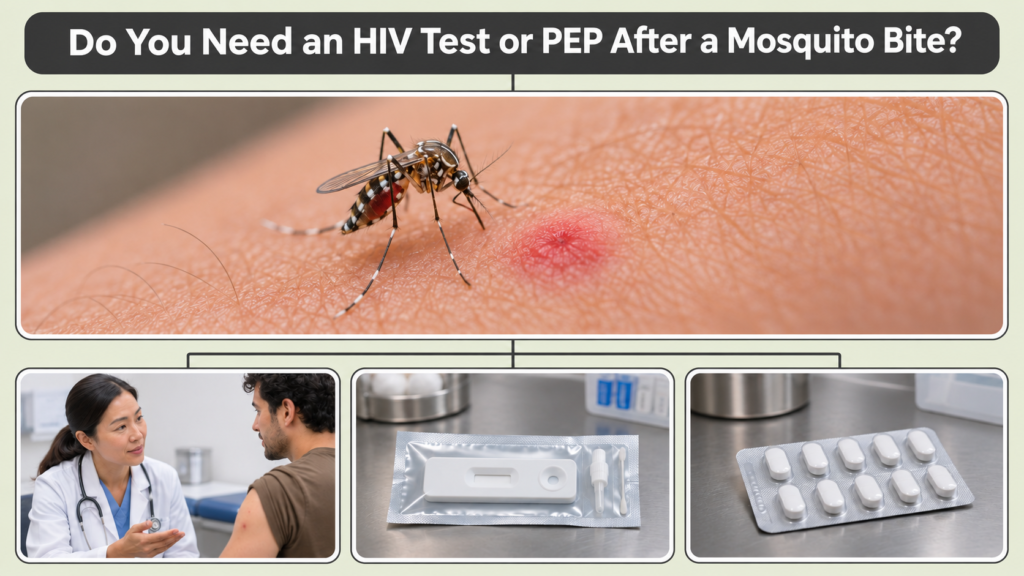
A mosquito bite alone is not a reason to take HIV post-exposure prophylaxis (PEP) or get an HIV test. PEP is for certain possible exposures to HIV, such as a relevant sexual or blood exposure, and must be started within 72 hours. If you had another possible exposure as well as a mosquito bite, contact a healthcare professional or sexual health clinic promptly to discuss it.
When Testing May Be Appropriate
Consider testing if you had a possible HIV exposure through sex, shared injection equipment, or another situation involving potentially infectious blood or body fluids. A clinician or testing service can help determine the right test and timing based on the exposure. Testing is the only way to know your HIV status.
Do not use mosquito bites, bite marks, or flu-like symptoms alone to decide whether you have HIV. If you are worried because of an exposure other than the bite, describe that specific event to a healthcare professional.
Can Mosquitoes Spread Other Diseases?
Yes. Depending on the mosquito species and location, mosquitoes can spread diseases such as dengue, malaria, chikungunya, Zika, and West Nile virus. These infections are different from HIV and have their own transmission patterns. The fact that mosquitoes spread some diseases does not mean they spread HIV.
If you develop fever or other concerning symptoms after mosquito exposure—especially after travel or during a local outbreak—contact a healthcare provider and mention where and when you may have been bitten. They can assess whether testing for a mosquito-borne illness is appropriate.
How to Prevent Mosquito Bites
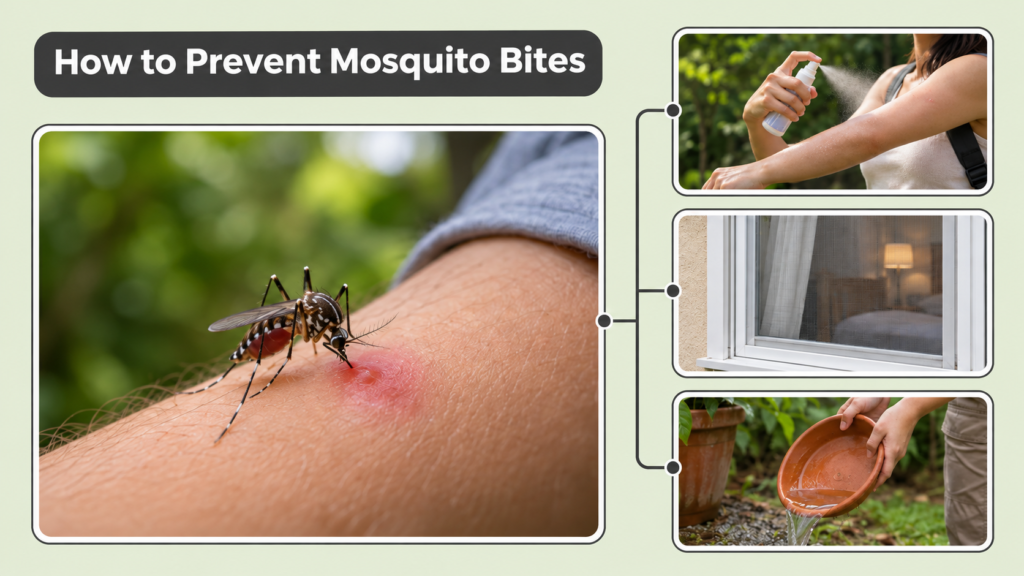
Preventing bites can reduce itching and lower the risk of mosquito-borne illnesses. Use a locally approved insect repellent according to its label, wear loose-fitting clothing that covers your arms and legs, and use window screens or a mosquito net where needed. Remove standing water from containers around your home when possible.
Simple steps include:
- Use insect repellent as directed on exposed skin.
- Wear loose, long-sleeved clothing and long pants.
- Use screens on windows and doors, or sleep under a mosquito net.
- Empty or cover containers that collect standing water.
These measures help protect against mosquito bites generally. They are not needed to prevent HIV transmission, because mosquitoes do not spread HIV.
FAQs
Can a mosquito bite someone with HIV and then infect me?
No. A mosquito cannot transmit HIV from one person to another. HIV does not reproduce inside the mosquito, and the insect does not inject a previous person’s blood when it bites. A bite is not considered an HIV exposure.
Can HIV survive inside a mosquito?
HIV cannot reproduce inside a mosquito. The insect processes its blood meal rather than carrying that blood into the next person. HIV.gov specifically lists mosquitoes and other insects among things that do not transmit HIV.
Do I need an HIV test after a mosquito bite?
No. A mosquito bite alone does not create a risk of HIV transmission, so it does not require an HIV test. If you had a separate possible exposure, such as unprotected sex or shared injection equipment, ask a healthcare professional about testing.
Should I take PEP after a mosquito bite?
No. PEP is not needed after a mosquito bite. It may be recommended after certain possible HIV exposures, but it must be started within 72 hours. Contact a healthcare professional promptly if you are concerned about a separate exposure.
Can mosquitoes cause AIDS?
No. AIDS is the most advanced stage of HIV infection, and mosquitoes do not transmit HIV. Mosquito bites can spread some other diseases, depending on location and species, but HIV and AIDS are not among them.
