
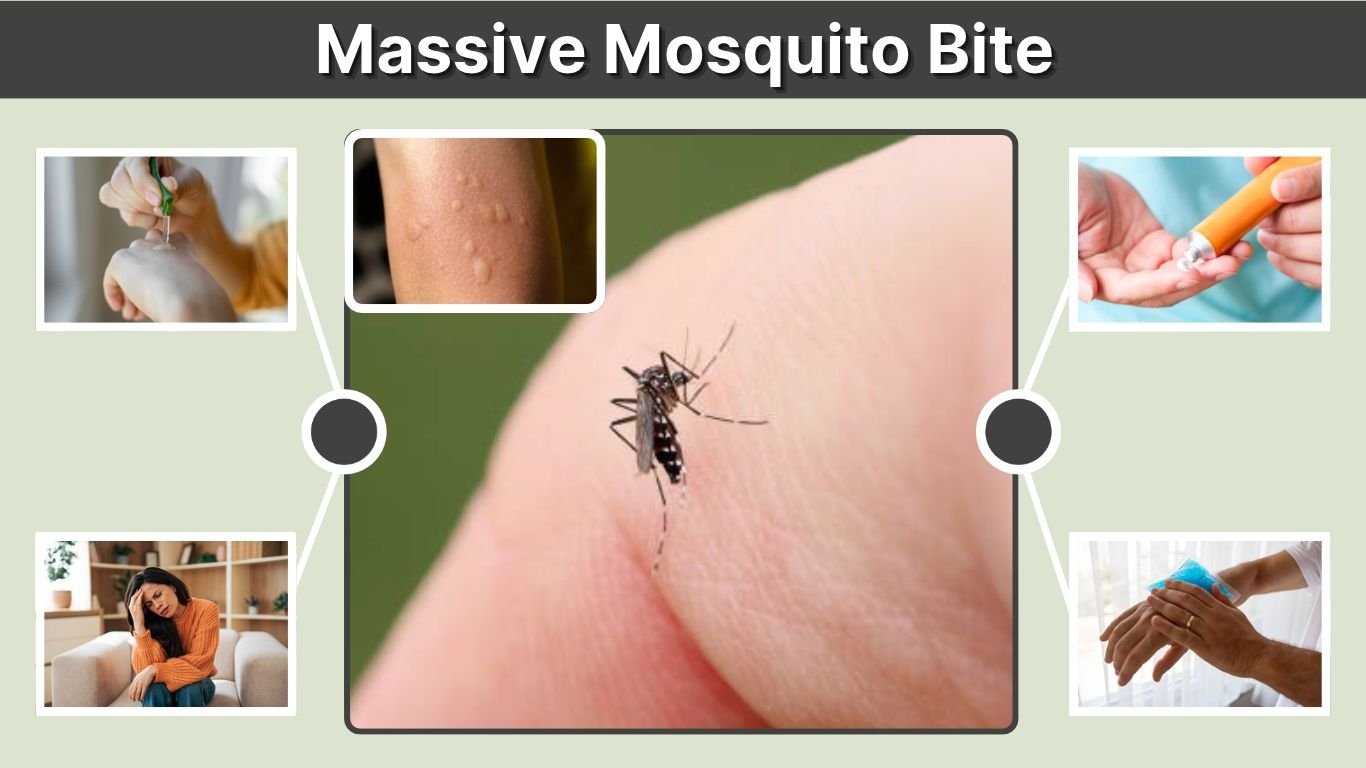
A massive mosquito bite can cause alarming swelling, intense itching, redness, and discomfort that lasts for several days. Unlike an ordinary mosquito bite, which typically produces a small, itchy bump, a severe reaction may create a large, swollen welt covering several inches of skin. These reactions often happen when the immune system responds strongly to proteins in mosquito saliva. Although most massive mosquito bites are not dangerous, some require medical attention. Understanding their causes, symptoms, and treatment options can help reduce swelling and prevent complications.
What Is a Massive Mosquito Bite?
A massive mosquito bite is an unusually large skin reaction that develops after a mosquito feeds on blood. Instead of producing a small bump, the bite causes extensive swelling, inflammation, and sometimes pain.
These reactions are commonly called large local reactions. Some people experience a more pronounced allergic response known as skeeter syndrome.
What Does a Massive Mosquito Bite Look Like?
A severe mosquito bite can appear significantly different from an ordinary bite. The affected area may become raised, swollen, warm, and unusually sensitive.
Common symptoms include:
- Large swelling: A swollen area extending several inches beyond the bite.
- Intense itching: Persistent itching that interferes with daily activities.
- Redness: Widespread redness or discoloration surrounding the bite.
- Warm skin: Increased warmth caused by inflammation.
- Firm welts: Raised, hard, or puffy patches of skin.
- Mild pain: Tenderness or discomfort when touching the affected area.
- Blisters: Occasionally, fluid-filled blisters develop during stronger reactions.
The appearance varies depending on the person’s immune response and skin sensitivity.
Why Do Mosquito Bites Become Massive?
Mosquito bites become unusually large when the body’s immune system reacts strongly to mosquito saliva. During feeding, female mosquitoes introduce saliva containing proteins that help them obtain blood.
The immune system recognizes these proteins and releases histamine and other inflammatory substances. This reaction increases blood flow and fluid accumulation around the affected area, producing swelling and itching.
Strong Allergic Reaction to Mosquito Saliva
Some people are particularly sensitive to mosquito saliva proteins. Their immune systems produce stronger inflammatory responses, causing swelling that extends far beyond the original bite.
Children often experience larger reactions because they may not have developed tolerance to mosquito saliva through repeated exposure.
Adults can also develop severe reactions, particularly after exposure to unfamiliar mosquito species.
Multiple Mosquito Bites in One Area
Receiving several mosquito bites close together can produce overlapping areas of swelling. This may make the affected skin appear as one massive mosquito bite.
A massive amount of mosquito bites can also create widespread itching and irritation, especially when bites occur on the legs, arms, or back.
Repeated scratching can further increase inflammation and discomfort.
What Is Skeeter Syndrome?
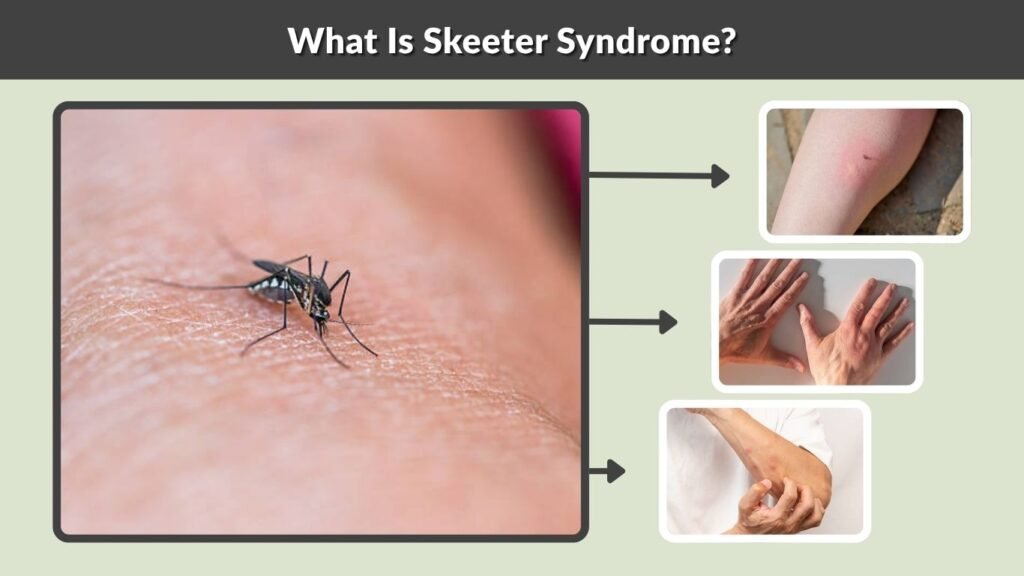
Skeeter syndrome is a significant local inflammatory reaction caused by sensitivity to mosquito saliva. It produces larger and more uncomfortable symptoms than typical mosquito bites.
The reaction often develops within hours of being bitten and may continue worsening before gradually improving.
Symptoms of Skeeter Syndrome
People experiencing skeeter syndrome may develop extensive swelling, redness, warmth, and intense itching.
The affected skin may become firm or painful. Some individuals also experience mild fever or swollen lymph nodes.
Symptoms commonly begin within approximately 8–10 hours after exposure and may last 3–10 days.
Although skeeter syndrome can resemble a bacterial skin infection, the two conditions require different treatments. A healthcare professional can help distinguish them.
How to Treat a Massive Mosquito Bite
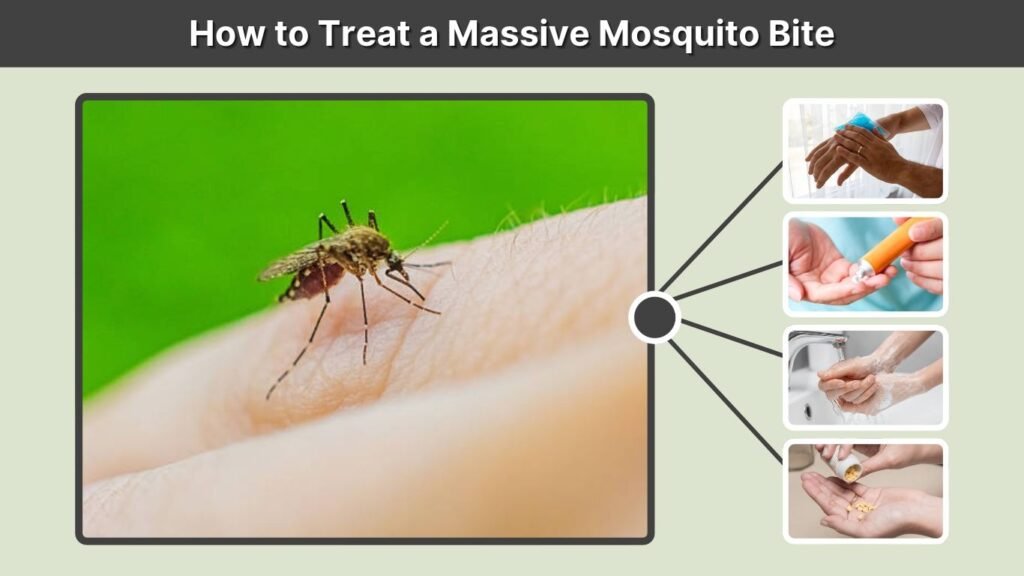
Treating a massive mosquito bite focuses on reducing inflammation, controlling itching, and preventing skin damage. Most large local reactions improve with supportive care and appropriate over-the-counter treatments.
However, unusually severe swelling or worsening symptoms may require medical evaluation.
Best Treatments for Massive Mosquito Bite Swelling
Several treatments can help reduce swelling and discomfort:
- Cold compress: Apply a cloth-wrapped ice pack for 10–20 minutes at a time to reduce discomfort and inflammation.
- Hydrocortisone cream: An appropriate over-the-counter hydrocortisone cream may relieve itching and inflammation.
- Oral antihistamines: Medications such as cetirizine or loratadine may help reduce allergic itching.
- Elevate the affected area: Raising a swollen arm or leg may help reduce fluid accumulation.
- Gentle cleansing: Wash the affected skin with mild soap and water.
- Avoid scratching: Scratching can worsen irritation and introduce bacteria.
Always follow medication labels and consult a pharmacist about age restrictions or medication interactions.
Medical Treatment for Severe Reactions
If swelling becomes extensive or interferes with normal activities, a healthcare professional may recommend stronger treatment.
In certain severe cases, prescription corticosteroids may be necessary to control inflammation.
Antibiotics are appropriate only when a bacterial infection is suspected or confirmed. They do not treat the allergic reaction itself.
How to Reduce Massive Mosquito Bite Swelling at Home
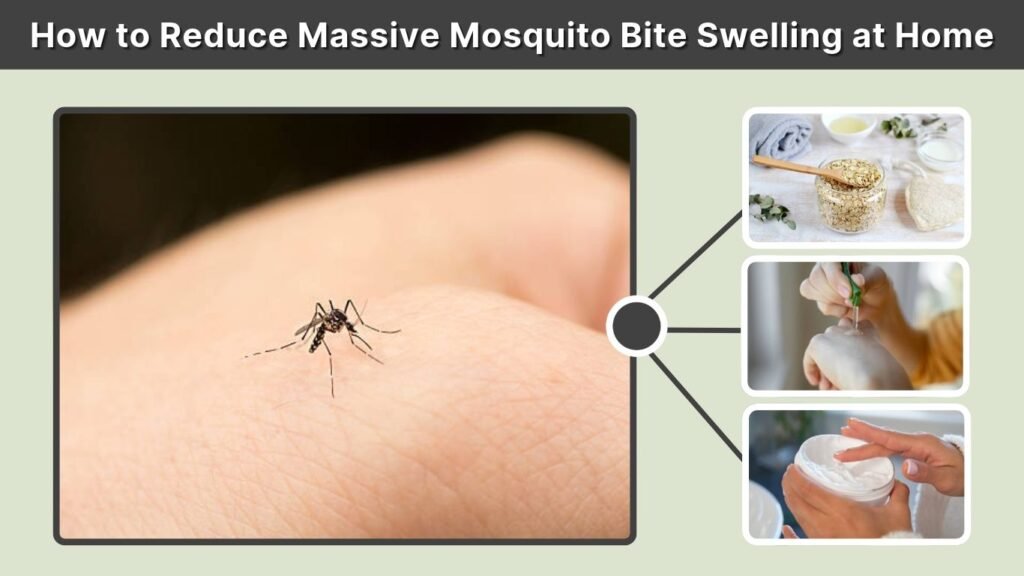
Home care can help manage discomfort while the immune reaction gradually settles. The most effective approach involves keeping the affected area clean, cool, and protected from irritation.
Cold compresses are particularly useful because they temporarily reduce itching and discomfort without exposing the skin to unnecessary chemicals.
Natural Remedies for Large Mosquito Bites
Some gentle home treatments may provide temporary relief:
- Cool water: Wash the area or apply a cool, damp cloth.
- Colloidal oatmeal: A gentle oatmeal preparation may soothe irritated skin.
- Aloe vera gel: Pure, fragrance-free aloe vera may provide a cooling sensation, although evidence for mosquito bite treatment is limited.
- Fragrance-free moisturizer: Helps prevent dryness and additional irritation.
Avoid applying toothpaste, vinegar, undiluted essential oils, or rubbing alcohol to swollen mosquito bites. These substances may irritate the skin and worsen discomfort.
Massive Mosquito Bite vs. Infected Mosquito Bite
A large allergic reaction can resemble a skin infection because both conditions may involve swelling, redness, and warmth.
However, understanding the differences can help determine when medical attention is necessary.
Differences Between Allergic Swelling and Infection
| Feature | Large Allergic Reaction | Infected Mosquito Bite |
| Onset | Often within hours | Often develops or worsens over subsequent days |
| Itching | Usually prominent | May occur |
| Swelling | Can be extensive | May progressively spread |
| Pain | Mild to moderate | Often increasing |
| Pus | Usually absent | May develop |
| Treatment | Anti-itch and anti-inflammatory care | Medical assessment; sometimes antibiotics |
These differences are general patterns rather than definitive diagnostic rules.
A bite that becomes increasingly painful, produces pus, or develops spreading redness should be examined by a healthcare professional.
How Long Does Massive Mosquito Bite Swelling Last?
Most ordinary mosquito bites improve within a few days. Massive reactions, however, can take longer because the immune system produces more extensive inflammation.
Skeeter syndrome commonly lasts approximately 3–10 days, although recovery varies between individuals.
Swelling may be most noticeable during the first day or two before gradually decreasing.
Itching can persist while the skin heals. Avoiding scratching and using appropriate treatments may improve comfort during recovery.
If swelling continues increasing, remains unusually painful, or fails to improve, seek medical advice.
When Is a Massive Mosquito Bite Dangerous?
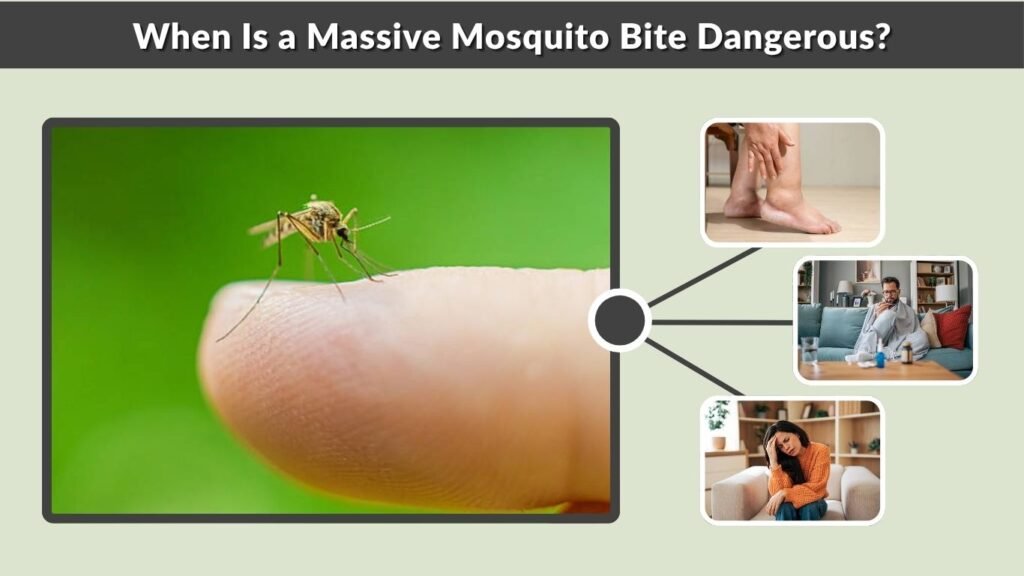
Although large mosquito bite reactions are usually localized, certain symptoms require immediate attention.
A severe allergic reaction can occasionally affect more than the skin. Additionally, mosquitoes can transmit infections that cause symptoms unrelated to the size of the bite.
Warning Signs That Require Medical Attention
Seek medical care if you experience:
- Swelling that rapidly spreads or becomes increasingly painful.
- Pus, worsening warmth, or red streaks extending from the bite.
- Significant swelling around the eye or swelling that limits movement.
- Persistent fever, severe headache, or unusual body aches.
- Large blisters, skin breakdown, or worsening discoloration.
Seek emergency care immediately for difficulty breathing, throat tightness, fainting, or swelling of the tongue or lips.
Fever and joint pain after mosquito exposure may also suggest a mosquito-borne illness and should not automatically be attributed to an allergic reaction.
How to Prevent Massive Mosquito Bites
People who regularly develop large reactions should focus on preventing mosquito exposure. Avoiding bites is often more effective than repeatedly treating severe swelling afterward.
Effective Mosquito Bite Prevention Tips
- Use EPA-registered mosquito repellents according to their labels.
- Wear long sleeves and long pants when outdoors.
- Install window and door screens.
- Remove standing water from containers and outdoor areas.
- Use mosquito nets where indoor mosquito exposure is common.
- Consider permethrin-treated clothing, but never apply permethrin products directly to skin.
Consistent preventive measures can significantly reduce mosquito bites and the likelihood of severe local reactions.
FAQs
1. Why Is My Mosquito Bite So Massive?
A massive mosquito bite usually develops because your immune system reacts strongly to proteins in mosquito saliva. This causes excessive inflammation, fluid accumulation, and swelling. Some people experience large local reactions or skeeter syndrome, which produces more noticeable symptoms than ordinary mosquito bites.
2. How Do You Get Rid of Massive Mosquito Bite Swelling Fast?
Apply a cold compress for 10–20 minutes and elevate the affected area when possible. Appropriate antihistamines or hydrocortisone cream may help reduce itching and inflammation. While these treatments can provide relief relatively quickly, significant swelling may take several days to disappear completely.
3. Can a Massive Mosquito Bite Cause High Blood Pressure?
A large local mosquito bite reaction does not typically cause sustained high blood pressure or hypertension. Pain, anxiety, or discomfort may temporarily affect blood pressure readings. However, persistent high blood pressure should be evaluated independently rather than attributed to a mosquito bite.
4. Is a Massive Mosquito Bite Dangerous?
Most massive mosquito bites are uncomfortable but not dangerous. However, severe allergic reactions, bacterial infections, and mosquito-borne illnesses can occur. Seek medical attention if swelling keeps worsening, infection develops, or you experience fever or unusual symptoms. Breathing difficulties require emergency care.
5. How Long Does a Massive Mosquito Bite Take to Go Away?
Most large mosquito bite reactions improve over several days. Skeeter syndrome may last approximately 3–10 days. Recovery depends on the severity of inflammation and individual immune sensitivity. Cold compresses, anti-itch treatments, and avoiding scratching may help make recovery more comfortable.
