
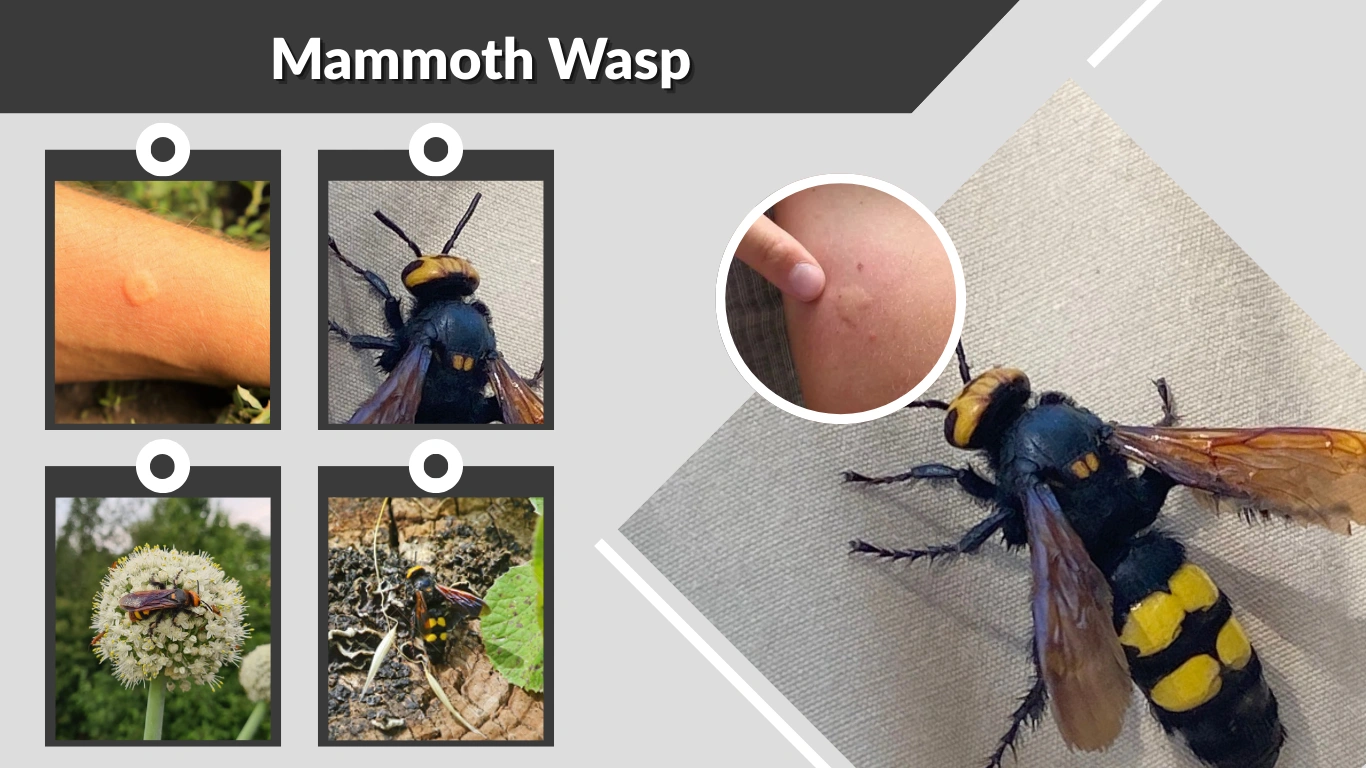
Wasps are often feared for their painful stings and aggressive behavior, but among them exists one of the most striking and misunderstood species—the Mammoth Wasp (Megascolia maculata). Known as the largest wasp in Europe, the mammoth wasp stands out for its size, unique appearance, and unusual life cycle. Despite its intimidating presence, it is not as dangerous as people might think. In fact, it plays an important role in ecosystems. This article explores everything you need to know about the mammoth wasp, from its size and sting to its rarity and ecological value.
What is a Mammoth Wasp?
The mammoth wasp (Megascolia maculata) belongs to the family Scoliidae. It is recognized as the largest wasp species in Europe and is also found in parts of Asia and North Africa. Unlike social wasps that live in colonies, the mammoth wasp is a solitary species. Its life cycle is closely tied to beetle larvae, particularly scarab beetles, which serve as hosts for its offspring.
The species is striking not only because of its size but also due to its powerful wings, robust body, and bold coloration. Its reputation often leads people to confuse it with more aggressive wasps or hornets, but its behavior is far less threatening.
Mammoth Wasp Size
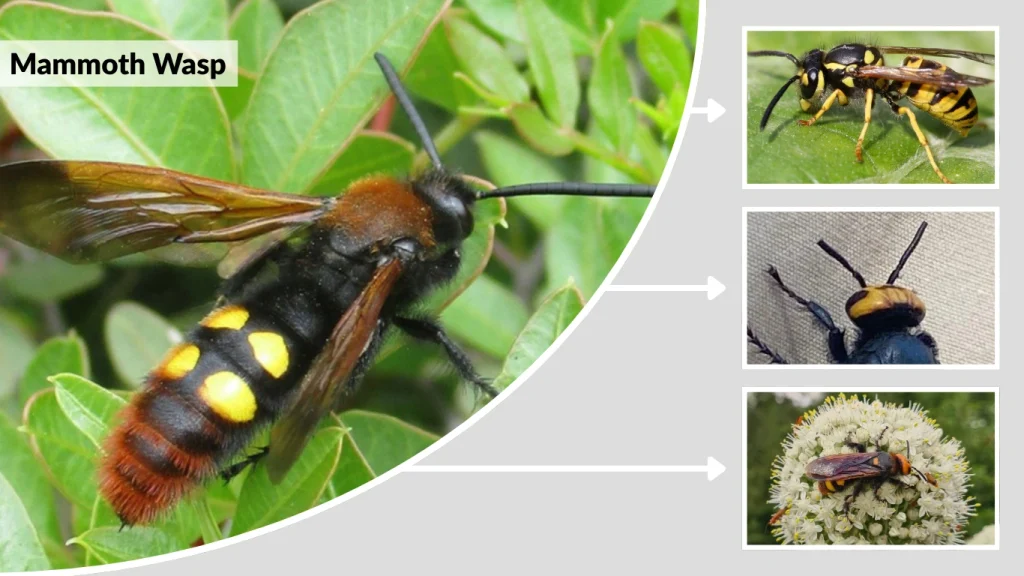
One of the most remarkable features of the mammoth wasp is its size. Adults typically range between 4 to 6 centimeters (1.5–2.3 inches), with some females reaching even larger lengths. This makes them significantly bigger than most wasps or hornets encountered in Europe.
- Females are noticeably larger than males and can exceed 5 cm.
- Males are smaller, with slimmer bodies and shorter wings.
To put their size into perspective:
- A common yellowjacket measures around 1–1.5 cm.
- An Asian giant hornet, often considered the largest hornet, can reach up to 5 cm.
- Mammoth wasps match or exceed these measurements, making them appear almost unreal when spotted in gardens or woodlands.
Their sheer size contributes to their intimidating reputation, even though their behavior doesn’t match their appearance.
Mammoth Wasp Appearance
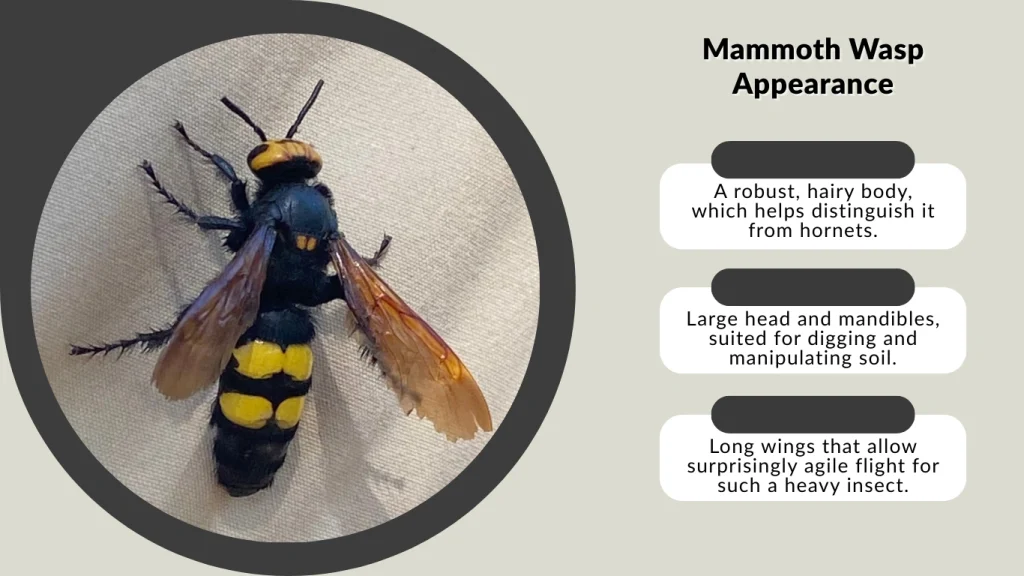
The mammoth wasp has a bold, instantly recognizable appearance. Its body is predominantly black, with bright yellow markings on the thorax that resemble spots or bands. The wings are large, smoky, and often show a metallic purple sheen in the sunlight.
Other identifying traits include:
- A robust, hairy body, which helps distinguish it from hornets.
- Large head and mandibles, suited for digging and manipulating soil.
- Long wings that allow surprisingly agile flight for such a heavy insect.
At first glance, some people mistake it for a large hornet or even a giant bee, but its distinctive coloring and size set it apart.
Mammoth Wasp Sting

The word “wasp” almost always raises concerns about stings, and with the mammoth wasp’s size, it’s natural for people to wonder how painful it can be. The mammoth wasp does have a stinger, but its use is quite different from social wasps like yellowjackets or hornets.
- The female’s sting is primarily designed to paralyze beetle larvae, which serve as hosts for her eggs.
- It is not aggressive toward humans and only stings when handled or provoked.
- On the Schmidt Sting Pain Index, the mammoth wasp is not ranked among the top painful stings, unlike the tarantula hawk or bullet ant.
That said, if stung, a person may experience:
- Intense localized pain.
- Redness and swelling.
- Rare allergic reactions in sensitive individuals.
Overall, the sting is painful but not life-threatening, and encounters are rare because the insect avoids human contact.
Are Mammoth Wasps Dangerous to Humans?

Despite their size and intimidating appearance, mammoth wasps are not considered dangerous to humans. They do not exhibit aggressive behavior, nor do they attack in groups, since they are solitary insects.
- Aggression level: Very low; they usually avoid humans.
- Sting risk: Only occurs if the insect is handled or feels threatened.
- Venom: Strong enough to paralyze beetle larvae but not designed to harm large animals.
For most people, the mammoth wasp is harmless. Gardeners or hikers may be startled by its size and buzzing flight, but the insect itself is more interested in finding food and hosts for its young than stinging humans.
Are Mammoth Wasps Rare?
Another common question is whether mammoth wasps are rare. The answer depends on the region.
- In southern Europe, particularly Spain, Italy, Greece, and France, mammoth wasps are more common in warm, dry climates.
- In northern Europe, they are rare due to cooler conditions.
- In Asia and North Africa, they are also present but often overlooked.
Populations are declining in some areas due to habitat loss and reduced beetle numbers, since their reproduction depends on the availability of scarab beetle larvae. While not classified as endangered, they are considered uncommon in many parts of their range. Spotting one is unusual enough to make it a memorable experience.
Mammoth Wasp Location & Habitat
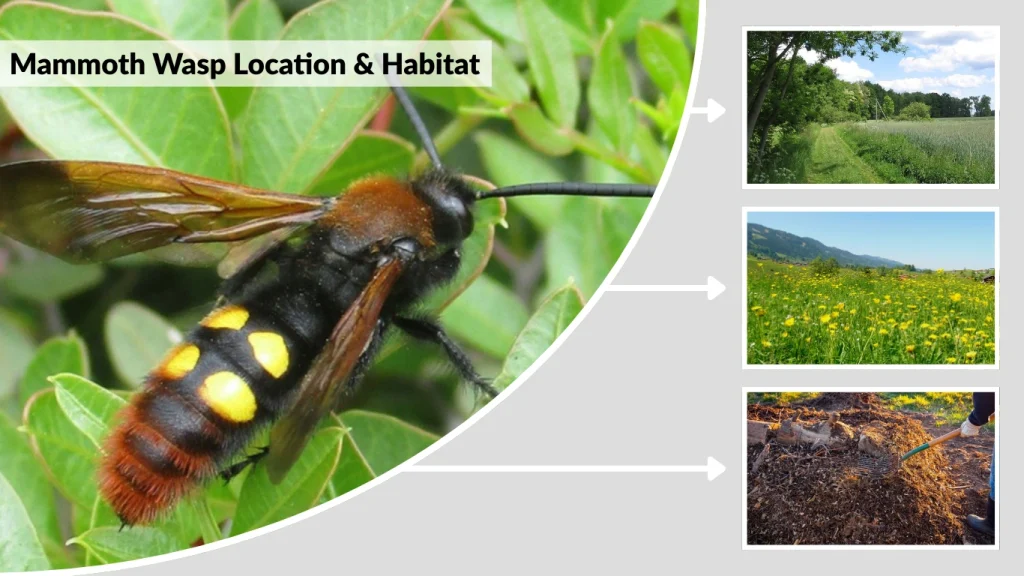
Mammoth wasps thrive in warm, sunny environments where their beetle hosts are found. They are commonly seen in:
- Woodlands and forest edges.
- Meadows and grasslands.
- Orchards and gardens with decaying wood or soil.
They prefer Mediterranean regions, where temperatures favor their activity. Adults are most active in the summer months, buzzing low over the ground in search of beetle larvae or nectar from flowers.
Because they rely heavily on scarab beetle populations for reproduction, their distribution often overlaps with areas where beetle larvae thrive, such as decayed wood, soil, and roots.
Mammoth Wasp Nesting Behavior
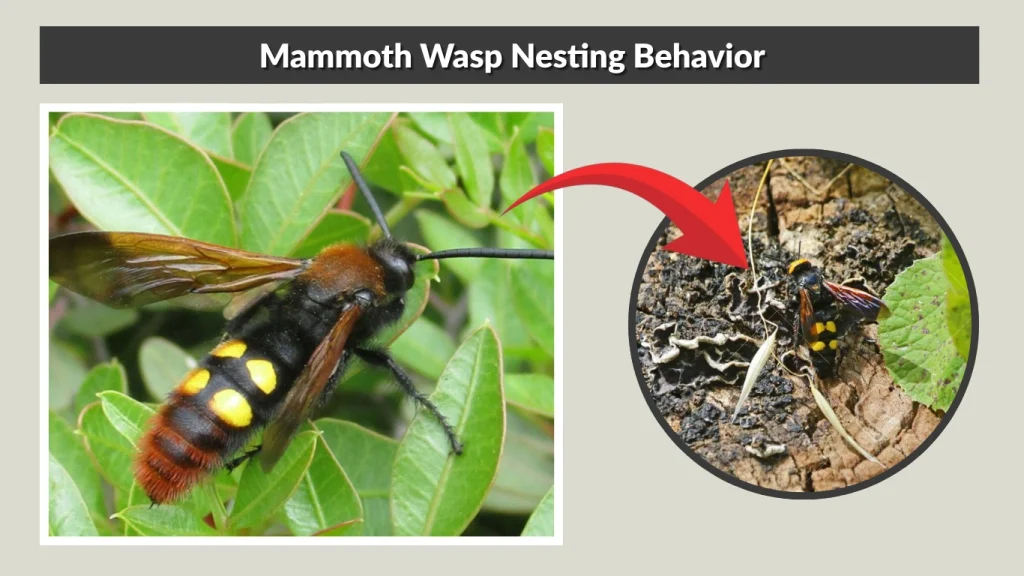
Unlike hornets or yellowjackets, mammoth wasps do not build traditional nests. They are solitary insects, and each female operates independently. Instead of making paper nests or underground colonies, the mammoth wasp uses soil or decayed wood as egg-laying sites.
The female searches for large beetle larvae—especially those of scarab beetles, such as rhinoceros beetles or rose chafers. Once located, she paralyzes the larva with her sting and lays a single egg on it. This beetle larva will serve as the food source for the developing wasp larva.
Because of this unusual nesting method, mammoth wasps are often spotted close to rotting logs, tree stumps, or loose soil where beetles are abundant. Their “nest” is not visible like a hornet’s paper nest but hidden underground or inside wood, making them difficult to detect.
Mammoth Wasp Life Cycle

The mammoth wasp’s life cycle is parasitic in nature and consists of four main stages:
- Egg Stage – After paralyzing a beetle larva, the female lays her egg on its body.
- Larval Stage – When the egg hatches, the wasp larva begins feeding on the still-living beetle larva. It consumes it gradually to ensure freshness.
- Pupal Stage – Once fully fed, the larva forms a cocoon in the soil or wood and enters the pupal stage. This transformation may last weeks or months, depending on climate.
- Adult Stage – The adult emerges as a fully developed mammoth wasp. Adults live only a short time, focusing mainly on reproduction and nectar feeding from flowers.
This life cycle demonstrates how crucial beetle populations are to mammoth wasps. Without beetle larvae hosts, the wasps cannot reproduce successfully.
Mammoth Wasp vs. Asian Giant Hornet

The mammoth wasp is often compared to the Asian giant hornet (Vespa mandarinia), mainly because both are impressively large. However, they differ significantly:
- Size: Both species can reach up to 5 cm, but the mammoth wasp often appears bulkier due to its hairy body.
- Behavior: The Asian giant hornet is highly aggressive, capable of attacking in groups and killing honeybees, while the mammoth wasp is solitary and avoids confrontation.
- Sting: The giant hornet’s sting is more dangerous, delivering potent venom. The mammoth wasp sting is painful but not deadly.
- Ecological role: Mammoth wasps parasitize beetle larvae, while hornets hunt insects and sometimes damage beehives.
In summary, while the Asian giant hornet poses a genuine risk to humans and bees, the mammoth wasp looks intimidating but is largely harmless.
Mammoth Wasp vs. Tarantula Hawk
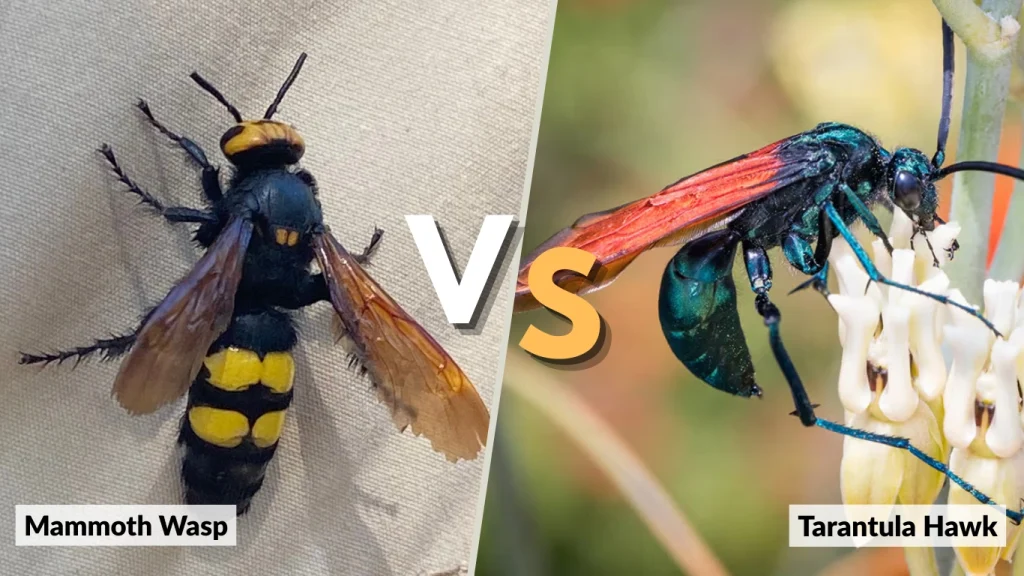
Another common comparison is with the tarantula hawk wasp (Pepsis grossa), famous for having one of the most painful stings in the world.
- Size: Both species are among the largest wasps, though tarantula hawks can sometimes exceed mammoth wasps in wingspan.
- Prey: Tarantula hawks paralyze tarantulas, while mammoth wasps target scarab beetle larvae.
- Sting Pain: The tarantula hawk ranks near the top of the Schmidt Sting Pain Index, while the mammoth wasp is painful but less extreme.
- Behavior: Both are solitary, but tarantula hawks are slightly more aggressive when disturbed.
Thus, while they share similarities in size and solitary lifestyle, the tarantula hawk is far more infamous for its sting.
Mammoth Wasp Sting Pain Index
Entomologists rank insect stings on the Schmidt Sting Pain Index, which describes pain intensity based on human experience.
- The tarantula hawk and bullet ant rank near the top, with unbearable, electric-shock-like pain.
- The Asian giant hornet delivers severe burning pain that can be dangerous due to venom quantity.
- The mammoth wasp sting is not commonly tested but is reported as sharp and painful, similar to a hornet sting but shorter in duration.
Most stings result only in redness, swelling, and temporary pain. Medical treatment is rarely required unless allergic reactions occur.
How to Get Rid of Mammoth Wasps (If Necessary)
Because mammoth wasps are not aggressive and provide ecological benefits, extermination is rarely needed. However, if they become a concern near human activity, these measures may help:
- Avoid handling: Do not touch or trap them; this is when stings occur.
- Reduce beetle larvae: Since their reproduction depends on beetles, minimizing decayed wood or compost piles can reduce populations.
- Relocation: In rare cases, professional removal may be needed if they appear near children’s play areas.
Most experts recommend leaving mammoth wasps alone, as they pose little threat and help naturally control beetle populations.
Ecological Role of Mammoth Wasps
Mammoth wasps may look frightening, but they serve important ecological functions:
- Parasitic control: By targeting scarab beetle larvae, they naturally regulate beetle populations, which can otherwise harm plants and crops.
- Pollination: Adults feed on nectar from flowers, contributing to pollination.
- Biodiversity support: They are part of complex ecosystems, balancing predator-prey relationships.
Far from being pests, they are valuable insects that demonstrate how nature balances itself through predator-prey cycles.
FAQs
1. Do mammoth wasps sting humans?
Yes, mammoth wasps can sting, but they rarely do so. Unlike aggressive hornets, they are solitary and avoid confrontation. A sting usually happens only if the insect is handled or provoked. While painful, the sting is not deadly, and most people experience only temporary swelling and redness.
2. Are mammoth wasps dangerous?
No, mammoth wasps are not considered dangerous to humans. Their sting is painful but lacks the strong venom of hornets or tarantula hawks. They do not attack in swarms and are not aggressive. The main danger comes from allergic reactions, which are rare but should be treated by medical professionals if they occur.
3. Where are mammoth wasps found?
Mammoth wasps are primarily found in southern Europe, the Mediterranean, North Africa, and parts of Asia. They prefer warm, sunny environments with plenty of decayed wood or soil where scarab beetle larvae thrive. In northern Europe, they are rare due to colder climates but may occasionally appear during warmer seasons.
4. What do mammoth wasp larvae eat?
Mammoth wasp larvae are parasitic and feed exclusively on scarab beetle larvae. The female paralyzes a beetle grub with her sting and lays an egg on it. Once hatched, the wasp larva slowly consumes the beetle, keeping it alive long enough to remain fresh until the wasp completes development.
5. Is the mammoth wasp bigger than the Asian giant hornet?
Yes, in some cases, the mammoth wasp can match or even exceed the size of the Asian giant hornet. Females may grow up to 6 cm, making them bulkier. However, the hornet is more dangerous due to its aggressive behavior and venomous sting, while mammoth wasps are solitary and rarely sting humans.
