
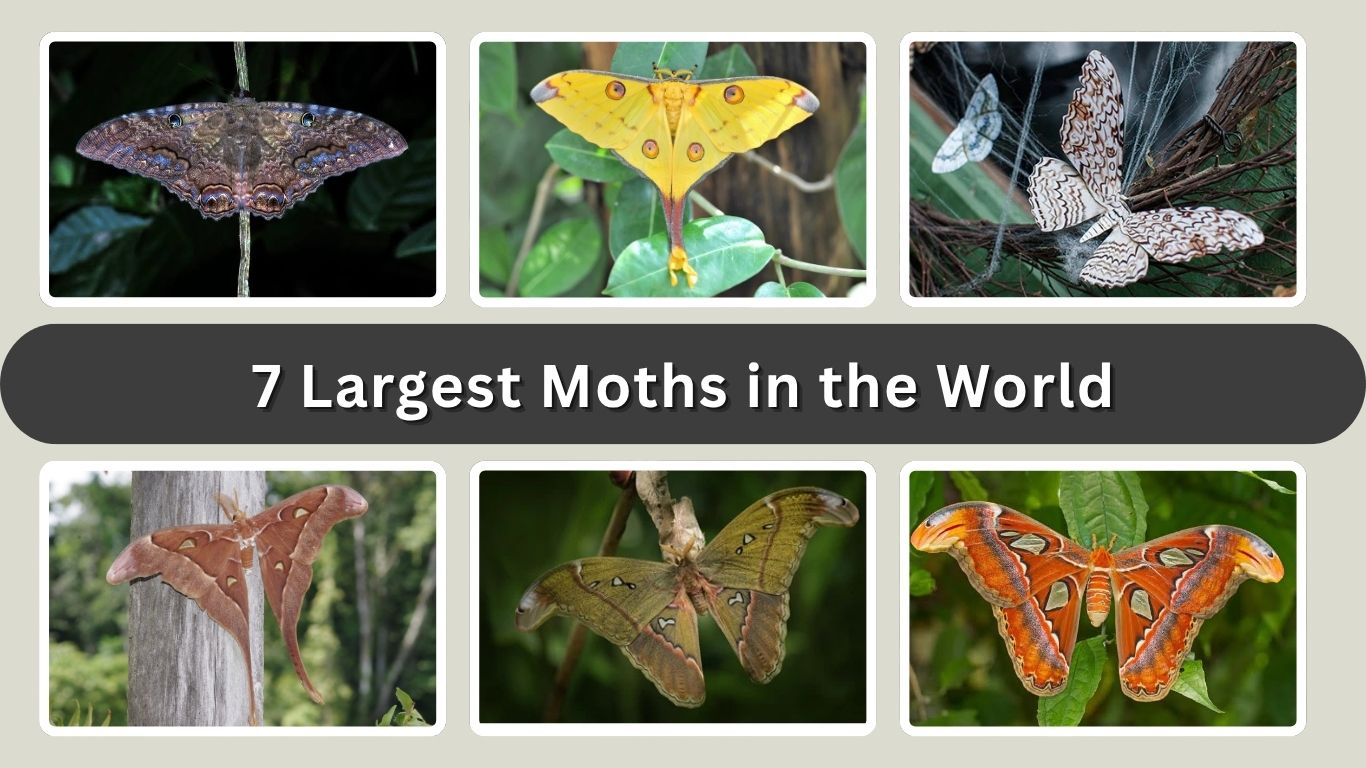
The largest moths in the world are known for their huge wings, unusual patterns, and fascinating life cycles. Some species, like the White Witch Moth, are famous for their record-breaking wingspan, while others, such as the Hercules Moth and Atlas Moth, are known for massive wing surface area. These giant moths live in different parts of the world, from tropical rainforests in Asia and Australia to forests across the Americas. In this guide, you will learn about seven of the biggest moths, how to identify them, where they live, what they eat, and what makes each one special.
1. White Witch Moth
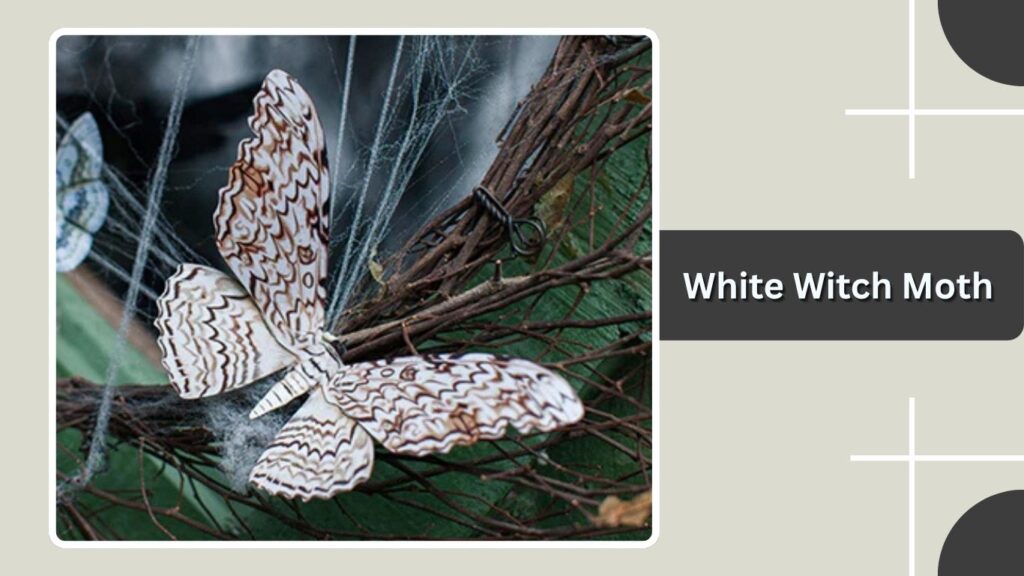
The White Witch Moth is often listed among the largest moths in the world because of its incredible wingspan. Its scientific name is Thysania agrippina, and it is best known for its pale, ghost-like wings that can stretch wider than many people expect. This moth is found mainly in Central and South America, with occasional records as far north as Texas.
Identification
- The White Witch Moth has very wide, pale gray to whitish wings.
- Its wings are covered with fine wavy brown or gray markings.
- It can reach a wingspan of around 12 inches, making it one of the widest moths known.
- The body looks small compared with the huge wings.
- Its soft, ghostly appearance gives it common names like White Witch, Ghost Moth, Great Gray Witch, and Great Owlet Moth.
Habitat and Distribution
The White Witch Moth lives mostly in tropical and subtropical regions. It is commonly associated with forests in South America, Central America, and Mexico. Although it is not a regular species in the United States, it has sometimes appeared as a stray in southern areas such as Texas. Its wide range and strong flight make it one of the most mysterious giant moths.
Behavior and Diet
Adult White Witch Moths are mostly active at night. Their large wings help them glide through forest habitats, and their pale markings allow them to blend with tree bark during rest. Like many large moths, they are more often noticed when attracted to lights or when resting on walls, trees, or buildings.
Life Cycle
The full life cycle of the White Witch Moth is less well known than that of many other giant moths. Like other moths, it goes through egg, caterpillar, pupa, and adult stages. The adult stage is the most famous because of the moth’s record-breaking wingspan and unusual ghost-like appearance.
2. Hercules Moth
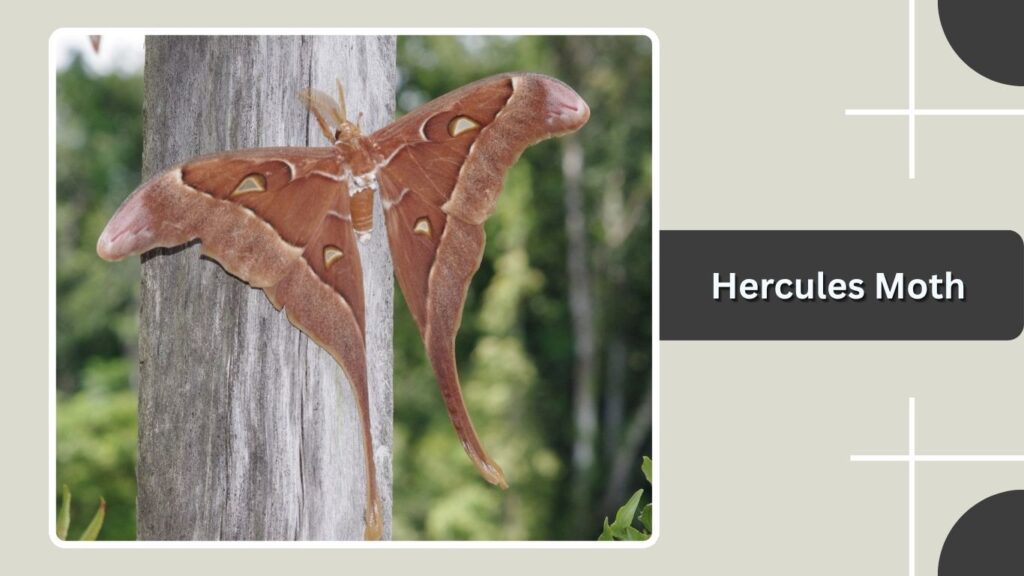
The Hercules Moth is one of the largest moths in the world and is especially famous for its huge wing surface area. Its scientific name is Coscinocera hercules, and it is native to New Guinea and northern Australia. This giant moth has brown patterned wings, clear “window” markings, and a short adult life focused mainly on reproduction.
Identification
- The Hercules Moth has very large brown wings with pale triangular edges.
- Its wings have transparent window-like spots.
- Females are usually larger and heavier than males.
- Males have longer tail-like extensions on their hindwings.
- The caterpillar is large, pale green to bluish-green, with yellow spikes and colored side markings.
- It is considered Australia’s largest moth and one of the biggest moths by wing area.
Habitat and Distribution
The Hercules Moth lives mainly in tropical rainforest regions. It is found in northern Australia and New Guinea, where warm, humid forests provide the right food plants for its caterpillars. In Australia, it is strongly associated with rainforest habitats in Queensland. These forests give the larvae access to host trees and provide sheltered places for adults to rest after emerging.
Behavior and Diet
Adult Hercules Moths do not feed. They survive on energy stored during the caterpillar stage, so the adult moth’s life is short and focused on mating. The larvae feed on rainforest plants such as bleeding heart, red bean, and cheese tree. The caterpillar stage is the main feeding stage and can last for around three months.
Life Cycle
The Hercules Moth goes through egg, caterpillar, cocoon, and adult stages. The caterpillar grows large by eating leaves before spinning a cocoon. After emerging as an adult, the moth does not eat and instead searches for a mate. Females release pheromones, while males use their feathery antennae to locate them.
3. Atlas Moth
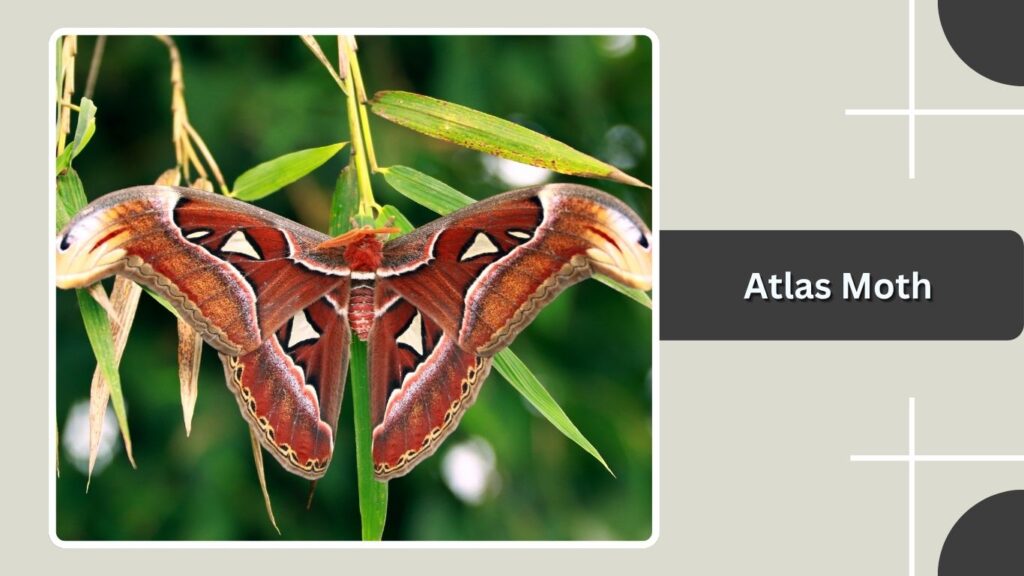
The Atlas Moth is one of the largest moths in the world and is famous for its huge wings, reddish-brown patterns, and snake-like wing tips. Its scientific name is Attacus atlas, and it is native to parts of Asia. Although it looks powerful because of its size, the adult Atlas Moth is harmless and lives only a short time after leaving the cocoon. The Natural History Museum notes that adults do not feed and usually live only one to two weeks.
Identification
- The Atlas Moth has very large reddish-brown wings with cream, black, and orange markings.
- Its wing tips can resemble snake heads, which may help scare predators.
- It can reach a wingspan of about 10 to 12 inches.
- Females are usually larger and heavier than males.
- Males have broad, feathery antennae used to detect female pheromones.
- It is considered one of the largest moths by wing surface area.
Habitat and Distribution
The Atlas Moth is mainly found in tropical and subtropical parts of Asia. Its range includes areas of India, China, Malaysia, Indonesia, and Southeast Asia. The moth is usually associated with forests, shrublands, plantations, and warm habitats where its caterpillars can find suitable host plants. In other regions, people may see it in butterfly houses, insect exhibits, or captive breeding collections rather than in the wild.
Behavior and Diet
Adult Atlas Moths do not eat because their mouthparts are not functional. Instead, they survive on energy stored during the caterpillar stage. This makes the larval stage very important, as the caterpillar must feed enough to support the adult moth later. Adults usually rest during the day and become more active at night when searching for mates.
Life Cycle
The Atlas Moth goes through four stages: egg, caterpillar, pupa, and adult. The caterpillar feeds heavily on leaves before spinning a tough silk cocoon. After pupation, the adult moth emerges, expands its wings, and focuses on reproduction. Because it cannot feed as an adult, its lifespan is short but highly specialized.
4. Caesar Cobra Moth
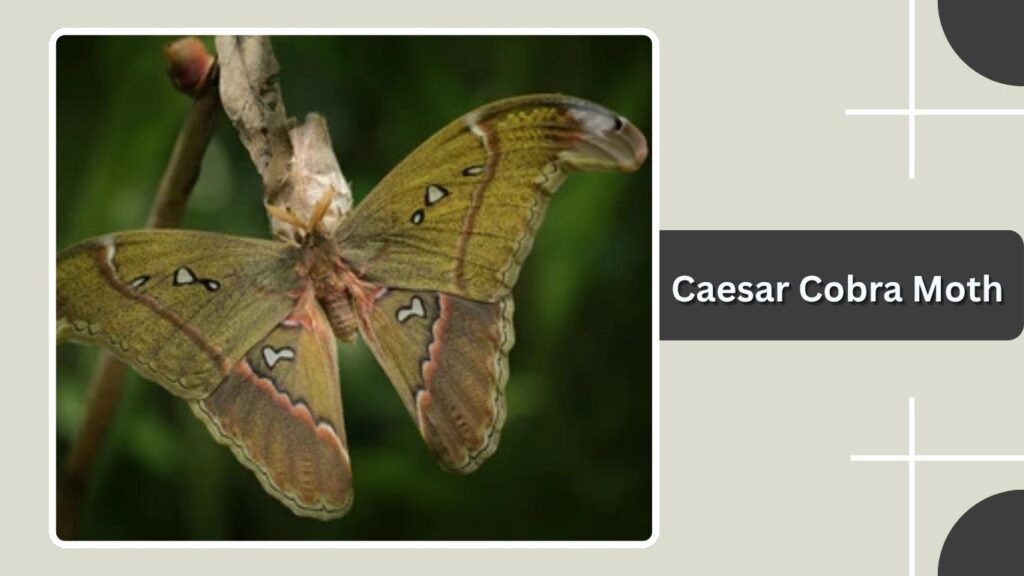
The Caesar Cobra Moth is one of the largest moths in the world by wingspan. Its scientific name is Attacus caesar, and it belongs to the same giant silk moth family as the Atlas Moth. This species is found in the southern Philippines and is known for its huge wings, warm brown coloring, and dramatic cobra-like appearance. It has been recorded with a wingspan of about 255 mm, or around 10 inches.
Identification
- The Caesar Cobra Moth has very large brown, orange, and cream-colored wings.
- Its forewing tips are curved and can resemble snake or cobra heads.
- It has transparent window-like patches on the wings.
- The body is thick, furry, and much smaller than the total wing size.
- Females are usually larger and heavier than males.
- Males have more feathery antennae for detecting female pheromones.
Habitat and Distribution
The Caesar Cobra Moth is mainly found in the southern Philippines. Because it is a tropical silk moth, it is associated with warm forested habitats where its caterpillars can find suitable host plants. Compared with the Atlas Moth, this species has a more limited range, which makes it less commonly discussed by casual moth watchers.
Behavior and Diet
Like other giant moths in the genus Attacus, the adult Caesar Cobra Moth does not feed. Its adult stage is focused on resting, mating, and reproduction rather than searching for food. The caterpillar stage is the main feeding stage, when the insect eats leaves and stores the energy it will later use as an adult. Adults are mostly active at night and may rely on their large wings and snake-like markings to discourage predators.
Life Cycle
The Caesar Cobra Moth follows the normal moth life cycle: egg, caterpillar, pupa, and adult. After hatching, the caterpillar feeds and grows before spinning a silk cocoon. Inside the cocoon, it changes into a pupa. The adult moth later emerges, expands its wings, and uses its short adult life to find a mate.
5. Edward’s Atlas Moth
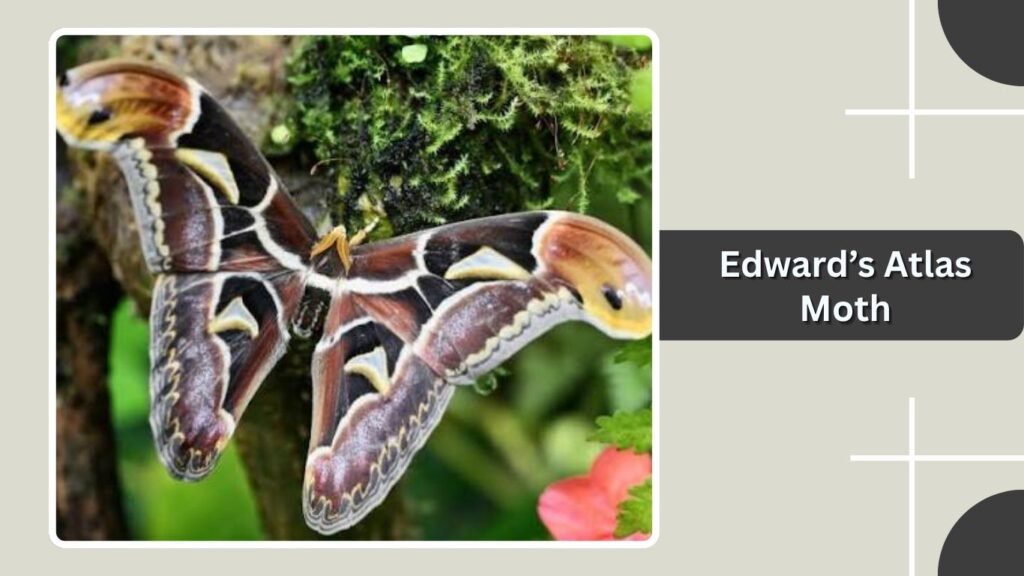
Edward’s Atlas Moth is another giant silk moth and one of the largest moths in the world. Its scientific name is Archaeoattacus edwardsii, and it belongs to the Saturniidae family. This species is closely related to the Atlas Moth but is often listed separately because of its impressive size, darker wing patterns, and Asian range. It can reach a wingspan of up to about 25 cm, making it one of the largest Asian moths.
Identification
- Edward’s Atlas Moth has very large brown wings with bold pale markings.
- Its wingspan can reach up to about 25 cm.
- The upper wings range from dark brown to pale brown.
- It has striking white markings across the wings.
- Females are usually larger and heavier than males.
- Males have feathery antennae used to detect female scent.
- The caterpillars become whitish in later stages and are covered with a waxy powder.
Habitat and Distribution
Edward’s Atlas Moth is found in parts of Asia, especially around the Himalayas and Southeast Asia. Its reported range includes India, Nepal, Vietnam, Myanmar, Bhutan, Peninsular Malaysia, Borneo, and Sabah. This species is linked with warm forest habitats where caterpillars can feed on suitable host plants and adults can rest safely after emerging.
Behavior and Diet
Like other giant silk moths, Edward’s Atlas Moth has a short adult life focused mainly on reproduction. Females attract males by releasing scent from a gland at the end of the abdomen. The larvae feed on host plants such as Machilus, Prunus, and Ailanthus species. The adult moth is not known for active feeding; most energy is stored during the caterpillar stage.
Life Cycle
Edward’s Atlas Moth follows the usual moth life cycle: egg, caterpillar, pupa, and adult. The caterpillar feeds and grows before forming a cocoon. Inside the cocoon, it changes into a pupa. When the adult moth emerges, it expands its large wings, rests, and later searches for a mate.
6. Comet Moth
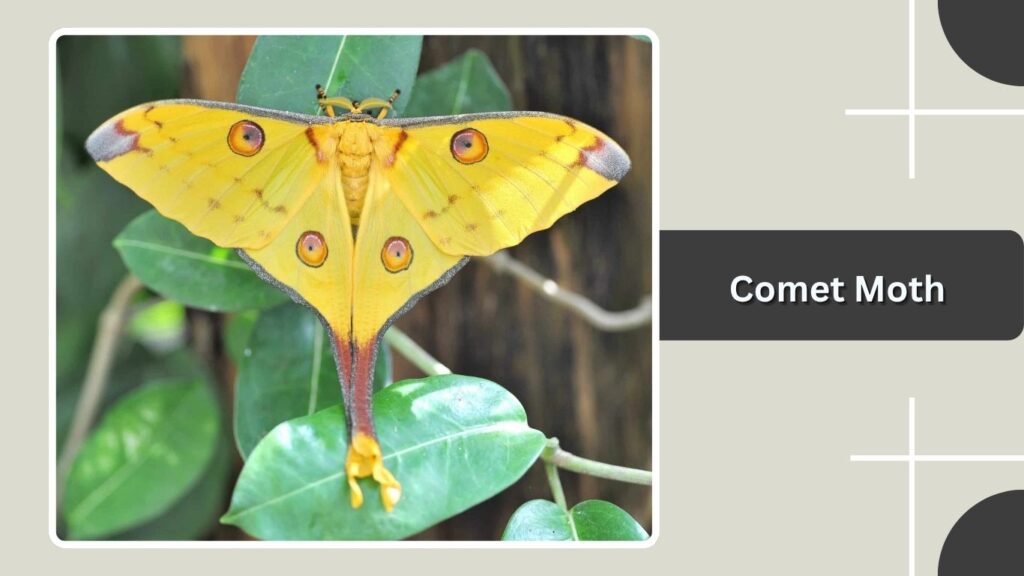
The Comet Moth is one of the most beautiful giant moths in the world. It is also called the Madagascan Moon Moth, and its scientific name is Argema mittrei. This moth is native to Madagascar and is known for its bright yellow wings, long trailing tails, and round eyespots. The Natural History Museum describes it as a large Madagascan silk moth whose caterpillars spin silk cocoons before becoming adults.
Identification
- The Comet Moth has bright yellow wings with orange, brown, and reddish markings.
- It has long tail-like extensions on the hindwings.
- The wings have round eyespots that may help confuse predators.
- Males usually have longer tails and more feathery antennae.
- Females are usually heavier-bodied and less slender than males.
- It is also commonly known as the Madagascan Moon Moth.
Habitat and Distribution
The Comet Moth is native to Madagascar, especially rainforest habitats where its caterpillars can find suitable host plants. It is not a regular wild moth in North America or Europe, though it may be seen in insect exhibits, butterfly houses, or captive breeding collections. Its natural range makes it one of the most famous giant moths associated with Madagascar’s unique wildlife.
Behavior and Diet
Adult Comet Moths do not feed after emerging from the cocoon. Their adult life is very short, usually lasting only a few days to about a week. During this time, their main purpose is to find a mate and reproduce. Wildlife Madagascar notes that male comet moths use large feathery antennae to detect the scent of females, possibly from far away.
Life Cycle
The Comet Moth begins life as an egg, then hatches into a caterpillar. The Natural History Museum says females may lay around 100 to 150 eggs. The caterpillar later spins a silk cocoon and changes into a pupa. After the adult moth emerges, it expands its wings and uses its short adult stage for reproduction.
7. Black Witch Moth
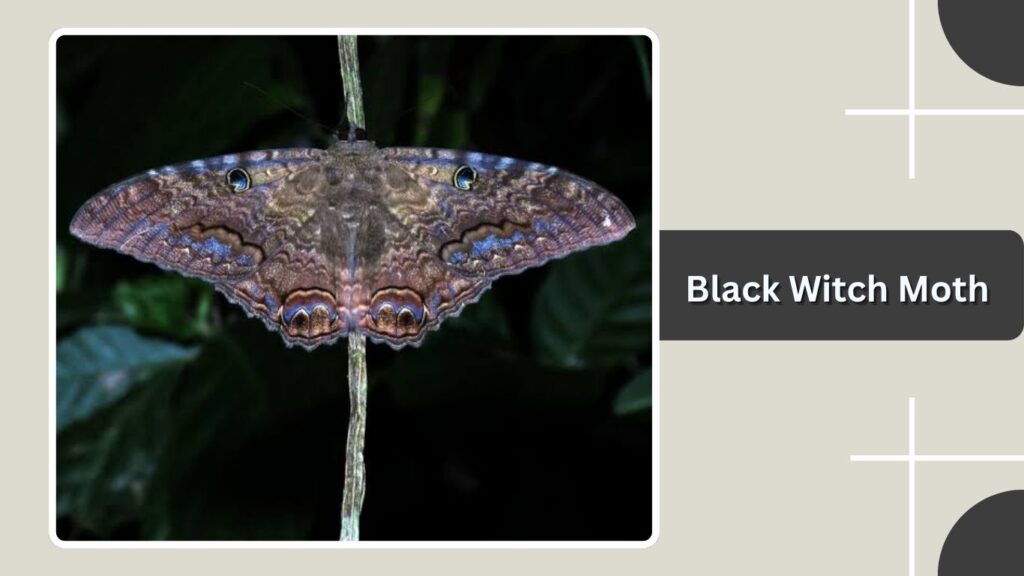
The Black Witch Moth is a large, dark moth known for its bat-like shape and mysterious folklore. Its scientific name is Ascalapha odorata, and it belongs to the family Erebidae. Although it is not as colorful as the Atlas Moth or Comet Moth, it is still one of the largest moths in the Americas. It is especially noticeable because of its dark wings, strong flight, and impressive wingspan of about 11 to 15 cm.
Identification
- The Black Witch Moth has dark brown to blackish wings.
- Its wings are broad, pointed, and bat-like in shape.
- Females often have a pale pinkish-white band across the wings.
- Males are usually darker and lack the pale band.
- It has an oval patch near the outer wing margin with two rounded spots.
- Its wingspan is commonly around 11 to 15 cm.
Habitat and Distribution
The Black Witch Moth is found mainly in tropical and subtropical parts of the Americas. Its range includes Mexico, Central America, South America, and the southern United States. It is also known as a strong migratory moth and may travel north through Texas during warmer months, sometimes reaching much farther into the United States and even Canada.
Behavior and Diet
This moth is nocturnal and often surprises people because it flies strongly and can resemble a small bat at night. Adults may be attracted to lights, walls, porches, and buildings. Unlike many giant silk moths, adult Black Witch Moths can feed, especially on fruit juices or overripe fruit. Their larvae feed on host plants such as cassia and catclaw.
Life Cycle
The Black Witch Moth goes through the normal moth life cycle: egg, caterpillar, pupa, and adult. The caterpillar stage is the main growing stage, when the larva feeds on leaves and stores energy. After pupation, the adult emerges as a large dark moth. In many cultures, this moth has symbolic meanings, but biologically it is simply a harmless night-flying insect.
FAQs
1. What is the largest moth in the world?
The White Witch Moth is often considered the largest moth in the world by wingspan. Its wings can spread wider than many other moth species, giving it a record-breaking appearance even though its body is not as heavy as some giant silk moths.
2. Which moth has the largest wing area?
The Hercules Moth is often known for having one of the largest wing surface areas of any moth. While some moths may have a wider wingspan, the Hercules Moth has massive wings that make it one of the biggest overall.
3. Is the Atlas Moth bigger than the White Witch Moth?
The Atlas Moth is larger in wing surface area and body size, but the White Witch Moth can have a wider wingspan. This means the “largest moth” depends on whether size is measured by wingspan, wing area, or body mass.
4. Are the largest moths dangerous?
No, the largest moths in the world are not dangerous to humans. They do not bite or sting. Some species have dramatic wing patterns that may look scary, but these markings are mainly used to confuse or scare predators.
5. Why are some giant moths so short-lived?
Many giant silk moths do not feed as adults because their mouthparts are reduced or nonfunctional. They survive on energy stored during the caterpillar stage, so their adult life is short and focused mainly on finding a mate and reproducing.
