
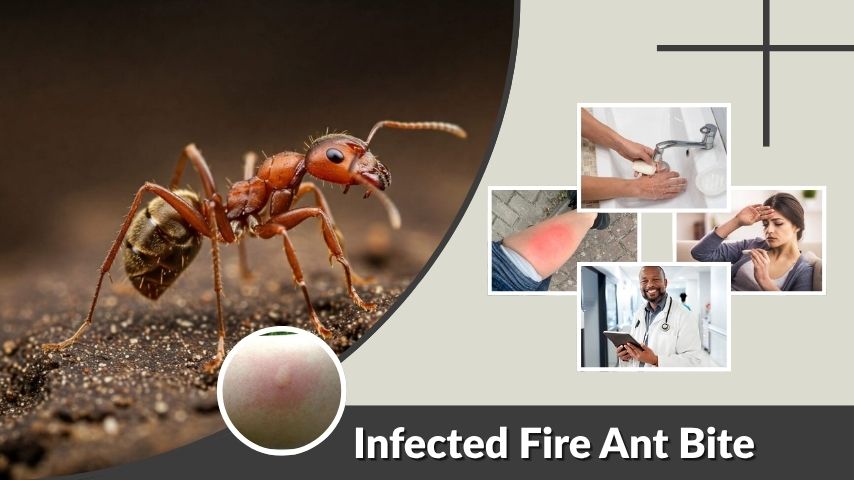
An infected fire ant bite can be painful, swollen, red, and worrying. Fire ant stings often create itchy bumps and small pus-like blisters, so it is easy to wonder whether the bite is infected or healing normally. In many cases, the white blister is a common reaction to fire ant venom, not a true infection. However, scratching, popping, or picking at the bite can break the skin and allow bacteria to enter. Knowing the difference can help you treat the bite safely and get medical care when needed.
What Is an Infected Fire Ant Bite?
An infected fire ant bite happens when bacteria enter the skin after a fire ant sting. This usually occurs when the bite is scratched, rubbed, popped, or not kept clean. Fire ants are known for painful stings that can cause burning, redness, swelling, itching, and small pustules. These symptoms can look similar to infection, but they are not always the same thing.
Fire ants usually bite first to grip the skin, then sting and inject venom. The venom causes a burning sensation and later may form a raised bump or blister. According to Cleveland Clinic, fire ant sting symptoms may develop in stages: burning first, itchy bumps within about an hour, then blisters that may fill with yellow or white pus-like fluid about a day later.
That pus-like fluid can look alarming. Still, a small white pustule is common after a fire ant sting and does not automatically mean infection.
Can Fire Ant Bites Get Infected?
Yes, fire ant bites can get infected. The main risk comes from broken skin. When someone scratches an itchy bite or pops the blister, bacteria from the skin, nails, clothing, or environment can enter the wound.
Fire ant bites are especially itchy, so scratching is common. Children may scratch without realizing it. Adults may also irritate bites by wearing tight shoes, socks, gloves, or clothing over the affected area.
Why Infection Happens
Infection may develop when:
- The blister is popped
- The bite is scratched open
- Dirt enters the wound
- The area is not cleaned
- Shoes or clothing rub the bite
- The person has a weakened immune system
- The bite is on the foot, ankle, or hand
- There are many bites close together
Most fire ant bites heal without infection. But if the skin barrier is damaged, bacteria can grow and cause symptoms that need medical attention.
What Does an Infected Fire Ant Bite Look Like?
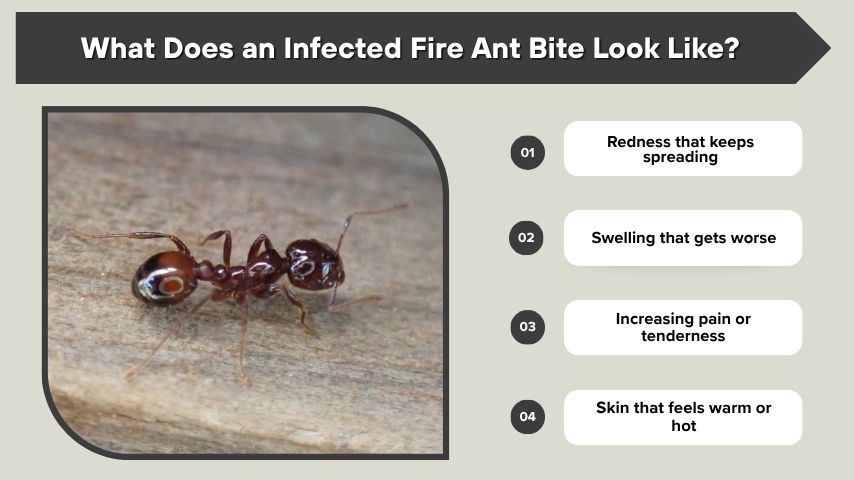
An infected fire ant bite may look more inflamed than a normal sting. It may become increasingly red, swollen, warm, and painful. Instead of slowly improving, the bite may get worse after the first day or two.
Common Signs of Infection
Possible signs of fire ant bite infection include:
- Redness that keeps spreading
- Swelling that gets worse
- Increasing pain or tenderness
- Skin that feels warm or hot
- Thick yellow or green drainage
- Red streaks moving away from the bite
- Fever or chills
- A wound that does not heal
- Swollen lymph nodes near the area
The key sign is progression. A normal bite may be itchy and swollen, but it should gradually improve. An infected bite often becomes more painful, more swollen, or more red over time.
Normal Fire Ant Pustule vs Infection
Because fire ant stings often form pustules, many people search for infected fire ant bite pictures. Pictures can help, but they are not always enough. The timeline and symptoms matter more.
| Feature | Normal Fire Ant Reaction | Possible Infection |
| Pain | Burning early, then improves | Pain gets worse over time |
| Itching | Common and may last days | May occur with worsening tenderness |
| Blister/pustule | Small white or yellow pustule is common | Drainage may be thick, spreading, or foul-smelling |
| Redness | Usually limited around the bite | Redness expands or forms streaks |
| Swelling | Mild to moderate | Increasing or severe |
| Warmth | Mild warmth possible | Area feels hot and tender |
| Fever | Not typical | Possible warning sign |
| Healing | Gradual improvement | Delayed healing or worsening |
A normal fire ant blister can last several days. MedlinePlus notes that pus-filled blisters from fire ant stings may last 3 to 8 days, and scabbing may last longer.
Fire Ant Bite Infection Symptoms
Fire ant bite infection symptoms usually involve worsening skin changes. The area may become more painful than itchy. It may also feel hot or tight. If infection spreads, symptoms can affect more than the skin.
Local Infection Symptoms
Local infection symptoms stay near the bite area. These may include redness, swelling, warmth, and tenderness. You may notice cloudy drainage or crusting if the bite has opened.
Local symptoms should be watched carefully. If redness expands, pain increases, or the area becomes very warm, contact a healthcare provider.
Spreading Infection Symptoms
A spreading infection may cause more serious warning signs. These include fever, chills, red streaking, swollen lymph nodes, or feeling generally unwell.
Red streaks are especially concerning because they may suggest infection spreading through the lymph vessels. Fever or weakness after a bite should also be taken seriously.
How to Treat an Infected Fire Ant Bite
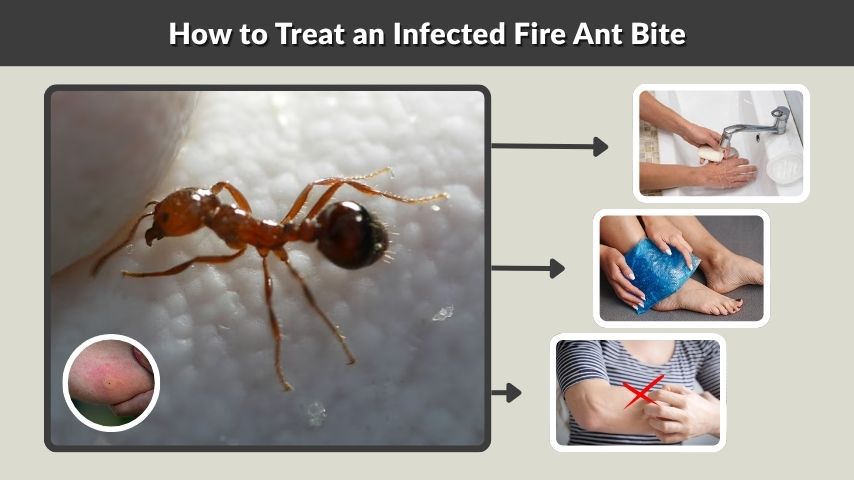
Treatment depends on how severe the infection appears. Mild irritation can often be managed with careful cleaning and protection. A true infection may require prescription medication from a healthcare provider.
First Aid for Fire Ant Bites
If you have just been stung, start with basic first aid:
- Move away from the fire ant mound.
- Brush ants off your skin and clothing.
- Wash the area with soap and water.
- Apply a cold compress for 10 to 15 minutes.
- Avoid scratching the bite.
- Do not pop the blister.
- Keep the area clean and dry.
Mayo Clinic says most insect bites and stings are mild and can be treated at home, but some can transmit bacteria, viruses, or parasites, and fire ant stings can also cause severe allergic reactions in some people.
Care for a Bite That May Be Infected
If the bite has opened or looks mildly irritated, clean it gently with soap and water. Pat it dry with a clean towel. Cover it with a sterile bandage if it is rubbing against clothing or shoes.
You can take these steps:
- Wash the area daily
- Use a clean bandage
- Change the bandage if wet or dirty
- Avoid tight shoes or clothing
- Keep fingernails short
- Do not squeeze the bite
- Watch for spreading redness or fever
Do not apply harsh chemicals, bleach, or strong home remedies to the wound. These can irritate the skin and make healing harder.
When Antibiotics May Be Needed
If a healthcare provider confirms a bacterial infection, antibiotics may be needed. This could be an antibiotic ointment for a minor skin infection or oral antibiotics for a more serious infection. The right treatment depends on the size, severity, location, and symptoms.
Do not use leftover antibiotics or someone else’s medication. Using the wrong antibiotic can fail to treat the infection and may contribute to antibiotic resistance.
Infected Fire Ant Bite Treatment at Home
Home care may help if the bite is only mildly irritated and there are no signs of spreading infection. The goal is to prevent the area from getting worse while watching for warning signs.
Safe Home Care Tips
Try these simple steps:
- Clean with mild soap and water
- Apply a cool compress for swelling
- Cover open skin with a clean bandage
- Keep the area dry
- Avoid scratching or picking
- Use fragrance-free moisturizer around, not inside, irritated skin
- Elevate the foot or hand if swollen
An oral antihistamine or hydrocortisone cream may help itching around closed skin, but avoid putting steroid cream into an open wound unless a doctor tells you to.
What Not to Do
Avoid these mistakes:
- Do not pop fire ant blisters
- Do not scratch with fingernails
- Do not use dirty bandages
- Do not apply bleach or gasoline
- Do not cut the bite open
- Do not ignore spreading redness
- Do not delay care for fever or red streaks
Scratching is one of the biggest problems. Cleveland Clinic notes that scratching ant bites can break the skin and lead to infection.
How to Tell If a Fire Ant Bite Is Infected
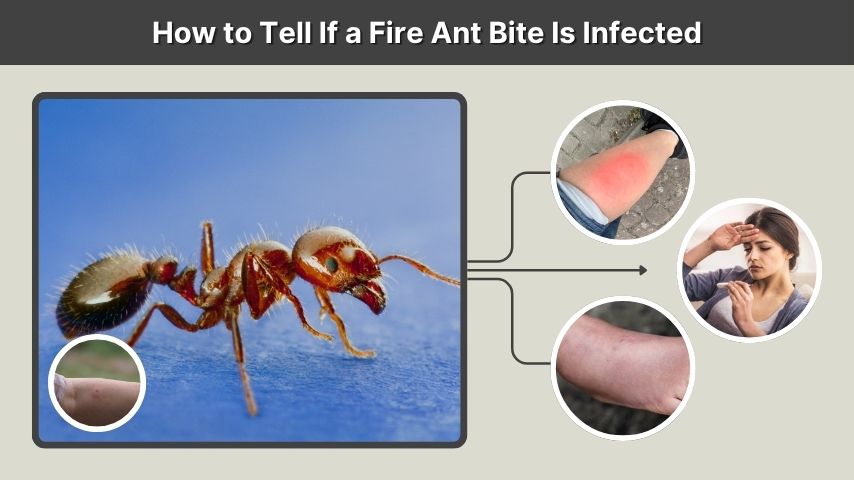
The easiest way to tell if a fire ant bite may be infected is to watch whether it is improving or worsening. Normal bites can itch and look unpleasant, but they usually begin to calm down after the first few days.
A bite may be infected if:
- It becomes more painful after 24 to 48 hours
- Redness spreads outward
- Swelling becomes worse instead of better
- The skin feels hot
- Drainage becomes thick or discolored
- Red streaks appear
- You develop fever
- The wound does not start healing
Take a photo once a day in the same lighting if you are unsure. This can help you see whether redness is spreading. You can also gently mark the edge of redness with a washable pen. If redness moves beyond the mark, contact a healthcare provider.
Fire Ant Bite Staph Infection
Some people search for staph infection from fire ant bite because open bites can become infected with bacteria commonly found on the skin, including Staphylococcus. Not every infected bite is a staph infection, but staph is one possible cause of skin infection.
A staph skin infection may look like a painful red bump, boil, abscess, or draining sore. It may feel warm and tender. Some staph infections require medical drainage or antibiotics. If a bite becomes very painful, swollen, full of pus, or does not improve, see a healthcare provider.
Do not try to drain a suspected abscess at home. Squeezing can push infection deeper or spread bacteria.
When to See a Doctor
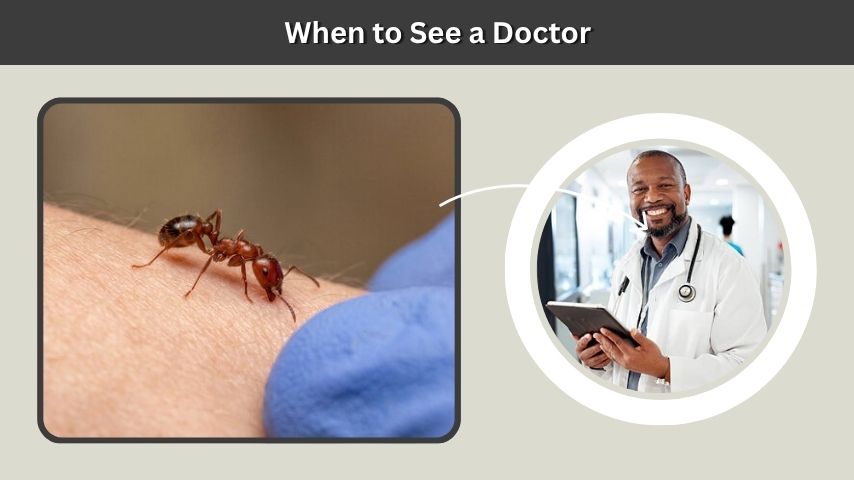
You should contact a doctor if you think a fire ant bite is infected or if symptoms are getting worse. Early treatment can prevent a minor skin infection from becoming more serious.
Call a Doctor If You Notice
- Spreading redness
- Increasing pain
- Warm or hot skin
- Pus or drainage
- Swelling that worsens
- Fever
- Red streaks
- Swollen lymph nodes
- Bite near the eye, mouth, or genitals
- Infection signs in a child
- Diabetes or immune system problems
People with diabetes, poor circulation, immune suppression, or chronic skin conditions should be more cautious because infections may become serious more quickly.
Seek Emergency Help
Get emergency help right away if you have signs of a severe allergic reaction, such as trouble breathing, swelling of the lips or throat, dizziness, fainting, widespread hives, chest tightness, or confusion. Fire ant stings can cause anaphylaxis in allergic people, which is life-threatening. Cleveland Clinic notes that severe allergic symptoms from ant stings can include trouble breathing, chest tightness, nausea, vomiting, dizziness, and other systemic symptoms.
Infected Fire Ant Bites on Dogs
Dogs can also get fire ant bites, especially on their paws, belly, nose, or mouth. Bites may become irritated if the dog licks or chews the area. Infection is possible if the skin breaks.
Signs of a possible infected fire ant bite on a dog include swelling, redness, oozing, limping, pain, licking, or a sore that does not heal. More serious signs include facial swelling, vomiting, weakness, or trouble breathing.
If your dog has mild irritation, contact your veterinarian for advice. Do not give human medication unless a vet approves it. Seek urgent veterinary care if your dog has breathing trouble, collapse, facial swelling, repeated vomiting, or severe pain.
How to Prevent Infection From Fire Ant Bites
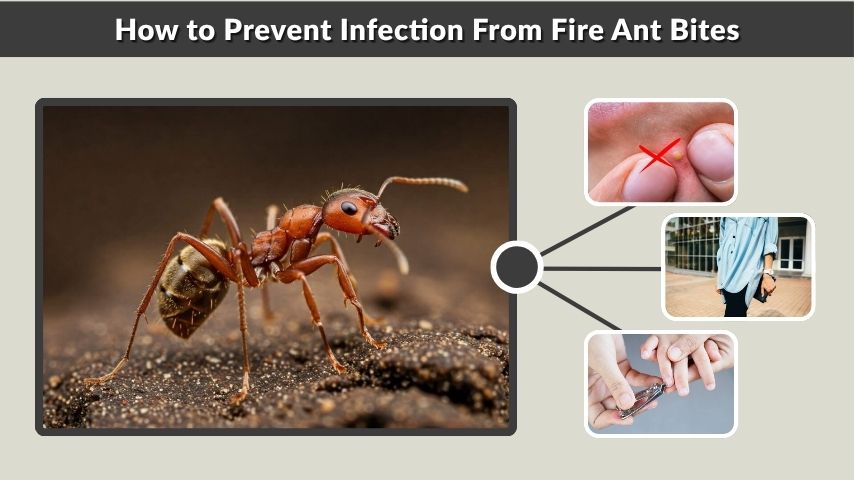
Preventing infection starts with reducing scratching and protecting the skin. Fire ant bites itch intensely, so treating the itch early can help prevent broken skin.
Prevention Tips
Use these steps:
- Wash bites soon after being stung
- Apply a cold compress
- Avoid scratching
- Keep bites covered if needed
- Do not pop pustules
- Wear loose shoes or clothing
- Keep children’s nails trimmed
- Check bites daily
- Treat fire ant mounds around the home
If you are often exposed to fire ants, wear closed-toe shoes, socks, gloves, and long pants when working outdoors. Avoid standing near mounds, and keep children and pets away from fire ant colonies.
FAQs
Can a fire ant bite get infected?
Yes, a fire ant bite can get infected if bacteria enter broken skin. This often happens after scratching, popping, or picking at the bite. Keeping the area clean and avoiding scratching can lower the risk.
What does an infected fire ant bite look like?
An infected fire ant bite may look increasingly red, swollen, warm, and painful. It may drain thick fluid, form red streaks, or fail to heal. A small white pustule alone is common after fire ant stings and does not always mean infection.
How do you treat infected fire ant bites?
Clean the area with soap and water, keep it covered if open, avoid scratching, and watch for worsening symptoms. If redness spreads, pain increases, pus appears, or fever develops, see a healthcare provider. Antibiotics may be needed for bacterial infection.
Is pus normal after a fire ant bite?
A small pus-like blister is common after a fire ant sting and may last several days. However, thick drainage, worsening pain, spreading redness, warmth, or fever may suggest infection and should be checked by a doctor.
When should I worry about a fire ant bite infection?
You should worry if the bite gets worse after the first day or two, becomes very painful, feels hot, drains pus, develops red streaks, or comes with fever. Emergency help is needed for breathing trouble, throat swelling, or fainting.
