

Nothing disrupts your peace around the house like the persistent buzzing of wasps. Whether they’re hovering near your windows, building nests under the eaves, or lurking around your garden, wasps can quickly become more than just a nuisance—they can pose a real threat, especially to those allergic to their sting.
Fortunately, keeping wasps away doesn’t require toxic sprays or harsh chemicals. With a few strategic, natural steps, you can discourage them from nesting near your home or even approaching it in the first place. Here’s a complete guide on how to keep wasps away from your house the natural way.
Why Are Wasps Attracted to Your House?

Before jumping into the solutions, it helps to understand why wasps are coming around in the first place. If you can remove what attracts them, you’re already halfway to solving the problem.
1. Food Sources
Wasps are especially drawn to protein and sugar. Outdoor cookouts, sweet drinks, pet food, and even fallen fruit in your garden can all attract wasps.
2. Shelter and Nesting Areas
Wasps look for protected areas to build nests—under eaves, in roof spaces, attics, vents, and even wall cavities.
3. Water
Standing water like birdbaths, dripping taps, or leaky gutters gives wasps a place to hydrate.
4. Sweet Scents
Floral perfumes, scented candles, air fresheners, and even some laundry detergents can lure wasps near windows and doors.
Step-by-Step Guide to Keep Wasps Away Naturally
Step 1: Seal Entry Points and Gaps
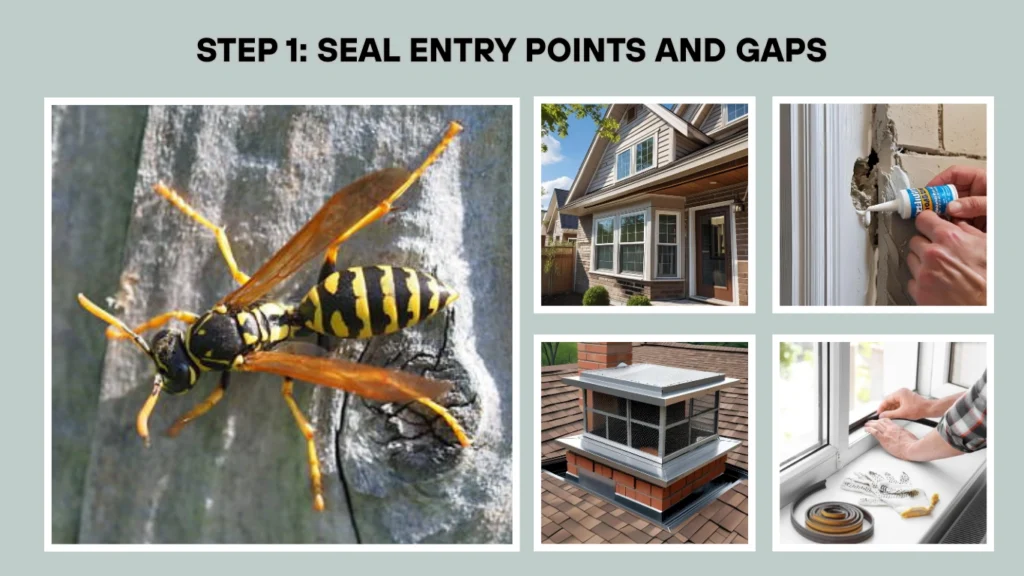
One of the most important steps is to block access to areas where wasps might try to nest or hide.
- Inspect your home’s exterior, especially around windows, doors, vents, siding, and eaves.
- Use silicone caulk to seal small cracks and gaps.
- Cover open vents, chimney caps, and attic openings with fine mesh screens.
- Install weather stripping on doors and windows to prevent entry.
By closing off access points, you eliminate the shelter wasps seek.
Step 2: Keep Outdoor Garbage Bins Clean and Sealed

Wasps are often drawn to trash—especially if it contains sugary or protein-rich items.
- Use tight-fitting lids on garbage cans.
- Wash bins regularly with vinegar and water to remove sticky residue and smells.
- Avoid leaving food scraps outside, and always double-bag meat waste or fruit peels.
- Compost piles should be well-managed and kept away from the house.
This simple step significantly reduces the food attraction around your home.
Step 3: Remove Outdoor Food and Water Sources
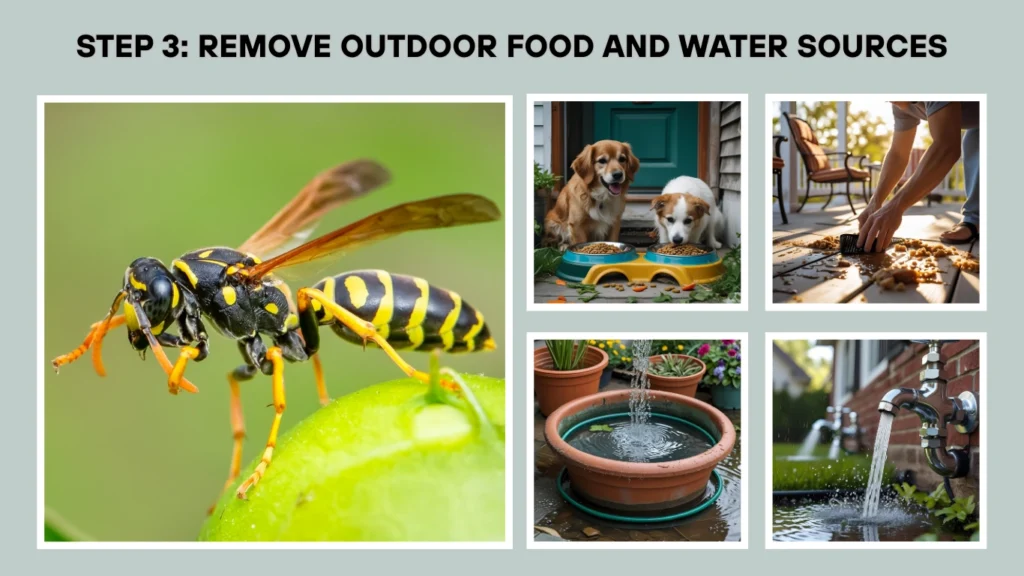
If there’s nothing to eat or drink, wasps are far less likely to hang around.
- Don’t leave pet food bowls outside.
- Clean up grill drippings, food spills, and crumbs after meals on the porch or patio.
- Dump out standing water in buckets, trays, birdbaths, or flower pots.
- Repair leaky faucets or sprinklers and clear clogged gutters.
These small actions help reduce the wasps’ reason to explore your property.
Step 4: Use Natural Wasp Repellent Sprays

Instead of harmful pesticides, you can use natural essential oil sprays to keep wasps at bay.
Peppermint Oil Spray
- Mix 2 cups of water, 1 tsp dish soap, and 10–15 drops of peppermint essential oil in a spray bottle.
- Shake well and spray around doorways, windows, porch railings, under eaves, and any cracks or corners.
Other essential oils that repel wasps include clove, lemongrass, geranium, and citronella.
Repeat the spray every few days, especially after rain or heavy wind, to keep the scent strong.
Step 5: Hang Decoy Wasp Nests
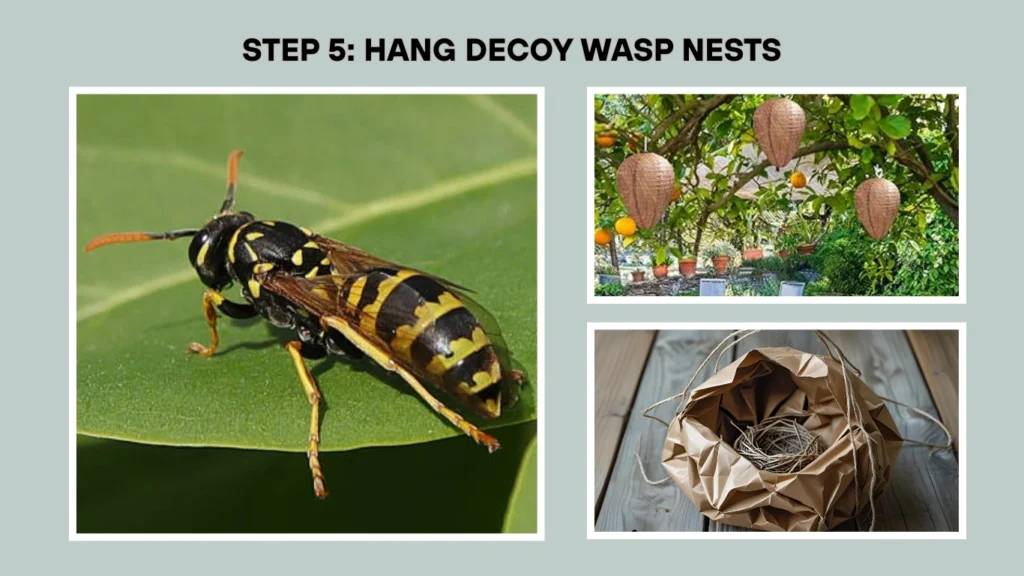
Wasps are territorial and generally won’t build nests within 200 feet of another colony. You can use this instinct against them.
- Hang paper decoy nests under eaves, porches, and patio overhangs.
- DIY: Crumple and shape a brown paper bag to mimic a nest and hang it with string.
Change the decoy nest every season or if it becomes worn out. One or two per side of the house is usually enough.
Step 6: Maintain Your Yard and Garden
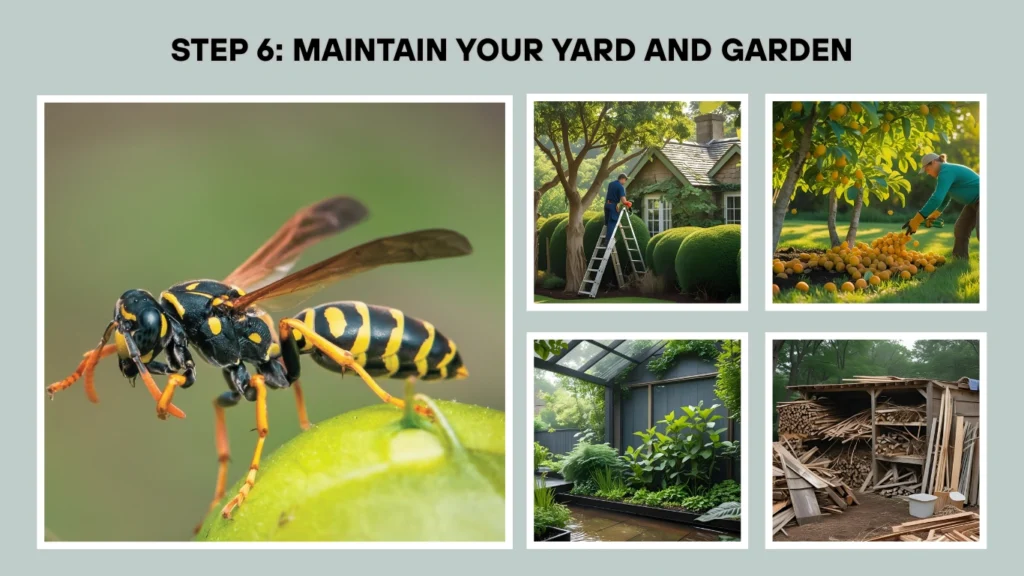
Your landscaping can either repel or invite wasps. Here’s how to manage it wisely:
- Trim bushes and trees regularly, especially near windows and the roofline.
- Remove fallen fruits from trees immediately.
- Avoid overwatering—damp, shaded areas attract insects that wasps feed on.
- Clean up piles of wood, old furniture, or unused structures where nests may form.
A clean and tidy yard removes hiding and nesting opportunities.
Step 7: Add Wasp-Repelling Plants Near the House

Many natural plants repel wasps due to their strong scent. You can use them near windows, entryways, or garden borders.
Top Wasp-Repelling Plants:
- Peppermint
- Citronella grass
- Lemongrass
- Eucalyptus
- Marigolds
- Basil
- Geranium
Grow them in pots or garden beds near the house to create a natural barrier.
Step 8: Replace Outdoor Lights with Yellow Bug Bulbs
Bright white or blue-tinted lights attract insects—which then attract wasps. Switch to yellow bug lights outdoors to reduce insect activity near your home at night.
- Turn off porch or garden lights when not in use.
- Use motion-sensor lighting instead of always-on lights.
Less light means fewer bugs, and fewer bugs means fewer wasps looking for food.
What to Do If You See a Nest Forming
Early intervention is key.
- If you spot a small nest (like a golf ball-sized one under the eaves), spray it with a natural repellent solution at dusk when wasps are least active.
- Observe for a day or two. If there’s no movement, safely remove the nest using a stick or broom and dispose of it in a sealed bag.
- Never remove an active or large nest on your own. If it’s embedded in the house or located in a dangerous area, call a licensed pest control professional.
Common Mistakes to Avoid
- Spraying water or using fire: These can cause more danger than help and provoke aggressive behavior.
- Removing a nest during the day: Wasps are most active in sunlight. Always handle nests at dusk or dawn.
- Leaving sugary drinks near windows: Even the smallest cup of juice can draw them in.
- Forgetting regular inspections: New nests can form in just a few days.
Avoiding these mistakes keeps you and your family safer.
Final Tips for Year-Round Wasp Control
- Inspect your house each season, especially in early spring, when queen wasps look for nesting spots.
- Reapply peppermint spray regularly.
- Refresh decoy nests at the start of summer.
- Teach kids to avoid swatting at wasps—it can provoke stings.
By being consistent with natural methods, you can make your house far less attractive to wasps without resorting to harmful chemicals.
FAQs
What smell do wasps hate the most?
Wasps dislike strong scents like peppermint, clove, eucalyptus, and lemongrass. These oils can be used in homemade sprays or diffused near entry points.
Can peppermint oil really keep wasps away?
Yes, studies have shown peppermint oil to be an effective natural repellent. It irritates wasps’ senses and encourages them to find another place to nest.
Do wasps return to old nest sites?
Wasps don’t reuse old nests, but they may return to the same area if the conditions are still favorable. That’s why removing the nest and cleaning the area with vinegar is important.
How can I keep wasps out of vents and soffits?
Install fine mesh screens over openings and check them regularly for damage. Apply peppermint oil spray around vent edges.
When is the best time to start wasp-proofing the house?
Start in early spring when queen wasps begin to search for nesting locations. Acting early can prevent the colony from forming altogether.
