

Ground wasps can turn your yard or garden into a danger zone, especially during the warmer months when their colonies are at their peak. These stinging insects often build hidden nests underground, making them easy to disturb by accident—and quick to defend with painful stings. Whether you’re dealing with aggressive yellow jackets or solitary digger wasps, knowing how to remove a ground wasp nest safely is essential.
In this guide, we’ll cover the safest removal methods, timing, protective steps, and ways to prevent future infestations.
Understanding Ground Wasp Nests

What Are Ground Wasps?
Ground wasps are stinging insects that build their nests underground rather than in trees, walls, or other elevated structures. They include a variety of species, with yellow jackets being the most common and aggressive. While some species are solitary and rarely pose a threat, others live in large colonies and will fiercely defend their nests when disturbed.
Common Species That Nest Underground
- Yellow Jackets (Vespula spp.) – Known for their aggressive nature and tendency to sting multiple times.
- Digger Wasps (Sphecidae family) – Solitary hunters that are generally non-aggressive.
- Cicada Killers (Sphecius speciosus) – Large, solitary wasps that prey on cicadas and rarely sting humans unless provoked.
Why They Build Nests in the Ground
Underground nests provide protection from predators, shelter from weather, and a stable temperature for raising their young. Many wasps take advantage of abandoned rodent burrows or soft, sandy soil to start their colonies.
Nest Structure and Activity Patterns
A ground wasp nest typically has a single entrance hole, though yellow jackets may create additional exits over time. Inside, the nest contains multiple chambers for brood rearing and food storage. Activity is highest during warm daylight hours, with most wasps returning to the nest at night.
Why You Should Remove a Ground Wasp Nest

Risk to Humans and Pets
Ground wasps, especially yellow jackets, are highly defensive of their nests. A single disturbance—such as mowing the lawn or walking nearby—can trigger a swarm attack, resulting in multiple painful stings. For individuals who are allergic to wasp venom, even one sting can lead to a life-threatening reaction. Pets are also at risk, as their curiosity may lead them too close to a nest.
Impact on Outdoor Activities
A ground wasp nest can make your yard, garden, or play area unsafe. Children may be unable to play outside, and gardening, landscaping, or barbecuing can become risky. In public spaces like parks, ground wasps can disrupt recreational activities and pose hazards to visitors.
Population Growth Over Time
Wasps multiply rapidly during the summer. A small colony in spring can grow into hundreds or even thousands of workers by late summer. The larger the nest, the more aggressive the wasps become and the more dangerous removal becomes—making early action the safest option.
When to Remove a Ground Wasp Nest

Best Time of Day
The safest time to remove a ground wasp nest is in the evening or early morning. During these hours, most wasps are inside the nest and less active due to cooler temperatures and low light, reducing the risk of multiple stings.
Best Time of Year
Early summer is ideal for removal because the colony is still small and easier to control. By late summer or early fall, the nest population peaks, making removal riskier and requiring stronger protective measures.
Weather Conditions to Consider
Choose a calm, cool, and dry day for removal. Wind can blow insecticide away from the target, while rain may wash treatments out of the nest before they take effect. Cooler temperatures help slow wasp activity, giving you more time to act safely.
Safety Precautions Before Removal

Wear Protective Gear
Always wear thick, protective clothing to minimize sting risk. This includes long sleeves, long pants, closed-toe shoes, thick gloves, and eye protection. For aggressive species like yellow jackets, consider wearing a beekeeping suit or jacket for full coverage.
Keep Children and Pets Indoors
During removal, make sure children and pets are safely inside the house or at a safe distance. Ground wasps can travel quickly and may sting multiple times when defending their nest.
Have an Emergency Plan
If you or someone nearby is allergic to stings, keep an epinephrine auto-injector (EpiPen) on hand. Also, have a phone ready to call emergency services in case of a severe reaction.
Methods to Get Rid of a Ground Wasp Nest
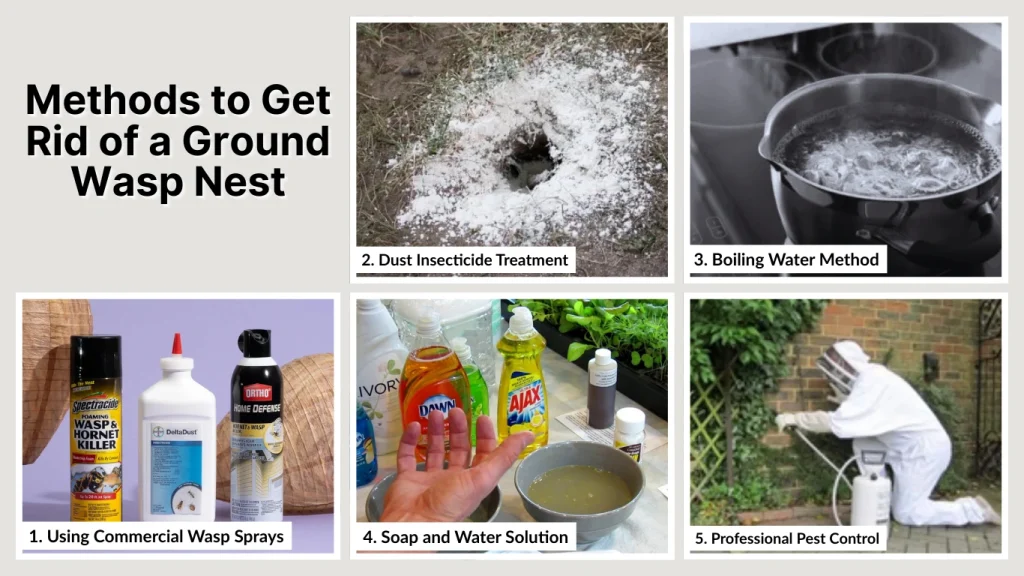
1. Using Commercial Wasp Sprays
- Select a spray labeled for wasps and hornets.
- Stand several feet away from the nest entrance.
- Spray directly into the hole in short bursts during the evening.
- Repeat after 24 hours if activity continues.
2. Dust Insecticide Treatment
- Apply a powdered insecticide designed for ground wasps.
- Use a duster to puff the dust directly into the nest entrance.
- The dust sticks to the wasps and spreads deeper into the nest as they move.
3. Boiling Water Method (For Non-Aggressive Species Only)
- Pour boiling water directly into the nest entrance at night.
- Repeat for 2–3 nights if needed.
- Avoid for large or aggressive colonies due to the risk of provoking multiple stings.
4. Soap and Water Solution
- Mix 2–3 tablespoons of liquid dish soap with a gallon of water.
- Pour the solution into the nest entrance at night to suffocate the wasps.
5. Professional Pest Control
- If you have an aggressive or large colony, call a licensed pest control company.
- Professionals have protective equipment and stronger, targeted treatments.
Step-by-Step Removal Guide
- Locate the main entrance hole to the nest.
- Wait until after sunset when wasps are inside and inactive.
- Wear full protective clothing, including gloves and eye protection.
- Stand several feet away and spray directly into the entrance for 5–10 seconds.
- Retreat immediately to a safe distance.
- Return the next day to check for activity.
- If no wasps are seen, fill the hole with soil or gravel to prevent reuse.
What NOT to Do

Avoid Gasoline or Fire
Pouring gasoline into a nest is dangerous, illegal in many areas, and harmful to soil, plants, and groundwater. Fire poses obvious burn and spread risks—never use it as a removal method.
Don’t Disturb the Nest During the Day
Ground wasps are most aggressive during daylight hours when foraging is in full swing. Disturbing the nest then can provoke an intense swarm and greatly increase sting risk.
Avoid Incomplete Treatments
Applying only a small amount of insecticide or only partially blocking the nest can make wasps more aggressive. Always follow through with a complete treatment and ensure the nest is fully inactive before sealing.
Final Thoughts
Removing a ground wasp nest requires planning, patience, and proper safety precautions. By working at the right time of day, wearing protective gear, and using proven methods, you can eliminate the nest while reducing the risk of painful stings. For large or aggressive colonies—especially yellow jackets—professional pest control is often the safest option. Taking steps to prevent future nesting will also save you trouble in the seasons ahead.
