
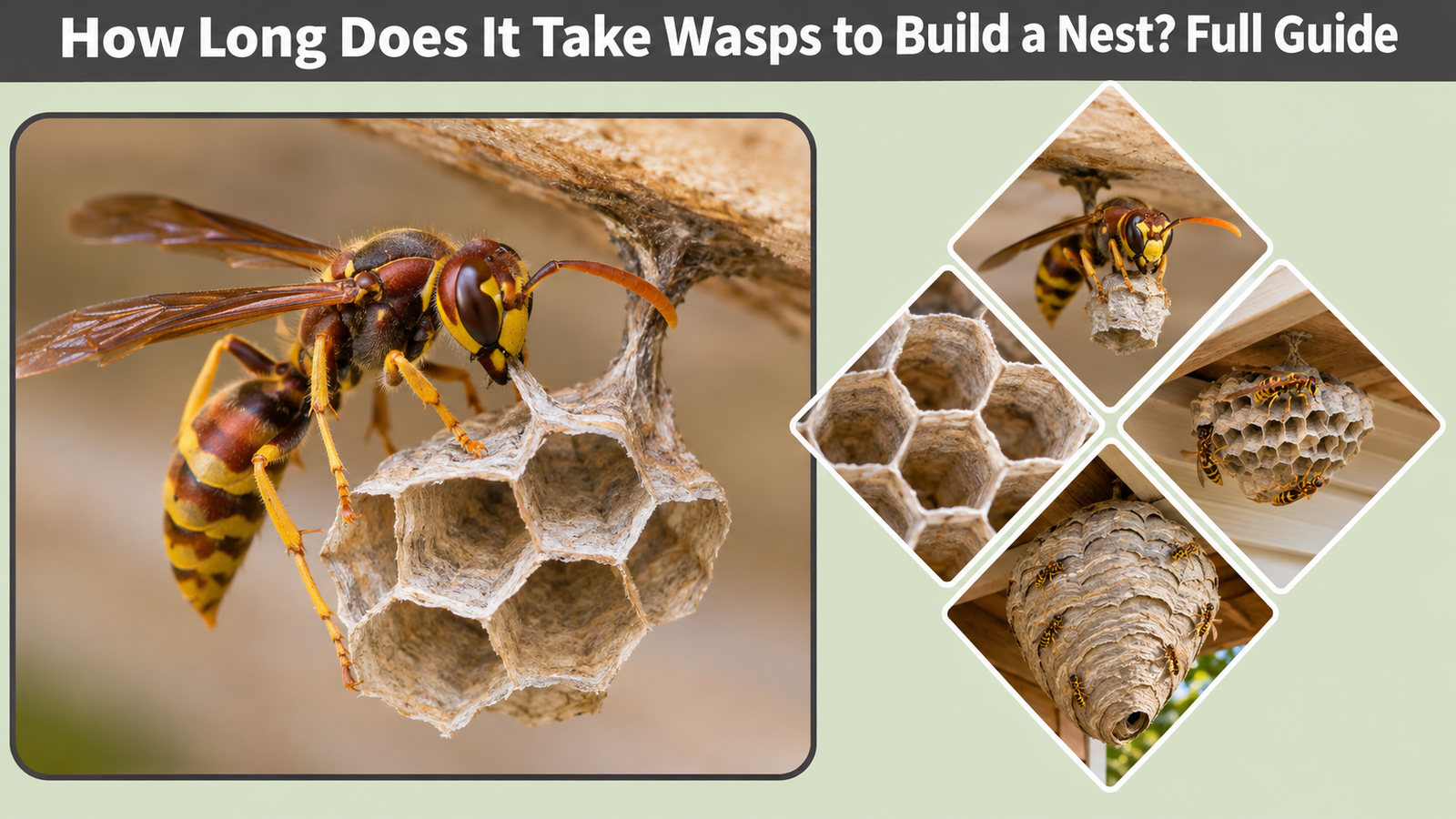
How long does it take wasps to build a nest? A queen can begin a small nest within days, but a large colony nest generally develops over several weeks or months. The exact timeline depends on the wasp species, weather, food supply, and number of workers. Paper wasps, yellowjackets, and hornets continue adding cells as their colonies grow, so there is rarely a single day when construction is complete. This guide explains typical nest-building timelines, how wasps construct nests, and when a new nest becomes a concern.
How Long Does It Take Wasps to Build a Nest?
Most social wasps begin constructing small nests within days, but developing a large, established colony usually takes several weeks or months. A queen initially builds the nest alone, creating enough cells to raise her first offspring. Once workers mature, they help expand the structure, allowing construction to accelerate.
Typical Wasp Nest Building Timeline
Wasp nests generally develop through several stages:
- First few days: The founding queen begins constructing the initial nest cells.
- Following weeks: The queen raises her first generation of workers.
- Early summer: New workers help enlarge the nest and care for developing larvae.
- Mid to late summer: The growing colony continues expanding its nest.
- Late season: Construction slows as the colony reaches maturity and begins declining.
These are general stages rather than fixed deadlines. Development varies considerably between species and climates.
Can Wasps Build a Nest Overnight?
Wasps can make noticeable progress on a small nest within a day, but an established colony nest does not normally appear overnight.
A tiny structure discovered in the morning may have been developing unnoticed for several days. Larger nests require repeated construction, egg development, and the emergence of additional workers.
How Do Wasps Build Their Nests?
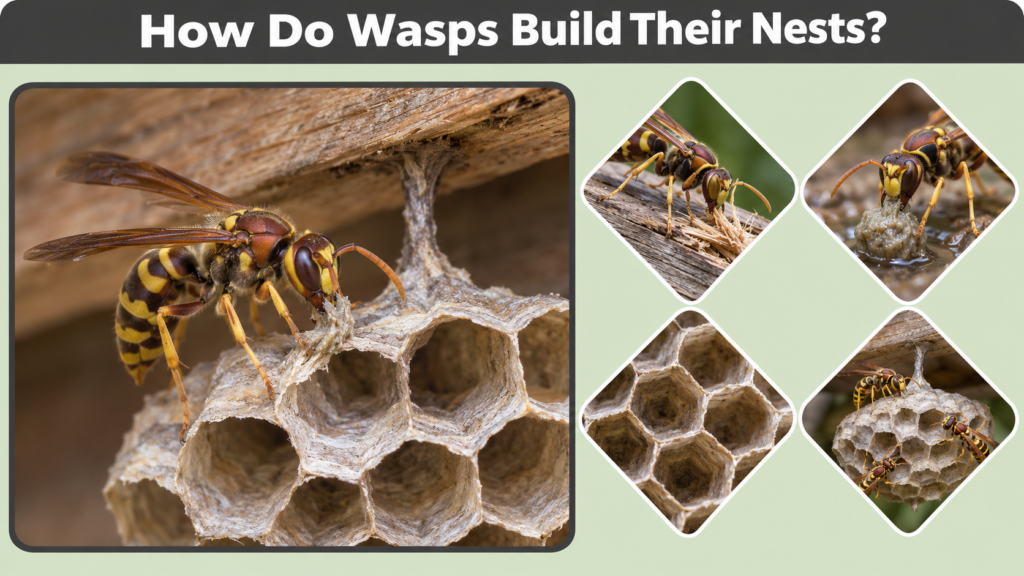
Social wasps construct nests using plant fibers, saliva, and carefully selected sheltered locations. Paper wasps, yellowjackets, and hornets commonly gather weathered wood and chew it into a pulp that dries into a lightweight, paper-like material. The queen begins construction, while workers eventually take over much of the building activity.
Steps in Wasp Nest Construction
The construction process generally involves:
- Selecting a location: A queen chooses a protected area suitable for nesting.
- Collecting materials: She gathers weathered wood fibers or other suitable materials.
- Making paper pulp: The wasp chews plant fibers and mixes them with saliva.
- Building cells: She shapes the material into hexagonal chambers for developing offspring.
- Expanding the nest: Emerging workers add cells and strengthen the structure.
Why Do Wasps Build Hexagonal Cells?
Hexagonal cells allow paper-building wasps to arrange many brood chambers efficiently within a compact structure. Shared cell walls also reduce the amount of building material needed.
Each cell provides space for an egg and developing larva. Depending on the species, the surrounding nest may remain exposed or become enclosed within protective paper layers.
How Long Do Different Wasps Take to Build Nests?
Different wasp species construct nests at different rates because their colony sizes, materials, and nesting behaviors vary. Paper wasps build exposed combs, yellowjackets often develop nests inside cavities, and hornets may create large enclosed structures. Solitary wasps, including mud daubers, construct individual brood chambers rather than large social colonies.
Nest Building Time by Wasp Type
- Paper wasps: Begin small nests within days and continue expanding them throughout the active season.
- Yellowjackets: Establish nests during spring, with colony structures growing over several months.
- Bald-faced hornets: Start with small enclosed nests that can become much larger by late summer.
- Mud daubers: Construct individual mud chambers over repeated building trips, sometimes completing small structures within days.
Do Hornets Build Nests Faster Than Paper Wasps?
Hornets can develop larger nests because their colonies may contain numerous workers contributing to construction.
However, nest size does not necessarily indicate faster building. The founding queen must first raise workers, and colony growth depends on weather, food availability, and the species involved.
What Affects How Fast Wasps Build a Nest?
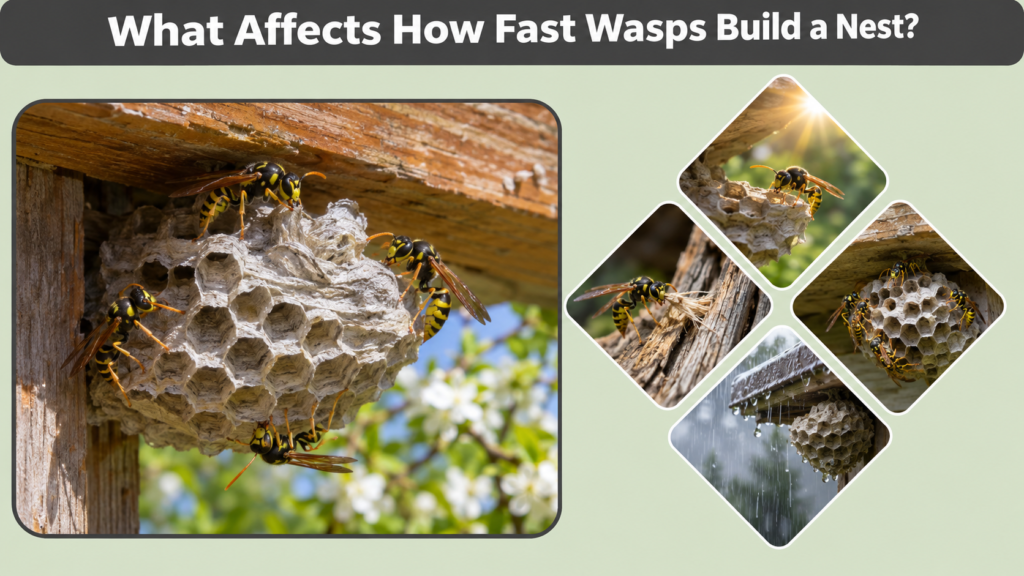
Several environmental factors determine how quickly wasps establish and expand their nests. Warm weather, suitable materials, and abundant food can support colony development. In contrast, cold temperatures, heavy rainfall, and disturbances may slow construction. The number of available workers also becomes increasingly important as a colony grows.
Factors That Influence Nest Construction
Important factors include:
- Temperature: Suitable warmth supports foraging and nest-building activity.
- Weather: Persistent rain and strong winds can interrupt construction.
- Food availability: Sufficient insect prey helps colonies raise additional workers.
- Building materials: Accessible wood fibers or mud support nest construction.
- Colony size: More workers can collect materials and expand the nest.
- Nest location: Protected sites reduce exposure to damaging weather.
Does Warm Weather Help Wasps Build Faster?
Warm conditions generally encourage wasp activity when temperatures remain within a suitable range. Workers can spend more time collecting materials and feeding developing larvae.
However, extreme heat and drought can create unfavorable conditions. Nest development depends on the overall environment rather than temperature alone.
When Do Wasps Start and Stop Building Nests?
In temperate regions, social wasps usually begin nesting during spring when overwintered queens become active. Colony growth continues through summer as successive generations of workers emerge.
Many colonies reach their largest populations in late summer or early autumn. As colder weather arrives, workers and old queens typically die, while newly mated queens seek protected overwintering locations.
Do Wasps Reuse Old Nests?
Most temperate social wasps establish new colonies each year instead of reusing abandoned nests. Old paper structures generally deteriorate after the colony disappears.
However, exceptions occur, including some European paper wasps that may reuse existing nest structures. Nesting behavior also differs in warmer climates where colonies can survive longer.
How Long Does a Wasp Nest Stay Active?
Many social wasp nests remain active from spring through autumn, although the exact duration depends on climate and species.
A nest may become inactive when temperatures fall and the colony dies. In mild climates, certain species can maintain colonies for longer periods, making seasonal patterns less predictable.
How to Identify a New Wasp Nest
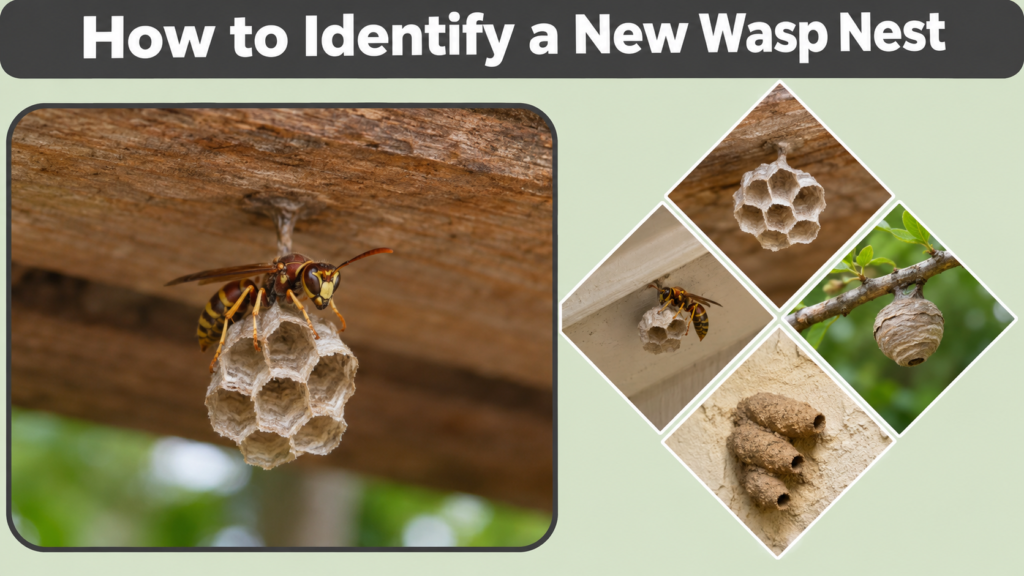
Recognizing an early-stage wasp nest can help homeowners assess potential risks before a colony becomes large. Newly established nests are usually much smaller than mature structures and may contain only a founding queen. Their appearance depends on the species and nesting location.
Signs of an Early Wasp Nest
Common signs include:
- Small paper comb: A few exposed hexagonal cells beneath a sheltered surface.
- Single queen: One wasp repeatedly visiting a small structure.
- Repeated activity: Wasps carrying building materials to the same location.
- Tiny enclosed nest: An early hornet or yellowjacket structure beginning to expand.
- Mud chambers: Small mud tubes or rounded cells attached to protected surfaces.
Where Do Wasps Build New Nests?
Wasps frequently select sheltered locations around buildings, including roof eaves, porch ceilings, sheds, and wall cavities.
Some species also establish nests underground in abandoned animal burrows. Inspecting these areas from a safe distance can help identify activity without disturbing the colony.
Is It Safe to Remove a Nest While Wasps Are Building?
Small developing nests generally contain fewer wasps than mature colonies, but disturbing them can still trigger defensive behavior. Female social wasps can sting repeatedly when protecting their nests.
Avoid knocking down active nests, blocking entrances, or spraying unfamiliar chemicals. A qualified pest-control professional can identify the species and determine whether removal is necessary.
Should You Remove Every Wasp Nest?
Not every nest requires removal. Wasps help control caterpillars, flies, and other insects, making them beneficial predators in gardens.
Nests located away from people can often remain undisturbed. However, colonies near entrances, children’s play areas, or frequently used spaces may require professional assessment.
FAQs
1. How Fast Can Wasps Build a Small Nest?
A founding queen can begin a small nest within days, depending on weather and available materials. However, producing workers and establishing a functioning colony takes longer. Even a small nest may continue growing for several weeks as additional wasps emerge and help with construction.
2. Can Wasps Build a Large Nest in One Week?
A large, mature social wasp nest is unlikely to develop from nothing within one week. Most colonies begin with a single queen and expand over several weeks or months. A nest that suddenly appears large may have been growing unnoticed for some time.
3. How Long Does It Take Paper Wasps to Build a Nest?
Paper wasps can begin constructing their first nest cells within days. However, building an established colony takes weeks or months because the founding queen must raise workers before expansion accelerates. Construction often continues throughout the warmer season.
4. Do Wasps Build Nests at Night?
Most familiar paper wasps and yellowjackets perform much of their nest-building and foraging during daylight. Their activity usually decreases at night, although some species, including European hornets, can remain active after dark. Nesting behavior varies by species and environmental conditions.
5. How Long Does It Take Wasps to Rebuild a Destroyed Nest?
Wasps may begin rebuilding within days if surviving individuals remain capable of establishing or maintaining a colony. However, successful rebuilding depends on the species, season, and whether the queen survives. Destroying a structure does not necessarily eliminate the colony or prevent another nest nearby.
