
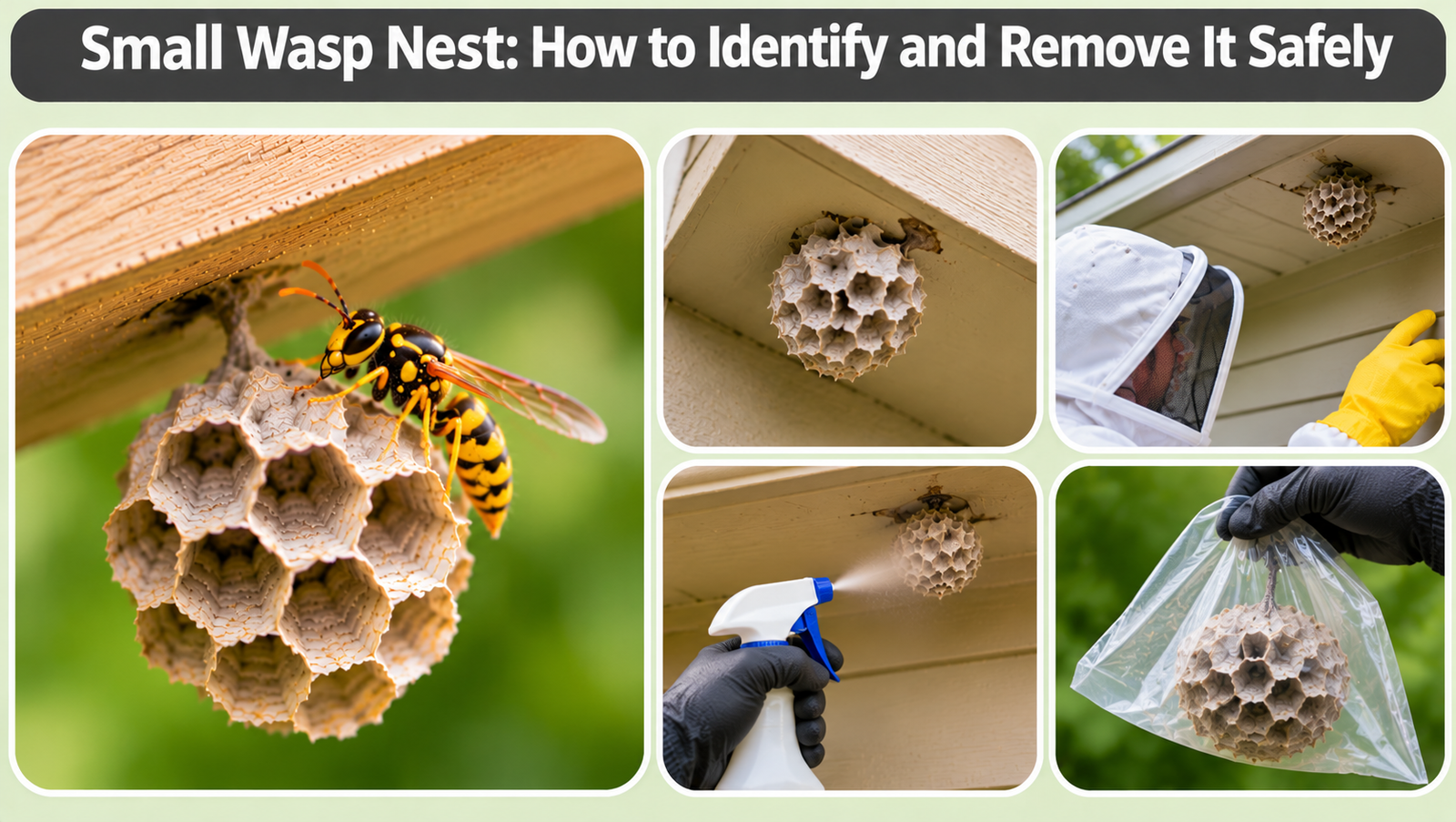
Finding a small wasp nest under your porch, inside a shed, or near a window can be unsettling. Its size may suggest that only one insect is present, but that is not always true. Some nests are newly started paper wasp colonies, while others belong to solitary mud daubers or developing yellowjacket colonies. Knowing what a small wasp nest looks like helps you identify the insects, understand potential sting risks, and decide whether removal is necessary. This guide explains early nest stages, common locations, and safer options for dealing with them.
What Does a Small Wasp Nest Look Like?
A small wasp nest may look like a tiny honeycomb, a rounded paper ball, or a cluster of dried mud. Its appearance depends on the species and stage of construction. Examining the shape, material, and location from a safe distance can help identify the nest without disturbing the insects.
Small Paper Wasp Nest
Paper wasps build exposed, umbrella-shaped nests from chewed wood fibers mixed with saliva. These nests often appear gray or light brown and hang from a narrow stalk.
- Open, hexagonal cells resembling a honeycomb
- Gray or brown papery material
- Usually attached beneath sheltered surfaces
- Often starts with one founding female
Small Round Wasp Nest
Some yellowjackets and hornets construct enclosed nests with a rounded exterior. Their protective paper covering hides the internal combs.
- Small, rounded or oval appearance
- Gray, tan, or layered paper covering
- A visible entrance opening
- Commonly attached to protected structures or vegetation
Small Mud Wasp Nest
Mud daubers and some other solitary wasps build nests from mud rather than paper. These structures can resemble dried clay tubes or irregular mud patches.
- Brown or gray mud construction
- Tube-shaped or clustered cells
- Frequently attached to walls or rafters
- Usually maintained by individual females
How Do Small Wasp Nests Start and Grow?
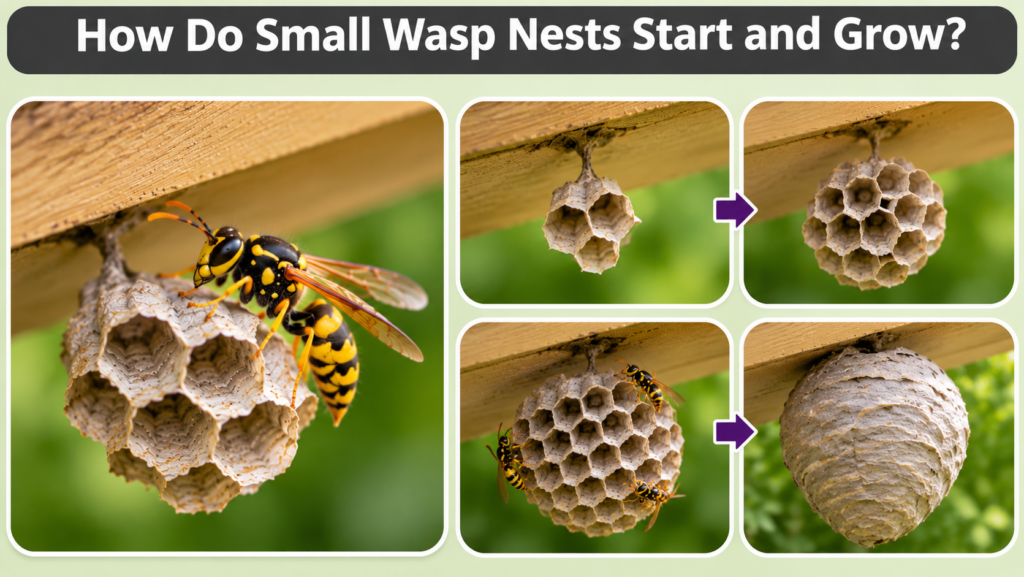
Most social wasp colonies begin with a founding queen that selects a protected location. She starts constructing a nest, lays eggs, and feeds the developing larvae. Once workers emerge, they help expand the colony and gather food. Nest growth depends on the species, climate, and availability of resources.
Beginning Stage of a Small Wasp Nest
An early-stage paper wasp nest may contain only a few visible cells. The founding queen performs most of the construction and brood care before the first workers develop.
During this period, the colony may appear inactive when the queen is away collecting food or building materials. However, even a nest attended by one wasp can present a sting risk if disturbed.
How Many Wasps Are in a Small Nest?
A newly established paper wasp nest may initially contain only one queen. Later, several workers may emerge, and the population can increase as additional adults develop.
However, nest size alone cannot determine population. Solitary mud nests may contain developing young in individual chambers, while enclosed social nests can hide numerous insects. Never assume a small nest is empty.
Where Are Small Wasp Nests Commonly Found?
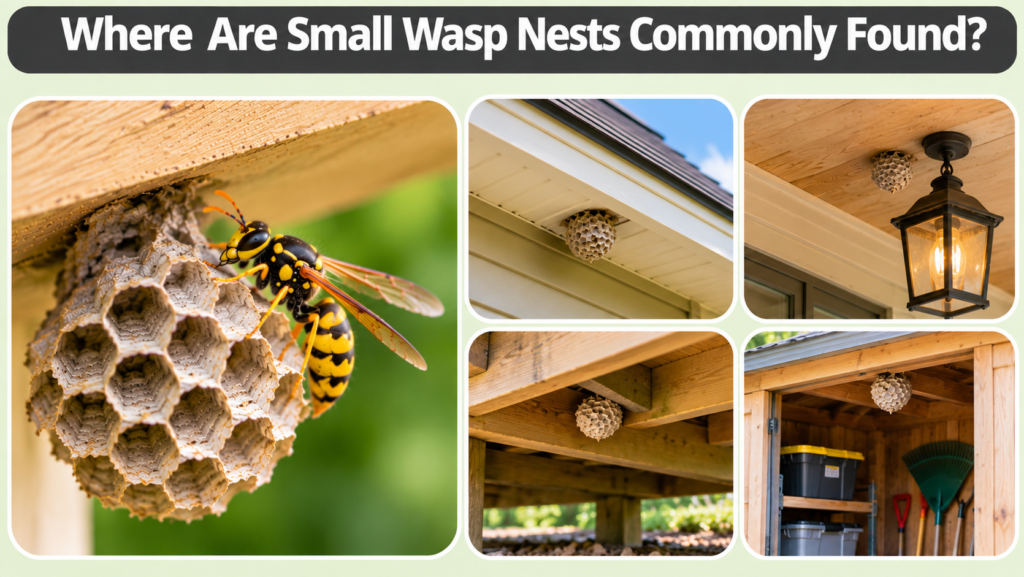
Wasps prefer places that offer protection from weather, predators, and disturbance. Around residential properties, these locations often include rooflines, outdoor structures, storage buildings, and concealed cavities. Identifying common nesting spots helps homeowners inspect their properties without accidentally disturbing active colonies.
Small Wasp Nest on a House
Paper wasps frequently attach small nests to protected exterior surfaces.
- Under roof eaves and porch ceilings
- Around window frames and shutters
- Beneath exposed beams
- Near outdoor light fixtures
Small Wasp Nest in a Shed or Loft
Sheds, lofts, and attics provide sheltered environments where colonies may develop unnoticed.
- Wooden rafters and ceiling corners
- Roof gaps and structural cavities
- Behind stored equipment
- Near ventilation openings
Small Wasp Nest in the Ground
Some yellowjackets establish colonies in underground cavities. Solitary ground-nesting wasps may also create small burrows.
- Abandoned rodent holes
- Bare soil and sandy areas
- Beneath landscaping materials
- Near garden paths or lawn edges
How to Get Rid of a Small Wasp Nest Safely
Removing a small wasp nest requires careful identification and an understanding of whether the nest is active. Not every nest needs removal, especially when it belongs to a solitary species and is located away from people. Safety should take priority over the convenience of removing the structure immediately.
1. Identify the Type of Nest
Observe the nest from a safe distance. Determine whether it has exposed paper cells, an enclosed covering, or mud chambers. These characteristics help distinguish social wasps from solitary species.
2. Check for Wasp Activity
Watch from a distance for insects entering, leaving, or attending the nest. Do not touch the structure to determine whether it is occupied. A small nest may still contain defensive adults.
3. Decide Whether Removal Is Necessary
Consider the nest’s location and potential exposure to people. A solitary mud dauber nest high on an unused wall may be harmless, while a paper wasp colony beside a doorway could create problems.
4. Contact a Professional When Needed
Professional assistance is recommended for active social wasp nests near people, concealed colonies, or nests requiring ladders. It is particularly important when household members have serious sting allergies.
Can You Remove a Small Wasp Nest Yourself?
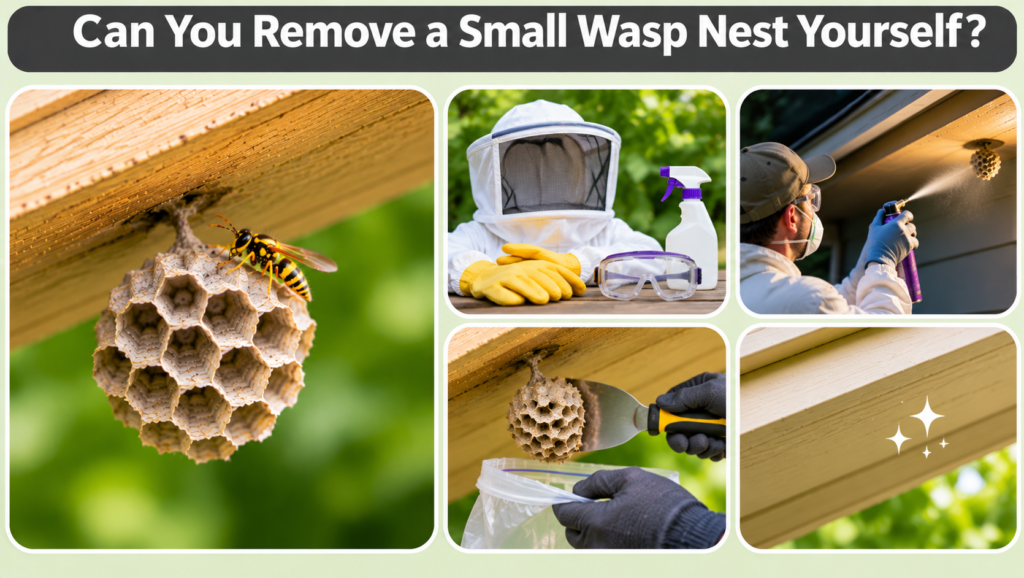
Some small, accessible, confirmed inactive nests can be removed without professional treatment. However, attempting to knock down an active social wasp nest can provoke defensive behavior, even when only a few adults are present.
Removing an Inactive Wasp Nest
Once a nest has been reliably confirmed inactive, its remains can generally be detached using suitable tools. Clean the attachment surface afterward and inspect the area for structural openings.
For mud daubers, removal is often unnecessary because these solitary insects rarely defend their nests. Avoid destroying occupied nests when they pose little risk.
Why You Should Not Knock Down an Active Nest
An active colony may respond aggressively when its nest is struck or shaken. This can result in multiple stings, especially with social species such as yellowjackets and hornets.
Never use fire, gasoline, boiling water, or other dangerous homemade removal methods. Seek professional help when safe removal is uncertain.
How Much Does Small Wasp Nest Removal Cost?
Professional removal costs vary depending on the wasp species, nest location, accessibility, and treatment required. An exposed nest at ground level is generally easier to address than a colony hidden inside an attic or wall cavity.
Some pest control companies charge inspection fees, while others include inspection within the service price. Request a written estimate and confirm whether follow-up treatment is included.
How to Prevent Small Wasp Nests From Returning
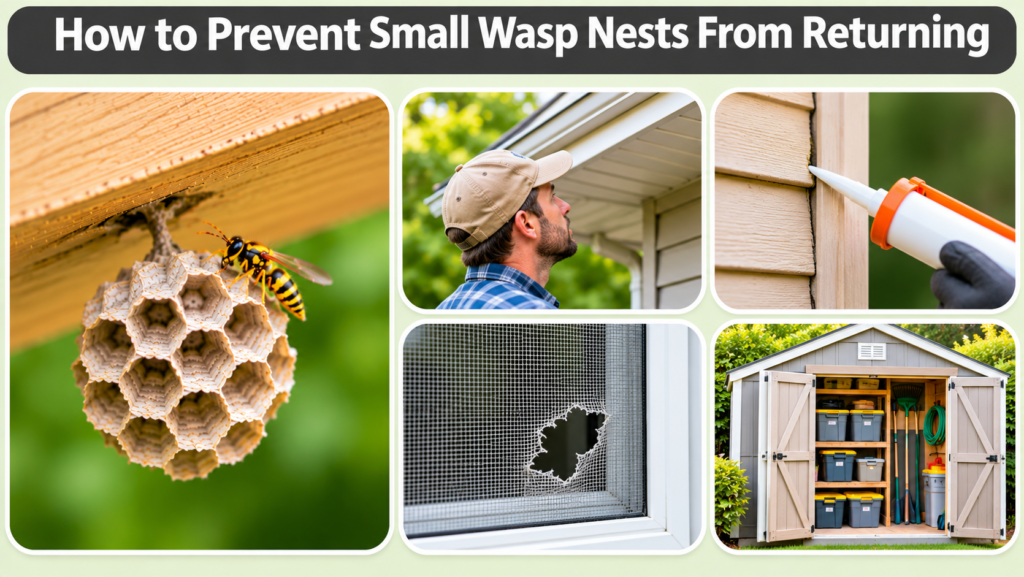
Preventing repeated nesting involves maintaining suitable building surfaces and limiting access to sheltered cavities. Although new queens may choose previously occupied locations, most temperate-climate social wasps do not reuse old nests. Regular maintenance can help reduce future nesting opportunities.
- Inspect roof eaves and porches during spring.
- Seal unused cracks after confirming they are unoccupied.
- Repair damaged screens and exterior trim.
- Keep sheds and outdoor storage areas organized.
- Monitor locations where nests previously appeared.
FAQs
1. Why Are Some Wasp Nests So Small?
A nest may be small because construction has recently begun, the colony is still developing, or the species naturally builds individual nesting chambers. Environmental conditions and nest abandonment can also affect its size.
2. Can a Small Wasp Nest Have Only One Wasp?
Yes. A newly founded paper wasp colony may initially contain one queen. Solitary wasps also build nests individually. However, hidden chambers may contain developing larvae or pupae.
3. Are Small Wasp Nests Dangerous?
Small nests can still present sting risks, particularly when they belong to social wasps. The potential danger depends on the species, colony activity, location, and likelihood of disturbance.
4. How Quickly Does a Small Wasp Nest Grow?
Growth varies by species, temperature, food availability, and season. Social colonies may expand considerably after the first workers emerge, while solitary mud nests do not develop into large cooperative colonies.
5. Should I Remove a Small Wasp Nest Immediately?
Not necessarily. Nests located away from people may safely remain undisturbed. If an active nest is close to entrances, frequently used areas, or vulnerable household members, professional assessment is advisable.
