

Ground wasp nests are often hidden in plain sight, making them tricky to identify and handle. These nests, typically constructed by species like yellow jackets and hornets, can be found in gardens, yards, or other outdoor spaces. While they play a crucial role in pest control, ground wasp nests can pose a danger, especially if disturbed.
In this guide, we will explore how to identify ground wasp nests, what to do if you encounter one, and the best ways to safely remove them. Whether you’re looking to protect your family, pets, or garden, understanding ground wasp behavior and knowing how to deal with them effectively is key.
What Are Ground Wasp Nests?
Ground wasp nests are underground habitats built by certain species of wasps, such as yellow jackets, hornets, and mud daubers. Unlike tree-dwelling wasp species, these wasps prefer to create their nests in the soil, often in areas like lawns, gardens, or even under the foundation of buildings. The nest is usually made of paper-like material that the wasps create by chewing wood fibers mixed with saliva, forming a paper-like pulp. These nests can be small or large, depending on the size of the colony.
The nest’s entrance is usually a small hole in the ground, surrounded by a dirt mound. You may notice wasps flying in and out of this hole, indicating an active nest below. Ground nests are typically well-hidden, making it difficult to spot them, especially if the area is overgrown with grass or shrubs.
Ground Wasp Nest Identification
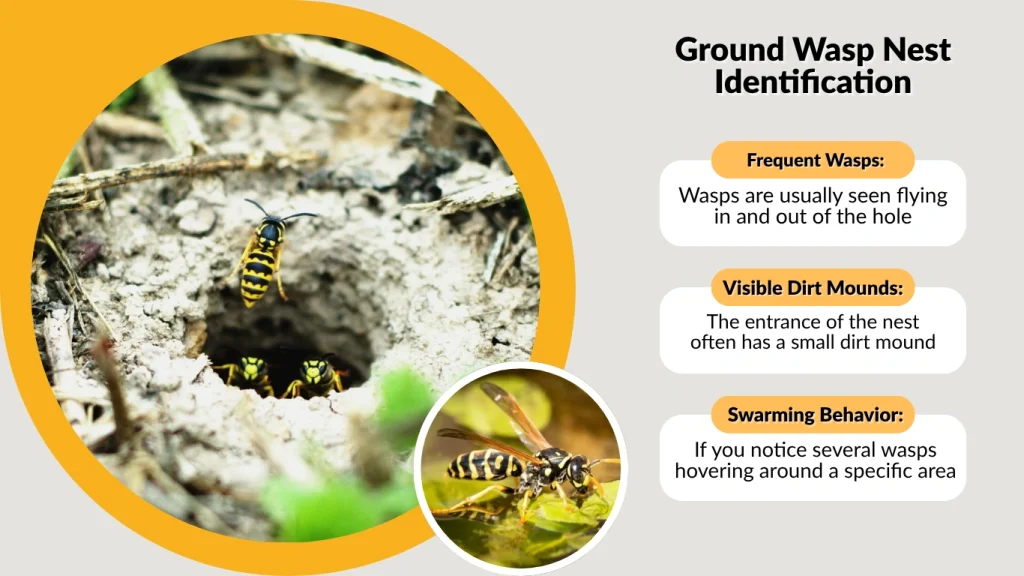
Identifying a ground wasp nest requires a keen eye and awareness of the signs of activity. Here’s what to look for:
Appearance of Ground Wasp Nests
Ground wasp nests are typically located in dry, well-drained areas of soil. The nest entrance will often appear as a small hole in the ground, which may be surrounded by a slight dirt mound. The size of the hole can vary depending on the species and the age of the nest, but it usually ranges from 1 to 3 inches in diameter.
The nest itself is not visible, as it’s underground, but the wasps’ activity around the entrance is a telltale sign. You might see wasps flying in and out, especially in the early morning or late afternoon when they are most active. If the area is disturbed, the wasps can become aggressive in defending their nest.
Signs of Active Ground Wasp Nests
- Frequent Wasps: Wasps are usually seen flying in and out of the hole, with a marked increase in activity as the nest grows.
- Visible Dirt Mounds: The entrance of the nest often has a small dirt mound or pile around it, made by the wasps when they dig to create the nest.
- Swarming Behavior: If you notice several wasps hovering around a specific area in your yard or garden, there’s likely a ground nest nearby.
Do Wasps Build Nests in the Ground?

Yes, wasps do build nests in the ground. This behavior is most common among social wasp species like yellow jackets and hornets, which prefer underground spaces for their colonies. These wasps dig tunnels or burrows in the ground, using soil and their paper-like nest material to build and expand the colony.
Unlike bees, which prefer to nest in sheltered areas like trees or walls, wasps find the ground to be a safe and hidden environment for their nests. Ground nests are often well-camouflaged, making it difficult to detect them until the wasps become active in the warmer months.
Ground wasp nests can grow significantly in size, housing hundreds or even thousands of individual wasps by the end of the season. These nests are often abandoned in winter, but they can be reused by new generations of wasps. Knowing how to spot and safely handle a ground wasp nest is essential for minimizing the risks they pose.
How to Find a Wasp Nest in the Ground
Finding a wasp nest in the ground can be challenging, especially because these nests are often hidden beneath soil and vegetation. However, with the right approach, you can safely locate a ground wasp nest. Here are some methods to help you find it:
Steps to Locate a Ground Wasp Nest
- Observe Wasps: Watch for wasp activity in your yard. If you notice wasps flying in a specific direction and entering or exiting a particular spot in the ground, that’s a good indication of a nest location.
- Look for Dirt Mounds: Check for small dirt piles or mounds around areas of your yard where wasps have been observed. These mounds are typically created when wasps dig their nest entry hole.
- Check Near Plant Roots or Structures: Ground wasp nests often appear near thick grass, shrubs, or along fence lines. They may also be found near the foundation of buildings or structures where the soil is disturbed.
Tools and Techniques for Finding Ground Wasp Nests
- Use of Traps: Special wasp traps designed to lure wasps can be helpful in identifying the general area of a nest. Once you find the wasps attracted to the trap, trace their flight path to the nest.
- Visual Clues: Look for concentrated wasp traffic. Wasps will fly in and out of the nest, following the same path repeatedly. Once you observe this behavior, carefully trace their movements to pinpoint the nest entrance.
How to Get Rid of Ground Wasp Nests

If you’ve identified a ground wasp nest and it’s causing a problem, you may need to take action to remove it. There are several methods to eliminate the nest, ranging from natural solutions to professional treatments.
Safe Methods to Remove a Ground Wasp Nest
- Wait for Nightfall: Wasps are less active at night, making it the safest time to address a ground nest. Wear protective clothing (long sleeves, gloves, and a face shield) before approaching the nest.
- Use Soap and Water: A simple solution of dish soap and water sprayed into the nest entrance can suffocate the wasps. The soap clogs their breathing pores, causing them to die.
- Seal the Entrance: After applying the soap and water mixture, quickly seal the entrance of the nest with soil or a large rock to prevent further wasp activity.
Chemical Methods for Ground Wasp Nest Removal
- Insecticidal Sprays: Specialized wasp-killing sprays are available in most stores and can be effective in eradicating ground wasp nests. These sprays often come with a long nozzle, allowing you to apply the insecticide directly into the nest from a safe distance.
- Powdered Insecticide: If you prefer a non-spray option, powdered insecticides can also be effective. Apply the powder around the entrance of the nest, and it will spread through the colony as the wasps enter and exit.
Professional Removal Services
- Pest Control Experts: If the nest is large, near high-traffic areas, or if you are allergic to wasp stings, it’s best to hire a professional pest control service. They have the tools and expertise to safely remove the nest without risking harm.
How to Safely Handle a Ground Wasp Nest

Handling a ground wasp nest can be dangerous, especially if the wasps feel threatened. Here are some safety precautions to follow:
Safety Precautions When Dealing with Ground Nests
- Wear Protective Gear: Always wear long sleeves, pants, gloves, and a face shield to protect yourself from potential stings.
- Approach at the Right Time: The safest time to handle a ground wasp nest is during the evening or early morning when the wasps are less active.
- Keep Pets and Children Away: Make sure pets and children are kept at a safe distance from the nest area.
When to Avoid Interacting with a Ground Wasp Nest
- High Wasps Activity: If the nest is near a high-traffic area or if you notice an excessive number of wasps, it’s best to avoid trying to handle the situation yourself.
- Allergic Reactions: If you or anyone nearby is allergic to wasp stings, do not attempt to remove the nest. In this case, contact a pest control professional immediately.
Ground Wasp Nests and Their Role in the Ecosystem
While ground wasp nests can be a nuisance or pose a danger to humans, these wasps play a significant role in maintaining balance in the ecosystem. Here’s a look at the ecological impact of ground wasps.
Benefits of Ground-Nesting Wasps
- Pest Control: Ground wasps are natural predators of various insects, including flies, caterpillars, and other garden pests. By preying on these harmful insects, wasps help control the population of pests that could otherwise damage plants and crops.
- Pollination: Although wasps are not as effective as bees, some species of ground-nesting wasps also contribute to pollination by visiting flowers while hunting for prey.
- Supporting Biodiversity: Wasps, including those that nest in the ground, are an essential part of the food chain. They are prey for many animals, such as birds, mammals, and other insects, helping to maintain biodiversity in the local environment.
The Negative Impact of Ground Wasp Nests
- Risk of Stings: Ground wasp nests can be dangerous if disturbed, especially for individuals who are allergic to wasp venom. Wasps can sting multiple times, which increases the risk of severe reactions, including anaphylaxis.
- Danger to Pets and Livestock: Pets, especially dogs, may accidentally provoke wasps while playing outdoors. Stings can lead to swelling, pain, and potential allergic reactions in pets, requiring immediate attention.
- Threat to Human Activity: If a wasp nest is located in a frequently visited area like a garden or yard, it can limit outdoor activities. The presence of aggressive wasps can deter people from using these spaces, especially during peak activity times in summer.
FAQs
Can wasps make nests in the ground?
Yes, certain species of wasps, like yellow jackets, prefer to build their nests underground. These nests are typically hidden beneath soil and often go unnoticed until wasp activity becomes apparent.
How to get rid of a wasp nest in the ground safely?
To safely remove a ground wasp nest, approach it at night when the wasps are less active. Wear protective clothing and use methods like soapy water or insecticidal sprays. If the nest is large or near a high-traffic area, consider calling a professional pest control service.
What should you do if you get stung by a ground wasp?
If stung by a ground wasp, clean the sting site with soap and water, apply a cold compress to reduce swelling, and take over-the-counter pain relievers. Monitor for allergic reactions, and seek medical help if symptoms like difficulty breathing or dizziness occur.
How do you know if a wasp nest is active?
An active wasp nest is typically characterized by wasps flying in and out of the nest entrance. You may also see increased wasp activity around the nest, especially during the daytime. If you notice this behavior, there is likely an active nest nearby.
Are ground wasps dangerous?
Ground wasps can be dangerous, especially if their nest is disturbed. They are capable of stinging multiple times, and some people may experience severe allergic reactions. It’s essential to approach ground wasp nests with caution, and professional removal may be needed for safety.
Conclusion
Understanding ground wasp nests and their potential risks can help you handle these insects safely and responsibly. While they contribute to natural pest control and biodiversity, ground wasp nests should be approached with care, especially in areas where people and pets frequent. Whether you choose to remove the nest yourself or enlist the help of a professional, it’s important to be aware of the best practices for managing wasp activity. Always take the necessary precautions to avoid stings, and if allergic reactions are a concern, don’t hesitate to seek professional assistance.
