
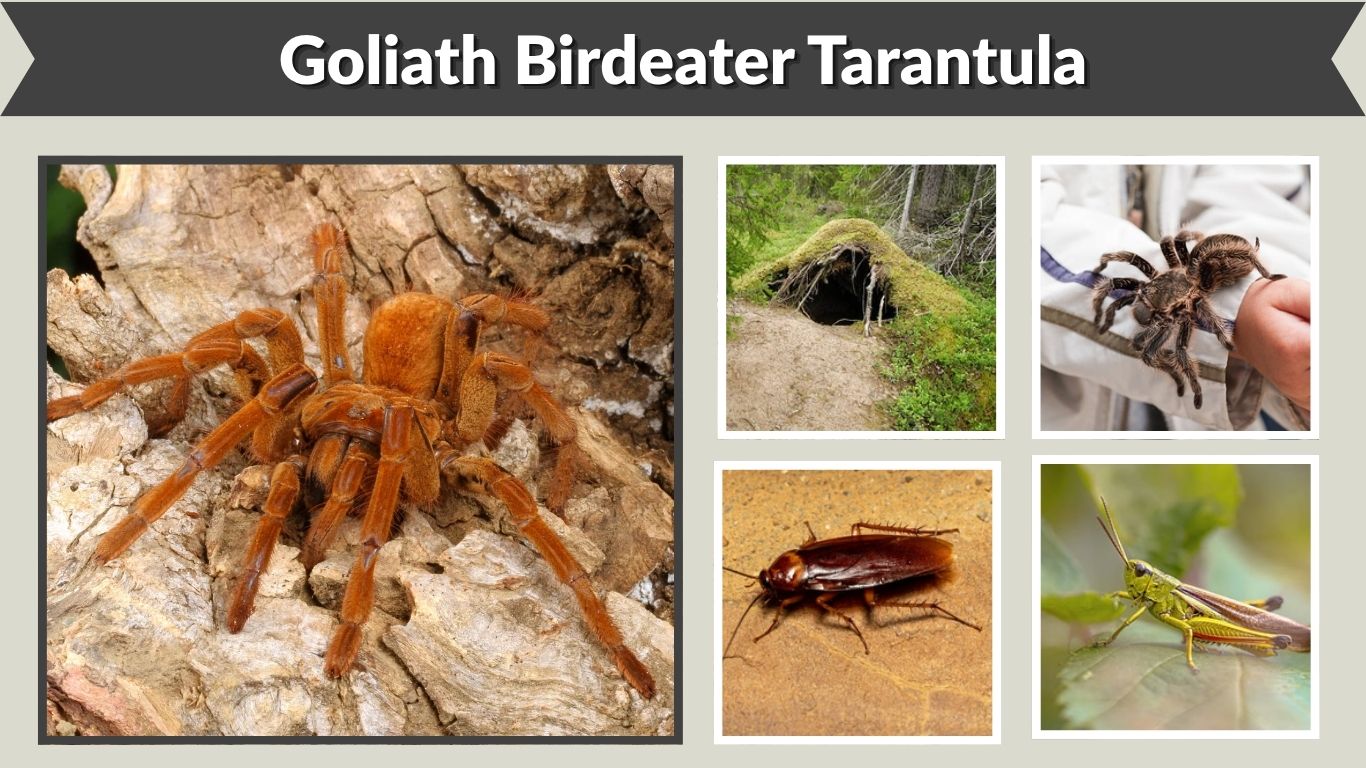
The Goliath birdeater tarantula is one of the largest and most impressive spiders on Earth. Native to the humid forests of northern South America, this massive tarantula is known for its heavy body, long legs, powerful fangs, and irritating defensive hairs. Despite its frightening name, it rarely eats birds and usually hunts insects and other small animals. This guide explains Goliath birdeater size, habitat, diet, bite, venom, lifespan, behavior, pet care, and other important facts about this remarkable South American tarantula.
What Is a Goliath Birdeater Tarantula?
The Goliath birdeater, Theraphosa blondi, is a true tarantula in the family Theraphosidae. It is famous for its enormous, heavily built body and ground-dwelling lifestyle. Much of its time is spent in or near a burrow, while its brown coloration and dense body hairs give it a rugged appearance.
Identification and Physical Characteristics
A Goliath birdeater can be recognized by several features:
- Scientific name: Theraphosa blondi
- Family: Theraphosidae
- Color: Russet brown, dark brown, or nearly black
- Body length: Up to about 12 cm (4.75 inches)
- Leg span: Up to about 28 cm (11 inches)
- Body: Thick, heavy, and densely covered with hairs
- Fangs: Large, downward-striking fangs connected to venom glands
- Activity: Mainly terrestrial and nocturnal
The Smithsonian describes it as the world’s biggest tarantula.
Is the Goliath Birdeater Really a Tarantula?
Yes. Theraphosa blondi belongs to Theraphosidae, the tarantula family, and its scientific name is recognized as a valid species. “Birdeater” is simply part of its common name and does not mean it is a different type of spider.
Goliath Birdeater Tarantula Size
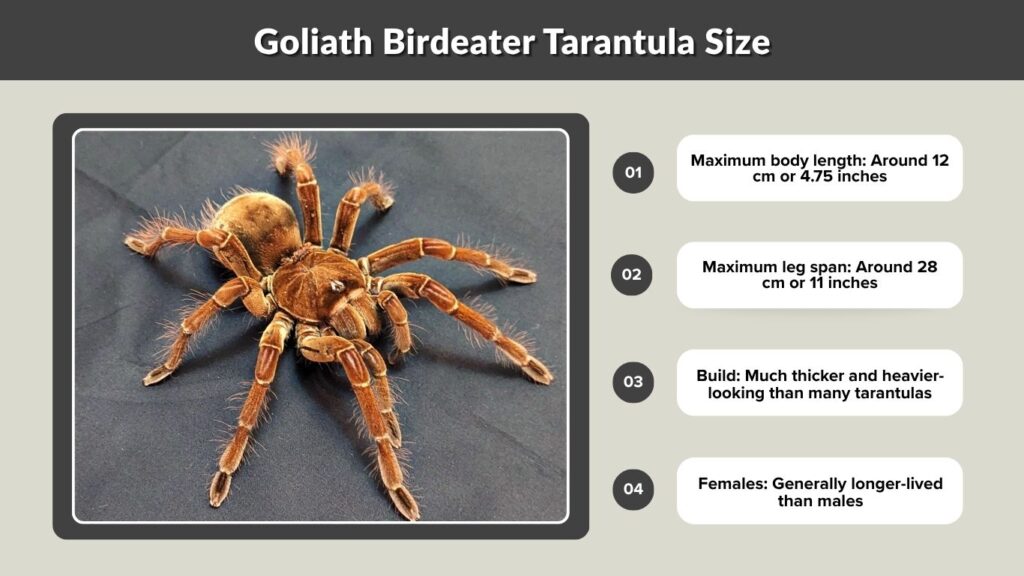
Size is what makes the Goliath birdeater famous. A large specimen can spread nearly a foot across, but its heavy body is equally impressive. Its combination of body length, robust build, and broad leg span makes it one of the most imposing living spiders.
How Big Can It Get?
Important size characteristics include:
- Maximum body length: Around 12 cm or 4.75 inches
- Maximum leg span: Around 28 cm or 11 inches
- Build: Much thicker and heavier-looking than many tarantulas
- Females: Generally longer-lived than males
Dense body hairs make a full-grown individual appear even larger.
Male vs. Female Goliath Birdeater
Females can live for many years after maturity, while adult males have much shorter lives. Smithsonian information gives females a potential lifespan of about 20 years, whereas males generally live around three to six years.
Habitat and Natural Behavior
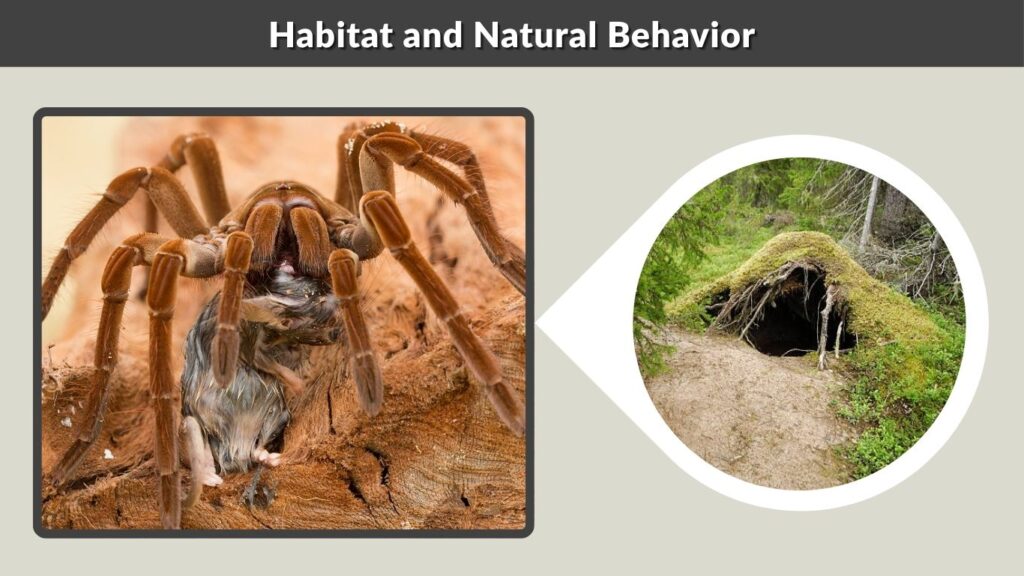
The Goliath birdeater is a ground-dwelling rainforest spider. Its surroundings are humid, shaded, and rich in soil, leaf litter, roots, and rocks. Burrows provide shelter for resting, molting, hiding from predators, and waiting for prey, keeping most activity close to the forest floor.
Where Does the Goliath Birdeater Live?
The species occurs in northern South America, including Venezuela, northern Brazil, Guyana, French Guiana, and Suriname. It lives in deep rainforest and commonly shelters in silk-lined burrows or protected spaces beneath roots and rocks.
Is It Active During the Day?
Goliath birdeaters are mostly nocturnal and generally solitary except when adults meet to reproduce. During daylight, a spider may remain hidden in its retreat. Its eyesight is limited, so sensitive hairs help it detect vibrations and movement around the burrow.
What Does a Goliath Birdeater Eat?
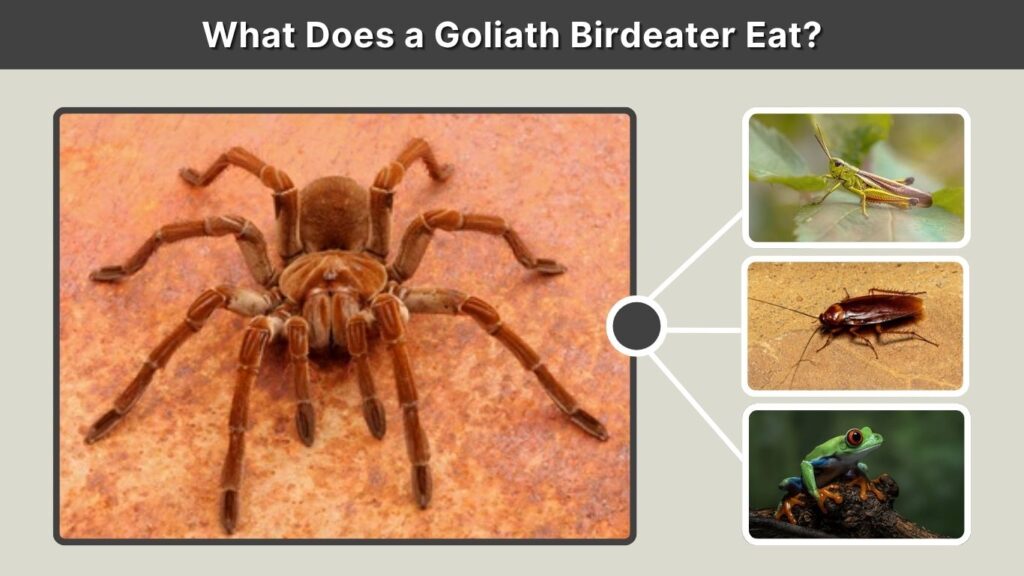
Despite its dramatic name, birds are not its normal everyday food. The Goliath birdeater is an opportunistic predator that captures animals small enough to overpower. Much of its diet comes from creatures moving across the rainforest floor. Its powerful fangs help subdue prey, while its large body allows it to tackle food that would be impossible for smaller spiders.
Common Foods
Its potential prey includes:
- Large insects
- Cockroaches
- Other invertebrates
- Frogs
- Small lizards
- Small rodents
- Occasionally small birds
At the Smithsonian’s National Zoo, the species is fed cockroaches.
Does It Actually Eat Birds?
It can capture a small bird under suitable circumstances, but birds are not frequent prey. The name therefore creates an exaggerated impression of its feeding habits. Invertebrates and small ground-dwelling vertebrates are more typical food choices.
Goliath Birdeater Bite, Venom, and Defense
A Goliath birdeater has large fangs and venom, so it should not be handled casually. Biting is only one part of its defense. When threatened, the spider may raise its front body, display its fangs, make an audible warning sound, or release irritating hairs from its abdomen. These defenses help discourage predators without requiring prolonged physical contact.
Defensive Behaviors
Its main defenses include:
- Threat posture: Raising the front body and displaying the fangs
- Stridulation: Rubbing specialized bristles together to make a hissing sound
- Urticating hairs: Releasing irritating abdominal hairs
- Biting: Using its large fangs when sufficiently threatened
The warning sound can be heard from several feet away.
Is the Bite Dangerous to Humans?
A bite can be painful because of the large fangs, and venom may be injected. Serious systemic effects from New World tarantulas are generally uncommon, although reactions can vary. Urticating hairs can cause redness, itching, swelling, and significant eye irritation.
A bite should be washed with soap and water. Seek medical advice for severe or worsening symptoms, and get medical evaluation if urticating hairs enter the eyes.
Goliath Birdeater Tarantula as a Pet
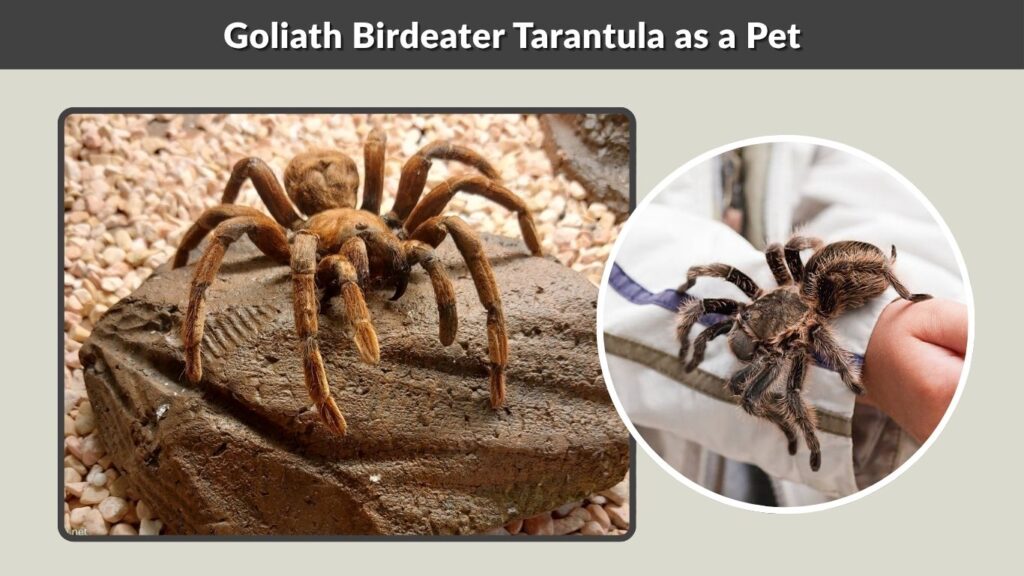
Its enormous size attracts experienced keepers, but the Goliath birdeater is not a good handling species. Its moisture needs, powerful fangs, and defensive hairs require careful husbandry. A suitable enclosure should emphasize security, floor space, burrowing depth, ventilation, moisture, and access to clean water.
Basic Care Requirements
A secure terrestrial enclosure with deep, moisture-retaining substrate and a suitable hide allows natural burrowing behavior. The substrate should be damp enough for this moisture-dependent species without becoming stagnant or waterlogged, and ventilation remains important. A clean water dish should be available, while appropriately sized feeder insects can form the captive diet.
Handling is best avoided. Falls may injure a heavy terrestrial tarantula, while a disturbed individual may release urticating hairs or bite.
Goliath Birdeater Tarantula Lifespan and Life Cycle
The Goliath birdeater grows by molting and replacing its old exoskeleton. Its long female lifespan can make ownership a lengthy commitment. Reproduction involves mating, egg-sac production, and repeated molts by the young. Females live far longer than males and may produce large egg sacs.
Reproduction and Development
A female may produce an egg sac containing roughly 50 to 200 eggs. Young spiderlings molt repeatedly as they grow and take several years to reach maturity. Females can live up to about 20 years, while males generally survive only three to six years.
FAQs
The Goliath birdeater attracts attention because of its size and dramatic name, but many assumptions about it are exaggerated. It is a burrowing rainforest tarantula, not a spider that regularly hunts birds or attacks people. These quick answers cover several of the most common questions about its danger, size, venom, suitability as a pet, and unusual warning behavior.
1. Can a Goliath birdeater tarantula kill a human?
A typical bite is not expected to be fatal to a healthy adult, but it can be painful and should be taken seriously. Individual reactions can differ.
2. How big is a Goliath birdeater tarantula?
It can reach about 12 cm (4.75 inches) in body length and approximately 28 cm (11 inches) in leg span.
3. Are Goliath birdeater tarantulas poisonous?
They are venomous, not poisonous. Venom is delivered through the fangs. Their urticating hairs are a separate defense that can irritate skin and eyes.
4. Can you keep a Goliath birdeater as a pet?
Yes, where local regulations allow it. However, its size, defensive hairs, moisture needs, and potential bite make it better suited to experienced tarantula keepers.
5. Why does the Goliath birdeater make a hissing sound?
It produces the sound by rubbing specialized bristles together, a behavior called stridulation. The noise functions as a warning when the spider feels threatened.
