

The German yellowjacket (Vespula germanica) is one of the most recognized wasp species worldwide. Originally native to Europe, this species has become an invasive pest in many parts of the globe, including North America, New Zealand, and Australia. Known for their aggressive behavior and adaptability, German yellowjackets play a dual role in ecosystems: they help control insect populations but also create conflicts with humans. Understanding their life cycle, nesting habits, size, and sting is essential to managing their presence effectively.
German Yellow Jacket Life Cycle

The life cycle of the German yellowjacket follows a seasonal rhythm that begins with the survival of the queen.
Stages of Development
The cycle starts when the overwintered queen emerges in spring. After selecting a nest site, she lays her first eggs. These hatch into larvae, which are fed by the queen until they develop into worker wasps. Once enough workers emerge, they take over the foraging and nest-building duties, leaving the queen to focus solely on egg-laying.
- Egg → laid by the queen in hexagonal cells.
- Larva → fed with chewed insects and sugary substances.
- Pupa → undergo metamorphosis inside capped cells.
- Adult → emerges as either a worker, drone, or new queen.
Colony Formation
In the early months of spring, the colony is small and fragile, consisting of only a few dozen workers. By mid-summer, the nest population can reach several thousand. The workers expand the nest, defend the colony, and gather food to feed the larvae and queen.
End of the Season
As autumn arrives, the colony begins to decline. New queens and males are produced, which leave the nest to mate. The fertilized queens then find sheltered places to hibernate through the winter, while the old queen and workers die off. This cycle ensures continuity into the next year.
German Yellow Jacket Nest

Nesting behavior is one of the most distinctive traits of this species.
Nest Structure
German yellowjackets build nests from a papery material created by chewing wood fibers and mixing them with saliva. These nests feature multiple tiers of hexagonal cells enclosed in a protective outer covering.
Nesting Sites
While some nests are underground in abandoned rodent burrows, many German yellowjackets prefer sheltered human structures. Wall voids, attics, and roof spaces are common nesting areas. This proximity to humans often leads to dangerous encounters.
Colony Size
At their peak, nests may house anywhere from 2,000 to 5,000 wasps, making them large and difficult to control once fully established.
Nest Expansion and Risks
The defensive nature of these wasps makes nest removal risky. Disturbing a nest can trigger swarming attacks, as workers aggressively defend their colony. Professional pest control services are often necessary when nests are located inside buildings or close to human activity.
German Yellow Jacket Size

Size differences are key to distinguishing members of the colony.
- Workers: Average between 12–15 millimeters in length.
- Queens: Larger, reaching up to 20 millimeters.
- Males (drones): Slightly longer than workers but slimmer in build.
Although small, their numbers and defensive behavior amplify their impact. When compared to other yellowjackets or hornets, the German yellowjacket falls within the medium-size range but compensates with aggression and adaptability.
German Yellow Jacket Queen

The queen plays the most critical role in the survival of the colony.
Identification of the Queen
She is noticeably larger than the workers, with a more robust body. Unlike workers, the queen has fully developed reproductive organs, allowing her to lay thousands of eggs over a single season.
Role in the Colony
After founding the nest in spring, the queen dedicates her life to egg-laying. Workers take over all other duties—feeding larvae, defending the nest, and expanding the structure—allowing the queen to focus solely on reproduction.
Survival Strategy
While the colony dies off in late fall, the fertilized queens ensure the species’ survival by overwintering. They hibernate in protected spaces such as tree bark crevices, soil, or man-made structures. In spring, each surviving queen will start a new colony, beginning the cycle again.
German Yellow Jacket Sting

One of the most feared aspects of German yellowjackets is their painful sting.
Nature of the Sting
Unlike honeybees, which can sting only once, German yellowjackets have smooth stingers that allow them to sting repeatedly. Their venom contains chemicals that cause immediate pain and inflammation.
Human Reaction
Most people experience swelling, redness, and a sharp burning sensation at the sting site. While these symptoms usually subside within a few hours, multiple stings can cause more intense discomfort.
Allergic Responses
For individuals allergic to wasp venom, stings can trigger severe reactions such as difficulty breathing, dizziness, or anaphylaxis—a life-threatening condition requiring immediate medical attention.
Treatment and First Aid
- Wash the sting site with soap and water.
- Apply a cold compress to reduce swelling.
- Use antihistamines or topical creams to relieve itching.
- Seek emergency medical help if signs of an allergic reaction appear.
The ability of German yellowjackets to sting repeatedly, coupled with their aggressive defense of nests, makes them a genuine threat when disturbed.
Are German Yellow Jackets Dangerous?
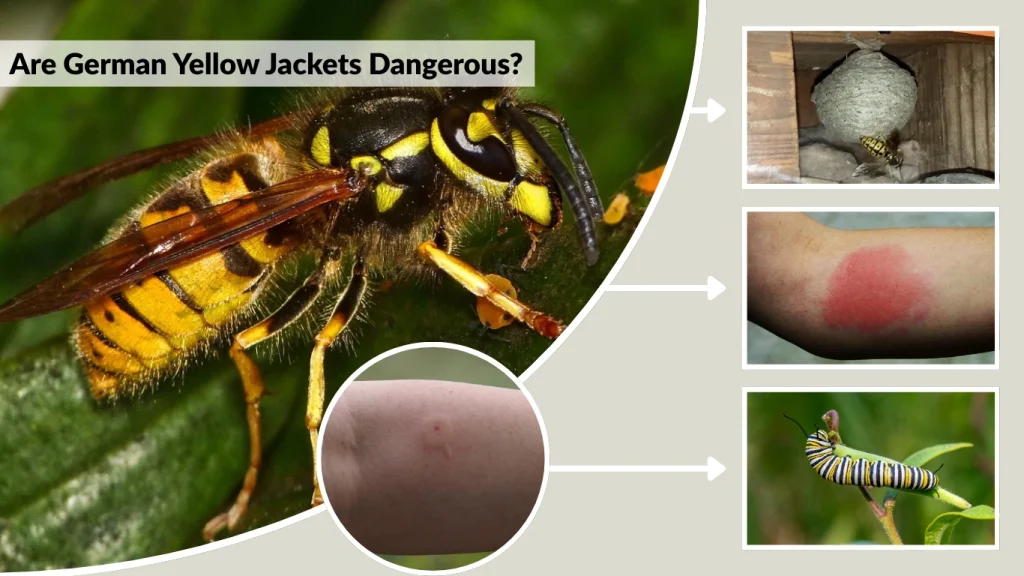
The danger posed by German yellowjackets lies in both their physical defenses and their adaptability to human environments.
Aggressive Nature
Unlike honeybees, which sting primarily in defense of the hive, German yellowjackets are far more aggressive. They are quick to attack when their nest is threatened, often mobilizing large numbers of workers in a coordinated defense. Even accidental disturbances, such as mowing a lawn or leaning against a wall that houses a nest, can trigger an attack.
Risks to Humans and Pets
German yellowjackets can sting multiple times, inflicting sharp pain. For most people, this results in temporary swelling and redness, but pets and children are particularly vulnerable due to their smaller body size and lower tolerance for venom. In rare cases, repeated stings can even be life-threatening for otherwise healthy adults.
Ecological Impact
While they can be dangerous, German yellowjackets also play an ecological role. They prey on flies, caterpillars, and other insects, acting as natural pest controllers. However, their aggression and dominance often disrupt native pollinators, making them an invasive concern in regions outside their natural range.
How Was the German Yellow Jacket Introduced?
The global spread of the German yellowjacket is largely due to human activity.
Expansion Beyond Europe
German yellowjackets are native to Europe but have successfully colonized many parts of the world, including North America, South America, Australia, and New Zealand. Their spread was accidental, likely occurring through shipments of goods, timber, and agricultural products.
Rapid Spread and Adaptability
Once introduced, German yellowjackets thrived due to their ability to nest in diverse environments—from forests to urban centers. In regions such as New Zealand, they reached such high densities that they significantly altered ecosystems by outcompeting native insects and consuming large amounts of honeydew, a vital food source for other species.
German Yellow Jacket Impact on Economy

While they may seem like just another insect, German yellowjackets impose significant costs on society.
Agricultural Concerns
German yellowjackets feed on ripening fruits, including grapes, pears, apples, and plums. This feeding damages crops and lowers their market value. Vineyards, in particular, suffer losses when wasps chew into grapes, exposing them to fungal infections and reducing wine quality.
Public Health Costs
Medical treatments for stings, particularly allergic reactions, contribute to healthcare expenses. In heavily infested regions, hospitals see seasonal surges in sting-related visits, especially during late summer when colonies are at their peak.
Pest Control Expenses
Homeowners, businesses, and municipalities spend considerable amounts on pest control measures. Professional nest removal can be costly, especially when nests are hidden inside buildings or in hard-to-reach places.
German Yellow Jacket vs. Eastern Yellow Jacket

German yellowjackets are often confused with their close relatives, especially the eastern yellowjacket (Vespula maculifrons). Understanding their differences helps with identification and management.
Physical Differences
- German Yellow Jacket: Distinct three small black dots on the front of the head (a key identifier).
- Eastern Yellow Jacket: Black markings are more irregular and lack the signature dots.
Nesting Behavior
- German Yellow Jacket: Frequently nests inside walls, attics, and structures, bringing them into closer contact with humans.
- Eastern Yellow Jacket: Prefers underground burrows and rarely invades buildings unless disturbed.
Aggression Levels
Both species are defensive, but German yellowjackets are particularly notorious in urban settings. Their tendency to nest in buildings increases human-wasp encounters and raises the likelihood of conflict.
Conclusion
The German yellowjacket is a fascinating yet troublesome insect. Its life cycle revolves around the queen and her seasonal colony, which grows to thousands before collapsing in winter. Their nests, often built in human structures, create conflict as colonies expand. Their ability to sting multiple times, aggressive defense, and adaptability make them a dangerous insect when disturbed.
Despite these challenges, German yellowjackets play a role in controlling insect populations. However, in non-native regions, they disrupt ecosystems and burden agriculture, healthcare, and pest management systems. Awareness, careful nest management, and respect for their presence are the best strategies for coexistence.
FAQs
What is the lifespan of a German yellowjacket?
Workers typically live a few weeks, while the queen can survive up to one year if she successfully hibernates through winter.
How big can a German yellowjacket nest get?
At peak size, colonies may house between 2,000 and 5,000 workers, with some reports exceeding these numbers.
Do German yellowjackets have any benefits?
Yes, they are natural predators of many pest insects, including caterpillars, spiders, and flies.
How do you safely remove a German yellowjacket nest?
Professional pest control is recommended. DIY removal can be dangerous due to their aggressive defense behavior.
Why are German yellowjackets more aggressive in late summer?
As food becomes scarce and colonies grow larger, workers become more desperate, leading to heightened aggression and increased scavenging around human food.
