
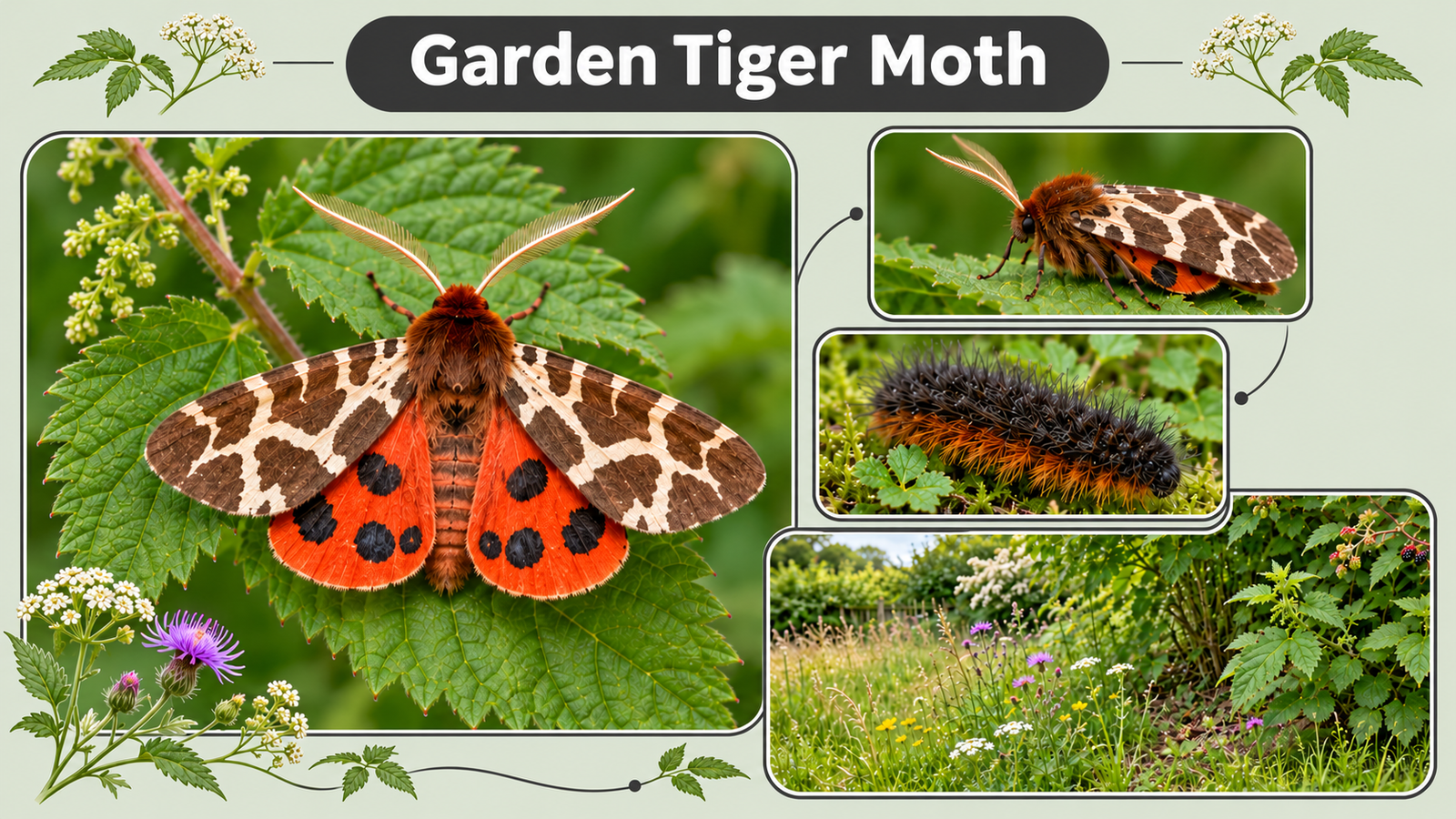
The garden tiger moth (Arctia caja) is a large, vividly patterned moth found across much of the Northern Hemisphere. Its brown-and-cream forewings hide striking orange-red hindwings marked with dark spots, while its densely hairy caterpillar is commonly called a woolly bear. Although the species can turn up in gardens, it also lives in grasslands, woodland edges, and other open habitats. Learn how to identify a garden tiger moth, what its caterpillar eats, where it lives, and how to support it.
Garden Tiger Moth at a Glance
The garden tiger is a member of the tiger moth group in the family Erebidae. The scientific name is Arctia caja, and “great tiger moth” is another common name in some regions. Adults are most often noticed in summer, while the caterpillars spend much more of the year feeding and sheltering among low vegetation.
| Feature | Description |
|---|---|
| Scientific name | Arctia caja |
| Family | Erebidae |
| Adult wingspan | About 45–65 mm (1.8–2.6 in) |
| Caterpillar name | Woolly bear |
| Typical adult season | Summer; timing varies by location |
| Winter stage | Caterpillar |
| Main larval food | A wide range of herbaceous plants and some shrubs |
What Does a Garden Tiger Moth Look Like?
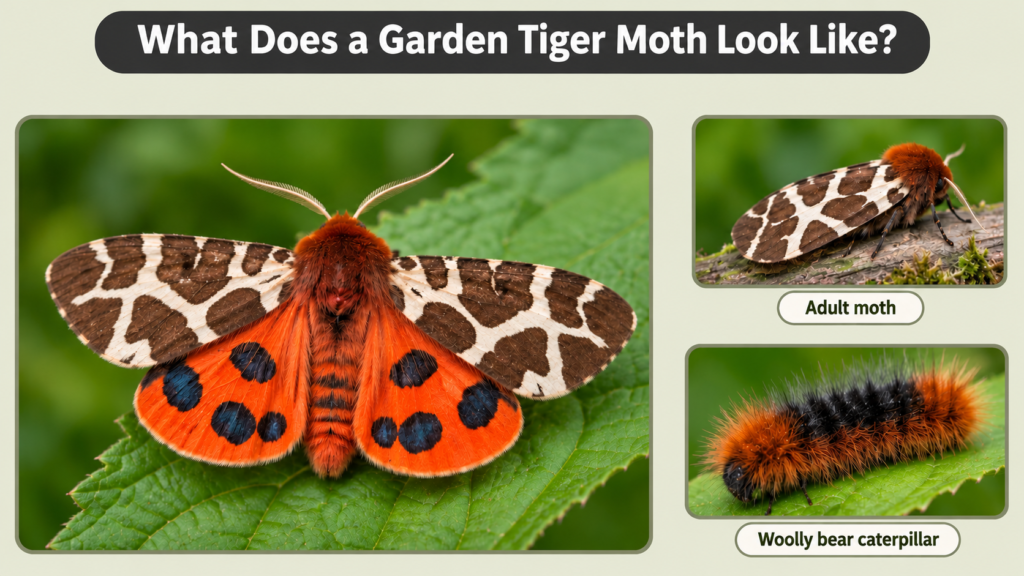
The garden tiger moth is easy to recognize when its wings are open, but it can appear much less colorful while resting. Look for a large, broad-winged moth with patterned forewings and a bright hindwing display. The colors and markings can vary, so use several features together rather than relying on a single spot or shade.
Adult moth markings
The forewings are usually chocolate-brown or dark tan with cream or pale yellow patches and irregular bands. Beneath them, the hindwings are orange to red-orange and carry dark blue-black spots. The body is furry and often has a reddish or orange abdomen with dark markings. Typical wingspans are roughly 45 to 65 millimeters, making this a relatively large moth.
At rest, the moth generally folds its forewings over the hindwings. This hides the brighter colors and helps it blend into bark, dry leaves, or other muted backgrounds. If disturbed, it may spread its wings to expose the contrasting hindwing pattern. This sudden flash can startle a predator and serves as a warning signal.
The woolly bear caterpillar
Garden tiger caterpillars are shaggy, dark caterpillars with long black and rusty-brown hairs. Their coloring can look almost uniformly black from a distance, but closer inspection often reveals reddish or orange-brown hair mixed through the coat. They grow through several stages and become larger and hairier as they mature.
The common name “woolly bear” is used for the garden tiger larva, but it is also applied to caterpillars of other moth species. A fuzzy, dark caterpillar is not enough for a sure identification. Note the pattern of its hairs, the plant it is on, and your location, and take a clear photograph without handling it.
Where Do Garden Tiger Moths Live?
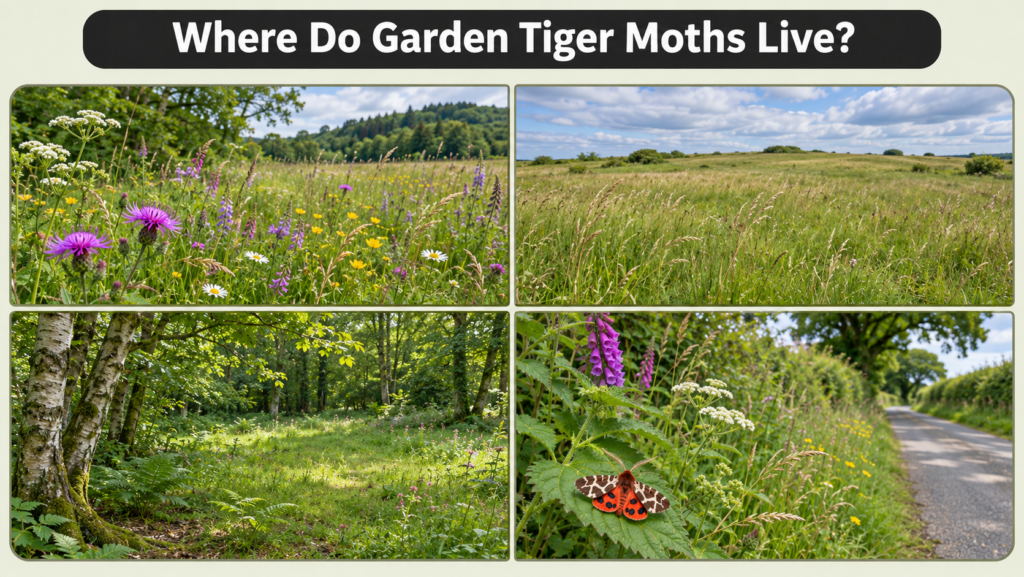
The garden tiger moth has a broad northern distribution. It occurs across much of Europe and temperate Asia, extending into northern regions, and is also found across parts of North America. Its exact range and local abundance vary, and similar-looking tiger moths may occur in some areas.
Habitat
This species uses a variety of open or partly open places, including meadows, grasslands, woodland clearings, roadsides, field margins, coastal areas, and gardens. The caterpillars need suitable low-growing plants, while adults need sheltered resting places and places to find mates. A garden may provide these conditions when it has a mix of vegetation and undisturbed corners.
A closely clipped lawn offers fewer opportunities than a garden with rough grass, nettles, bramble, and small wild areas, which provide food and cover.
Where it occurs seasonally
Adult garden tiger moths are generally seen in summer, often during July and August in Britain, though local timing can shift with climate and elevation. In other parts of its range, emergence may happen earlier or later. The caterpillar is present across more of the year because it feeds in warm months, overwinters, then resumes growth before pupating.
What Do Garden Tiger Moth Caterpillars Eat?
Garden tiger caterpillars feed on a broad range of plants, which makes them polyphagous rather than dependent on one host species. Recorded food plants include nettles, docks, dandelions, plantains, brambles, and other low-growing herbs. They may also feed on shrubs such as willow and honeysuckle. The menu depends on local plant availability.
Do they eat garden plants?
They may feed on plants growing in gardens, especially weedy or wild areas, but a few caterpillars do not automatically mean a serious pest problem. Their numbers and feeding damage vary. If you find one, check the plant and observe whether the leaf loss is substantial before taking action. Avoid pesticide use simply because a hairy caterpillar is present; the insect may be part of the local food web.
Caterpillar growth
After hatching, young larvae feed on leaves and grow through several molts. They may move between plants or shelter among vegetation when they are not feeding. Their hairs can blend into dry stems and leaf litter, so they are easy to overlook.
Garden Tiger Moth Life Cycle
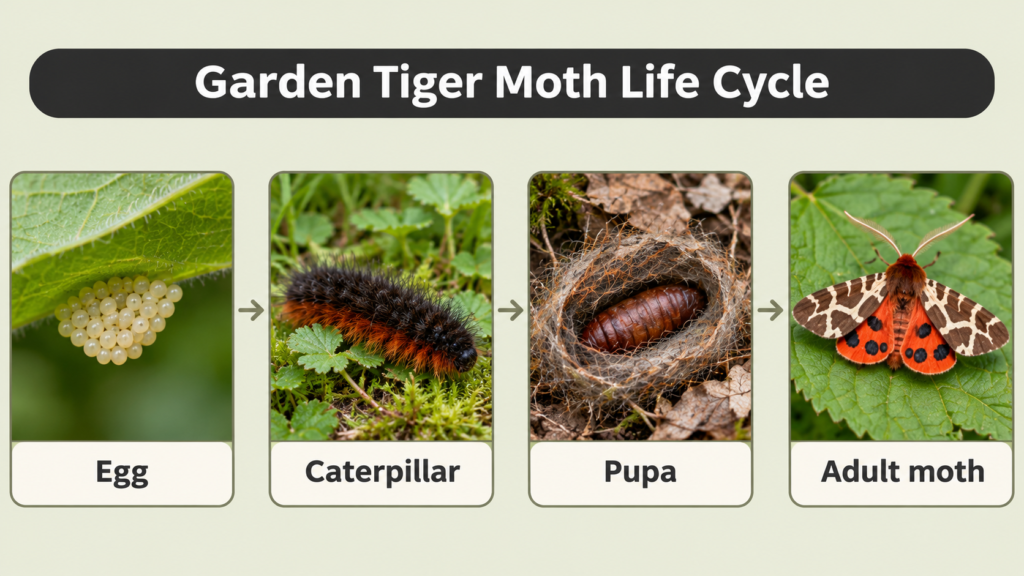
The garden tiger typically produces one generation per year. Its life cycle includes egg, caterpillar, pupa, and adult stages. The caterpillar is the longest-lasting and most visible feeding stage; the adult moth’s short summer appearance is just one part of the annual cycle.
Eggs and young caterpillars
After mating, a female lays clusters of eggs on or near suitable vegetation. The eggs hatch into small larvae, which begin feeding on leaves. Young caterpillars grow gradually, shedding their skins as they increase in size. They may be overlooked because they are smaller and less striking than mature woolly bears.
Overwintering as a caterpillar
Unlike moths that spend winter as an egg or pupa, the garden tiger overwinters as a caterpillar. It shelters low in vegetation or among ground cover and resumes feeding when conditions become suitable. This makes undisturbed leaf litter, rough vegetation, and plant bases useful shelter. Clearing every fallen leaf or cutting all vegetation close to the ground can remove places where larvae hide.
Pupation and adult emergence
When the caterpillar has finished growing, it forms a loose silken cocoon close to the ground, often incorporating its own hairs and nearby material. It pupates inside, then an adult moth emerges in summer. The adult mates and lays eggs, completing the annual cycle. Adults do not feed; the energy they use for reproduction and flight is accumulated during the caterpillar stage.
Are Garden Tiger Moths Poisonous or Dangerous?
Garden tiger moths are not dangerous to people in the way that venomous or biting insects are. The adult moth does not sting or bite. Its bold hindwing colors act as a warning to predators that it may be unpleasant to eat, and it has defensive behaviors that can include exposing its bright wings when threatened.
The caterpillar’s long hairs are mainly a physical defense, not a venomous sting. However, hairy caterpillars can cause irritation for some people, and it is difficult to identify every species by touch. Avoid handling the caterpillar, keep children and pets from picking it up, and wash your hands if you accidentally touch one. If a reaction develops, follow local medical advice.
Why Are Garden Tiger Moths Declining in Some Places?
The garden tiger remains widespread across its overall range, but it has declined in several regions. In Britain, monitoring and conservation sources have reported a substantial long-term decrease since the late twentieth century. The causes are not necessarily the same everywhere, and local changes in land use and habitat quality can affect populations.
Habitat loss and simplification can reduce food plants and winter shelter. Frequent mowing, removing wild vegetation, clearing leaf litter, and pesticide use can also make places less suitable. Broader environmental pressures may contribute, so no single cause explains every local trend.
How to Help Garden Tiger Moths
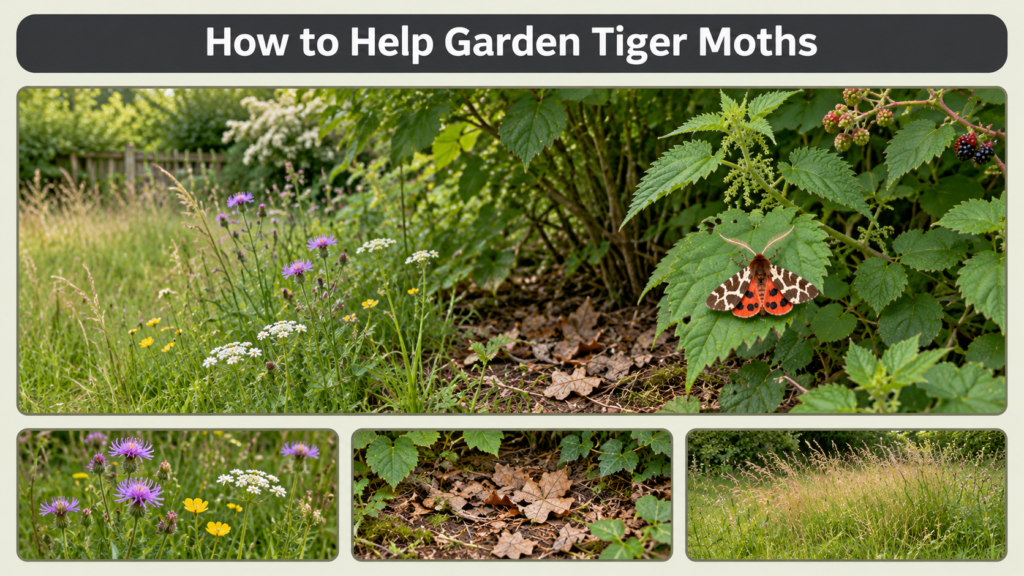
A wildlife-friendly garden does not need to be untidy everywhere. A few well-chosen areas left to grow can provide food and shelter for moths and other wildlife.
- Keep a small patch of nettles, brambles, or other useful wild plants in a quiet corner.
- Grow a mix of native or locally appropriate flowering plants and herbs.
- Leave some leaf litter and low vegetation undisturbed through winter.
- Reduce pesticide use, especially broad-spectrum insecticides.
- Mow less often in selected areas and avoid cutting all vegetation at once.
- Record sightings with a local wildlife or moth-monitoring group.
These steps support more than the garden tiger alone. Different moth species need different plants and life-cycle conditions, so a varied garden usually helps a wider range of insects.
Frequently Asked Questions
Is the garden tiger moth rare?
It is not rare throughout its full range, but it has declined in some regions, including Britain. Its local status depends on habitat and location. A sighting is useful information, and recording it with a regional moth-monitoring project can help track changes.
What does a garden tiger moth caterpillar turn into?
The woolly bear caterpillar becomes the adult garden tiger moth, Arctia caja. It pupates in a loose cocoon near the ground before emerging as a patterned moth with brown-and-cream forewings and orange-red hindwings.
Can you touch a garden tiger caterpillar?
It is best not to handle it. The hairs are not a venomous sting, but they may irritate sensitive skin, and similar fuzzy caterpillars can be harder to identify. Observe it in place or photograph it instead.
Do garden tiger moths eat clothes?
No. Garden tiger caterpillars feed on plants, not clothing. Clothes damage is associated with the larvae of certain other moths, such as clothes moths, which have different habits and appearance.
What time of year do garden tiger moths fly?
Adults are usually active in summer. In Britain they are most often recorded in July and August, although the flight period can vary by region and weather. The caterpillar overwinters and is present during much of the rest of the year.
