
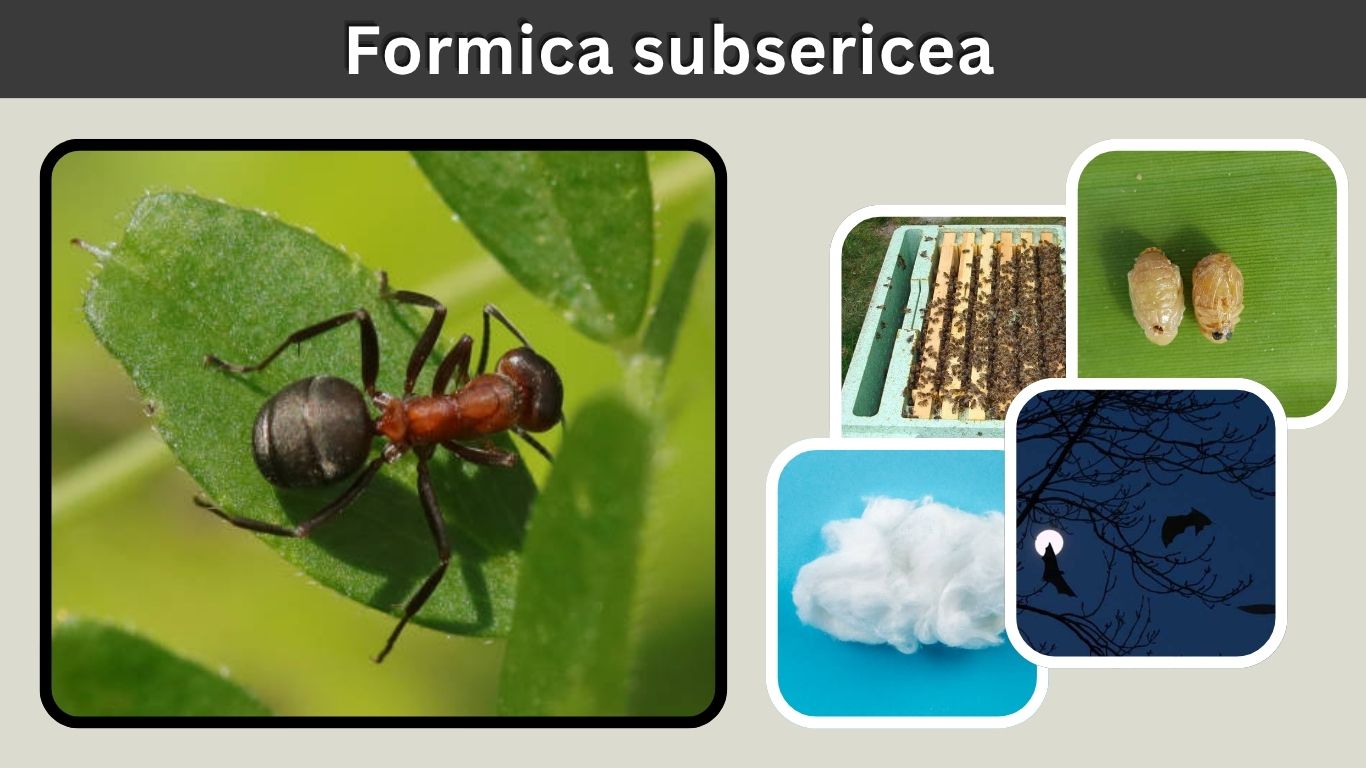
Formica subsericea, commonly known as the silky field ant or black field ant, is a fast-moving North American ant species popular among ant keepers. It is known for its dark body, silvery sheen, active foraging, and strong response to food. For beginners interested in native Formica ants, this species can be rewarding, but queens and young colonies need patience, protein, sugar, and seasonal rest.
What Is Formica subsericea?
Formica subsericea is a species of field ant in the genus Formica. It is native to eastern North America and is commonly found in open woods, fields, lawns, forest edges, and areas with logs, stones, or loose soil. Workers are usually dark brown to black, often with a silky or silvery appearance caused by fine body hairs.
This ant is not usually a house pest. Outdoors, it plays a helpful role by hunting small arthropods, scavenging dead insects, and collecting sugary liquids such as honeydew. In captivity, it is valued for its speed, alert behavior, and strong feeding response.
Formica subsericea Quick Facts
This species is often searched by ant keepers because it is available in parts of North America and can grow into an active display colony. However, it is not always the easiest founding species because young queens may be sensitive to stress.
| Feature | Formica subsericea Details |
|---|---|
| Common names | Silky field ant, black field ant |
| Scientific name | Formica subsericea |
| Native range | Eastern United States and Canada |
| Worker size | Usually about 4–6 mm |
| Queen size | Usually about 10–11 mm |
| Color | Dark brown to black with silvery sheen |
| Colony type | Usually monogynous, though reports vary by population |
| Founding style | Generally treated as fully claustral in care guides |
| Activity | Fast, alert, mostly active during the day |
| Diet in captivity | Sugar water, honey, insects, mealworms, small arthropods |
| Hibernation | Recommended for long-term health |
Identification and Common Name
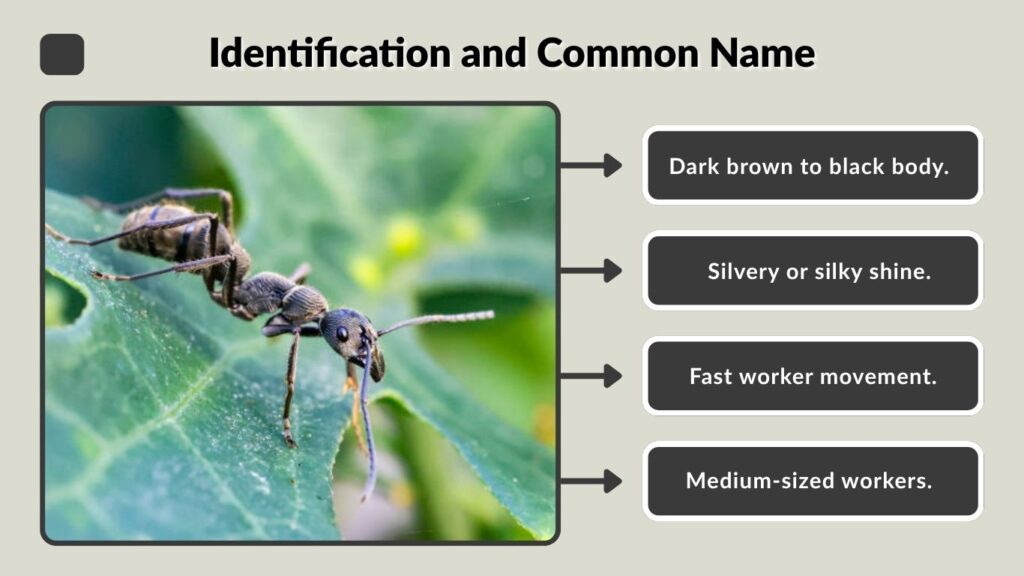
The common name “silky field ant” comes from the fine, silvery pubescence on the body. Under light, workers may look slightly gray or satin-like instead of plain black. This sheen is one of the features that helps separate them from some other dark Formica species.
What Does Formica subsericea Look Like?
Workers are usually medium-sized and dark. They move quickly and often appear nervous when disturbed. A colony may send workers out in fast trails, especially when food is discovered. Queens are larger, with a thicker body and enlarged thorax from their wing muscles.
Common visual traits include:
- Dark brown to black body
- Silvery or silky shine
- Fast worker movement
- Medium-sized workers
- Larger queen with robust thorax
- Single waist node, like other formicine ants
Exact identification can be difficult because Formica species are often similar. Species such as Formica podzolica, Formica fusca, and related dark field ants may be confused with F. subsericea. For confident identification, clear close-up photos of the queen, workers, body hairs, and profile are helpful.
Natural Habitat and Behavior
In the wild, Formica subsericea often nests in soil, under stones, near logs, along woodland edges, or in open grassy areas. It is adaptable and can live in disturbed places such as lawns and field margins, as long as the soil, moisture, and food supply are suitable.
Natural Nesting Sites
This species may nest in places such as:
- Under rocks
- Around logs
- Near tree roots
- In soil banks
- Along paths or lawns
- At forest edges
- In open fields and meadows
They are active foragers and may travel some distance from the nest to search for food. Outdoors, they eat insects, dead arthropods, nectar-like liquids, and honeydew from sap-feeding insects.
Are Formica subsericea Aggressive?
They are usually more nervous and fast than heavily aggressive. Workers may flee when disturbed, but larger colonies can defend their nest. Like other Formica ants, they do not sting. They can bite and may use formic acid as a chemical defense.
Formica subsericea Queen Care
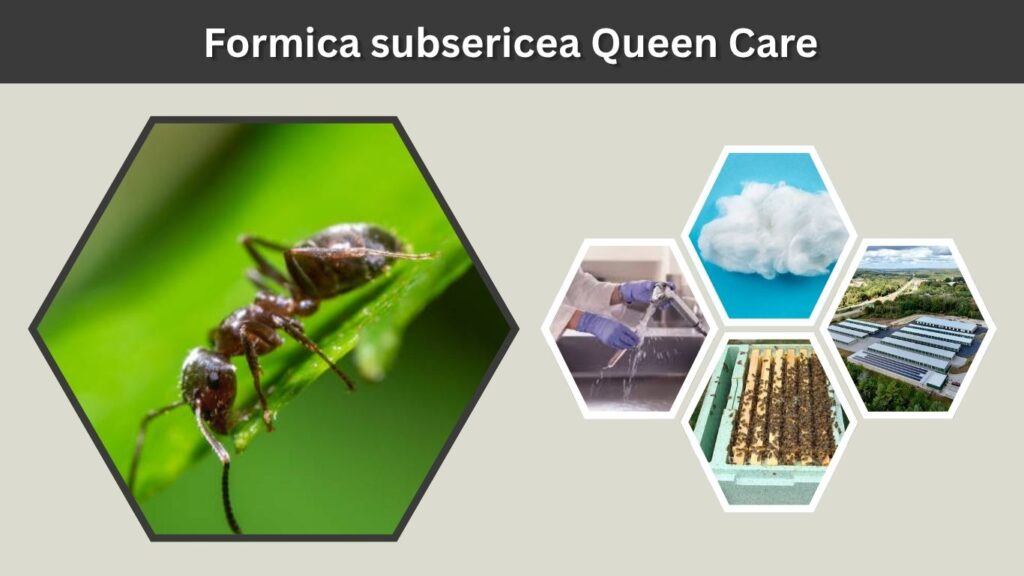
Many searches around this species focus on queens, eggs, and founding problems. A newly mated queen is the most delicate stage of the colony. Too much checking, vibration, bright light, or incorrect moisture can delay egg laying or cause brood loss.
Test Tube Setup
A standard test tube setup is usually the best starting home for a queen. It provides stable humidity, a drinking source, and a small dark chamber.
A basic test tube setup includes:
- Clean test tube
- Water reservoir
- Cotton plug holding back the water
- Dry chamber for the queen
- Cotton entrance plug
- Dark cover or foil wrap
- Quiet storage area
Place the queen in the tube and keep her somewhere dark and stable. Check only occasionally. Many founding failures happen because the keeper checks too often.
Formica subsericea Queen Not Laying Eggs
A queen may not lay eggs immediately. This can happen because of stress, poor temperature, lack of seasonal timing, infertility, or recent capture. Some queens need time to settle before producing eggs.
Common reasons for no eggs include:
- Too much disturbance
- Tube is too wet or too dry
- Temperature is too low
- Queen is unmated
- Queen is stressed after capture
- Colony needs hibernation timing
- Queen ate eggs after being disturbed
Give the queen privacy and avoid moving the tube often. If she has not laid after several weeks during the active season, review temperature, light exposure, and stress.
Eggs, Larvae, Pupae, and Nanitics
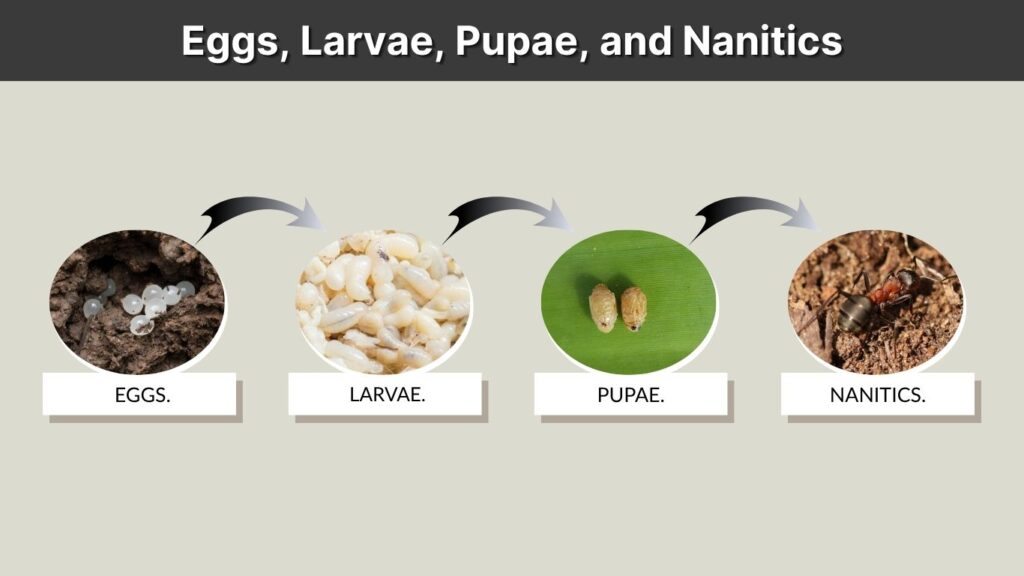
A young colony develops through several stages. Eggs hatch into larvae, larvae grow and pupate, and then the first workers emerge. The first workers are called nanitics. They are usually smaller than later workers because the queen raises them using limited stored energy.
Formica subsericea Eggs
Eggs are tiny, pale, and often kept in a small pile. Queens may move them around the tube to adjust moisture or temperature. If a queen eats her eggs, it may be due to stress, infertility, lack of proper conditions, or disturbance.
Larvae and Pupae
Larvae need protein to grow after workers arrive and begin feeding the colony. In many Formica species, pupae are often enclosed in cocoons. Keepers may see small tan or brownish cocoons in the brood pile before workers emerge.
First Nanitics
When nanitics arrive, the colony should be offered food. Start small because tiny colonies can be overwhelmed by large prey items or too much waste.
Good first foods include:
- Small drops of sugar water
- Tiny pieces of mealworm
- Small fruit fly portions
- Crushed cricket pieces
- Small pieces of roach or fly
- Honey diluted with water
Remove uneaten insects before mold develops.
Feeding Formica subsericea
This species needs both carbohydrates and protein. Sugar fuels workers, while protein supports larvae and colony growth. A colony with only sugar may stay alive, but brood growth will suffer. A colony with only insects may lack quick energy.
Do Formica subsericea Like Mealworms?
Yes, many colonies accept mealworms, especially when they are freshly killed or cut open. Smaller colonies may ignore a whole mealworm because it is too large or difficult to access. A cut piece exposes soft tissue and makes feeding easier.
Mealworms should be offered in small amounts. Remove leftovers within a day to prevent mold and mites.
Will Formica subsericea Eat Spiders?
They may eat spiders, but wild-caught spiders are not always ideal as feeder prey. Spiders can carry pesticides, parasites, or defensive chemicals. If you use wild prey, only collect from pesticide-free areas and avoid dangerous or unknown species.
Safer feeder options include captive-raised insects such as mealworms, fruit flies, crickets, dubia roaches, and small feeder flies.
How Many Times a Week Should You Feed?
Feeding depends on colony size and brood level. A founding queen without workers usually does not need regular feeding if she is fully claustral. Once workers arrive, offer sugar regularly and protein as needed.
A simple schedule:
- Small colony: sugar available often, protein 1–2 times weekly
- Growing colony: sugar available often, protein 2–3 times weekly
- Large colony: sugar frequently, protein several times weekly
- Before hibernation: reduce feeding as activity slows
Do not overfeed. Too much protein can rot, mold, and stress a small colony.
Formica subsericea Setup and Formicarium
A test tube is best for founding, but a growing colony eventually needs more space. Do not move them too early. Ants do better in a slightly cramped nest than in a huge empty formicarium.
When to Move From a Test Tube
Move the colony when the tube is crowded, dirty, dry, or difficult to feed. A small outworld can be connected before a full nest move. This lets workers forage while the queen remains safe in the tube.
Best Formicarium Style
A good Formica subsericea setup should provide moderate humidity, dry areas, and room for fast workers. They do not need a soaking-wet nest. A moisture gradient is better than uniform dampness.
Useful setup features include:
- Secure escape barrier
- Small outworld for feeding
- Hydration chamber or water tower
- Dark nest area
- Good ventilation
- Easy trash removal
- Space to expand gradually
Because they are fast, escapes can happen during feeding. Use a tight lid and a reliable barrier.
Hibernation for Formica subsericea
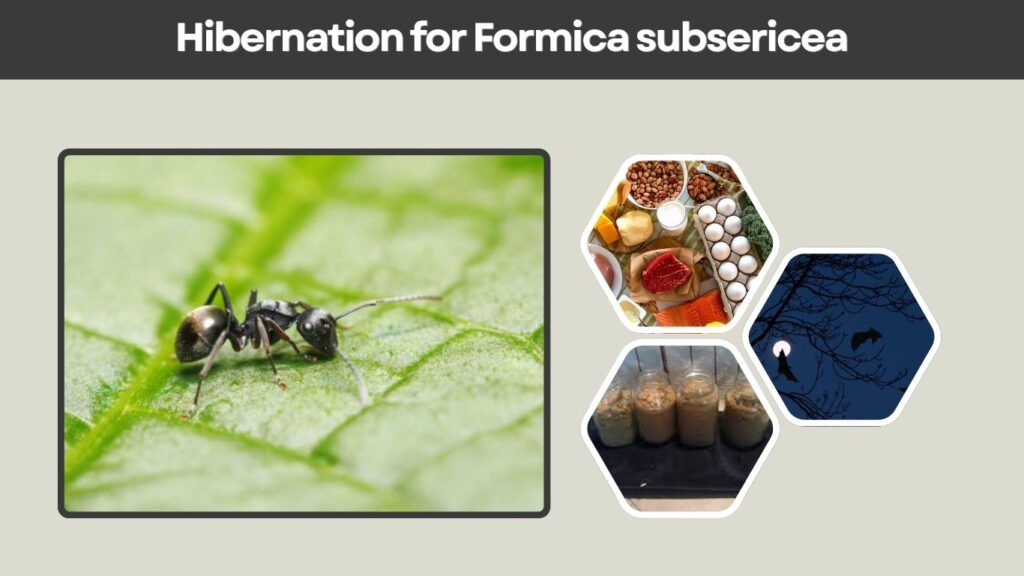
Hibernation is important for many temperate North American ants. Formica subsericea comes from regions with cold winters, so a rest period helps match its natural cycle.
Why Hibernation Matters
Skipping hibernation may cause stress, reduced egg laying, shorter colony life, or unusual brood timing. Colonies often slow down naturally in fall. Workers become less active, brood development decreases, and feeding response may drop.
Basic Hibernation Tips
Prepare the colony gradually. Do not suddenly move a warm, active colony into very cold conditions. Reduce temperature slowly and make sure the colony has water.
General hibernation steps include:
- Stop heavy protein feeding as activity slows
- Keep sugar available before cooling
- Make sure the nest has moisture
- Cool gradually over days or weeks
- Keep the colony dark and quiet
- Check occasionally for water and mold
- Warm gradually after the rest period
Exact temperatures vary by keeper and local conditions, but the goal is a cold, stable rest without freezing the colony solid or drying the nest.
Colony Size and Growth
A healthy Formica subsericea colony can grow quickly after the first workers arrive. Growth depends on queen health, feeding, heat, hibernation, nest space, and stress level.
Young colonies may start with only a few nanitics. With steady feeding and good care, worker numbers can increase significantly during the second season. Mature colonies can become large and active, requiring a bigger nest and outworld.
Is Formica subsericea Polygynous?
Most care information treats Formica subsericea as usually monogynous, meaning one queen per colony. Some keepers and sellers report occasional multi-queen or oligynous situations, but beginners should not assume queens can be combined safely.
Do not put unrelated queens together unless you have strong species-specific experience. Queen fighting can kill one or both queens and destroy a founding attempt.
Formica podzolica vs subsericea
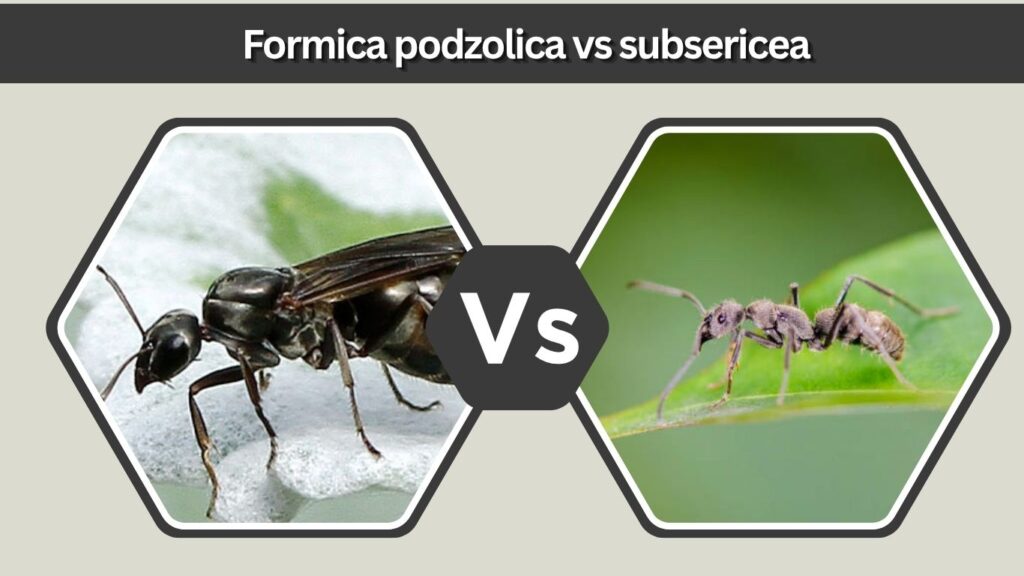
Formica podzolica and Formica subsericea can look similar to beginners because both are dark Formica ants. Identification may require close attention to body hair, sheen, size, location, and expert keys.
For ant keepers, the care is broadly similar: both need sugar, protein, secure housing, and hibernation. However, species identification still matters for legality, climate matching, and proper expectations.
If you are unsure which species you have, take clear photos in good light and ask experienced identifiers. Include the queen, workers, side view, top view, and location where the ant was found.
Common Care Problems
Most problems with Formica subsericea come from stress, poor feeding, poor moisture, or skipping seasonal cycles.
Queen Eating Eggs
A queen may eat eggs if she is stressed, infertile, disturbed too often, or kept in unsuitable conditions. Reduce checking, keep her dark, and avoid shaking the tube.
Workers Not Eating
Workers may ignore food if the colony is stressed, full, cold, entering hibernation, or offered prey that is too large. Try smaller portions and fresh sugar water.
Mold in the Test Tube
Small mold spots are common and not always dangerous. Heavy mold, bad smell, or dead insects should be addressed. Remove leftovers quickly and move the colony if the tube becomes unhealthy.
FAQs
What is the common name of Formica subsericea?
Formica subsericea is commonly called the silky field ant or black field ant. The name “silky” refers to the silvery sheen on the body, while “field ant” reflects its habit of nesting in fields, lawns, woodland edges, and open habitats.
How big is a Formica subsericea queen?
A Formica subsericea queen is usually around 10–11 mm long, although exact size can vary by individual and population. Queens are much larger than workers and have a thicker thorax because they originally had wings before mating.
What should I feed Formica subsericea?
Feed them carbohydrates and protein. Sugar water, diluted honey, or nectar substitutes provide energy, while mealworms, fruit flies, crickets, roaches, and other feeder insects provide protein. Small colonies need tiny portions, and uneaten prey should be removed to prevent mold.
Does Formica subsericea need hibernation?
Yes, hibernation is recommended because this is a temperate North American ant. A winter rest period helps support natural brood cycles and long-term colony health. Cool them gradually, keep the nest hydrated, and avoid disturbing the colony during rest.
Why is my Formica subsericea queen not laying eggs?
She may be stressed, too cold, unmated, recently captured, or disturbed too often. Keep her in a dark, quiet test tube setup with stable moisture. If she was caught late in the season, she may wait until after hibernation to begin laying.
