
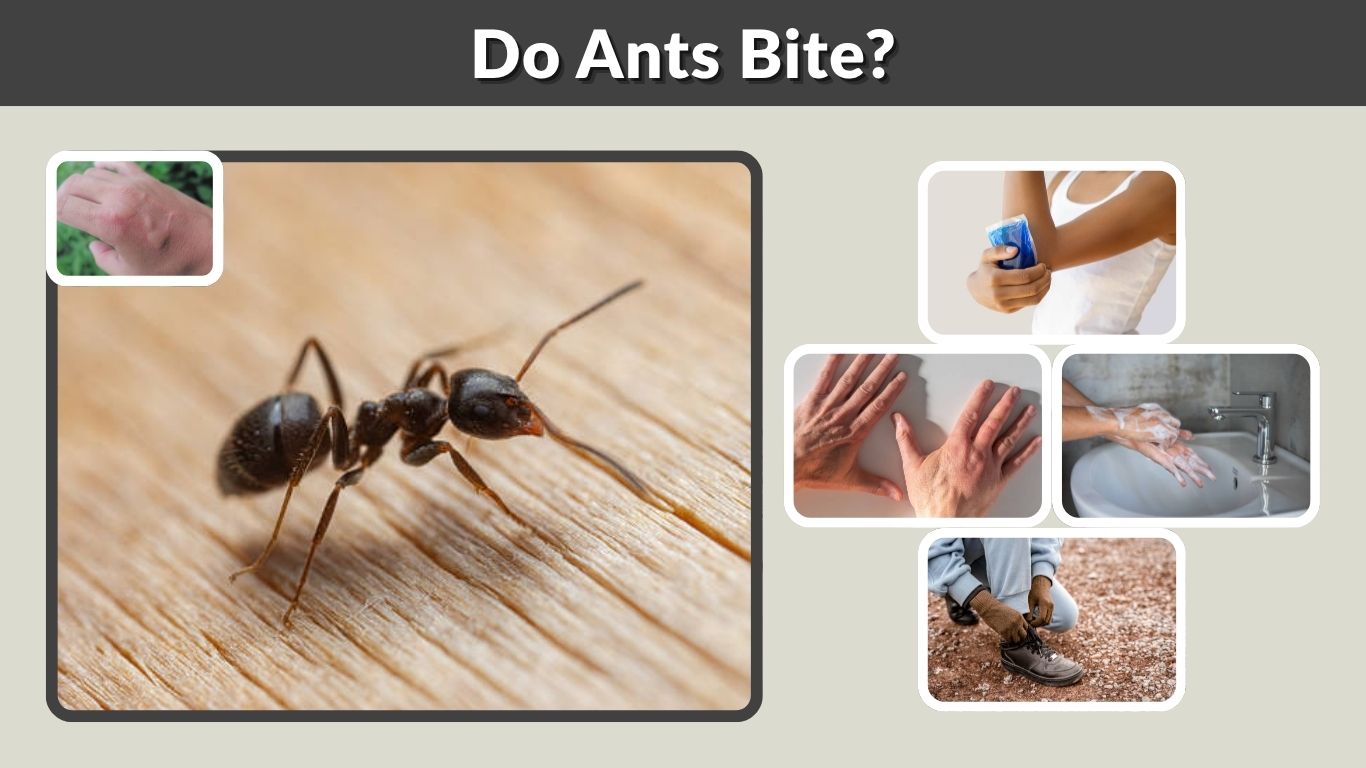
Yes, ants can bite humans, although the experience varies greatly depending on the species. Some ants use their strong mandibles to pinch the skin, while others sting and inject venom after biting. Most common household ant bites cause only mild irritation, redness, or itching, but fire ants and a few other species can produce more painful reactions. Understanding which ants bite, why they do it, and how bites differ from stings can help you respond correctly and reduce future encounters.
Do Ants Bite Humans?
Most ants possess mandibles that they use for carrying food, building nests, defending their colonies, and handling prey. However, having mandibles does not mean every ant regularly bites people. Human bites usually happen when an ant feels trapped, threatened, or disturbed. Some species barely affect human skin, while others can deliver a noticeable and sometimes painful bite.
How Do Ants Bite?
Ants bite by closing their mandibles around the skin. Depending on the species, the bite may feel like a small pinch or a sharper sensation.
Some ants also use biting as a way to hold onto the skin while they sting. Fire ants are a familiar example: they grip with their jaws and then use a stinger located at the rear of the body.
Why Do Ants Bite People?
Ants generally do not seek out humans simply to bite them. Common reasons include:
- Defending the nest or queen
- Protecting food sources
- Becoming trapped against the skin
- Reacting when stepped on or disturbed
- Defending themselves while being handled
Ants encountered around kitchens or countertops are usually searching for food and moisture rather than people.
Do Ants Bite or Sting?
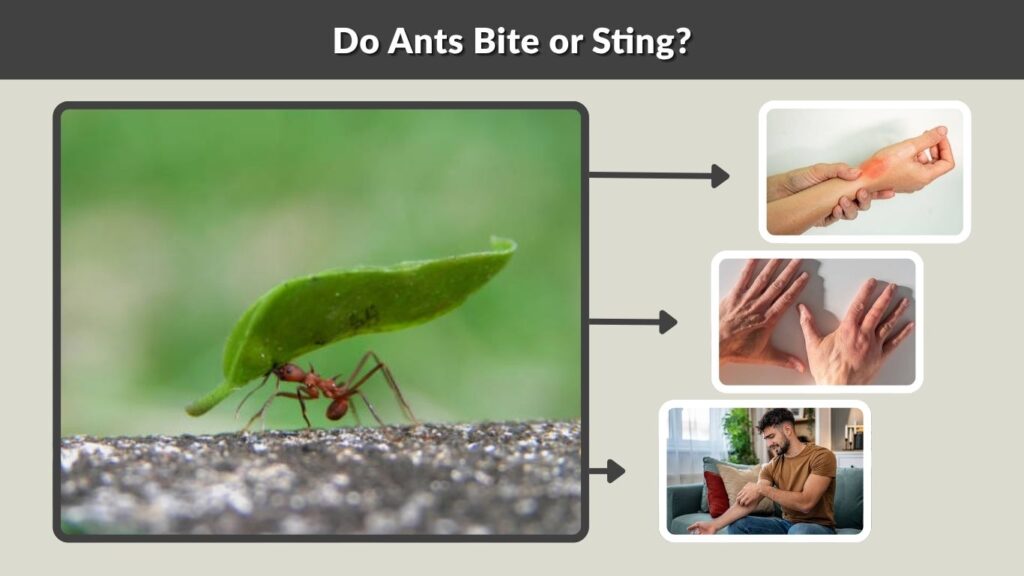
The terms “ant bite” and “ant sting” are often used interchangeably, but they describe different actions. A bite comes from the mandibles at the front of the ant’s body, whereas a sting is delivered through a specialized structure at the abdomen. Some species only bite, some can sting, and others use both methods during defense.
Ant Bites
A typical ant bite may cause:
- A brief pinching or burning sensation
- Mild redness around the area
- Slight swelling
- Temporary itching
- Minor localized tenderness
Many bites from common household ants are mild and disappear without special treatment.
Ant Stings
Stinging ants can inject venom into the skin. These encounters may produce stronger burning, swelling, itching, or raised bumps.
Fire ants are especially well known for stinging repeatedly after gripping the skin. Their stings commonly produce an immediate burning sensation followed later by itchy bumps or small pustule-like spots.
What Types of Ants Bite?
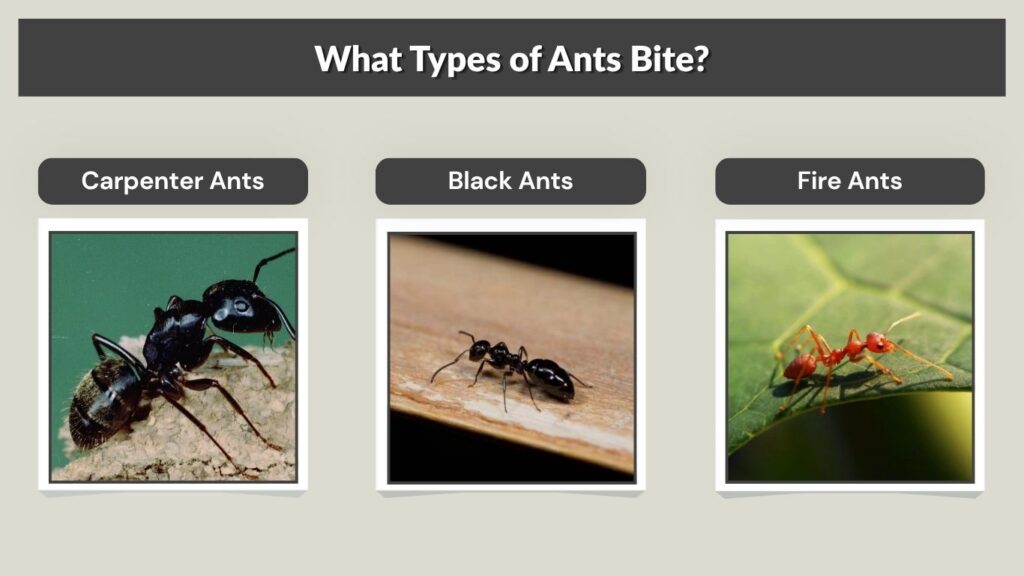
Different ant species vary considerably in their ability and willingness to bite humans. Some common household ants are unlikely to cause noticeable symptoms, while larger or more defensive species can deliver stronger bites.
Carpenter Ants
Carpenter ants can bite humans, particularly when they are handled or their nest is disturbed. Their relatively large mandibles can produce a noticeable pinch.
A carpenter ant bite may cause localized pain or irritation, but these ants do not have a functional stinger. They generally prefer to escape rather than attack people unless they feel threatened.
Black Ants and Little Black Ants
The term “black ant” can refer to many different species. Some black ants are capable of biting, although most common household varieties cause little or no significant reaction.
Little black ants may occasionally bite, but their tiny size means the sensation is usually mild. Seeing many black ants indoors is generally more of a nuisance or infestation concern than a biting hazard.
Fire Ants
Fire ants are among the ants most likely to cause painful encounters with people. They commonly:
- Swarm when their mound is disturbed
- Grip the skin with their mandibles
- Sting repeatedly
- Cause intense burning or itching
- Produce small raised or pustule-like lesions
Avoid disturbing fire ant mounds, especially when working or walking outdoors.
Flying Ants
Flying ants are simply reproductive ants with wings, not a separate species. Whether they can bite or sting depends on the species they belong to.
Most flying ants encountered during mating swarms are not aggressive toward people. Carpenter ant reproductives, for example, may technically be capable of biting but rarely do so unless handled or trapped.
Sugar Ants and House Ants
“Sugar ant” is a common name used for several small ants attracted to sweet foods. Many household sugar ants are capable of using their mandibles, but bites to humans are uncommon and usually minor.
Odorous house ants, ghost ants, pavement ants, and similar household species are typically much more interested in crumbs, grease, or sugary liquids than in biting people.
What Does an Ant Bite Look Like?
The appearance of an ant bite depends on the species and whether venom was injected. A minor bite may leave very little visible evidence, while stinging species can produce more obvious skin reactions. Individual sensitivity also affects how strongly the skin reacts.
Common Signs
Ant bites or stings may cause:
- Small red spots
- Localized swelling
- Itching or irritation
- A burning sensation
- Mild tenderness
- Raised bumps
Fire ant stings may develop into small, whitish pustules within about a day. Avoid scratching or breaking these areas because damaged skin can become infected.
When a Reaction May Be More Serious
Most reactions remain limited to the area around the bite or sting. Seek urgent medical care if symptoms include difficulty breathing, swelling of the face or throat, widespread hives, faintness, or another rapidly developing severe reaction.
People with a known history of serious insect-sting allergies should follow their medical emergency plan.
What to Do After an Ant Bite
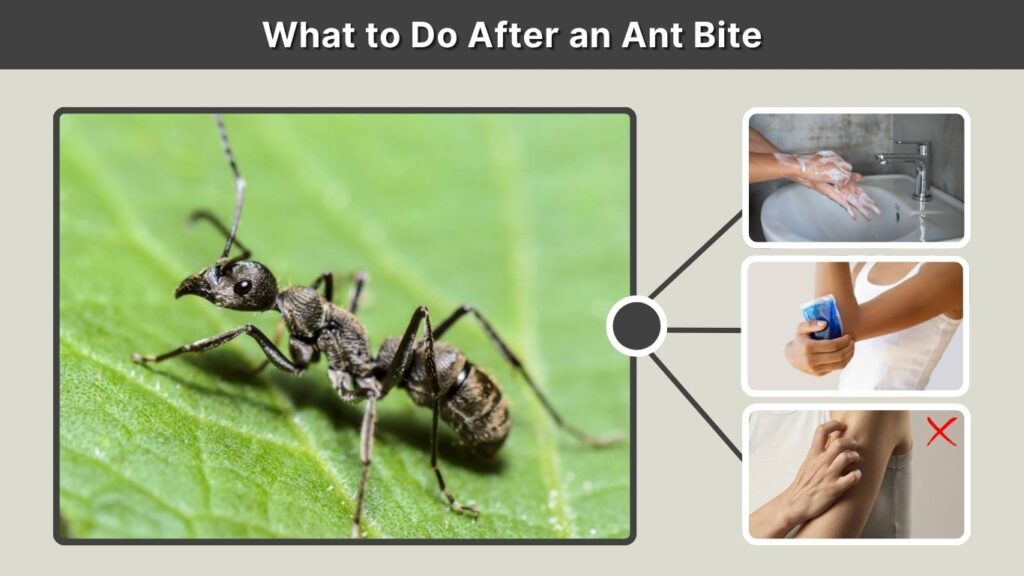
Minor ant bites usually require only simple first aid. The main goals are to clean the skin, control discomfort, and avoid scratching the irritated area.
Simple Care Steps
- Move away from the ants or nest.
- Wash the affected area with soap and water.
- Apply a cold compress for short periods to reduce swelling.
- Avoid scratching itchy skin.
- Keep any blister or pustule clean and intact.
- Monitor the area for worsening redness or swelling.
Over-the-counter products may help with itching or discomfort when used according to their directions.
When to Get Medical Advice
Contact a healthcare professional if pain or swelling becomes severe, symptoms continue worsening, or the area shows possible infection such as spreading redness, warmth, drainage, or increasing tenderness.
Emergency treatment is appropriate for breathing problems, significant facial or throat swelling, dizziness, fainting, or widespread allergic symptoms.
How to Prevent Ant Bites Around the Home
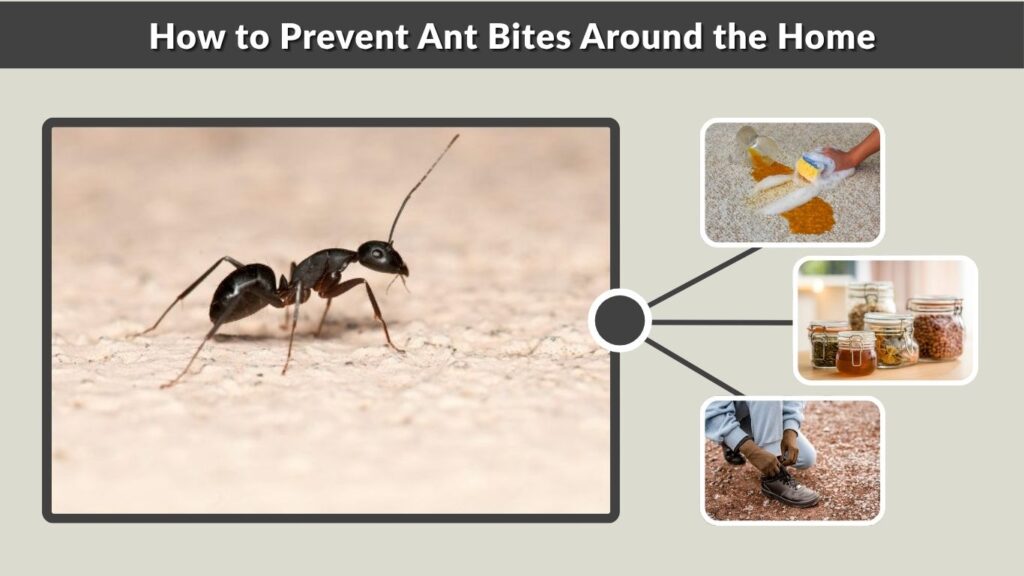
Reducing ant activity also reduces the likelihood of accidental bites. Indoor ants usually enter because they can find food, water, shelter, or accessible openings. Prevention works best when these attractions and entry routes are addressed rather than relying only on killing visible workers.
Practical Prevention Tips
- Clean food spills and crumbs promptly.
- Store sugar and other foods in sealed containers.
- Repair leaking sinks, pipes, or faucets.
- Seal cracks around doors and windows.
- Trim vegetation touching exterior walls.
- Keep outdoor trash containers closed.
- Avoid disturbing outdoor ant nests.
- Wear shoes and gloves when working near known colonies.
If ants continue appearing indoors, follow their trails to determine where they are entering and whether a nest may be nearby.
FAQs
1. Do all ants bite?
Most ants have mandibles, but not all species commonly bite humans. Some are too small to produce a noticeable bite, while others use their jaws mainly for food handling and colony activities. Larger or defensive ants are generally more likely to bite when disturbed.
2. Do black ants bite humans?
Some black ant species can bite humans, but most common household black ants produce little or no significant reaction. Larger black carpenter ants can deliver a more noticeable pinch when handled or threatened.
3. Do carpenter ants bite or sting?
Carpenter ants can bite using their powerful mandibles, but they do not sting. Bites usually occur when the ants are handled, trapped against the skin, or defending a disturbed colony.
4. Do fire ants bite or sting?
Fire ants do both. They first grip the skin with their mandibles and then sting with the rear of their abdomen. A single fire ant can sting repeatedly, which is why disturbed colonies can cause numerous painful lesions quickly.
5. Do flying ants bite?
Flying ants may be physically capable of biting or stinging depending on their species, but most winged ants are not aggressive toward humans. They are reproductive ants primarily focused on mating and establishing new colonies rather than attacking people.
