

Mayflies are delicate freshwater insects best known for their short adult lives and their important role in river and lake ecosystems. Found across the world, they spend most of their lives underwater as nymphs, where they help maintain water quality and serve as a vital food source for fish and other animals. With hundreds of species and many recognizable types, mayflies are also widely used as indicators of clean, healthy aquatic environments.
1. Blue-Winged Olive Mayfly

The Blue-Winged Olive Mayfly is one of the most widespread and recognizable mayflies in the world. Known for its small size and olive-toned body, it thrives in clean freshwater streams, rivers, and lakes. This mayfly is especially famous among anglers because it emerges in large numbers and appears across many seasons, making it a key species in aquatic ecosystems.
Identification
- Small to medium-sized mayfly, usually 5–10 mm long
- Slender olive to brownish-olive body
- Distinct bluish-gray or smoky wings held upright at rest
- Large compound eyes, often more prominent in males
- Two or three long, thread-like tail filaments
Habitat
Blue-Winged Olive mayflies live mainly in cool, well-oxygenated freshwater environments. They are commonly found in slow to moderately flowing rivers, spring creeks, and the edges of lakes. Nymphs inhabit the bottoms of streams, hiding among gravel, aquatic plants, and submerged debris where they can cling and feed safely.
Life Cycle
This mayfly goes through incomplete metamorphosis with three main stages: egg, nymph, and adult. The nymph stage can last several months, during which it molts many times underwater. When ready, it rises to the surface, emerges as a winged sub-adult, and later molts again into a fully mature adult mayfly.
Behavior
Adult Blue-Winged Olives are most active during cool, cloudy, or damp weather. They often swarm over water surfaces to mate, after which females lay eggs directly onto the water. Adults live only a short time, sometimes just a day or two, focusing entirely on reproduction before dying.
2. Green Drake Mayfly
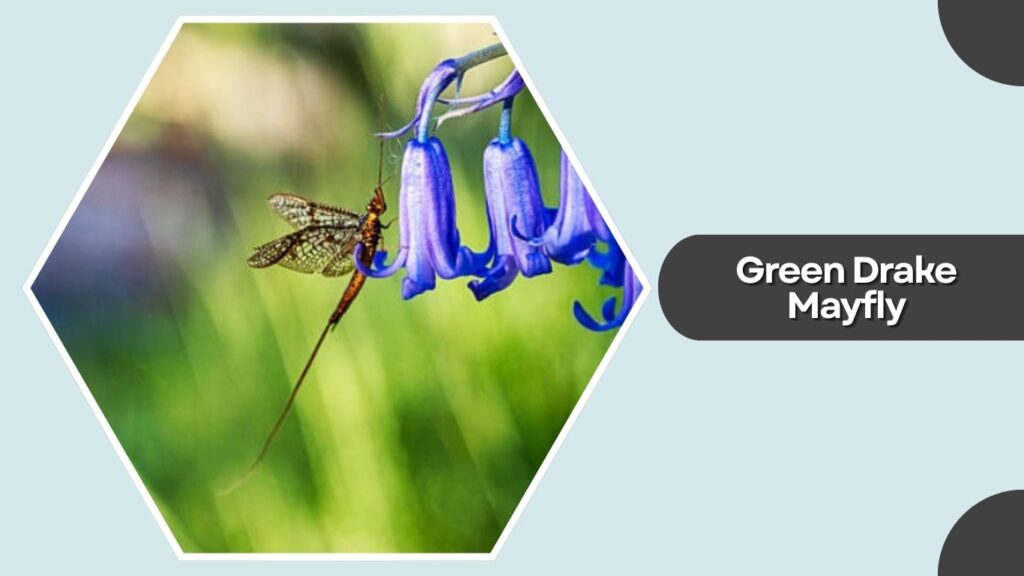
The Green Drake Mayfly is one of the largest and most spectacular mayflies, famous for its massive seasonal emergences. Its bright green body and strong flight make it easy to recognize, and it plays an important role as a food source for fish, birds, and other aquatic predators.
Identification
- Large mayfly, often 18–25 mm long
- Bright green to yellow-green body
- Transparent wings with visible dark veins
- Three long tail filaments
- Bulky thorax and broad wings compared to smaller mayflies
Habitat
Green Drake mayflies prefer clean, cold to moderately cool freshwater rivers and streams. Their nymphs live under rocks and among gravel in flowing water, where oxygen levels are high. They are especially common in mountainous and forested regions.
Life Cycle
The life cycle includes egg, aquatic nymph, winged sub-adult (dun), and adult (spinner). Nymphs may live for one to two years underwater before emerging. Adults live only a few days, during which mating and egg-laying occur.
Behavior
Green Drakes usually emerge in late spring to early summer. Adults often fly in large swarms, attracting many predators. After mating, females return to the water to drop their eggs, completing the cycle.
3. Brown Drake Mayfly
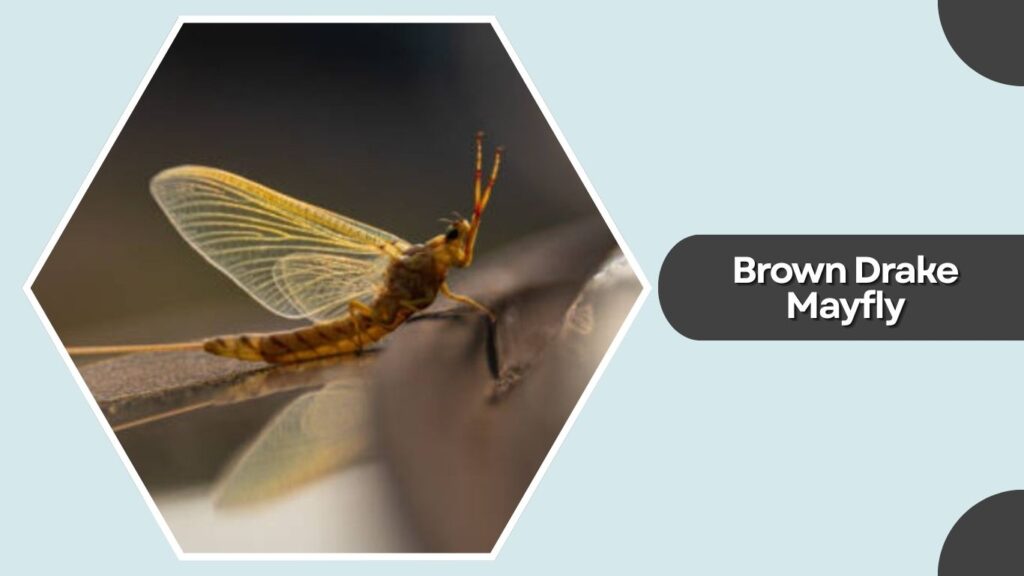
The Brown Drake Mayfly is another large mayfly species, closely related to the Green Drake. It is well known for its brownish body and heavy evening hatches that occur in many freshwater systems.
Identification
- Large size, usually 15–22 mm long
- Brown to tan body with darker markings
- Clear wings with brownish veins
- Two or three long tail filaments
- Strong, upright wing posture when resting
Habitat
Brown Drake mayflies inhabit clean rivers, lakes, and large streams. Their nymphs are burrowers or crawlers, living in muddy or sandy bottoms, as well as under stones where they feed on organic material.
Life Cycle
They spend most of their life as aquatic nymphs, which can last one year or longer. When ready to emerge, they swim to the surface and transform into winged adults. Like other mayflies, the adult stage is very short-lived.
Behavior
Brown Drake adults are mostly active in the evening and at night. They form mating swarms above water and nearby vegetation. After egg-laying, the adults quickly die, providing an important nutrient source for aquatic ecosystems.
4. March Brown Mayfly

The March Brown Mayfly is a classic early-season species, widely distributed across Europe, Asia, and North America. It is valued for its hardiness and its importance in spring freshwater food webs, often appearing when few other mayflies are active.
Identification
- Medium to large mayfly, about 10–18 mm long
- Mottled brown to dark tan body
- Broad, grayish-brown wings with darker speckles
- Two or three long tail filaments
- Stockier body compared to many small mayflies
Habitat
March Brown mayflies mainly live in cool, fast-flowing streams and rivers. Nymphs cling to rocks and gravel in riffles, where oxygen is high. They can also be found in clear lakes with stony bottoms.
Life Cycle
The nymph stage usually lasts around one year. During this time, the nymph molts many times before emerging at the water surface as a winged sub-adult. It later molts once more into the mature adult, which lives only briefly.
Behavior
March Browns are strong swimmers and active crawlers as nymphs. Adults often emerge during daylight hours, even in cool weather. They fly low over the water, forming loose swarms before mating and laying eggs.
5. Hexagenia (Giant Mayfly)
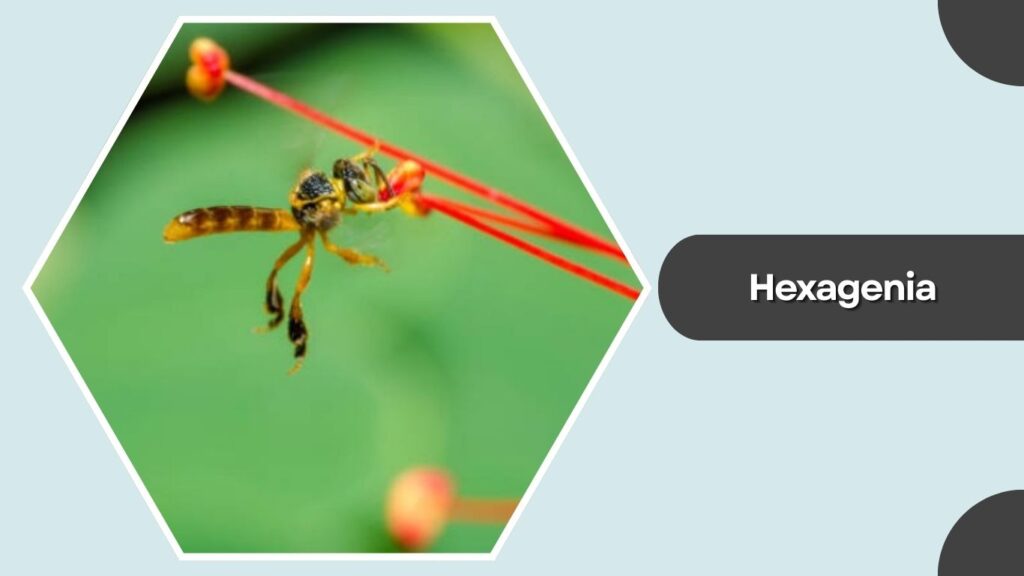
Hexagenia, commonly called the Giant Mayfly, is one of the most famous mayfly groups due to its enormous synchronized emergences. These mass hatches can be so dense that they appear on weather radar and cover roads and buildings near lakes and rivers.
Identification
- Large mayfly, often 18–30 mm long
- Pale yellow to cream-colored body
- Very long, delicate wings
- Three extremely long tail filaments
- Soft-bodied, fragile appearance
Habitat
Hexagenia nymphs are burrowers that live in soft mud or sandy bottoms of lakes, slow rivers, and large streams. They require clean water with enough oxygen, making them good indicators of water quality.
Life Cycle
The nymph stage can last one to three years underwater. When mature, millions may emerge within a short time, molt into adults, mate, and lay eggs. Most adults die within 24–48 hours.
Behavior
Adults are most active at night and are strongly attracted to lights. Their mass emergences overwhelm predators, ensuring that enough individuals survive to reproduce successfully.
6. Pale Morning Dun Mayfly

The Pale Morning Dun Mayfly is a small, light-colored mayfly known for its delicate appearance and frequent hatches. It is widely distributed and plays an important role in freshwater ecosystems as both a grazer and a food source for fish.
Identification
- Small to medium size, about 6–12 mm long
- Pale yellow to creamy body color
- Light gray to nearly transparent wings
- Two or three long, fine tail filaments
- Slender body with a soft, fragile look
Habitat
Pale Morning Dun mayflies prefer cool, clean streams and rivers with moderate flow. Nymphs are usually found clinging to rocks, aquatic plants, and woody debris where they feed on algae and microscopic organisms.
Life Cycle
The nymph stage can last several months to over a year depending on water temperature. When ready, nymphs rise to the surface and emerge into winged forms. Adults live briefly, focusing entirely on mating and laying eggs.
Behavior
These mayflies often emerge in the morning or early afternoon, especially during warmer months. Adults form gentle swarms above the water, and females return to the surface to release their eggs.
7. Light Cahill Mayfly
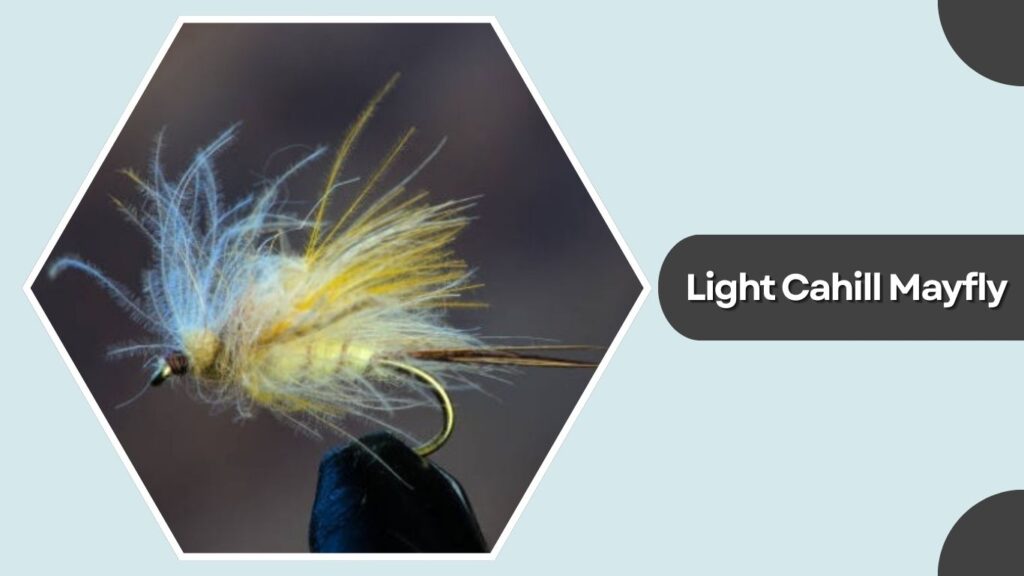
The Light Cahill Mayfly is a medium-sized, pale mayfly commonly found in healthy freshwater systems. It is well known for its steady summer emergences and its importance as prey for fish and other aquatic animals.
Identification
- Medium-sized mayfly, about 10–15 mm long
- Light cream to pale yellow body
- Clear wings with light-colored veins
- Two or three long tail filaments
- Smooth, evenly colored appearance
Habitat
Light Cahill mayflies inhabit clean rivers, streams, and spring creeks. Their nymphs live among gravel, submerged plants, and organic debris, where they feed on fine particles and algae.
Life Cycle
Most of the life span is spent in the aquatic nymph stage, which may last up to a year. After emerging, adults molt once more into mature forms, mate, and die shortly after egg-laying.
Behavior
Adults are usually active in late afternoon and evening. They often drift gently above the water before mating, then females skim the surface to deposit eggs.
8. Dark Cahill Mayfly

The Dark Cahill Mayfly is a close relative of the Light Cahill but is generally deeper in color and slightly more robust. It is a familiar species in many rivers and is especially known for its dependable summer and early autumn emergences.
Identification
- Medium-sized mayfly, around 10–16 mm long
- Tan to light brown body, darker than Light Cahill
- Clear wings with slightly darker veins
- Two or three long tail filaments
- More contrasting body segments
Habitat
Dark Cahill mayflies live in clean, well-oxygenated streams and rivers. Nymphs are commonly found among stones, gravel, and submerged vegetation, where they hide from currents and predators.
Life Cycle
The aquatic nymph stage may last close to a year. After repeated molts, mature nymphs swim to the surface and emerge as winged sub-adults, then molt again into adults. Adult life is very short.
Behavior
Dark Cahills usually emerge in the late afternoon or evening. Adults form loose mating swarms over riffles and calm pools. Females return to the water to lay eggs, then quickly die.
9. Sulphur Mayfly

The Sulphur Mayfly is a popular and easily recognized species due to its bright yellow to pale orange coloration. It appears in large numbers in late spring and early summer, making it an essential part of freshwater food chains.
Identification
- Small to medium size, about 6–12 mm long
- Bright yellow to sulfur-colored body
- Light gray wings with fine veins
- Two long tail filaments (sometimes three)
- Slim, delicate body shape
Habitat
Sulphur mayflies prefer slow to moderately flowing streams and rivers with good water quality. Nymphs live along the bottom in gravel, sand, and aquatic plants, feeding on algae and organic matter.
Life Cycle
They spend several months to over a year as nymphs before emerging. Adults live only a short time, usually a few days, during which they mate and deposit eggs on the water surface.
Behavior
Sulphur mayflies commonly emerge in the evening. Large swarms attract fish, birds, and insects. Females gently touch the water to release eggs before dying.
10. Hendrickson Mayfly

The Hendrickson Mayfly is a well-known spring species, valued for its early-season appearance and its importance in freshwater ecosystems. It is often one of the first medium-sized mayflies to emerge after winter, signaling improving water conditions.
Identification
- Medium-sized mayfly, about 8–13 mm long
- Pinkish-tan to light brown body
- Gray, semi-transparent wings
- Two or three long tail filaments
- Females usually lighter than males
Habitat
Hendrickson mayflies live mainly in cool, clean streams and small rivers. Nymphs inhabit rocky and gravelly bottoms where currents are steady and oxygen levels are high.
Life Cycle
The nymph stage lasts nearly a year. When mature, nymphs rise to the surface and emerge into winged forms, then molt once more into adults. Adult life is short and centered on reproduction.
Behavior
Hendricksons typically emerge from mid-morning to afternoon in early spring. Adults swarm above the water, mate in the air, and females return to lay eggs.
11. Trico Mayfly
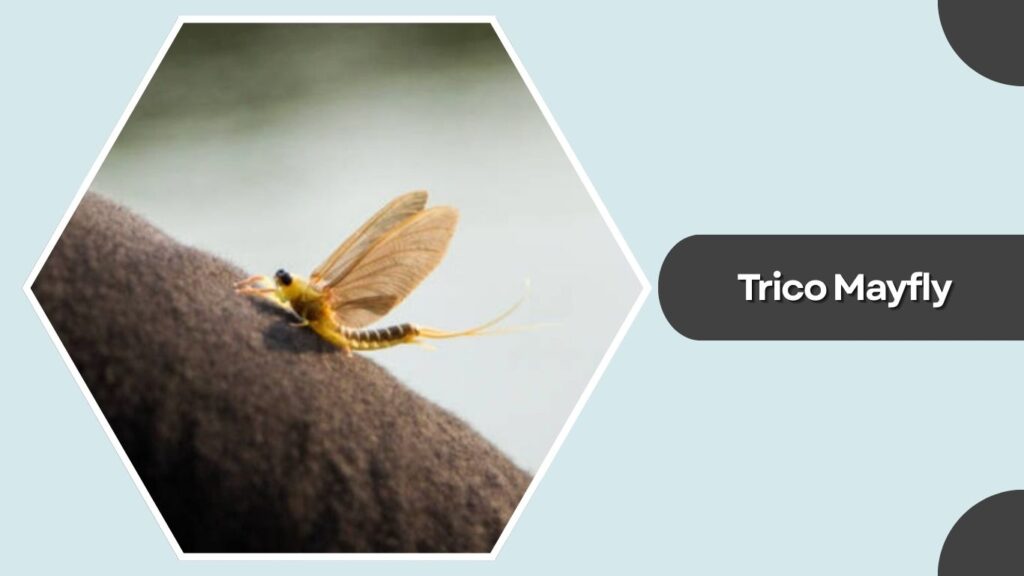
The Trico Mayfly is one of the smallest mayflies but also one of the most abundant. It is famous for its massive summer swarms that can fill the air above rivers and lakes.
Identification
- Very small mayfly, usually 3–6 mm long
- Black, dark brown, or olive body
- Clear wings that appear almost glass-like
- Two long tail filaments
- Males often darker than females
Habitat
Trico mayflies inhabit warm to cool rivers, streams, and still waters. Nymphs live on the bottom among fine sediments, plants, and organic debris.
Life Cycle
They may have one or more generations per year depending on climate. Nymphs mature quickly, and adults often appear in huge numbers during summer.
Behavior
Tricos usually swarm in dense clouds during early morning. After mating, females drop eggs onto the water surface, often creating spectacular scenes of feeding fish.
12. Isonychia Mayfly
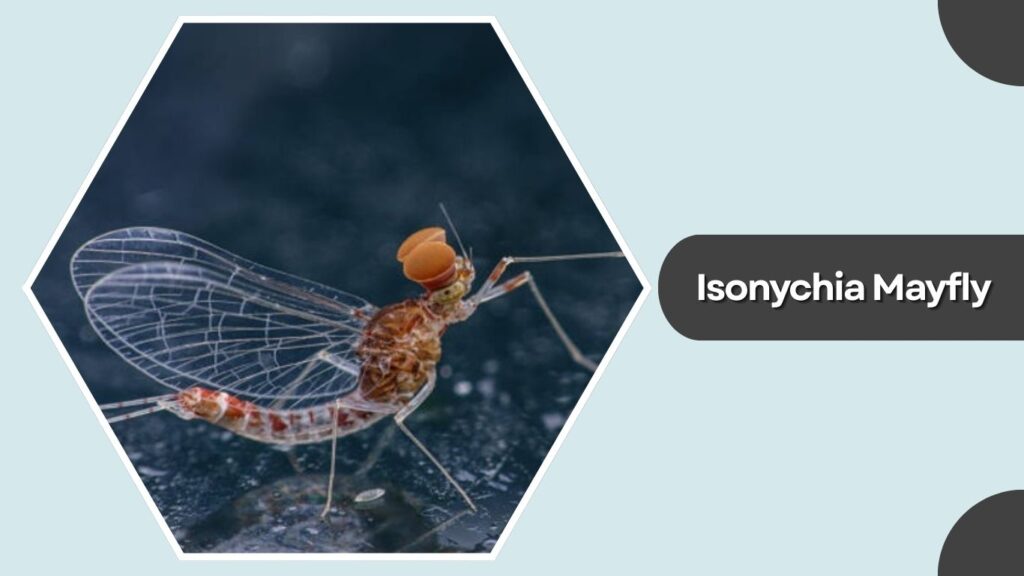
The Isonychia Mayfly is a sleek, fast-swimming species known for its dark coloration and long front legs. It is often called the “Dun Variant” and is common in many North American rivers.
Identification
- Medium-sized mayfly, about 8–14 mm long
- Dark brown to blackish body
- Smoky-gray wings
- Two long tail filaments
- Notably long forelegs, especially in males
Habitat
Isonychia mayflies prefer flowing rivers and large streams with good oxygen levels. Nymphs are strong swimmers and cling to rocks, wood, and aquatic plants where currents are steady.
Life Cycle
The nymph stage may last up to a year. Unlike many mayflies, Isonychia nymphs often swim actively rather than drifting. Adults emerge at the surface and live only a short time.
Behavior
Adults are often active in the afternoon and evening. Females may dive or crawl below the surface to lay eggs, which is unusual compared to many other mayflies.
13. Callibaetis Mayfly
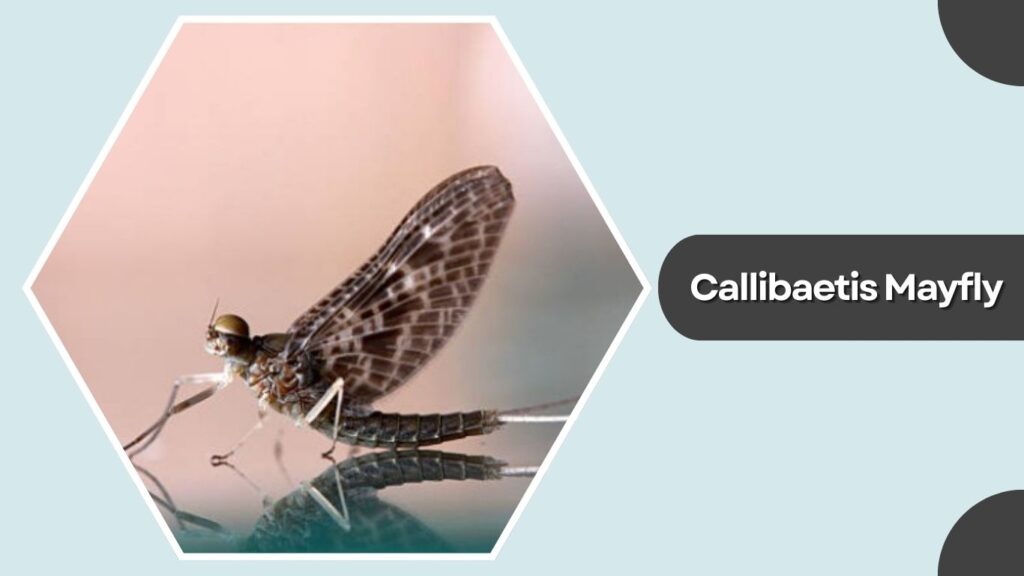
Callibaetis Mayflies are delicate, beautifully patterned insects commonly found around still waters. They are sometimes called “speckled duns” because of their spotted wings.
Identification
- Small to medium size, about 6–11 mm long
- Pale gray, tan, or olive body
- Distinctly mottled or speckled wings
- Two or three long tail filaments
- Graceful, slender appearance
Habitat
Callibaetis mayflies are strongly associated with lakes, ponds, and slow-moving waters. Nymphs live among aquatic vegetation and soft sediments where they feed on microscopic algae.
Life Cycle
They often produce multiple generations per year in warmer climates. Nymphs develop relatively quickly, and adults appear repeatedly from spring through fall.
Behavior
Adults fly low over still water and form small mating swarms. Females usually lay eggs directly on the surface, and adults die shortly afterward.
14. Slate Drake Mayfly
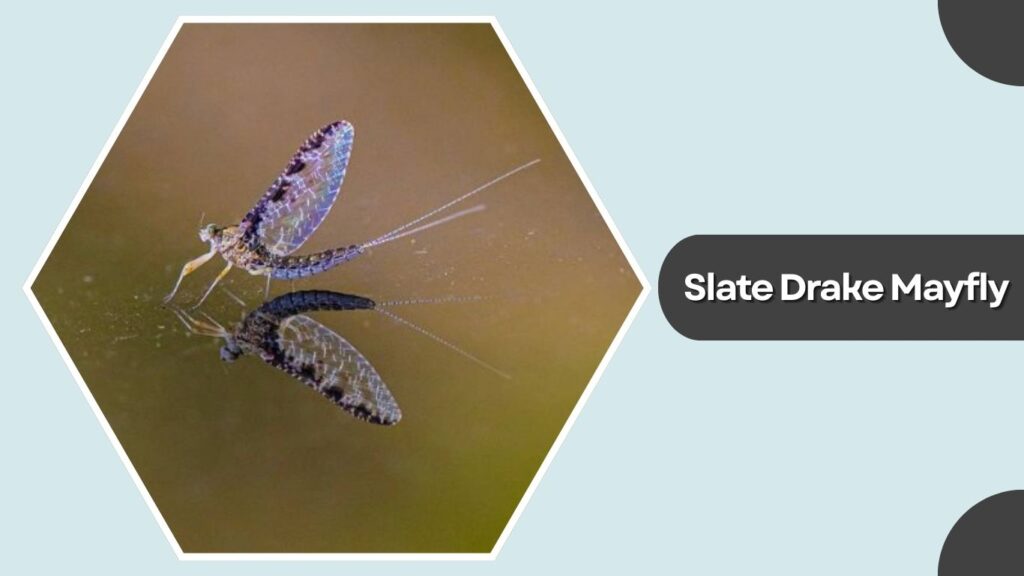
The Slate Drake Mayfly is a dark-colored, medium to large mayfly commonly found in rivers. It is known for its strong flight and late-season emergences, making it an important species in summer and early autumn freshwater ecosystems.
Identification
- Medium to large mayfly, about 10–18 mm long
- Dark gray to slate-colored body
- Smoky, semi-transparent wings
- Two long tail filaments
- Streamlined, sturdy appearance
Habitat
Slate Drake mayflies inhabit clear, flowing rivers and large streams. Nymphs live under stones and among gravel, where they cling tightly to surfaces and feed on organic matter.
Life Cycle
Nymphs usually develop over one year, molting many times before emerging. Adults appear later in the season compared to many other mayflies and live only briefly.
Behavior
Adults often emerge in the evening. They are strong fliers and form noticeable swarms above riffles and runs. Females return to the water to deposit eggs.
15. Mahogany Dun Mayfly
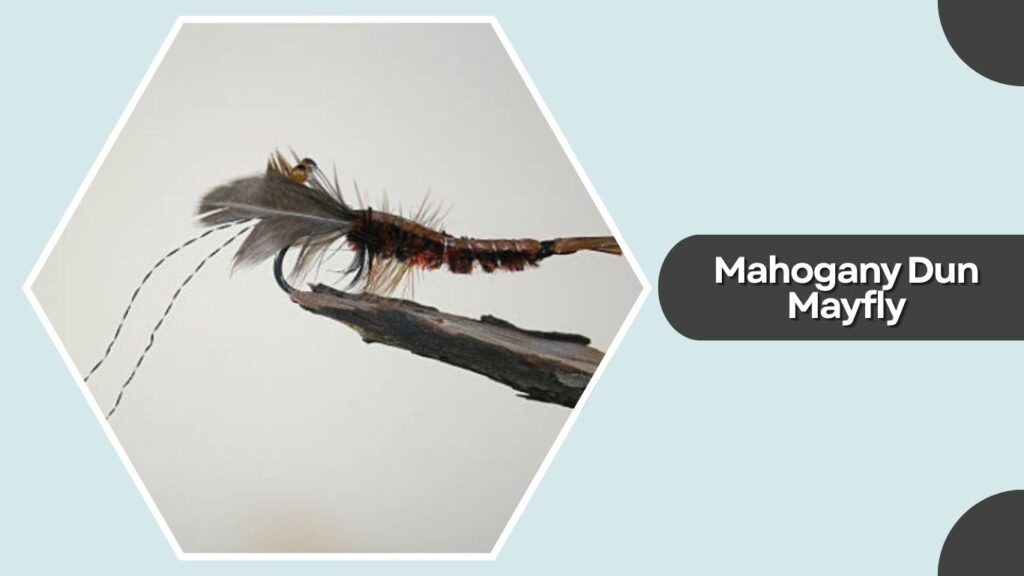
The Mahogany Dun Mayfly is a small, dark mayfly that appears later in the year when many other species have finished emerging. Its deep reddish-brown color makes it easy to distinguish.
Identification
- Small mayfly, about 6–10 mm long
- Dark mahogany to reddish-brown body
- Clear to slightly smoky wings
- Two long tail filaments
- Slim, delicate form
Habitat
Mahogany Duns prefer cool, clean streams and spring creeks. Nymphs live among gravel and fine sediments, feeding on algae and organic material.
Life Cycle
The nymph stage often lasts close to a year. Adults emerge in late summer to autumn and live only a short time, focused entirely on mating and egg-laying.
Behavior
Adults usually emerge during daylight hours. Swarms form low over the water, and females gently place eggs on the surface before dying.
