
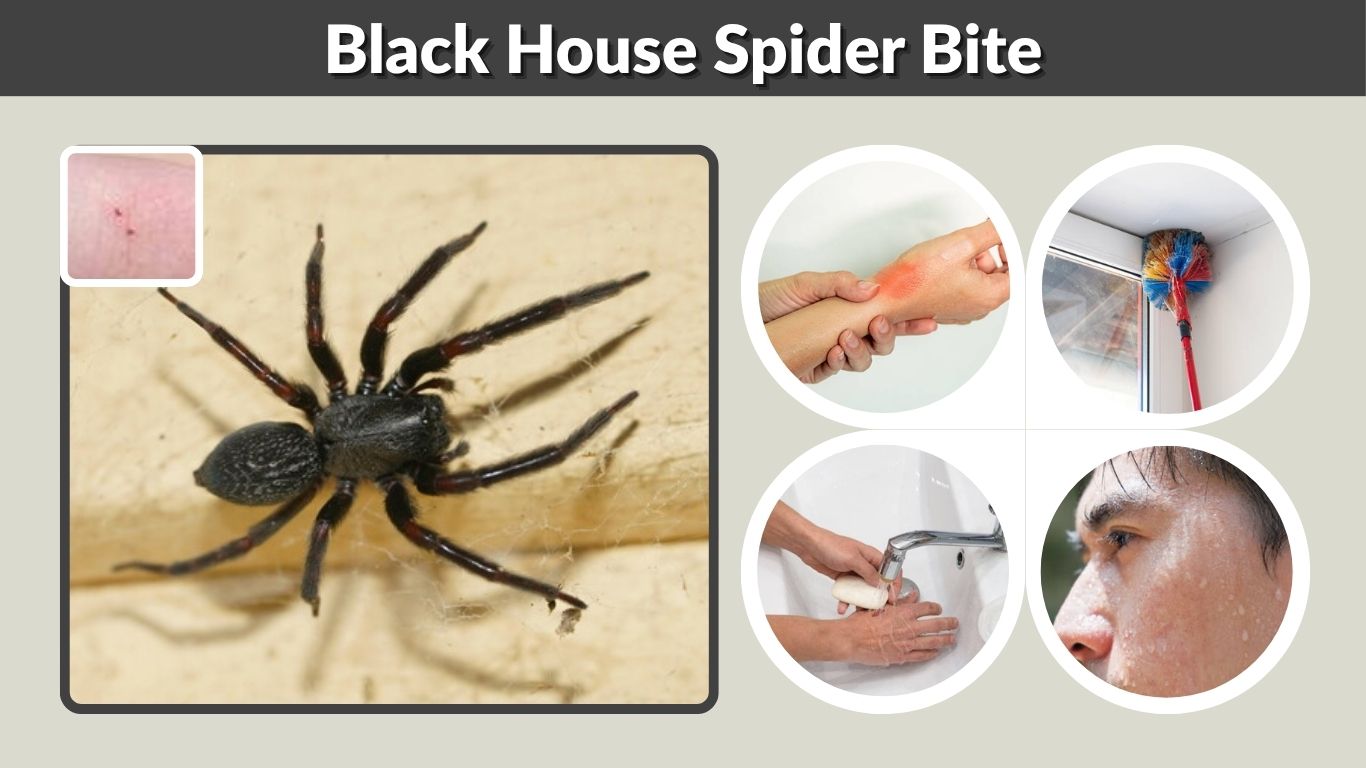
A black house spider bite can be painful, but bites from the Australian black house spider (Badumna insignis) are uncommon and usually cause localized symptoms rather than severe poisoning. Typical reactions include pain and swelling around the bite, while nausea, sweating, vomiting, or dizziness have occasionally been reported. Because several dark Australian spiders can look similar, identification matters. Understanding what a black house spider bite may look like, how symptoms develop, appropriate first aid, and when medical attention is needed can help you respond safely.
What Is a Black House Spider?
The black house spider, Badumna insignis, is a robust Australian spider commonly found around houses, window frames, wall crevices, fences, and tree bark. It builds messy, lacy sheet webs leading to a sheltered retreat. Females typically measure about 12–18 mm in body length, while males are smaller. These spiders are generally timid and rarely bite people.
How to Identify a Black House Spider
Typical identification features include:
- Dark brown to black legs and carapace
- Charcoal-grey abdomen
- Fine grey or velvety hairs
- Pale markings on the abdomen that may be faint
- Robust body shape
- Females larger than males
- Lacy sheet web with a funnel-like retreat
- Webs commonly around windows and building crevices
Their funnel-shaped retreats sometimes cause confusion with funnel-web spiders, but black house spiders belong to a completely different family.
Where Are Black House Spiders Found?
Black house spiders are widely distributed through southern and eastern Australia and are especially successful around human buildings.
They commonly construct webs around window frames, bricks, cracks in walls, sheds, fences, and other places where insects regularly pass. Outdoors, they also occupy rough tree bark, logs, rocks, and similar protected crevices.
The closely related brown house spider, Badumna longinqua, can occur in similar locations and has also been introduced outside Australia.
Do Black House Spiders Bite?
Black house spiders possess venom for capturing insect prey and are physically capable of biting humans. However, they are considered timid, and confirmed bites are relatively uncommon. A bite is most likely if the spider becomes trapped against skin, is handled, or is accidentally disturbed inside its retreat rather than because it actively approaches someone.
Are Black House Spider Bites Dangerous?
A confirmed black house spider bite is usually associated with local pain and swelling. The Australian Museum reports that nausea, vomiting, sweating, and giddiness have occasionally occurred, and skin lesions have been recorded in a small number of cases involving multiple bites.
Black house spiders are not Australian funnel-web spiders. However, if you are in Australia and have been bitten by an unidentified large black spider, health authorities advise treating the situation seriously because accurately distinguishing potentially dangerous species may be difficult.
Black House Spider Bite Symptoms
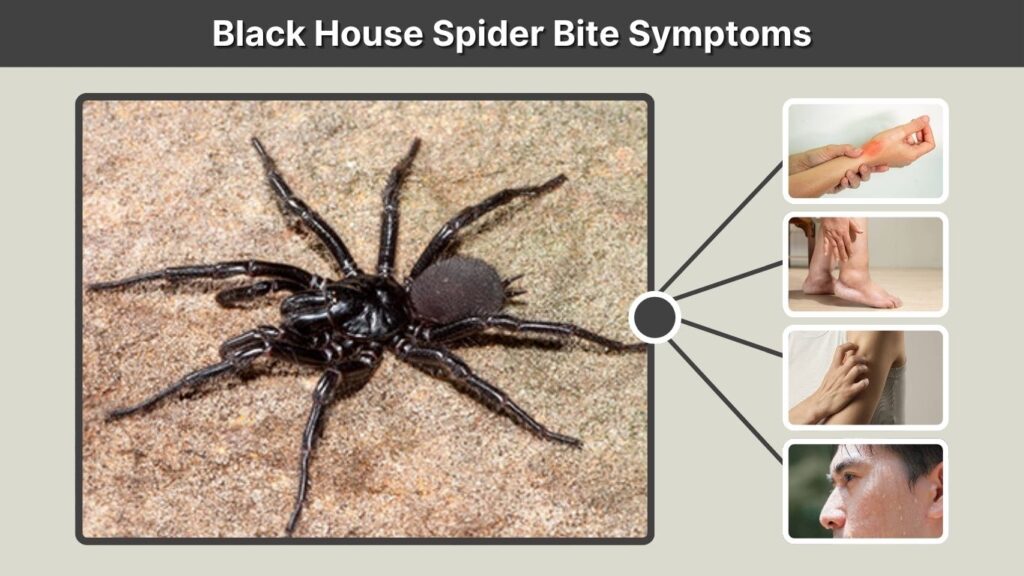
The reaction to a bite varies depending on the individual, bite location, and amount of venom delivered. Local symptoms are the most expected response. A person may notice pain almost immediately, followed by swelling and tenderness. More generalized symptoms have been reported but are considerably less typical than localized discomfort.
Common Symptoms
Possible symptoms include:
- Immediate or developing pain
- Redness at the bite site
- Local swelling
- Tenderness
- Mild inflammation
- Itching in some cases
- Nausea in occasional cases
- Vomiting in occasional cases
- Sweating
- Dizziness or giddiness
Symptoms that are severe, spreading, or persistent deserve medical assessment rather than being assumed to be a routine black house spider bite.
What Does a Black House Spider Bite Look Like?
There is no single appearance that reliably proves a mark came from a black house spider.
A bite may resemble a small red or swollen area accompanied by localized pain. Tiny puncture marks may sometimes be noticed, but they are not always visible.
Many insect bites, skin infections, allergic reactions, and other spider bites can look similar. A skin mark alone therefore cannot reliably identify the responsible spider.
How to Treat a Black House Spider Bite
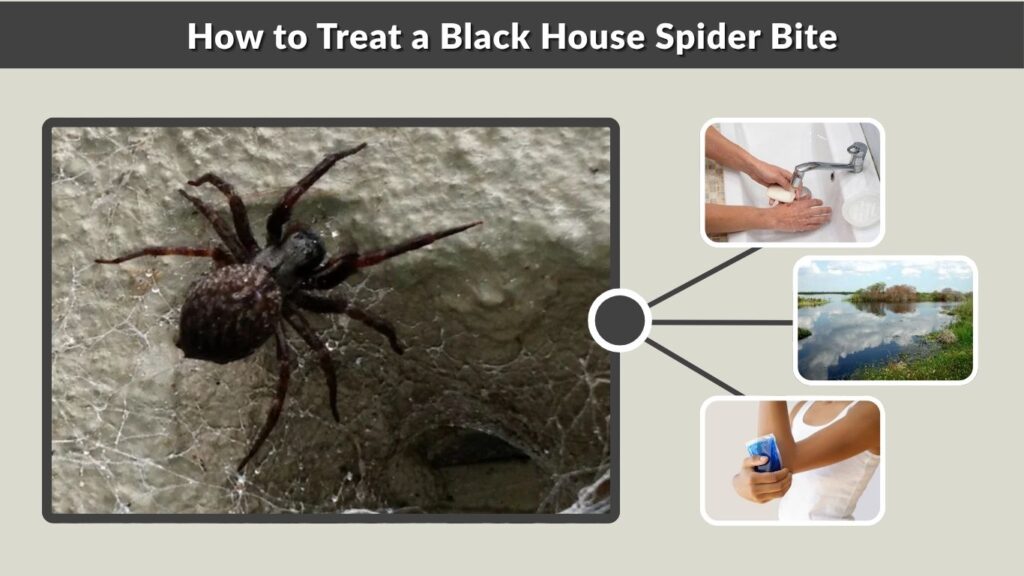
For a confidently identified black house spider bite causing only mild local symptoms, treatment is generally supportive. Australian health guidance for ordinary spider bites recommends cleaning the area and using cold treatment for pain and swelling. Symptoms that persist or worsen should be assessed by a healthcare professional.
Black House Spider Bite First Aid
For an uncomplicated bite:
- Move away from the spider.
- Wash the bite with soap and water.
- Apply an antiseptic if available.
- Wrap an ice pack in cloth.
- Apply the cold pack for short periods to reduce pain and swelling.
- Consider appropriate over-the-counter pain relief if needed.
- Avoid scratching or repeatedly irritating the bite.
- Monitor symptoms over the following hours.
Do not place ice directly against bare skin because prolonged direct contact can cause a cold injury.
Should You Use a Pressure Bandage?
Not for a confidently identified ordinary black house spider bite.
Pressure immobilization is primarily recommended in Australia for suspected funnel-web or mouse spider bites. Queensland clinical guidance specifically notes that pressure bandaging is not used for ordinary spider bites and may increase local pain.
However, if the spider was a large unidentified black spider in Australia, call emergency services and follow funnel-web first-aid guidance rather than assuming it was harmless.
When to Worry About a Black House Spider Bite
Most confirmed black house spider bites are not medical emergencies, but worsening symptoms should not be ignored. The larger concern is sometimes uncertainty over which spider actually caused the bite, especially in Australia where medically important funnel-web spiders may also be dark-colored.
Seek Medical Attention If You Have
Get medical advice if:
- Pain is severe or continues worsening
- Swelling becomes extensive
- Symptoms do not improve within several hours
- Swelling or itching becomes worse after 24–48 hours
- You develop repeated vomiting
- You become very sweaty or dizzy
- The wound shows signs of infection
- You are uncertain which spider caused the bite
Call emergency services immediately for difficulty breathing, throat or tongue swelling, collapse, confusion, severe muscle symptoms, or other signs of a serious systemic or allergic reaction.
What About Babies, Pregnancy, or Pets?
A suspected spider bite in a baby or young child deserves a lower threshold for professional medical advice because symptoms can be difficult to evaluate.
During pregnancy, seek medical advice if symptoms extend beyond a mild local reaction or if the spider cannot be confidently identified.
For a dog or cat with suspected spider envenomation, contact a veterinarian, particularly if the animal develops significant swelling, vomiting, weakness, pain, breathing changes, or abnormal behavior.
Black House Spider vs. Wolf Spider Bite
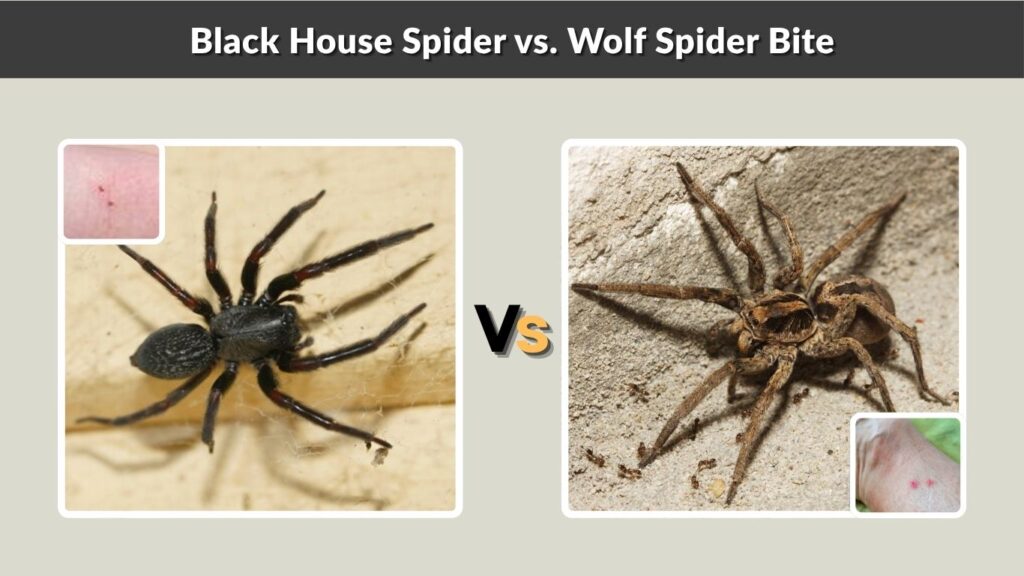
Both black house spiders and wolf spiders can cause painful localized bites, and the resulting skin reaction alone usually cannot identify the species. The spiders themselves differ more clearly in their behavior and web use.
Main Differences
Black house spider:
- Builds permanent lacy sheet webs
- Usually remains close to its retreat
- Common around windows and wall crevices
- Dark, robust appearance
- Bites are uncommon
Wolf spider:
- Actively hunts rather than relying on a permanent capture web
- Often runs across the ground
- Usually has a more patterned brown or grey appearance
- May enter houses while wandering
- Can also produce local pain and swelling
Correct spider identification is much more reliable than attempting to distinguish bites by skin appearance.
Black House Spider vs. Black Widow
The term “black house spider” should not be confused with black widow spiders. Black widows belong to the genus Latrodectus, while the Australian black house spider is Badumna insignis. They differ substantially in anatomy, web structure, behavior, and venom effects.
Are They the Same Spider?
No. Black house spiders are dark, hairy, robust spiders that construct lacy sheet webs with retreats.
Widow spiders typically have more bulbous abdomens and irregular cobwebs. Australia has the closely related redback spider (Latrodectus hasselti), whose bite can cause intense and spreading pain along with systemic symptoms.
A dark spider should therefore never be identified solely by its color.
How to Prevent Black House Spider Bites
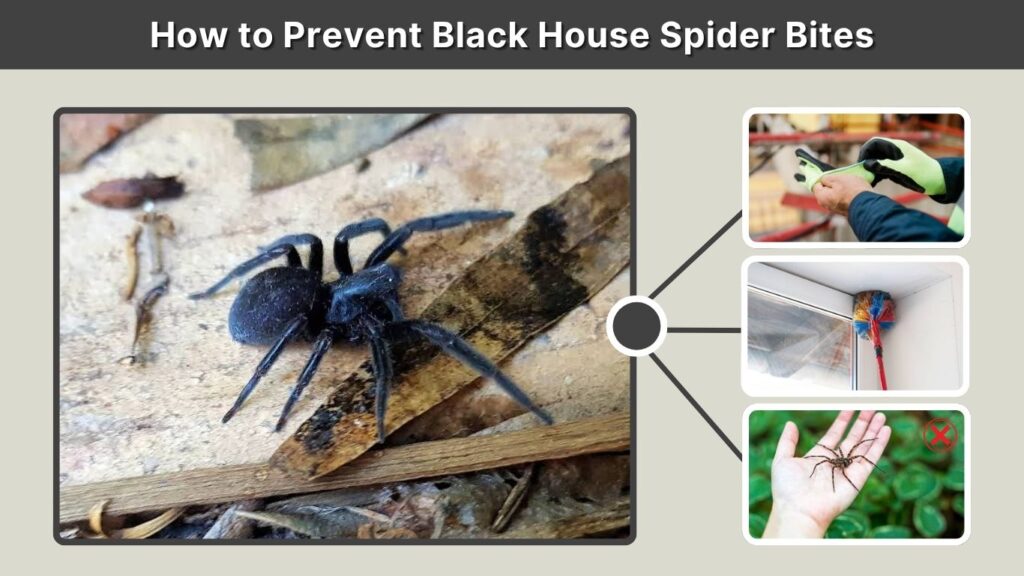
Black house spiders often provide natural insect control around buildings, so encounters do not always require extermination. Preventing accidental contact is usually enough. Their webs tend to remain in predictable locations, which makes reducing unwanted indoor encounters relatively straightforward.
Reducing the Risk of Bites
Wear gloves when clearing old webs or working around sheds and crevices. Avoid placing bare hands into dark openings where you cannot see clearly.
Regularly remove unwanted webs around windows and indoor areas, inspect stored items before handling them, shake out shoes and clothing that have been left undisturbed, and teach children not to touch unfamiliar spiders.
FAQs
Black house spider bite questions often focus on danger, appearance, symptoms, and treatment. The most important point is that a confirmed Badumna insignis bite is generally associated with local effects, while an unidentified large black spider bite in Australia requires greater caution because more dangerous species cannot always be excluded immediately.
Can a black house spider bite you?
Yes. Black house spiders can bite, but they are timid and bites are uncommon. Bites generally occur when the spider is trapped, handled, or disturbed.
What does a black house spider bite look like?
It may cause a red, swollen, painful area, but there is no unique skin mark that reliably identifies a black house spider bite.
How painful is a black house spider bite?
The Australian Museum describes the bite as potentially quite painful, usually with localized swelling. Nausea, vomiting, sweating, or dizziness are occasionally reported.
How do you treat a black house spider bite?
Wash the area with soap and water and use a wrapped cold pack to reduce local pain and swelling. Seek medical care if symptoms persist or worsen.
Can a black house spider bite be fatal?
Confirmed black house spider bites are not regarded like funnel-web bites and usually cause localized effects. However, in Australia, a bite from an unidentified large black spider should be treated as an emergency because dangerous funnel-web or mouse spiders may be difficult to rule out immediately.
