
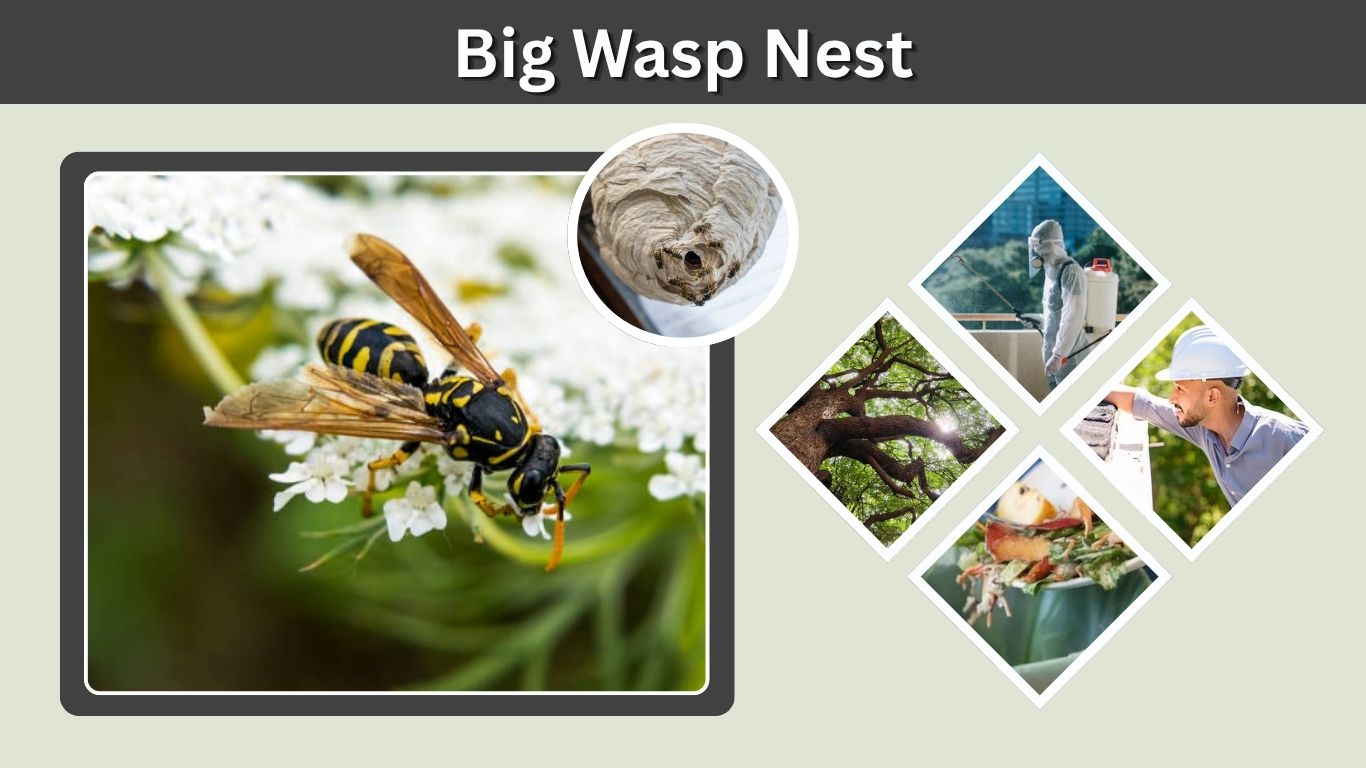
A big wasp nest can be an impressive but concerning discovery around your home or garden. Some nests grow as large as a soccer ball, while others remain hidden underground despite housing thousands of wasps. Their size, appearance, and location depend on the wasp species and the colony’s development. Understanding how big a wasp nest can get helps homeowners recognize different species and assess potential risks. This guide covers large wasp nest identification, growth, common locations, and safe removal options.
What Does a Big Wasp Nest Look Like?
A big wasp nest usually consists of gray, brown, or tan paper-like material made from chewed wood fibers mixed with wasp saliva. Depending on the species, the structure may resemble a football, a rounded ball, or an exposed honeycomb. Some nests have several protective outer layers, while others contain open cells without any covering.
Main Characteristics of a Large Wasp Nest
Large wasp nests may have several recognizable features:
- Color: Gray, brown, cream, or a mixture of different shades.
- Shape: Round, oval, football-shaped, or umbrella-shaped.
- Material: Lightweight paper produced from wood fibers and saliva.
- Entrance: One or more openings where workers enter and exit.
- Location: Trees, roof edges, attics, wall cavities, or underground.
- Activity: Numerous wasps traveling between the nest and surrounding areas.
The appearance of a nest can help narrow down its identification, although observing the wasps themselves is often necessary.
How Big Can a Wasp Nest Get?
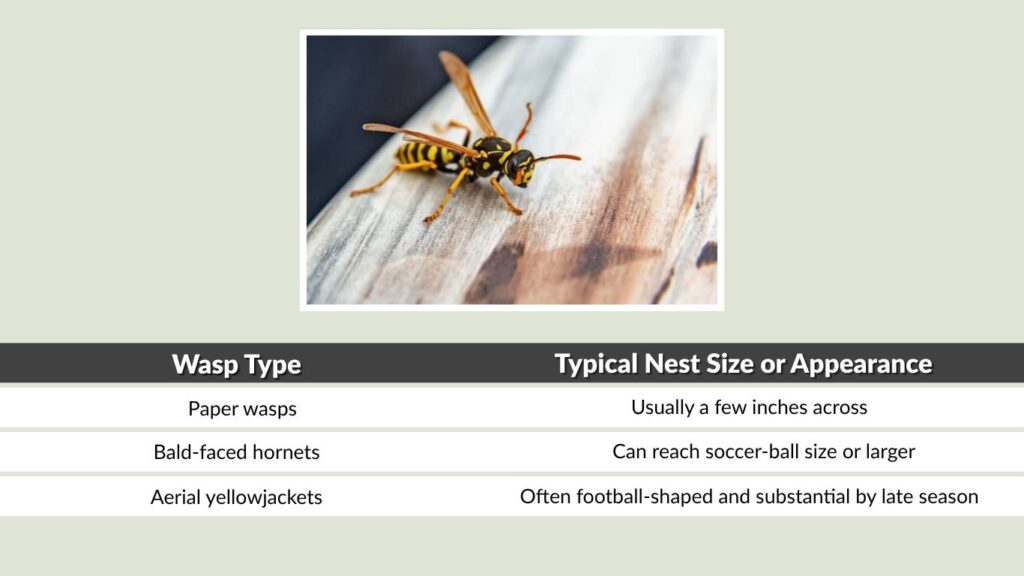
Wasp nest size varies considerably depending on species, available space, climate, and colony age. Some paper wasps build relatively small exposed nests, while certain yellowjackets and hornets construct enclosed nests capable of housing hundreds or thousands of individuals.
Wasp Nest Size Comparison
| Wasp Type | Typical Nest Size or Appearance |
| Paper wasps | Usually a few inches across |
| Bald-faced hornets | Can reach soccer-ball size or larger |
| Aerial yellowjackets | Often football-shaped and substantial by late season |
| Ground yellowjackets | Highly variable; usually hidden underground |
| European hornets | Large enclosed nests inside tree or building cavities |
These are general comparisons rather than fixed maximum measurements.
How Big Can a Paper Wasp Nest Get?
A big paper wasp nest typically has a single exposed layer of hexagonal cells. Most mature nests measure only a few inches across, although dimensions vary with species and colony conditions.
Paper wasps build their nests beneath roof eaves, branches, porch ceilings, and other sheltered surfaces.
Unlike hornets and yellowjackets, paper wasps do not create a protective envelope around their brood cells. Consequently, a five-inch paper wasp nest may be relatively large for its type, even though enclosed hornet nests can grow much bigger.
How Big Can an Underground Wasp Nest Be?
Underground yellowjacket nests can contain thousands of workers during peak colony development. However, measuring their physical dimensions is difficult because the structure remains concealed inside an existing cavity.
Wasps may occupy abandoned rodent burrows or other underground spaces and expand their paper combs as the colony develops.
The visible entrance may look like an ordinary hole in the lawn. Therefore, the entrance size does not reliably indicate how large the nest is beneath the ground.
Types of Big Wasp Nests
Different wasp species produce distinctive nesting structures. Identifying these differences is useful when examining a large nest from a safe distance. Color alone is not enough to determine the species because several wasps have similar markings.
Big Round Wasp Nest
A big round wasp nest hanging from a tree often belongs to an aerial yellowjacket, such as the bald-faced hornet.
These nests have gray, layered paper envelopes surrounding multiple internal combs. Their rounded or oval appearance becomes more noticeable as the colony expands.
Bald-faced hornets are black with prominent white markings and are especially defensive around their nests.
Big Red Wasp Nest
Red paper wasps, including species such as Polistes carolina, generally construct exposed umbrella-shaped nests.
Their nests contain visible hexagonal cells and are commonly attached to sheltered surfaces. Although a mature red wasp nest can become substantial, it usually does not resemble the large enclosed ball produced by bald-faced hornets.
The reddish coloration refers to the insects, not necessarily the nest material.
Big Black Wasp Nest
A large gray paper nest occupied by black-and-white wasps may belong to bald-faced hornets.
However, the great black wasp is a solitary species that nests underground rather than building a large communal paper structure.
Observing body markings and nesting behavior from a distance helps distinguish these different insects.
Where Are Big Wasp Nests Commonly Found?
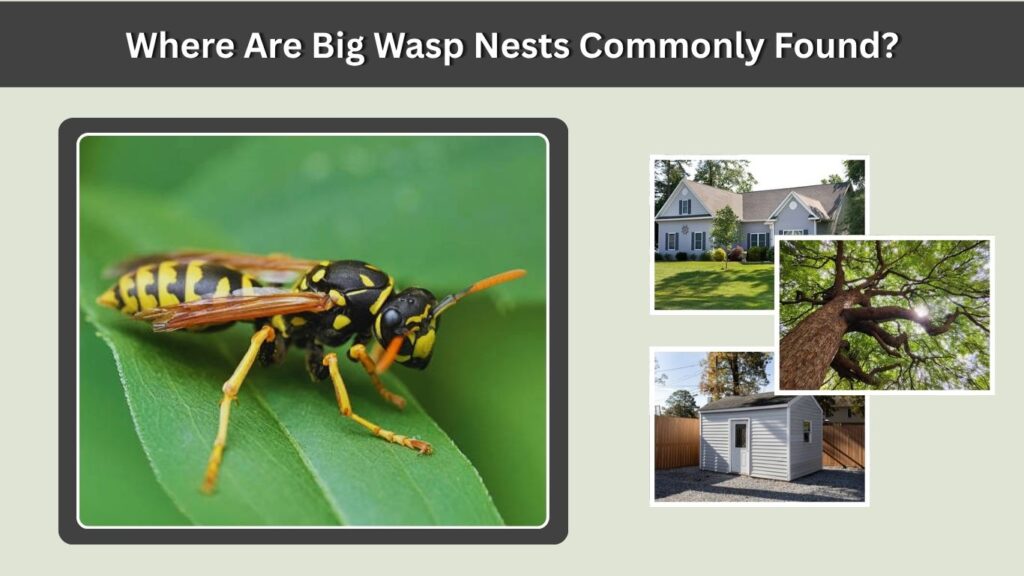
Large wasp nests appear in many outdoor and structural locations. Wasps generally select areas offering suitable support, shelter, or existing cavities. Some nests remain visible throughout their development, while others are discovered only after substantial growth.
Big Wasp Nest in a Tree
Trees are common locations for large aerial nests. Bald-faced hornets often attach their paper structures to branches, sometimes high above the ground.
A large nest may remain hidden among leaves throughout summer and become easier to notice after autumn leaf fall.
If a nest is located high in a tree away from walkways, it may be possible to leave it undisturbed. Avoid shaking branches, trimming nearby vegetation, or attempting removal with a long pole.
Big Wasp Nest in an Attic or House
Yellowjackets and some hornets establish colonies inside attics, wall voids, and other structural cavities.
Homeowners may notice repeated wasp movement through a small exterior opening, even when the nest itself remains invisible.
Hidden nests can become particularly problematic because workers may find their way into occupied rooms. Sealing the entrance while the colony is active can worsen this situation.
Professional inspection is generally the safest option.
Big Wasp Nest in a Shed, Camper, or Car
Occasionally, wasps nest inside sheds, unused campers, stored equipment, or stationary vehicles.
These locations provide shelter from rain and direct disturbance.
A previously unnoticed colony may become dangerous when someone opens a storage compartment, moves equipment, or begins operating a vehicle.
If active nesting is suspected, avoid disturbing the area until the species and removal requirements have been assessed.
Why Do Wasp Nests Become So Big?
Large nest development occurs because social wasp colonies expand throughout their active season. As worker numbers increase, additional insects collect building materials, feed larvae, and enlarge the nesting structure.
Seasonal Growth of Wasp Colonies
In temperate regions, a fertilized queen typically establishes a new nest during spring.
Initially, the queen builds cells and raises the first generation of workers. Once those workers emerge, construction accelerates because they take over many daily colony responsibilities.
By late summer, some yellowjacket colonies contain several thousand individuals.
Growth varies according to species, food availability, temperature, and seasonal conditions. Warmer climates may support different nesting cycles.
How to Tell How Big a Wasp Nest Is
An exposed nest can be assessed approximately by comparing its visible dimensions with nearby objects, without approaching it.
However, visible size does not necessarily reveal the population inside. A large abandoned nest might contain no living workers, while a hidden underground colony can be highly populated.
Repeated wasp traffic around an entrance is a stronger indication of activity than nest dimensions alone.
Never approach or open a nest simply to estimate its size.
How to Get Rid of a Big Wasp Nest Safely
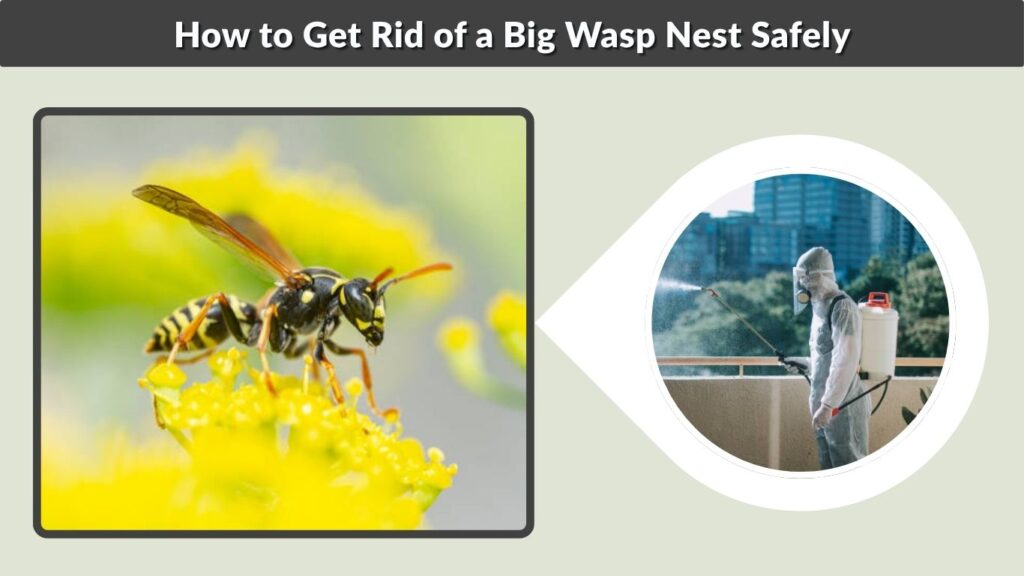
Big wasp nest removal requires careful consideration because established colonies may defend themselves aggressively when disturbed. Multiple stings can cause serious reactions, particularly in individuals with venom allergies.
Professional pest control is generally recommended for large, active nests.
What to Do When You Find a Large Nest
If you discover a large wasp colony near your property:
- Keep your distance: Avoid disturbing the nest or blocking its entrance.
- Protect children and pets: Restrict access to the immediate nesting area.
- Avoid vibrations: Do not operate mowers or trimming equipment near the colony.
- Observe from a distance: Identify the general location without approaching.
- Contact a professional: Arrange an assessment when the colony creates a significant risk.
Do not attempt to burn, flood, strike, or knock down an occupied nest.
Why Professional Wasp Nest Removal Is Safer
Professional pest-control technicians can identify the nesting species, evaluate the colony’s location, and select suitable treatment methods.
Large nests inside roof cavities, trees, walls, or underground spaces may require specialized equipment.
A technician can also assess whether removal is necessary or whether the nest can safely remain until its seasonal colony naturally dies out.
Attempting removal at night is not automatically safe. Wasps can still defend their nests when disturbed.
Can You Prevent Large Wasp Nests?
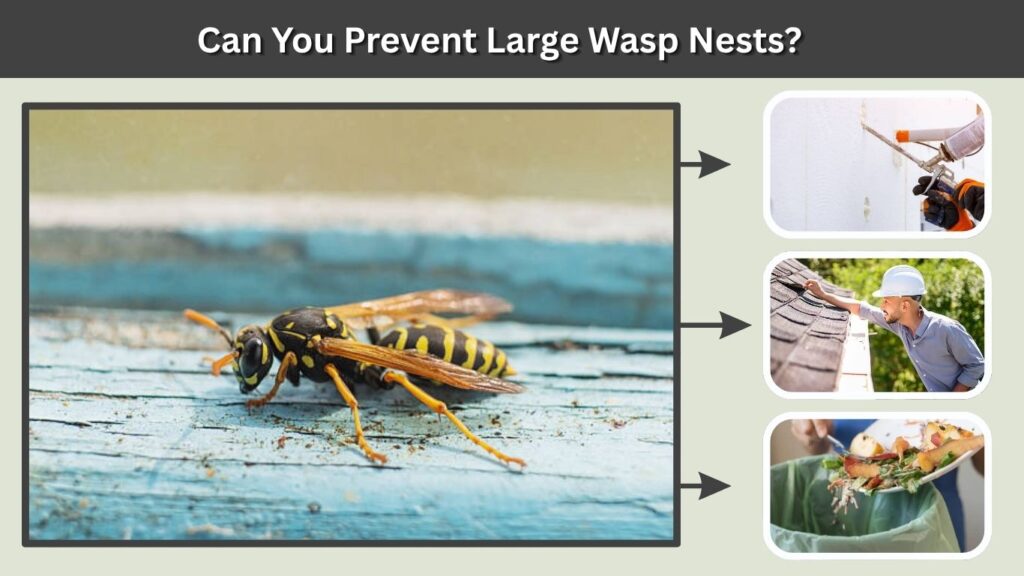
Preventing every wasp colony is impossible, but routine property maintenance can reduce opportunities for nesting near frequently occupied spaces. Early detection also makes it easier to assess developing colonies before they become large.
Wasp Nest Prevention Tips
- Inspect roof edges: Look for newly forming paper structures.
- Seal exterior gaps: Repair suitable openings only after confirming they are unoccupied.
- Maintain outdoor buildings: Check sheds, garages, and storage spaces.
- Control food waste: Keep garbage containers tightly covered.
- Monitor activity: Watch for repeated wasp movement around specific openings.
Avoid relying entirely on artificial decoy nests or homemade repellents, as their effectiveness is not consistently supported by evidence.
FAQs
1. How big is the average wasp nest?
There is no single average size because different species construct different nests. Paper wasp nests are generally only a few inches across, while enclosed aerial nests can reach soccer-ball size.
2. What is considered a big wasp nest?
Size depends on the species. A five-inch nest may be large for some paper wasps but relatively small for an aerial yellowjacket colony.
3. How many wasps live in a big nest?
Paper wasp colonies typically contain dozens of individuals. Large yellowjacket colonies may contain hundreds to several thousand workers, depending on the species and season.
4. Are big wasp nests dangerous?
Large active nests can pose significant sting risks when disturbed. However, a nest located far from people may present little immediate danger if left alone.
5. Will a big wasp nest disappear naturally?
In many temperate regions, social wasp colonies decline after freezing weather, and their nests are not reused the next season. The physical paper structure may remain attached for months before deteriorating. Warmer climates can have different seasonal patterns.
