

The Australian Paper Wasp (Polistes humilis) is a species native to Australia, famous for its unique papery nests and significant role in ecosystems. While they help control pests and pollinate plants, their painful sting can pose a threat to humans when provoked.
In this article, we will delve into their identification, nesting behavior, interactions with humans, and their importance in the environment, helping you safely coexist with these fascinating creatures.
Overview of the Australian Paper Wasp

The Australian Paper Wasp is a common species found across Australia, especially in gardens, forests, and urban areas. Known for their unique nest construction and distinct appearance, they play an essential role in controlling pest populations. These wasps are social insects that work together to maintain a structured colony. They are highly adaptable, thriving in various environments, from rural areas to city suburbs. Their nests are often found in sheltered locations like under eaves, branches, and other protected areas, offering a safe environment for their larvae and colony members.
Identification of the Australian Paper Wasp
- Size: Typically ranges from 15 to 20 millimeters in length.
- Color: Features a distinctive yellow and black coloration on its segmented body.
- Shape: Slender, elongated body with a narrow waist, characteristic of wasps.
- Head: Large compared to the body, with prominent antennae and large eyes.
- Wings: Iridescent and slightly transparent, positioned high on the body.
- Legs: Long, thin, and extend outward from the body, contributing to its unique appearance.
- Nests: Papery, greyish, umbrella-shaped nests made from chewed wood fibers, often found in sheltered areas like under eaves or branches.
Habitat and Distribution
The Australian Paper Wasp thrives in various habitats, including gardens, forests, and urban environments. They prefer sheltered areas for nest-building, often choosing locations such as under tree branches, roof eaves, and other protected spaces. These wasps are also commonly found in areas with abundant insect prey, as they hunt for small insects to feed their larvae.
Geographic Distribution
While native to Australia, the Australian Paper Wasp can be found across the country, from rural regions to metropolitan areas. They are adaptable and can settle in both coastal and inland areas, especially in warmer climates. Their range extends beyond Australia in some instances, as they have been known to spread to nearby regions with suitable conditions for nesting and foraging.
Nesting and Colony Structure

Nest Building Process
Australian Paper Wasps create their nests by chewing wood fibers and mixing them with saliva to form a papery material. They collect fibers from decaying wood, break them down with their mandibles, and combine them with saliva. This pulp is then molded into hexagonal cells, which build up into the nest’s signature umbrella-like shape. The nests are typically constructed in sheltered, elevated areas such as under eaves, branches, or on tree trunks, where they are protected from weather and predators.
Social Structure
The colony is organized with specific roles:
- Queen: The queen is the sole fertile female responsible for laying eggs to expand the colony.
- Worker Wasps: These are sterile females that maintain the nest, forage for food, protect the colony, and care for the larvae.
- Male Drones: Male wasps are produced late in the season to mate with the queen. Once their reproductive role is fulfilled, they die.
Seasonal Behavior
Australian Paper Wasp colonies exhibit seasonal behaviors that vary depending on the time of year:
- Spring and Summer: The queen lays eggs that hatch into worker wasps and male drones.
- Fall and Winter: As temperatures drop, the queen stops laying eggs, and the colony’s activity diminishes. The colony typically disbands by winter, with only newly mated queens surviving to begin new colonies the following spring.
Diet and Feeding Habits

What Do They Eat?
Australian Paper Wasps have a mixed diet that consists of:
- Nectar: They feed primarily on nectar from flowers, which provides essential sugars for energy.
- Insects: They also hunt small insects, including caterpillars, aphids, and spiders, to feed their larvae with protein.
Feeding Techniques
Australian Paper Wasps use different methods for foraging:
- Nectar Foraging: They visit flowers to extract nectar with their long proboscis, providing energy for the adults.
- Prey Hunting: They actively hunt insects using their mandibles to catch and subdue prey. These insects are then carried back to the nest to nourish the larvae.
Interaction with Humans
Stings and Potential Risks
While Australian Paper Wasps can sting, they are typically non-aggressive. However, they will sting if they feel threatened, particularly when defending their nest. Their sting is painful, causing swelling and redness, and can lead to more severe reactions in people who are allergic to wasp venom. Prompt treatment is recommended if stung.
Are They Dangerous?
Australian Paper Wasps are not inherently dangerous. They are generally calm unless their nest is disturbed. Their main defense mechanism is stinging in response to perceived threats. However, due to their defensive nature, it’s best to avoid disturbing them and to exercise caution near their nests to avoid stings.
Benefits to Humans
Despite their potential to sting, Australian Paper Wasps offer benefits to the environment and humans:
- Pest Control: They help control insect populations, including pests like caterpillars and aphids, which can damage plants.
- Pollination: As they forage for nectar, they also contribute to pollination, helping to fertilize plants and support biodiversity in gardens and agricultural areas.
How to Handle Australian Paper Wasps

Dealing with a Nest
When dealing with a nest of Australian Paper Wasps, it’s important to take precautions:
- Avoid Disturbance: If you encounter a nest, avoid disturbing it, especially during the warmer months when the wasps are more active.
- Professional Help: For larger nests or if you are allergic to stings, it’s advisable to contact pest control professionals to safely remove the nest.
- Protective Gear: If you must remove a nest yourself, wear protective clothing, including long sleeves, gloves, and a veil, to prevent stings.
Preventing Nesting
Preventing Australian Paper Wasps from nesting around your property involves a few simple steps:
- Seal Entry Points: Ensure that any gaps or cracks around your home, especially near eaves and windows, are sealed to prevent wasps from entering and building nests.
- Remove Food Sources: Australian Paper Wasps are attracted to sugary substances. Clean up food and drinks in outdoor areas to reduce attraction.
- Regular Inspection: Regularly inspect areas like your roof eaves, sheds, and trees for signs of nest-building. Early detection can help prevent the wasps from establishing a colony.
The Life Cycle of the Australian Paper Wasp
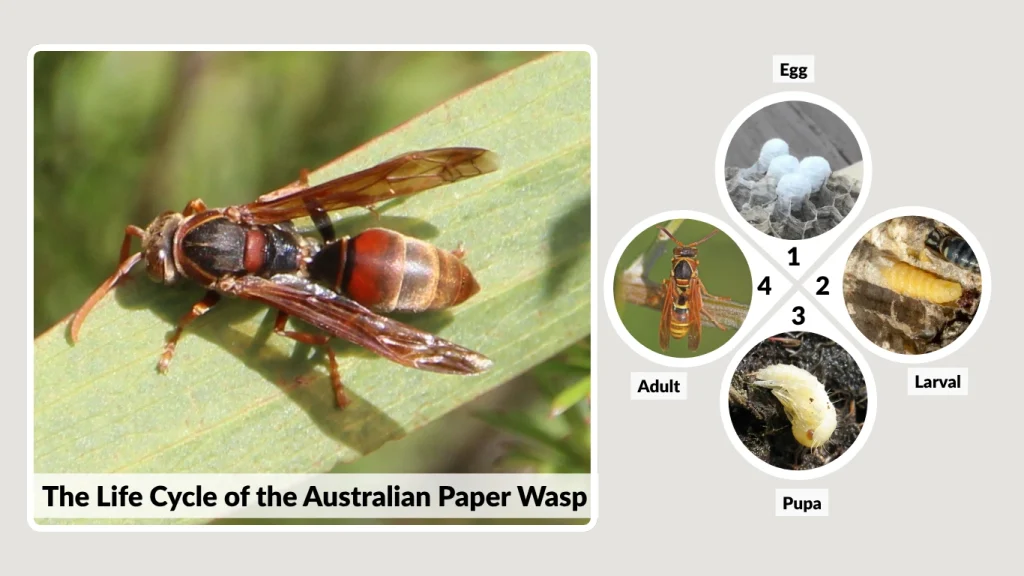
From Egg to Adult
The life cycle of an Australian Paper Wasp consists of several stages:
- Egg: The queen lays fertilized eggs, which hatch into larvae. These eggs are laid in the hexagonal cells of the nest.
- Larvae: The larvae feed on food brought to the nest by worker wasps. They grow rapidly and are tended to by workers.
- Pupa: After several molts, the larvae enter the pupal stage where they undergo metamorphosis to become adult wasps.
- Adult: Upon emerging from the pupal case, the adult wasp begins its role in the colony, either as a worker, drone, or queen.
Reproduction and Mating
- Queen’s Role: The queen is the central reproductive member of the colony. She mates with male drones and lays eggs that will develop into workers, drones, or future queens.
- Mating Season: In late summer or early autumn, male drones mate with the queen. After mating, the drones die, and the fertilized queen hibernates to begin a new colony the following year.
Australian Paper Wasp in Ecology
Role in the Ecosystem
Australian Paper Wasps are crucial for maintaining balance in local ecosystems:
- Pest Control: By hunting small insects, including agricultural pests, they naturally help control pest populations, preventing damage to crops and gardens.
- Food Source: They are an important food source for larger predators like birds and other insects.
Ecological Importance
- Pollination: While foraging for nectar, Australian Paper Wasps inadvertently pollinate plants, contributing to plant reproduction and biodiversity.
- Predator-Prey Relationships: As both predators of small insects and prey for larger animals, they contribute to the ecological food web.
FAQs
What should you do if you get stung by an Australian Paper Wasp?
If stung, the first step is to clean the area with soap and water to prevent infection. Apply a cold compress to reduce swelling and pain. Over-the-counter pain relief medications, like ibuprofen or antihistamines, can help alleviate discomfort. If you experience severe reactions such as difficulty breathing or swelling around the face, seek immediate medical attention as this could indicate an allergic reaction.
Are Australian Paper Wasps aggressive toward humans?
Australian Paper Wasps are not generally aggressive and will not sting unless they feel their nest is threatened or they are provoked. They are more likely to fly away or avoid human interaction. However, if you get too close to their nest, they may become defensive and sting in self-defense. It’s best to observe them from a distance.
How can I identify an Australian Paper Wasp nest?
Australian Paper Wasp nests are distinctively papery and often umbrella-shaped. They are made from chewed wood fibers and are typically grey or light brown in color. The nests are suspended in sheltered areas like under eaves, tree branches, or other elevated spots. You can also identify them by the wasps themselves, which are relatively slender with yellow and black markings.
What is the best way to remove an Australian Paper Wasp nest?
If you need to remove a nest, it’s best to call a professional pest control service, especially if you have an allergy to stings. If you decide to remove it yourself, wait until dusk when the wasps are less active. Wear protective clothing, including a veil, gloves, and long sleeves. Use a pesticide designed for wasps, and be sure to follow the instructions carefully. Always exercise caution to avoid stings.
