

House moths are among the most common indoor pests, often appearing in closets, kitchens, pantries, and storage spaces. These small insects can infest clothing, carpets, grains, and dried foods depending on the species involved. While adult moths cause little harm, their larvae can damage fabrics and contaminate food items. This guide explores twelve different types of house moths, helping you identify, understand, and manage them more effectively.
1. Common Clothes Moth

The Common Clothes Moth (Tineola bisselliella) is one of the most widespread indoor moths, known for damaging natural fibers such as wool, silk, and fur. These small, pale moths thrive in dark, undisturbed areas of homes where organic materials are stored.
Identification
- Pale golden or beige wings
- Wingspan: 12–16 mm
- Narrow, fringed wings
- Head tufted with reddish-gold hairs
- Larvae are creamy white with a brown head
Habitat
Common Clothes Moths live indoors, especially in closets, drawers, attics, basements, and storage areas. They prefer dark, humid, and undisturbed environments where natural fabrics are available for larvae to feed on.
Behaviors
These moths avoid light and are rarely seen flying in open areas. Adults flutter weakly when disturbed. Infestations often go unnoticed until damage appears on clothing or textiles. Females lay eggs directly on fabric for larvae to feed.
Diet and Lifecycle
Adults do not feed. Larvae consume natural fibers such as wool, silk, fur, feathers, and felt. The lifecycle includes egg, larva (the damaging stage), pupa (in a silken cocoon), and adult. Development can take several months, with multiple generations per year indoors.
2. Case-Bearing Clothes Moth
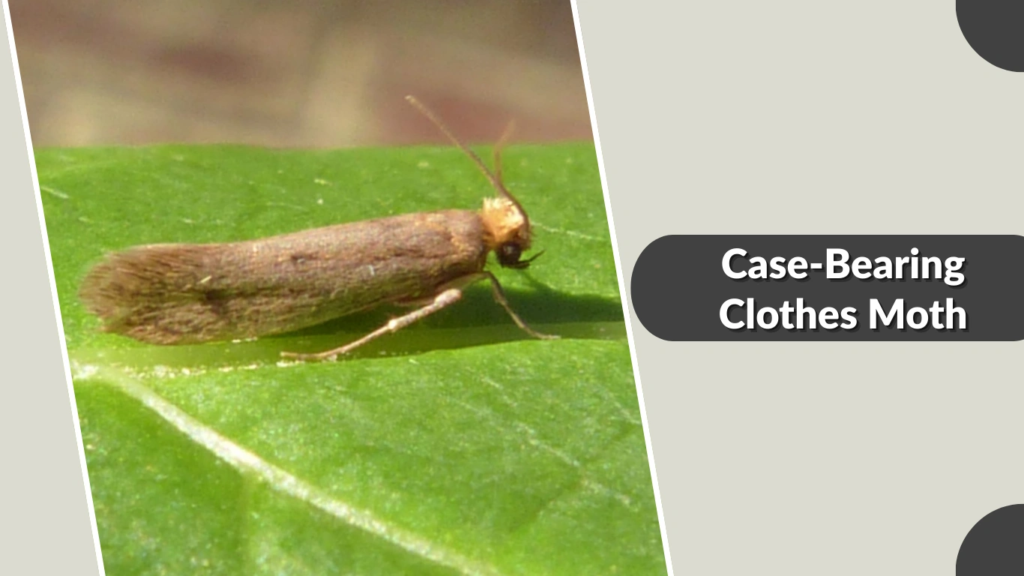
The Case-Bearing Clothes Moth (Tinea pellionella) is a common household moth known for the portable, silk-and-debris “case” its larvae build and carry. These moths infest natural fibers and are frequently found in storage areas where textiles are kept.
Identification
- Brownish or gray wings with darker speckles
- Wingspan: 12–17 mm
- Narrow, fringed wings
- Larvae create and carry a small, tube-like case
- Caterpillars are white with a brown head
Habitat
Case-Bearing Clothes Moths thrive indoors, especially in closets, fabric storage boxes, attics, and areas containing wool, feathers, or fur. They prefer dark, undisturbed environments with high humidity.
Behaviors
These moths avoid light and typically remain hidden. Larvae drag their protective cases while feeding on fabrics. Adults fly weakly when disturbed and concentrate on laying eggs near natural fiber sources.
Diet and Lifecycle
Adults do not feed. Larvae consume wool, feathers, fur, felt, and other natural fibers while remaining inside their case. The lifecycle includes egg, case-bearing larva, pupa (within the case), and adult. Indoors, several generations may occur each year.
3. Brown House Moth

The Brown House Moth (Hofmannophila pseudospretella) is a widespread indoor moth known for infesting stored foods and natural fibers. Its mottled brown wings help it blend into household environments, making it a persistent indoor pest.
Identification
- Mottled brown wings with dark brown flecks
- Wingspan: 15–26 mm
- Stout body with golden-brown scales
- Larvae are creamy white with brown heads
- Pupae often found in cracks, crevices, or fabrics
Habitat
Brown House Moths live in kitchens, pantries, basements, attics, and storage areas. They prefer warm, humid environments and can survive in a variety of indoor conditions, especially near stored grains or textiles.
Behaviors
They are nocturnal and often fly toward lights at night. Larvae hide in dark corners and feed on available organic materials. Adults flutter slowly and may be seen resting on walls or near pantries.
Diet and Lifecycle
Adults do not feed. Larvae have a broad diet, including grains, cereals, flour, dried foods, wool, feathers, and stored organic debris. The lifecycle includes egg, larva, pupa (in hidden locations), and adult, often producing multiple generations per year indoors.
4. White-Shouldered House Moth

The White-Shouldered House Moth (Endrosis sarcitrella) is a common indoor moth recognized by its distinctive white head and shoulders. It is frequently found in homes, warehouses, and food storage areas due to its adaptable feeding habits.
Identification
- Brownish, speckled wings
- Bright white head and “shoulders”
- Wingspan: 15–21 mm
- Slender body with fine scales
- Larvae are white or cream-colored with brown heads
Habitat
White-Shouldered House Moths live in kitchens, pantries, basements, attics, and storage rooms. They thrive in dry indoor environments and are often found near stored foods or organic debris.
Behaviors
These moths are attracted to light and often seen fluttering around lamps at night. Adults rest on walls or ceilings during the day. Larvae feed in dark, undisturbed corners where food particles or organic materials accumulate.
Diet and Lifecycle
Adults do not feed. Larvae consume grains, flour, dried foods, textiles, feathers, and other organic matter. Their lifecycle includes egg, larva, pupa (in a silken cocoon), and adult, with several generations per year indoors.
5. Pantry Moth (Indian Meal Moth)

The Pantry Moth (Plodia interpunctella), also known as the Indian Meal Moth, is one of the most common household pests found in stored food products. Its distinctive wing coloration and habit of flying around kitchens make it easy to identify.
Identification
- Forewings: reddish-brown or coppery on the outer half
- Forewings: pale gray or cream on the inner half
- Wingspan: 16–20 mm
- Slender body with banded appearance
- Larvae are off-white, pink, or greenish with brown heads
Habitat
Pantry Moths inhabit kitchens, pantries, food cupboards, and storage areas containing dry goods. They thrive in warm indoor environments with accessible grains and packaged foods.
Behaviors
Adults often fly in zig-zag patterns near lights. Infestations spread quickly as females lay eggs inside or near food packages. Larvae produce silk webbing, often seen in corners of containers or shelves.
Diet and Lifecycle
Adults do not feed. Larvae feed on flour, rice, cereals, nuts, dried fruits, pasta, pet food, and seeds. The lifecycle includes egg, larva (the damaging stage), pupa, and adult. Indoors, multiple generations can occur each year.
6. Mediterranean Flour Moth
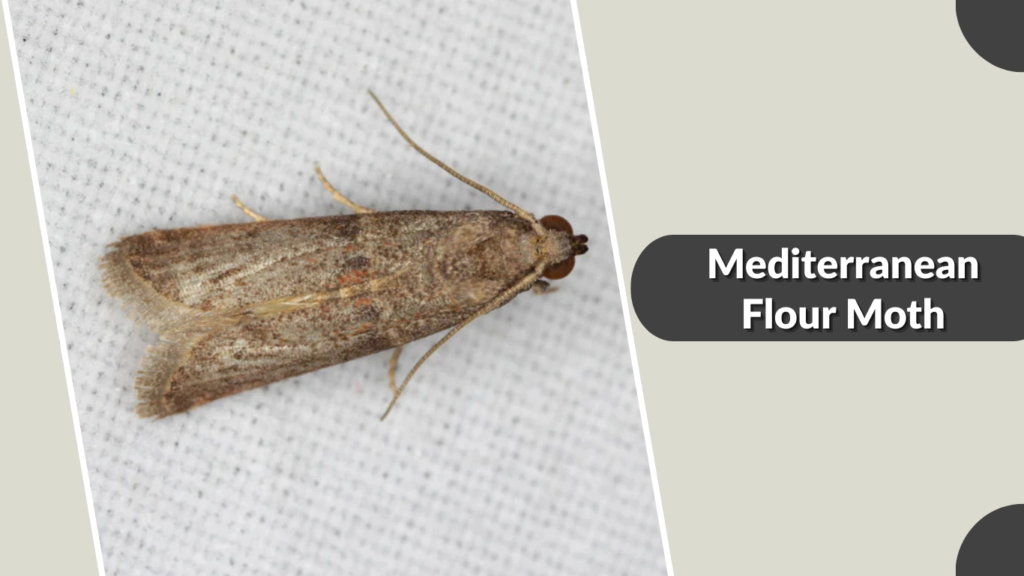
The Mediterranean Flour Moth (Ephestia kuehniella) is a well-known pantry pest found in homes, bakeries, and food storage facilities. Its larvae are notorious for infesting flour and other grain products.
Identification
- Pale gray wings with darker wavy lines
- Wingspan: 20–25 mm
- Slender body with long antennae
- Hindwings lighter with fine fringes
- Larvae are white or pinkish with dark heads
Habitat
Mediterranean Flour Moths thrive in kitchens, pantries, mills, and warehouses. They prefer warm, dry indoor environments rich in flour, grains, and baking products.
Behaviors
Adults are weak fliers and often rest on walls or ceilings. Larvae produce extensive silk webbing inside food products, causing clumping and contamination. They are commonly found in flour bins and grain containers.
Diet and Lifecycle
Adults do not feed. Larvae feed on flour, cereals, bran, dried grains, and processed foods. Their lifecycle includes egg, larva (the damaging stage), pupa (often in cracks or corners), and adult, with several generations per year indoors.
7. Tobacco Moth

The Tobacco Moth (Ephestia elutella) is a common stored-product moth known for infesting dried plant materials, especially tobacco. It is frequently found in warehouses, storage rooms, and occasionally inside homes.
Identification
- Grayish-brown forewings with darker mottled patterns
- Lighter hindwings with fringes
- Wingspan: 14–24 mm
- Slim body with smooth scaling
- Larvae are creamy white with brown heads
Habitat
Tobacco Moths inhabit warehouses, pantries, basements, and storage facilities containing dried plants, grains, or herbs. They prefer warm, dry indoor environments.
Behaviors
Adults fly weakly and are often seen near light sources. Females lay eggs directly on dried plant materials. Larvae create silk webbing as they feed, contaminating stored goods.
Diet and Lifecycle
Adults do not feed. Larvae feed on dried tobacco leaves, cocoa beans, nuts, grains, spices, and dried herbs. The lifecycle includes egg, larva, pupa, and adult, with multiple generations per year indoors.
8. Almond Moth

The Almond Moth (Cadra cautella) is a small household moth frequently found in stored food products. It is similar to other pantry moths and is known for infesting nuts, grains, and dried goods.
Identification
- Light brown to grayish forewings with fine dark speckles
- Wingspan: 14–20 mm
- Slender body with narrow wings
- Hindwings are pale with long fringes
- Larvae are white to pinkish with brown heads
Habitat
Almond Moths inhabit kitchens, pantries, storage rooms, and warehouses. They prefer warm indoor locations with access to stored foods, especially nuts and dried grains.
Behaviors
These moths are nocturnal and attracted to lights. Adults fly in short, quick bursts and often hover near food-storage areas. Females lay eggs directly in or near packaged foods, allowing larvae easy access.
Diet and Lifecycle
Adults do not feed. Larvae consume almonds, nuts, cereal grains, dried fruits, seeds, chocolate, and processed foods. The lifecycle includes egg, larva (the damaging feeder), pupa (often in crevices), and adult, with several generations per year in heated homes.
9. Carpet Moth

The Carpet Moth (Trichophaga tapetzella) is a well-known textile pest commonly found in homes with wool carpets, rugs, and upholstery. Its larvae feed on natural fibers, causing noticeable damage to household fabrics.
Identification
- Forewings dark brown with pale patches
- Hindwings lighter and fringed
- Wingspan: 14–18 mm
- Adults have a hunched resting posture
- Larvae are white with darker heads, often found in fabric fibers
Habitat
Carpet Moths live indoors, especially in areas with wool carpets, rugs, and furniture. They prefer low-traffic, dark environments such as under furniture, edges of carpets, and storage boxes.
Behaviors
Adults are weak fliers and usually hide in dark corners. Larvae cause damage by feeding within carpet fibers, often leaving irregular holes. Infestations grow quickly if undisturbed.
Diet and Lifecycle
Adults do not feed. Larvae consume wool, fur, feathers, and other keratin-rich materials. The lifecycle includes eggs laid on fabric, larvae feeding extensively, pupation within a cocoon, and adult emergence. Multiple generations may occur yearly indoors.
10. Webbing Clothes Moth

The Webbing Clothes Moth (Tineola bisselliella – a close relative of the Common Clothes Moth) is one of the most destructive textile pests in homes. It is distinguished by the silk webbing produced by its larvae as they feed on natural fibers.
Identification
- Pale golden or beige wings
- Wingspan: 12–16 mm
- Smooth, narrow wings with fringed edges
- Reddish-gold tuft of hairs on the head
- Larvae are white with brown heads and produce silk webbing
Habitat
Webbing Clothes Moths thrive in dark, quiet indoor spaces such as closets, attics, basements, and storage boxes. They prefer environments where wool, silk, or fur is present.
Behaviors
These moths avoid light and are rarely seen in open spaces. Adults flutter weakly when disturbed. Larvae hide within silk webbing on fabrics, making infestations difficult to detect until damage is visible.
Diet and Lifecycle
Adults do not feed. Larvae feed on keratin-rich materials such as wool, cashmere, silk, feathers, and fur. Their lifecycle includes egg, webbing-producing larva, pupa, and adult. Indoors, they produce multiple generations annually.
11. Rice Moth

The Rice Moth (Corcyra cephalonica) is a common stored-grain pest found in homes, warehouses, and food storage areas. It is particularly associated with rice, grains, and cereals.
Identification
- Light brown or grayish wings with fine speckles
- Wingspan: 18–26 mm
- Long, narrow wings with fringed edges
- Slender body with smooth scaling
- Larvae are white to pinkish with brown heads
Habitat
Rice Moths inhabit pantries, grain storage rooms, kitchens, and warehouses. They thrive in warm environments where cereals and dried food products are stored.
Behaviors
These moths are nocturnal and attracted to light. Adults fly weakly and often rest on walls or ceilings near food storage areas. Larvae create silk webbing inside grains and food containers, causing clumping.
Diet and Lifecycle
Adults do not feed. Larvae consume rice, wheat, corn, millet, cereals, nuts, and other stored grains. The lifecycle includes egg, larva (the main damaging stage), pupa (in corners or crevices), and adult, with multiple generations per year indoors.
12. Angoumois Grain Moth
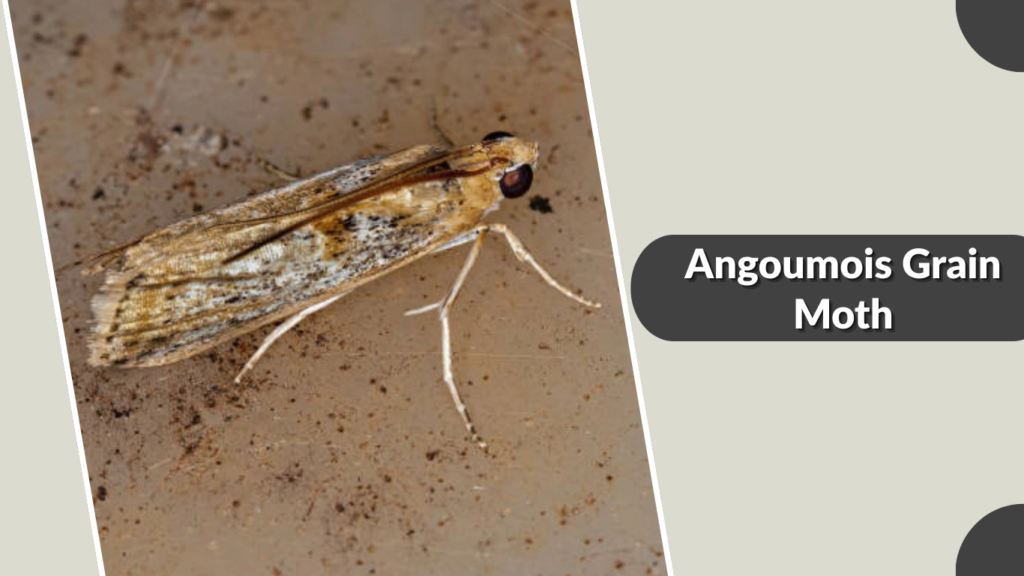
The Angoumois Grain Moth (Sitotroga cerealella) is a well-known pest of stored grain, particularly inside whole kernels. It is commonly found in food storage facilities and sometimes in household pantries.
Identification
- Pale yellowish-tan wings
- Wingspan: 10–15 mm
- Long, narrow wings with pointed tips
- Small, delicate body
- Larvae are white and develop inside whole grains
Habitat
Angoumois Grain Moths inhabit pantries, barns, grain silos, and warehouses. They prefer warm, poorly ventilated storage areas with large quantities of whole grains.
Behaviors
Adults are nocturnal and fly in erratic patterns. Females lay eggs directly on grain kernels, where larvae burrow inside. Damage often goes unnoticed until adults emerge from holes in the grain.
Diet and Lifecycle
Adults do not feed. Larvae infest wheat, corn, rice, barley, and other whole grains. Their lifecycle includes egg, larva (inside grain), pupa (inside grain), and adult. They can produce several generations yearly in warm climates.
FAQs
1. Why do house moths appear inside homes?
House moths enter homes in search of food sources such as natural fibers or stored dry goods. They may also arrive through open windows, infested products, secondhand clothing, or contaminated packaged foods. Once indoors, they thrive in dark, undisturbed places.
2. Are house moths harmful to humans?
House moths are not harmful to humans—they do not bite, sting, or spread disease. The main concern is the damage caused by their larvae, which feed on clothing, carpets, and pantry items.
3. How can I tell if moth damage is from pantry moths or clothes moths?
Pantry moth larvae contaminate food with silk webbing and are found near dry goods. Clothes moth larvae feed on fabrics and leave irregular holes in wool, silk, or fur. Pantry moths fly openly; clothes moths prefer darkness.
4. What conditions attract moths to a house?
Moths are attracted to warm, humid environments with accessible food sources. Clothes moths seek natural fibers, while pantry moths seek grains and dried goods. Cluttered, undisturbed areas make ideal breeding spots.
5. How long does it take to eliminate a moth infestation?
Eliminating a moth infestation can take several weeks to months, depending on severity. Breaking the lifecycle requires removing contaminated materials, cleaning thoroughly, sealing food, and possibly using traps. Adult moths are easy to remove, but larvae and eggs require persistent treatment.
