

Moths are among the most diverse and visually stunning insects on Earth. With thousands of species showing unique colors, patterns, and behaviors, they play important roles in ecosystems as pollinators and prey. This guide explores 32 remarkable moth species, highlighting their identification, habitats, behaviors, and lifecycles. From day-flying hummingbird mimics to giant silk moths with dramatic wings, each species reveals fascinating adaptations in the world of nocturnal and diurnal moths.
1. Luna Moth
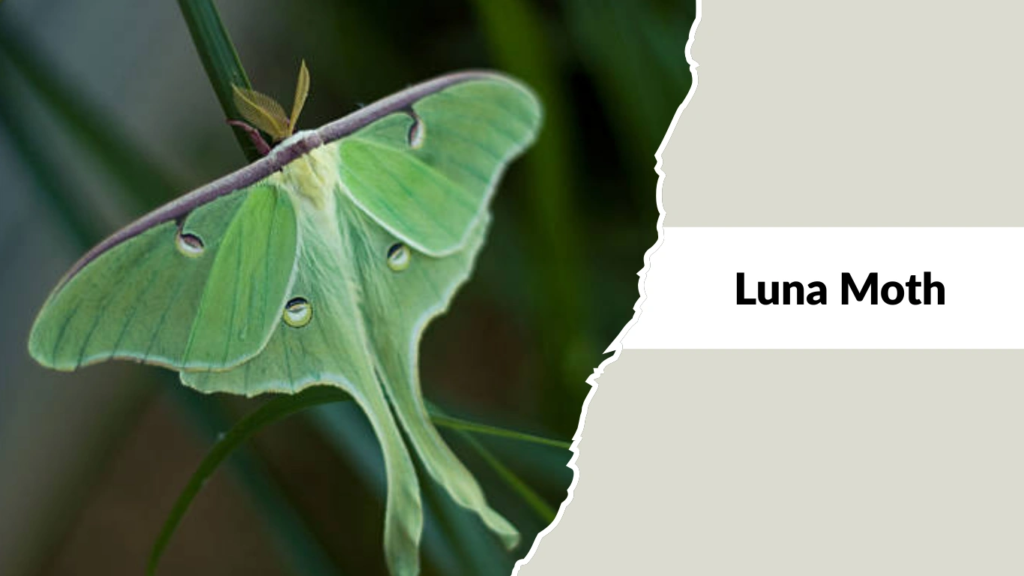
The Luna Moth (Actias luna) is one of the most recognized and visually stunning moths in North America. Known for its large size, lime-green wings, and elegant tail streamers, it symbolizes transformation and natural beauty.
Identification
- Large wingspan, typically 4.5–7 inches
- Pale lime-green wings with long trailing hindwing tails
- Transparent eyespots on all four wings
- Furry white body with feathery antennae (larger in males)
- Caterpillars are bright green with red spiracles
Habitat
Luna moths inhabit deciduous forests, woodlands, and areas rich in host trees. They are most common in eastern North America, from Florida to Canada. They generally appear in late spring and early summer, thriving in warm, humid environments.
Behaviors
These moths are nocturnal and strongly attracted to light. Adults do not eat; their sole purpose is reproduction. They have a short adult lifespan of about 7–10 days, during which males follow female pheromone trails. Their wing tails help confuse predators like bats through acoustic distraction.
Diet and Lifecycle
Luna moth caterpillars feed on several tree species such as hickory, walnut, sumac, and sweetgum. After several growth stages, they spin a papery cocoon and overwinter as pupae. Adults emerge in spring, mate, lay eggs, and complete a lifecycle centered around growth and metamorphosis.
2. Atlas Moth
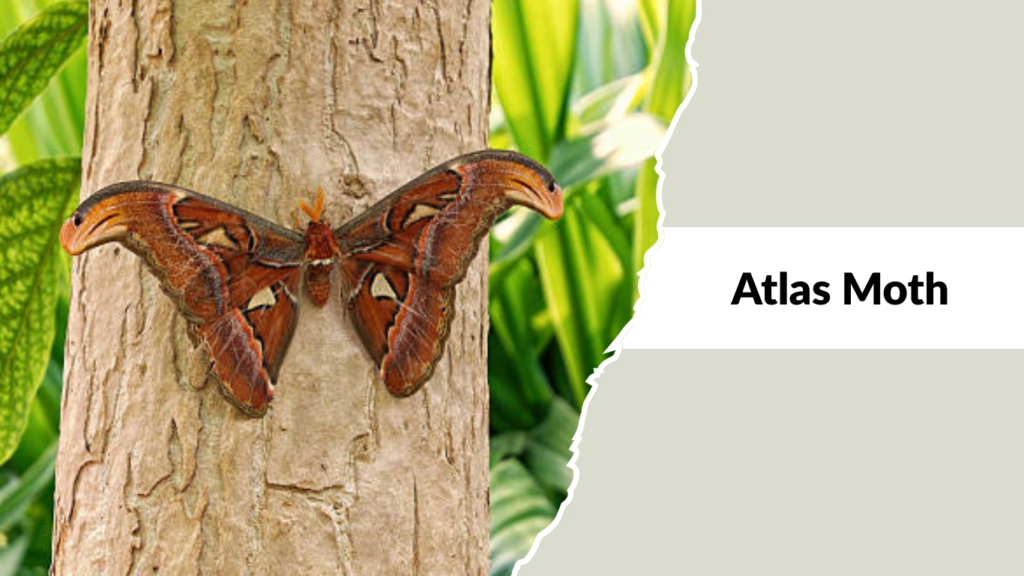
The Atlas Moth (Attacus atlas) is one of the largest moth species on Earth, famous for its massive wingspan and striking patterns. Its wingtips resemble a snake’s head, which helps deter predators. Native to Asia, it is often considered a symbol of grandeur and mystery.
Identification
- Enormous wingspan reaching up to 10–12 inches
- Rust-brown wings with bold, cream-bordered patterns
- Wing tips shaped like a snake’s head
- Thick, fuzzy body with minimal mouthparts
- Caterpillars are pale green with waxy spines
Habitat
Atlas moths live in tropical and subtropical forests of Southeast Asia, including India, China, Malaysia, and Indonesia. They thrive in warm, humid climates where dense vegetation provides abundant food for their larvae.
Behaviors
These moths are nocturnal and relatively slow fliers. Adults do not feed, surviving only on stored energy, which limits their lifespan to about a week. Their snake-head wing tips are used for defense, and females typically stay still while males actively search for them through pheromone signals.
Diet and Lifecycle
Atlas moth caterpillars feed on plants such as citrus, guava, cinnamon, and evergreen trees. After several instars, they spin a large silken cocoon and pupate. Adults emerge, mate quickly, and lay eggs before dying, completing a dramatic yet brief lifecycle.
3. Polyphemus Moth

The Polyphemus Moth (Antheraea polyphemus) is a large North American silk moth named after the giant cyclops of Greek mythology, thanks to its bold, dramatic eyespots. Its impressive wingspan and widespread distribution make it one of the most recognizable giant moths.
Identification
- Wingspan of 4–6 inches
- Brown to tan wings with a pinkish or reddish hue
- Large, vivid eyespots on the hindwings
- Fuzzy brown body; males have large feathery antennae
- Caterpillars are bright green with yellow and silver spots
Habitat
Polyphemus moths inhabit deciduous forests, suburban areas, and mixed woodlands throughout most of North America. They prefer environments with abundant host trees and are commonly found near oak, maple, and birch trees.
Behaviors
These moths are nocturnal and highly responsive to light. Males use their sensitive antennae to detect female pheromones from miles away. When threatened, they flash their large hindwing eyespots to startle predators. Adults do not feed and typically live only a week.
Diet and Lifecycle
The caterpillars feed on a wide range of trees, including oak, maple, birch, willow, and hickory. After several growth stages, they create a tough silk cocoon, usually attached to a twig or leaf litter. They overwinter as pupae, emerging in late spring or early summer to mate and lay eggs.
4. Cecropia Moth
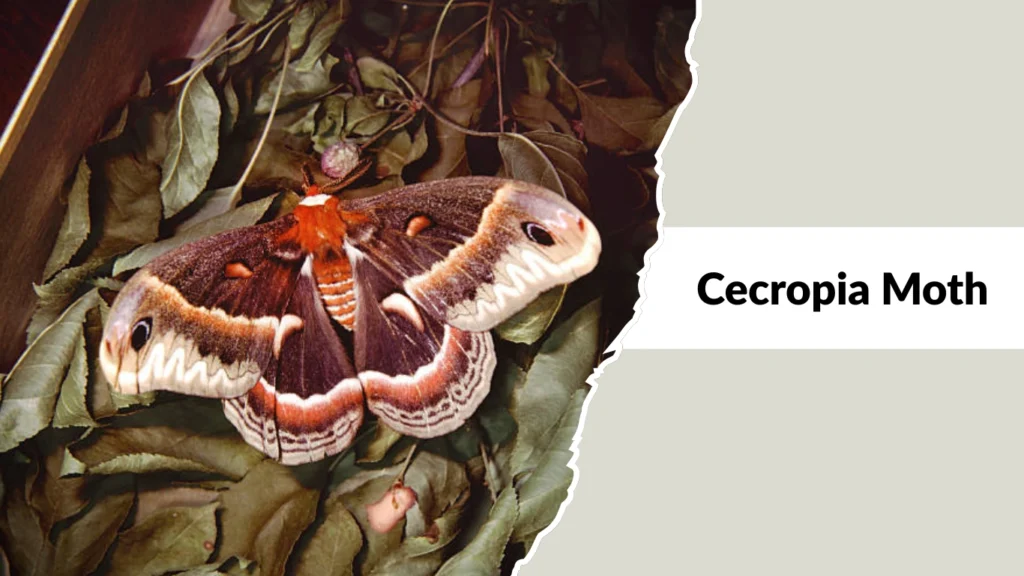
The Cecropia Moth (Hyalophora cecropia) is North America’s largest native moth, known for its bold red, white, and black patterns. This giant silk moth is striking in appearance and represents one of the most iconic members of the Saturniidae family.
Identification
- Impressive wingspan of 5–7 inches
- Dark brown wings with red bands and white crescent markings
- Body is thick and red with white stripes
- Males have wide, feathery antennae
- Caterpillars are large, bluish-green with colorful tubercles
Habitat
Cecropia moths live in deciduous forests, suburban areas, and roadside vegetation across the United States and southern Canada. They prefer regions rich in hardwood trees and shrubs where their caterpillars can easily feed.
Behaviors
These moths are nocturnal and heavily attracted to light sources. Adults do not feed and live only about a week. Males can detect female pheromones from long distances. When disturbed, they may vibrate their wings or flash wing patterns to deter predators.
Diet and Lifecycle
Cecropia moth caterpillars consume the leaves of maple, birch, cherry, apple, willow, and lilac. After reaching full size, they spin a dense, brown cocoon and pupate through winter. Adults emerge in late spring or early summer, mate, lay eggs, and complete their brief lifecycle.
5. Hummingbird Hawk-Moth
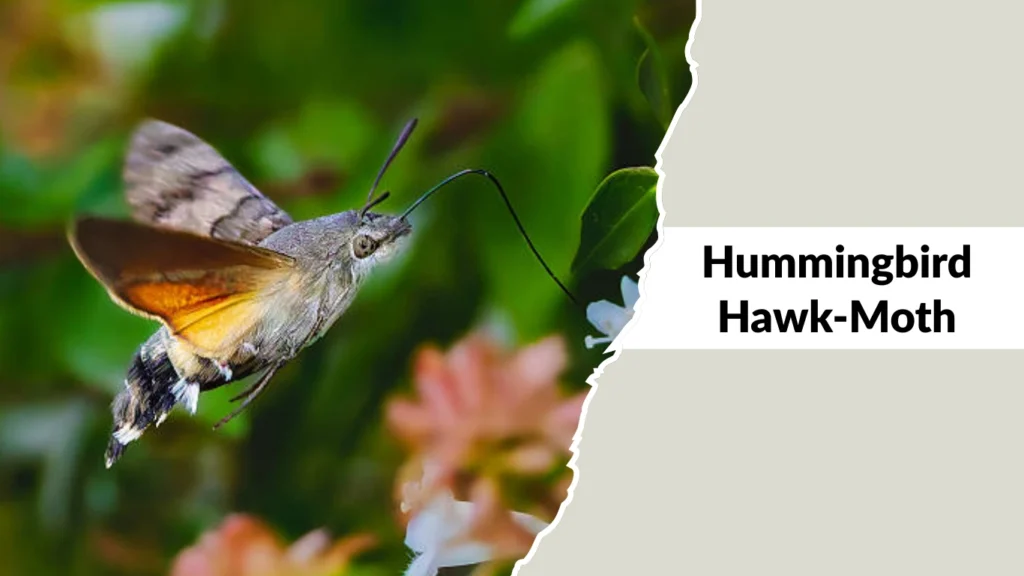
The Hummingbird Hawk-Moth (Macroglossum stellatarum) is a fast-flying moth famous for its hummingbird-like behavior. It hovers at flowers during the day, rapidly beating its wings while sipping nectar, making it one of the most fascinating moths to observe.
Identification
- Wingspan of 1.6–1.8 inches
- Gray-brown body with orange hindwings
- Long, thin proboscis used for nectar feeding
- Rapid wingbeats that create a humming sound
- Caterpillars are green with white stripes and a tail horn
Habitat
This species is commonly found in gardens, meadows, shrublands, and sunny open areas across Europe, North Africa, and Asia. They migrate seasonally, often appearing in regions far from their breeding grounds during warm months.
Behaviors
Unlike most moths, the Hummingbird Hawk-Moth is diurnal, active during daylight. It hovers like a hummingbird, darting quickly between flowers with precision. They have excellent memory and can revisit the same flower patches daily. Their flight is extremely agile and fast.
Diet and Lifecycle
The caterpillars feed on bedstraw and wild madder plants. After several molts, they pupate in leaf litter or shallow soil. Adults feed on nectar from flowers such as lavender, verbena, and honeysuckle. With multiple generations per year, they reproduce quickly in warm climates.
6. Death’s-head Hawkmoth
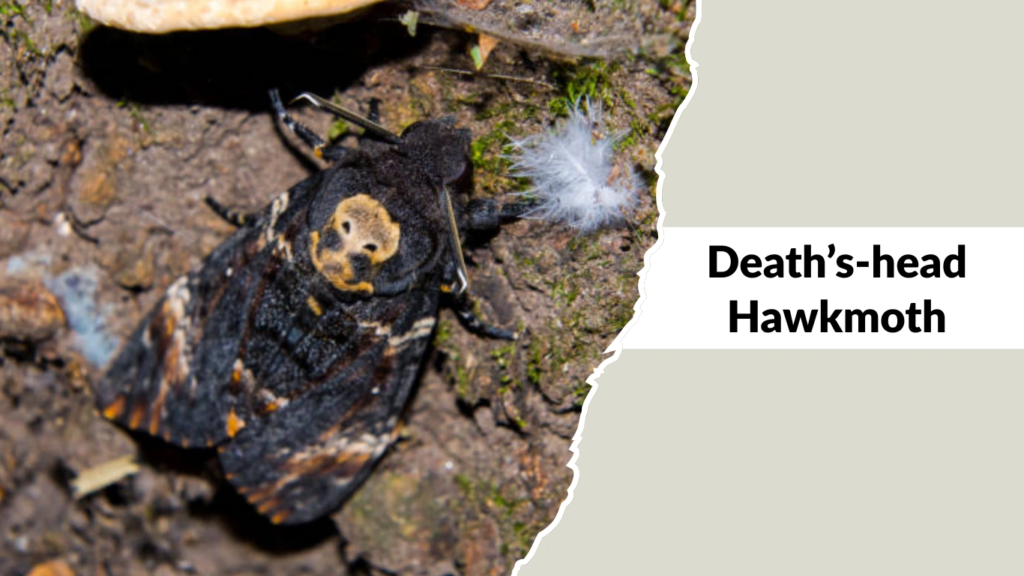
The Death’s-head Hawkmoth (Acherontia spp.) is one of the most distinctive moths in the world, instantly recognizable by the skull-like pattern on its thorax. Its eerie appearance and ability to squeak have made it a subject of folklore and fascination.
Identification
- Wingspan of 4–5 inches
- Brown forewings with mottled patterns; yellow-striped abdomen
- Distinct skull-shaped marking on the thorax
- Strong, fast body with robust wings
- Caterpillars are large, with side stripes and a curved tail horn
Habitat
These moths inhabit fields, gardens, woodlands, and agricultural areas across Africa, Europe, and Asia. They prefer warm climates and often migrate long distances, appearing in regions far from their original range during certain seasons.
Behaviors
Death’s-head Hawkmoths are nocturnal and known for their unusual behavior: they can emit a loud squeaking sound when disturbed. They also raid beehives for honey, using chemical mimicry to avoid being attacked by bees. Their flight is powerful and direct.
Diet and Lifecycle
The caterpillars feed on a variety of plants, including potato, tomato, jasmine, and deadly nightshade. After maturing, they pupate underground. Adults feed mainly on honey but may also drink fruit juices or tree sap. Their lifecycle involves migration, pupation, and nighttime activity.
7. Garden Tiger Moth
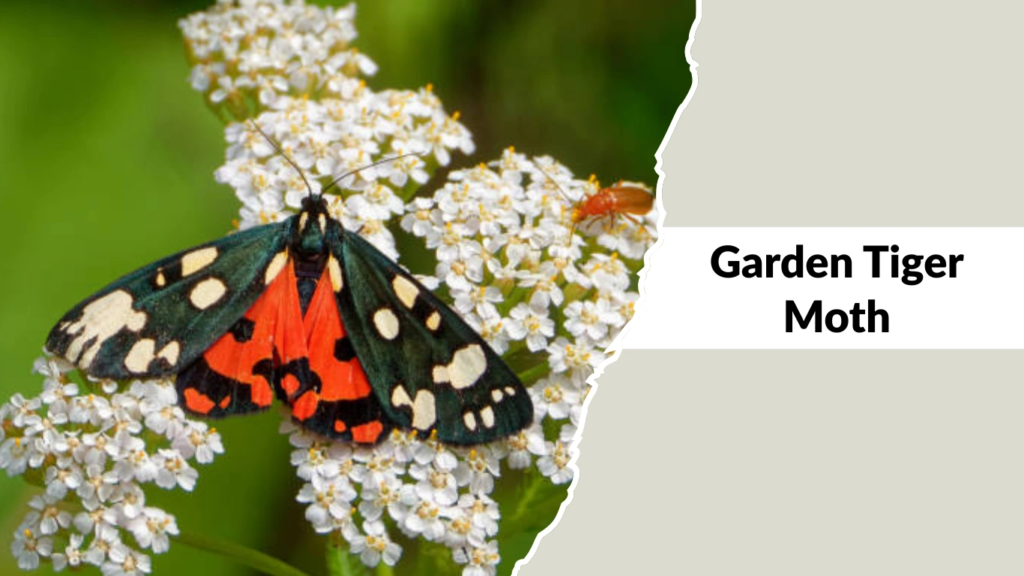
The Garden Tiger Moth (Arctia caja) is a striking moth known for its bold color patterns and hairy caterpillars. Its vibrant hindwings and distinctive forewing markings make it one of the most visually dramatic moth species in temperate regions.
Identification
- Wingspan of 2–3 inches
- Brown-and-white patterned forewings
- Bright orange or red hindwings with black spots
- Furry body, often reddish or orange
- Caterpillars are dense and hairy, commonly called “woolly bears”
Habitat
Garden Tiger Moths live in meadows, gardens, grasslands, coastal dunes, and open woodland areas across Europe, Asia, and North America. They prefer moist environments with abundant low-growing vegetation for their caterpillars.
Behaviors
These moths are nocturnal and strongly attracted to outdoor lights. When threatened, they flash their bright hindwings to startle predators. The caterpillars roll into a defensive ball when disturbed. Adults rely on stored nutrients and have a short lifespan focused on reproduction.
Diet and Lifecycle
The caterpillars feed on a wide range of plants, including dock, dandelion, nettle, and plantain. They overwinter as nearly grown larvae and pupate in spring within loosely woven cocoons. Adults emerge in summer, mate, lay eggs, and complete the yearly cycle.
8. Elephant Hawk-Moth

The Elephant Hawk-Moth (Deilephila elpenor) is a beautifully colored moth named for its caterpillar, which resembles an elephant’s trunk. Its vibrant pink and olive wings make it one of the most eye-catching moths in Europe.
Identification
- Wingspan of 2–3 inches
- Striking pink and olive-green wings
- Streamlined body with similar pink-green coloration
- Caterpillars are large, brown or green, with dramatic “eye spots” and trunk-like heads
- Long proboscis adapted for nectar feeding
Habitat
Elephant Hawk-Moths inhabit gardens, hedgerows, meadows, and woodland edges across Europe and parts of Asia. They are commonly found in areas with abundant flowering plants and their preferred larval food sources.
Behaviors
These moths are nocturnal and agile fliers. Adults are strongly attracted to scented flowers at night and can hover like hummingbirds while feeding. Their caterpillars use their eye spots to intimidate predators. Adults rely on nectar and live only a short time.
Diet and Lifecycle
The caterpillars feed primarily on rosebay willowherb and fuchsia plants. After growing, they pupate in leaf litter or shallow soil. Adults emerge in late spring to summer, feeding on nectar from flowers such as honeysuckle. The lifecycle includes caterpillar growth, pupation, and nighttime activity.
9. White Ermine Moth
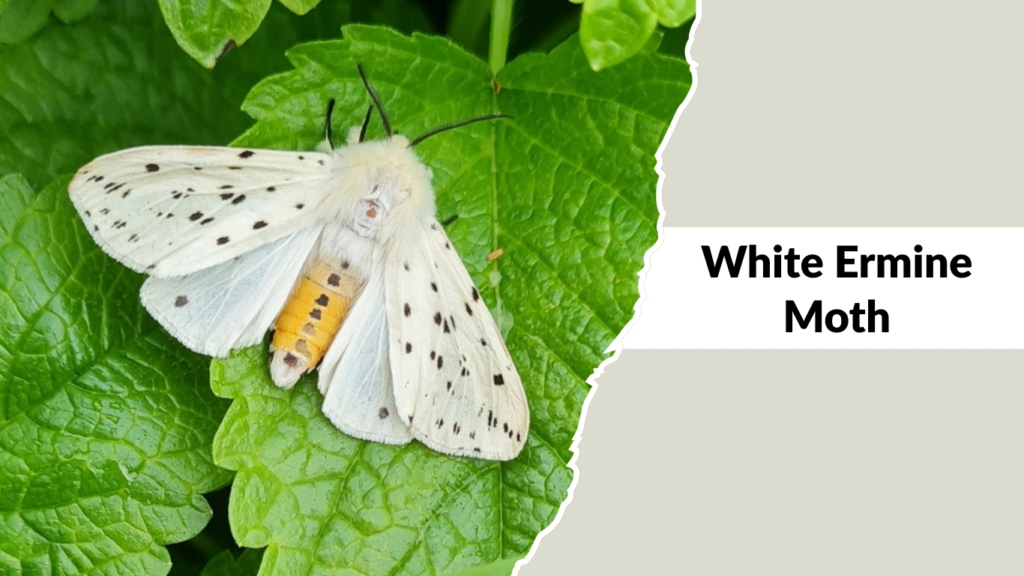
The White Ermine Moth (Spilosoma lubricipeda) is a delicate, pale-colored moth known for its silky white wings dusted with small black spots. Its elegant appearance and widespread presence make it a familiar sight in many temperate regions.
Identification
- Wingspan of 1.3–1.8 inches
- White wings with scattered black spots
- Fuzzy white or cream-colored body
- Caterpillars are dark, bristly, and known as “woolly bears”
- Slender antennae and soft wing texture
Habitat
White Ermine Moths inhabit gardens, grasslands, farmland, meadows, and woodland edges across Europe and parts of Asia. They prefer open, sunny habitats rich in herbaceous plants for their caterpillars.
Behaviors
These moths are nocturnal and strongly attracted to lights. When disturbed, adults may flutter erratically to escape threats. Caterpillars are slow-moving and rely on their dense bristles to discourage predators. Adult moths do not feed extensively and live only long enough to reproduce.
Diet and Lifecycle
The caterpillars feed on a variety of plants, including nettle, dandelion, dock, plantain, and mullein. After maturing, they spin a loose cocoon and pupate. Adults emerge in late spring or early summer, mate quickly, lay eggs, and complete their relatively short life cycle.
10. Rosy Maple Moth
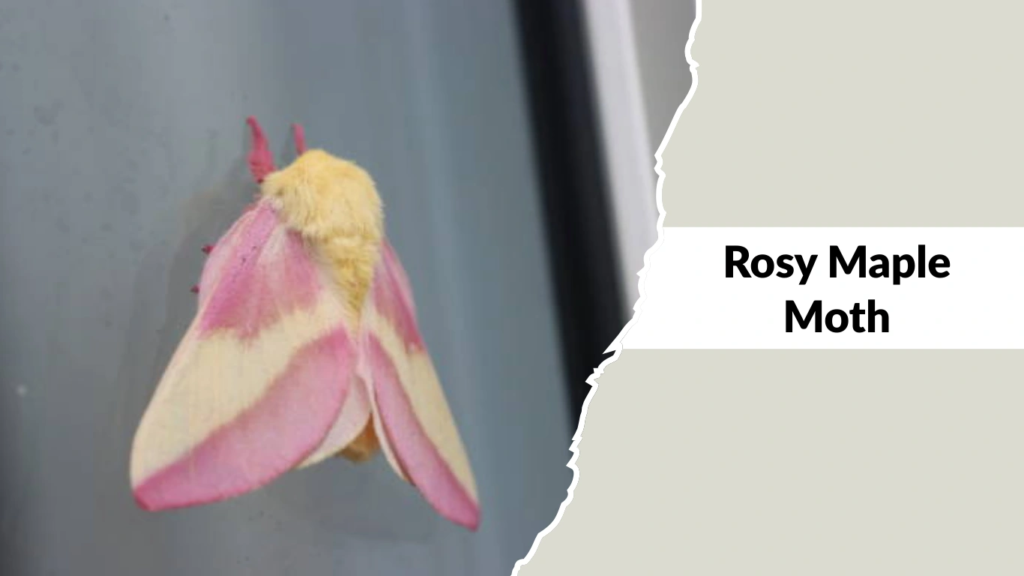
The Rosy Maple Moth (Dryocampa rubicunda) is one of the most colorful moths in North America, known for its bright pink and yellow “cotton candy” appearance. Its small size, paired with its vivid colors, makes it a favorite among moth enthusiasts.
Identification
- Wingspan of 1.25–2 inches
- Bright pink and yellow wings in soft, pastel tones
- Fuzzy yellow or pinkish body
- Males have larger, feathery antennae
- Caterpillars (called Greenstriped Mapleworms) are green with yellow stripes
Habitat
Rosy Maple Moths inhabit deciduous forests, suburban neighborhoods, and parks across the eastern United States and southeastern Canada. They thrive in regions where maple trees—especially red and sugar maple—are abundant.
Behaviors
These moths are nocturnal and attracted to artificial lights. Adults are gentle fliers and spend most of their short lives seeking mates. Their bright coloration is believed to help confuse predators. Unlike many moth species, adults do not feed.
Diet and Lifecycle
The caterpillars feed almost exclusively on maple leaves, particularly red, sugar, and silver maple. After several molts, they pupate in the soil. Adults emerge in late spring to early summer. In warmer regions, they may produce multiple generations per year.
11. Gypsy Moth

The Gypsy Moth (Lymantria dispar) is a well-known moth species due to its significant impact on forests. Originally from Europe, it has become invasive in parts of North America, where its caterpillars can defoliate large areas of woodland.
Identification
- Wingspan of 1.5–2 inches (males), 2–3.5 inches (females)
- Males: brown with wavy dark markings; Females: white with black speckles
- Caterpillars are hairy with blue and red spots along the back
- Females are larger and cannot fly
- Males have feathery antennae
Habitat
Gypsy Moths inhabit deciduous and mixed forests, urban parks, and suburban areas. They thrive wherever host trees—especially oak—are abundant. Their range continues to expand in North America due to their adaptability.
Behaviors
These moths are nocturnal, though males fly more actively in daytime. Caterpillars are voracious feeders and can climb trees using silk threads to disperse. Adults exist mainly to reproduce: males search for stationary females, which release pheromones but do not fly.
Diet and Lifecycle
Caterpillars feed on more than 300 species of trees, favoring oak, birch, willow, apple, and aspen. After feeding, they pupate in sheltered locations. Adults emerge in midsummer; females lay large egg masses that overwinter, completing the annual life cycle.
12. Peppered Moth
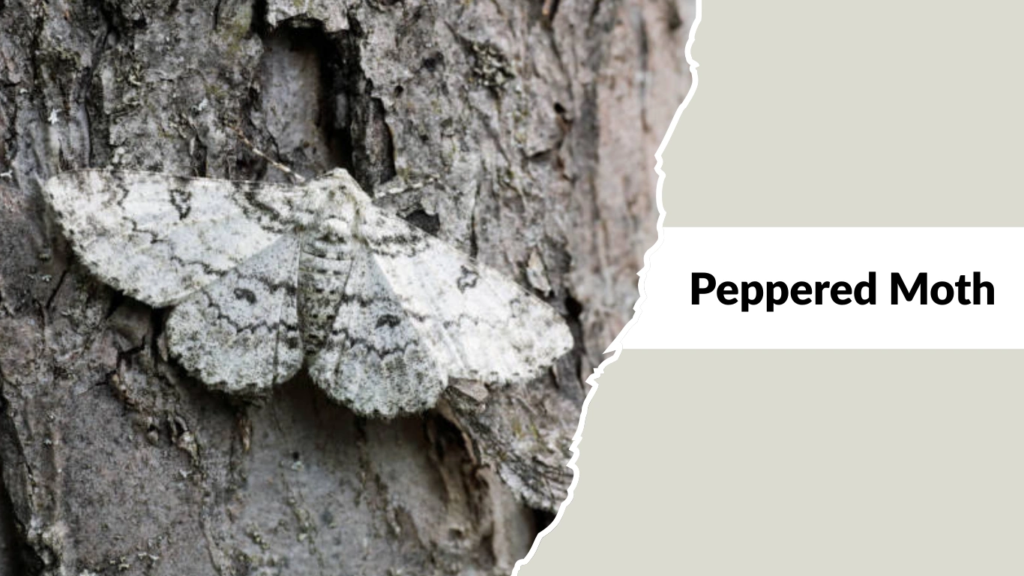
The Peppered Moth (Biston betularia) is a famous species in evolutionary biology due to its color variation linked to industrial pollution. Its speckled pattern provides excellent camouflage against lichen-covered trees.
Identification
- Wingspan of 1.8–2.4 inches
- Typical form: white wings with black speckling
- Melanic form: almost entirely dark charcoal or black
- Slender body with subtle striping
- Caterpillars mimic twigs with brown or green coloring
Habitat
Peppered Moths inhabit woodlands, gardens, parks, and suburban areas across Europe and North America. They prefer regions with plenty of trees and lichen, which help them blend into their surroundings.
Behaviors
These moths are nocturnal and use camouflage as their primary defense. During the day, they rest on tree trunks, relying on their coloration to avoid predators. Adults are moderate fliers and attracted to lights. Caterpillars use a “stick-like” posture to avoid detection.
Diet and Lifecycle
The caterpillars feed on a variety of trees, including birch, willow, oak, hazel, and alder. Pupation occurs in soil or leaf litter. Adults emerge in late spring to summer, mate, lay eggs, and repeat the cycle annually. Their famous color shift during the Industrial Revolution is a classic example of natural selection.
13. Io Moth

The Io Moth (Automeris io) is a vibrant North American moth known for its striking eyespots and highly reactive defense behaviors. Its colorful hindwings make it one of the most recognizable moths in the Saturniidae family.
Identification
- Wingspan of 2.5–3.5 inches
- Females: yellow-brown wings; Males: more vibrant yellow
- Large, dramatic eyespots on the hindwings
- Fuzzy body; males have feathery antennae
- Caterpillars are green with stinging spines
Habitat
Io Moths inhabit meadows, forests, gardens, and shrublands across the eastern United States into parts of Canada. They are especially common in areas with diverse vegetation that supports their wide range of larval host plants.
Behaviors
These moths are nocturnal. When threatened, they rapidly flash open their hindwings to reveal bold eyespots that startle predators. The caterpillars are social in early stages and possess venomous spines that can deliver a painful sting on contact.
Diet and Lifecycle
The caterpillars feed on many plants, including willow, clover, blackberry, cherry, oak, and maple. After maturing, they spin a cocoon in leaf litter or low vegetation. Adults emerge in late spring or summer, mate, and complete a yearly cycle that may include multiple generations in warmer climates.
14. Promethea Moth

The Promethea Moth (Callosamia promethea) is a striking North American silk moth known for its strong sexual dimorphism—males and females look noticeably different. Its graceful flight and elegant markings make it a standout among giant moth species.
Identification
- Wingspan of 3–4 inches
- Males: dark brown to nearly black wings
- Females: lighter brown with tan and pinkish accents
- Crescent-shaped pale markings on all wings
- Caterpillars are green with red, yellow, and blue tubercles
Habitat
Promethea Moths live in deciduous forests, orchards, suburbs, and woodland edges across eastern North America. They prefer areas rich in host trees such as tulip poplar and spicebush, where caterpillars thrive.
Behaviors
These moths are unusual because females are diurnal (active by day) while males fly at dusk searching for pheromone trails. They rest with wings closed, hanging from twigs like dead leaves for camouflage. Adults do not feed and live only long enough to reproduce.
Diet and Lifecycle
Caterpillars feed on spicebush, sassafras, tulip tree, sweetbay magnolia, and cherry. They spin a tough cocoon attached to a twig, wrapped in a leaf that remains through winter. Adults emerge in late spring or summer to mate, lay eggs, and complete the seasonal cycle.
15. Leopard Moth
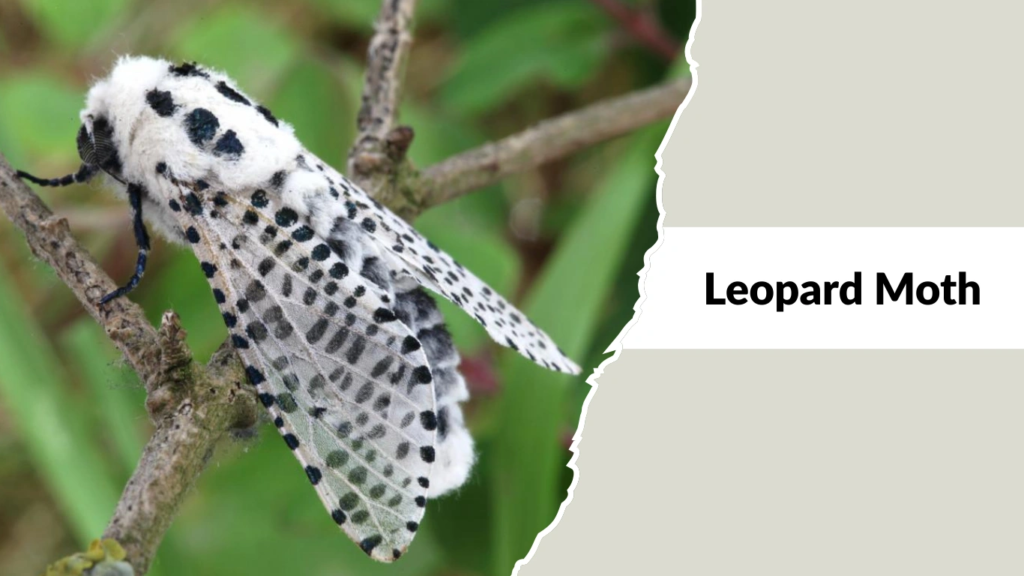
The Leopard Moth (Zeuzera pyrina) is a striking species named for its bold black-and-white spotted wings. Its long, cylindrical body and distinctive patterns make it easy to recognize among tree-boring moth species.
Identification
- Wingspan of 1.5–2.5 inches
- White wings with irregular, bold black spots
- Long, slender white body with dark markings
- Caterpillars are pinkish-white with dark heads
- Antennae are thin and slightly curved
Habitat
Leopard Moths inhabit orchards, gardens, woodlands, and parks across Europe, parts of Asia, and introduced regions in North America. They favor areas containing fruit trees and hardwoods, where larvae can burrow into trunks and branches.
Behaviors
These moths are nocturnal, with adults drawn strongly to lights. Caterpillars are wood-borers, tunneling deep into tree bark and stems for protection and food. Adults fly slowly and quietly, spending most of their energy on reproduction.
Diet and Lifecycle
Caterpillars feed on many woody plants, including apple, pear, cherry, ash, walnut, and oak. Their larval stage lasts up to two years as they tunnel and grow. Pupation occurs inside the tree. Adults emerge in summer, mate, lay eggs on bark, and complete the lifecycle.
16. Black Witch Moth
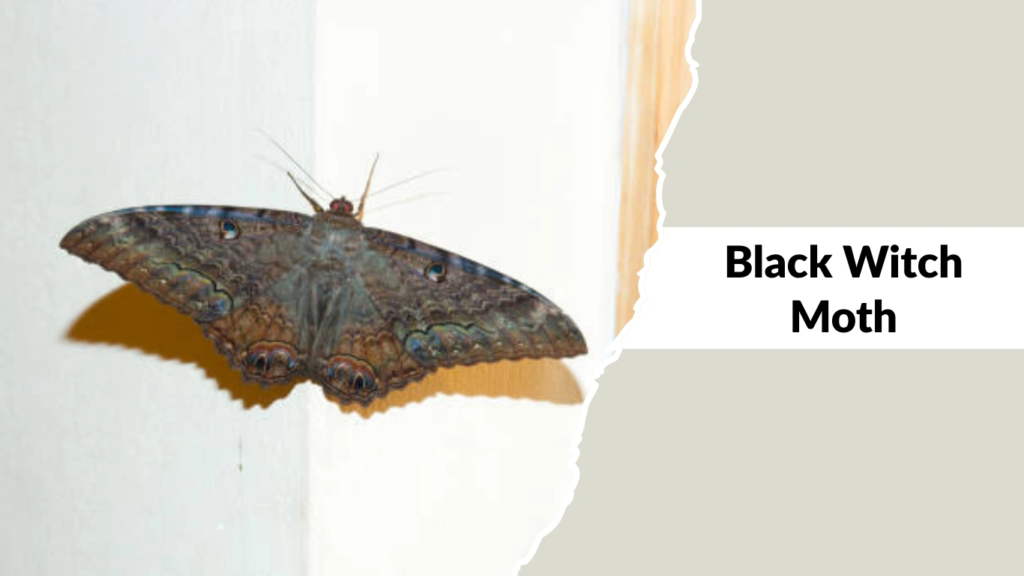
The Black Witch Moth (Ascalapha odorata) is a large, nocturnal moth often associated with myths and symbolism across the Americas. Its enormous wingspan and dark, ghostly appearance make it one of the most impressive migratory moths.
Identification
- Wingspan of 5–7 inches
- Dark brown to black wings with subtle marbling
- Pale, curved line across wings resembling a crescent
- Females have light bands and more contrast than males
- Caterpillars are green or brown with faint stripes
Habitat
Black Witch Moths inhabit tropical and subtropical regions, including Central America, South America, Mexico, and the southern United States. They are highly migratory and often appear far north during warm seasons, even reaching Canada.
Behaviors
These moths are nocturnal and often mistaken for bats due to their size and silent flight. They are attracted to light and sometimes enter buildings. In many cultures, they are considered omens or symbols of change. Their long-distance migrations are still not fully understood.
Diet and Lifecycle
Caterpillars feed on acacia, mesquite, and various legumes. After maturing, they pupate in loose cocoons among leaves. Adults typically feed on fermenting fruits or tree sap. Their life cycle involves tropical breeding, seasonal migration, and nighttime activity.
17. Emperor Gum Moth

The Emperor Gum Moth (Opodiphthera eucalypti) is a large and impressive Australian moth known for its bold eyespots and beautiful reddish-brown wings. It is one of the most recognizable moths native to Australia.
Identification
- Wingspan of 4–6 inches
- Reddish-brown wings with large eyespots on each wing
- Thick, fuzzy body with warm brown coloration
- Males have extremely feathery antennae
- Caterpillars are green with yellow or blue tubercles
Habitat
Emperor Gum Moths inhabit eucalyptus forests, woodlands, suburban areas, and parks across Australia. They thrive wherever eucalyptus trees—their primary larval food source—are abundant.
Behaviors
These moths are nocturnal and commonly found near lights at night. Adults do not feed and live only a short time, focusing their energy entirely on reproduction. Males locate females by following pheromone trails, sometimes traveling long distances.
Diet and Lifecycle
The caterpillars feed almost exclusively on eucalyptus leaves. After reaching full size, they spin a strong, brown cocoon attached to branches or hidden in foliage. Adults emerge in late spring or summer, mate, lay eggs, and complete their annual cycle.
18. Regal Moth

The Regal Moth (Citheronia regalis), also known as the Royal Walnut Moth, is one of North America’s largest and most striking moths. Its caterpillar, the Hickory Horned Devil, is equally famous for its fierce appearance.
Identification
- Wingspan of 3.75–6 inches
- Orange wings with gray bands and white spots
- Thick, robust orange-and-gray body
- Caterpillars (Hickory Horned Devils) are huge, greenish-blue, with long red horns
- Males have more feathery antennae than females
Habitat
Regal Moths inhabit deciduous forests, orchards, and wooded suburban areas across the southeastern United States. They thrive in regions rich in walnut and hickory trees, which support their larvae.
Behaviors
These moths are nocturnal and attracted to lights. Despite their intimidating caterpillar appearance, both larvae and adults are harmless. Adults do not feed and focus solely on reproduction during their short lifespan. Their flight is strong but often slow and deliberate.
Diet and Lifecycle
Caterpillars feed on hickory, walnut, persimmon, sweetgum, and ash trees. After maturing, they burrow into the soil to pupate, sometimes overwintering for several months. Adults emerge in summer, mate, and lay eggs to complete the lifecycle.
19. Walker’s Sphinx Moth

The Walker’s Sphinx Moth (Xylophanes tersa) is a sleek, streamlined moth known for its fast flight and elegant, pointed wings. Its caterpillars also display dramatic eye spots that help deter predators.
Identification
- Wingspan of 2–3 inches
- Long, narrow forewings with brown, tan, and olive striping
- Slender, aerodynamic body adapted for rapid flight
- Caterpillars are green or brown with bold, fake eye spots on the thorax
- Long proboscis for nectar feeding
Habitat
Walker’s Sphinx Moths inhabit gardens, fields, tropical forests, and suburban areas across the southeastern United States, Central America, South America, and the Caribbean. They thrive in warm climates with abundant flowering plants.
Behaviors
These moths are nocturnal but may be seen at dusk hovering at flowers like hummingbirds. They are strong, fast fliers and highly attracted to lights. Caterpillars show defensive displays by lifting the front of their body to reveal large eye spots.
Diet and Lifecycle
The caterpillars feed on plants such as buttonplant, starcluster (Pentas), and bedstraw. After growing through several stages, they pupate in soil or leaf litter. Adults emerge in warm months, feed on nectar, mate, and often produce multiple generations per year in tropical regions.
20. Oleander Hawk-Moth
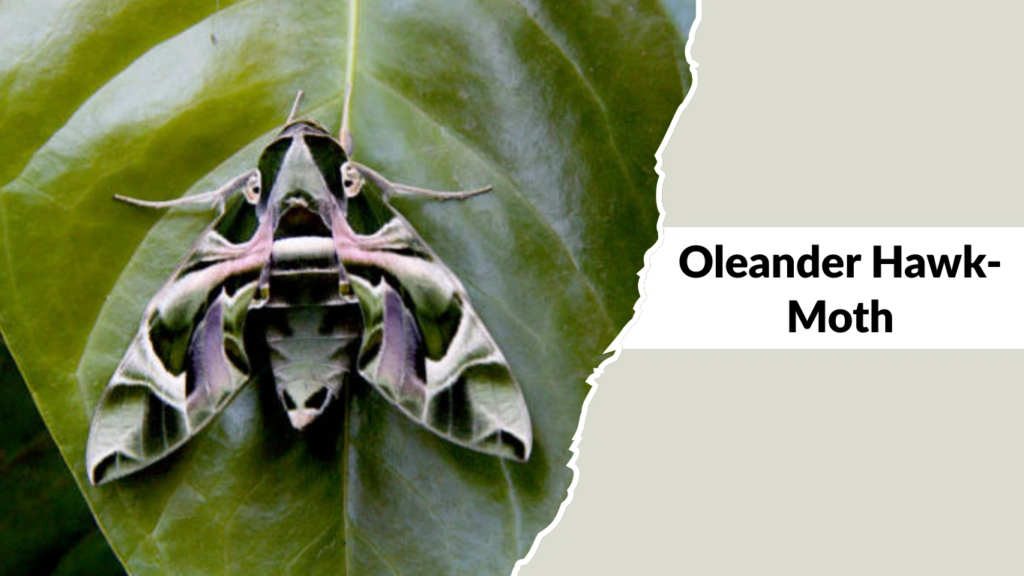
The Oleander Hawk-Moth (Daphnis nerii) is a large, tropical species admired for its intricate green patterns and smooth, leaf-like wings. It is one of the most beautifully camouflaged moths in the hawk-moth family.
Identification
- Wingspan of 3.5–5 inches
- Forewings patterned in shades of olive, green, cream, and brown
- Sleek body with matching camouflage tones
- Caterpillars are green or brown with blue eye spots and a tail horn
- Large eyes and long proboscis for nectar feeding
Habitat
This species inhabits tropical and subtropical regions, including Africa, the Mediterranean, the Middle East, and South Asia. It migrates widely and is often found in gardens, deserts, and areas where its host plant, oleander, grows.
Behaviors
Oleander Hawk-Moths are nocturnal and powerful fliers capable of long migrations. They hover at flowers similarly to hummingbirds and are attracted to bright, fragrant blooms. Their green camouflage helps them blend into foliage during the day.
Diet and Lifecycle
Caterpillars feed mainly on oleander, but may also eat periwinkle and desert rose. After reaching full size, they pupate in leaf litter or shallow soil. Adults emerge in warm seasons and feed on nectar from jasmine, petunia, honeysuckle, and other night-blooming flowers.
21. Pine Processionary Moth
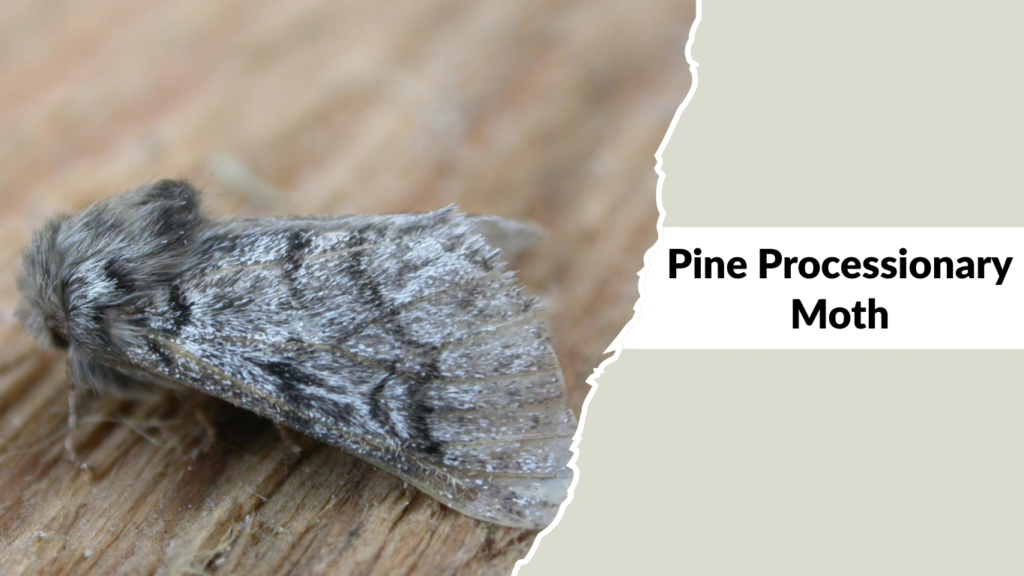
The Pine Processionary Moth (Thaumetopoea pityocampa) is a unique moth best known for its caterpillars, which travel in long head-to-tail lines like a “procession.” It is widespread in southern Europe and poses ecological and health concerns due to its irritating hairs.
Identification
- Wingspan of 1–1.5 inches
- Grayish-white forewings with fine dark streaks
- Light, fuzzy body typical of many tussock moths
- Caterpillars are gray-brown with dense, urticating (irritating) hairs
- Larvae move in long, single-file lines
Habitat
These moths inhabit pine forests, plantations, woodlands, and Mediterranean scrubland across southern Europe, North Africa, and parts of the Middle East. They thrive in warm climates where pine species—especially Aleppo and maritime pine—are abundant.
Behaviors
Pine Processionary Moths are nocturnal, but their larvae are highly visible due to their processional behavior. Caterpillars live in silky communal nests during winter and descend to the ground in spring to pupate. Their hairs can cause allergic reactions in humans and animals.
Diet and Lifecycle
Caterpillars feed primarily on pine needles, occasionally on cedar. They overwinter in treetop nests, then leave in processions to pupate in soil. Adults emerge in summer, mate, and lay eggs on pine branches, restarting the yearly cycle.
22. Puss Moth
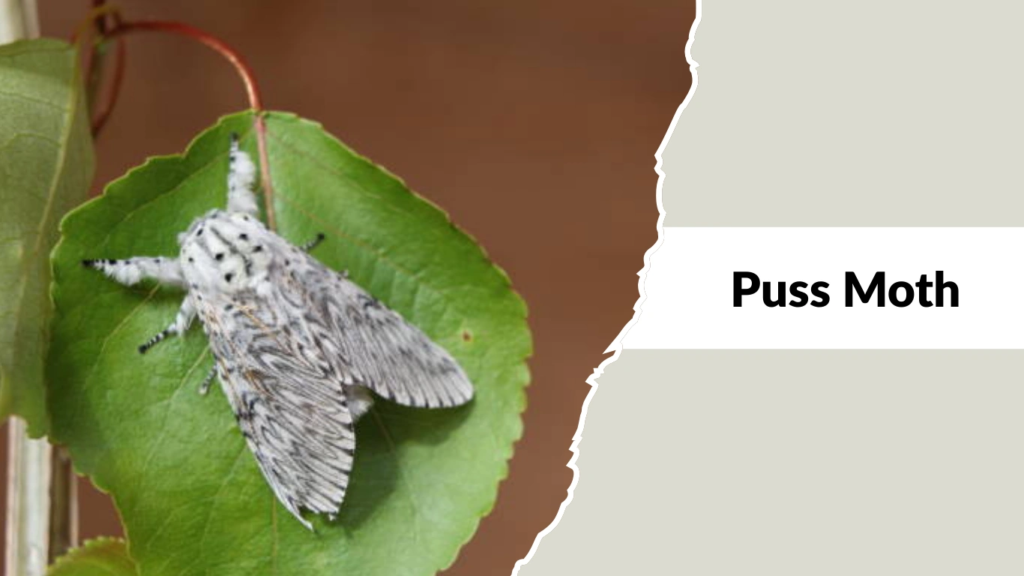
The Puss Moth (Cerura vinula) is a striking European moth known for its fluffy, cat-like appearance and its unusual, defensive caterpillars. Its gentle coloration contrasts with the fierce look of its larval stage.
Identification
- Wingspan of 2.5–3.5 inches
- Soft white or gray wings with wavy dark markings
- Furry, cat-like body that inspired its name
- Caterpillars are green with a split tail and red “whip-like” filaments
- Mature larvae display bold facial markings for defense
Habitat
Puss Moths inhabit woodlands, riverbanks, gardens, and marshy areas across Europe and parts of Asia. They prefer locations with willow and poplar trees, which serve as the main food sources for their caterpillars.
Behaviors
These moths are nocturnal and rest camouflaged on tree bark during the day. Caterpillars exhibit dramatic defensive behaviors: they raise their heads, display bright warning colors, and whip out red filaments to deter predators. Adults are gentle and slow-flying.
Diet and Lifecycle
Caterpillars feed mainly on willow, poplar, and aspen leaves. After completing development, they create a hard cocoon attached to tree bark, where they overwinter. Adults emerge in spring or early summer, mate, and lay eggs to complete the lifecycle.
23. Cinnabar Moth
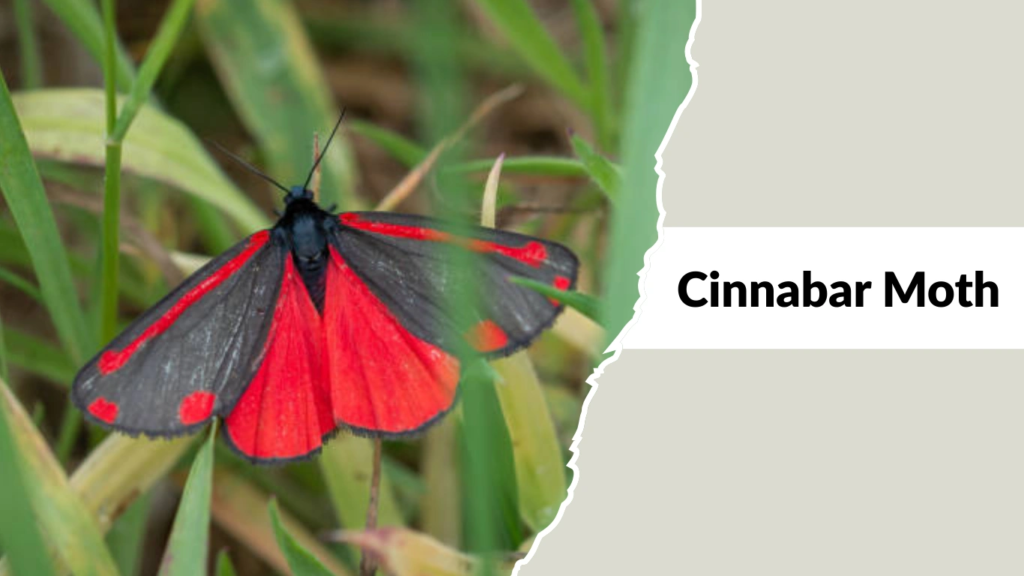
The Cinnabar Moth (Tyria jacobaeae) is a brightly colored, easily recognizable moth commonly found in Europe. Its striking red and black markings make it stand out both in flight and at rest.
Identification
- Wingspan of 1.4–1.8 inches
- Black forewings with bold red streaks
- Bright red hindwings with black borders
- Slim body with red and black coloration
- Caterpillars are yellow with black bands
Habitat
Cinnabar Moths live in meadows, grasslands, coastal dunes, and disturbed open areas across Europe and parts of Asia. They have also been introduced in North America and New Zealand for biological control of ragwort.
Behaviors
These moths are mainly nocturnal, but may fly during the day in sunny conditions. Their bright coloration warns predators of their toxicity. Caterpillars often gather in groups and feed openly, relying on poisonous compounds from their host plants for defense.
Diet and Lifecycle
Caterpillars feed primarily on ragwort, absorbing toxic alkaloids that make them distasteful. After feeding, they pupate in the soil and overwinter. Adults emerge in late spring to early summer to mate, lay eggs, and continue the yearly cycle.
24. Feathered Thorn Moth
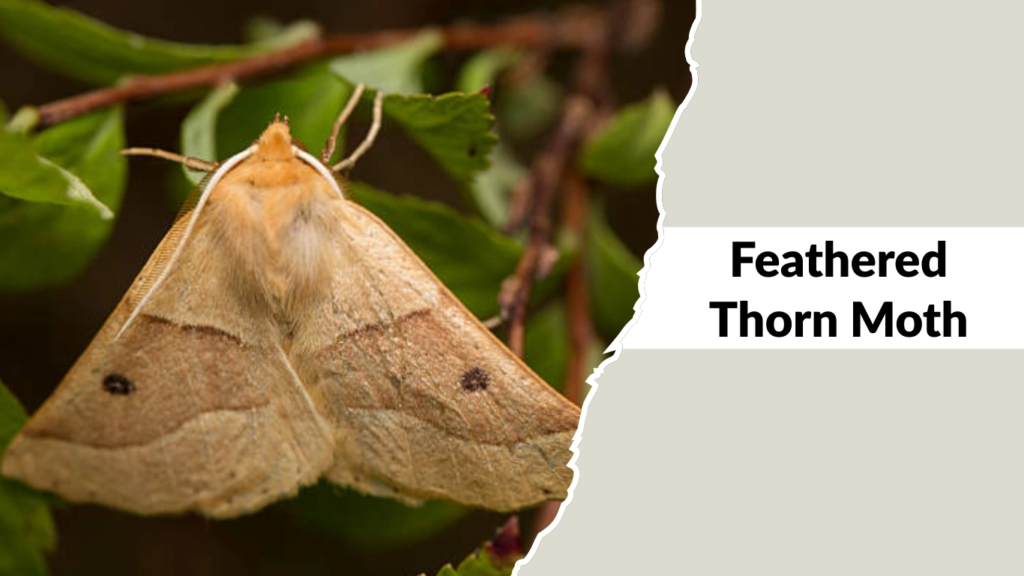
The Feathered Thorn Moth (Colotois pennaria) is a widespread European moth known for its warm autumn colors and the male’s distinctive feather-like antennae. It often appears late in the season when many other moths have disappeared.
Identification
- Wingspan of 1.6–2 inches
- Orange-brown wings with faint, wavy darker lines
- Males have large, feathery antennae; females have thinner ones
- Resting posture shows wings held roof-like over the body
- Caterpillars resemble twigs, long and thin with subtle markings
Habitat
Feathered Thorn Moths inhabit woodlands, parks, gardens, and shrublands across Europe and parts of Western Asia. They prefer deciduous trees and mixed forests where their caterpillar host plants are abundant.
Behaviors
These moths are nocturnal and commonly seen in late autumn. Males fly actively at night in search of females, using their broad antennae to detect pheromones. They are strongly attracted to lights. Caterpillars use excellent camouflage, mimicking twigs to avoid predators.
Diet and Lifecycle
Caterpillars feed on oak, hawthorn, blackthorn, apple, and birch. They overwinter as eggs, with larvae emerging in spring. Pupation occurs in the soil or leaf litter, and adults emerge in autumn, completing an extended seasonal cycle.
25. Angle Shades Moth
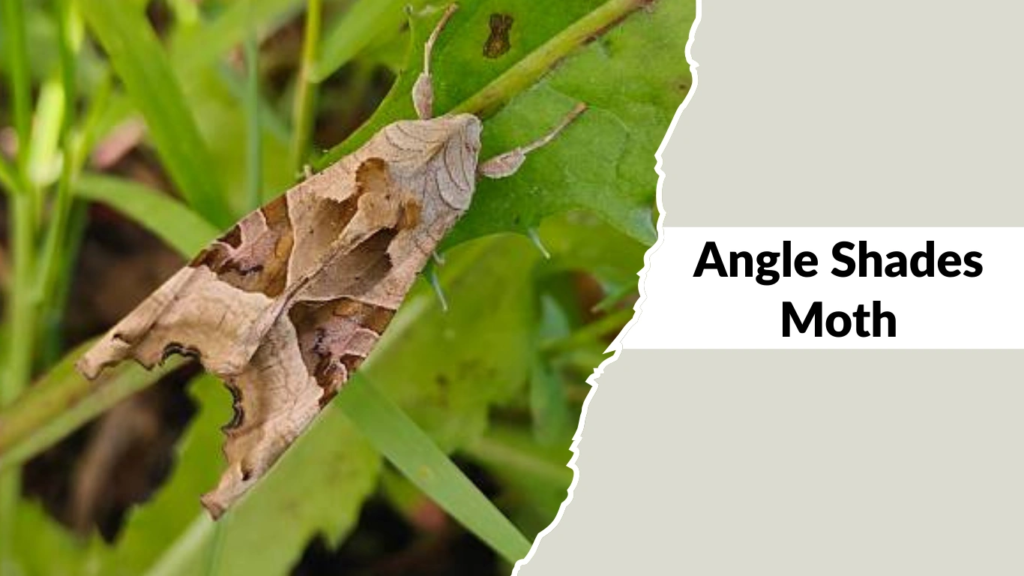
The Angle Shades Moth (Phlogophora meticulosa) is a uniquely shaped moth recognized by its folded, angular wings and camouflage that resembles dead, crumpled leaves. Its dramatic wing posture makes it stand out among nocturnal species.
Identification
- Wingspan of 1.75–2 inches
- Olive, brown, and pinkish wings with a striking V-shaped fold
- Wing pattern resembles curled or wilted leaves
- Deeply scalloped wing edges
- Caterpillars are green or brown with faint stripes
Habitat
Angle Shades Moths inhabit gardens, woodlands, meadows, farmland, and urban areas across Europe, North Africa, and temperate Asia. They thrive in diverse habitats with plenty of low vegetation for caterpillar feeding.
Behaviors
These moths are nocturnal and rest during the day in their signature folded-wing posture, blending perfectly with leaf litter. They are strong fliers and often migrate seasonally. Adults are frequently attracted to lights, especially in spring and autumn.
Diet and Lifecycle
Caterpillars feed on many herbaceous plants, including nettles, dock, brambles, clover, and various garden plants. Pupation occurs in soil or leaf litter. Adults may appear nearly year-round in mild climates, producing multiple generations per year.
26. Tiger Moth
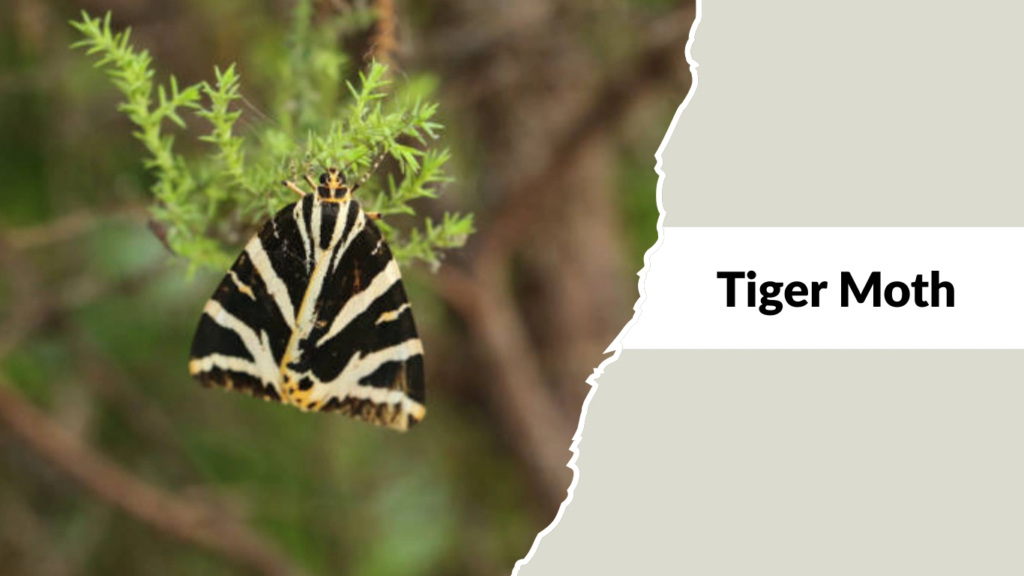
The Tiger Moth (Arctia spp.) represents a diverse group of vividly patterned moths known for their bold coloration and defensive strategies. Many species in this group display bright hindwings and striking forewing patterns.
Identification
- Wingspan generally 1.5–3 inches
- Forewings often patterned in browns, blacks, and whites
- Hindwings brightly colored—commonly red, orange, or yellow with black spots
- Fuzzy body with contrasting stripes or patches
- Caterpillars are usually hairy “woolly bears”
Habitat
Tiger Moths inhabit meadows, forests, gardens, grasslands, and coastal areas across Europe, Asia, and North America. Their adaptability allows them to thrive in both wild and urban environments with abundant host plants.
Behaviors
These moths are mostly nocturnal, although some species fly during the day. Bright hindwings are used as a warning or startle display against predators. Caterpillars rely on dense hair coverings for defense. Many species produce ultrasonic clicks to confuse bats during flight.
Diet and Lifecycle
Caterpillars feed on a wide range of plants, including nettles, dandelion, clover, plantain, and various shrubs. Most overwinter as larvae or pupae. Adults emerge in spring or summer to mate, lay eggs, and restart the annual cycle.
27. Winter Moth

The Winter Moth (Operophtera brumata) is a unique species known for its late-season activity and flightless females. It is commonly seen in colder months when most moths are no longer active.
Identification
- Wingspan of 1–1.5 inches (males)
- Males: brownish-gray wings with subtle banding
- Females: wingless, gray-brown, and spider-like in appearance
- Caterpillars are green with white stripes
- Pupae form in the soil
Habitat
Winter Moths inhabit woodlands, orchards, gardens, and suburban areas throughout Europe and North America. They thrive in cool climates, especially areas with abundant deciduous trees such as oak, apple, and birch.
Behaviors
These moths are active in late autumn and winter, often seen near lights on chilly nights. Males fly in search of flightless females that climb tree trunks to lay eggs. Caterpillars emerge in spring and “balloon” on silk threads to new feeding sites.
Diet and Lifecycle
Caterpillars feed on oak, apple, cherry, birch, and maple, often causing damage to new spring leaves. After feeding, they drop to the ground to pupate. Adults emerge in late fall or winter, mate, and lay overwintering eggs, completing a cool-season cycle.
28. Six-spot Burnet Moth
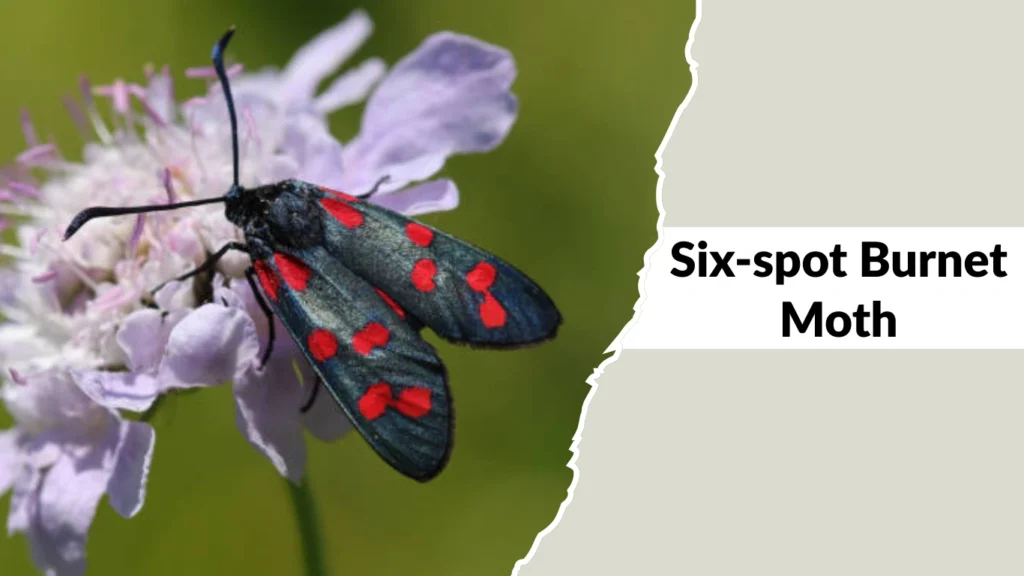
The Six-spot Burnet Moth (Zygaena filipendulae) is a brightly colored day-flying moth known for its vivid red spots and metallic wings. Its striking appearance warns predators of its toxicity.
Identification
- Wingspan of 1.2–1.6 inches
- Metallic blue-black forewings with six red spots
- Bright red hindwings with black borders
- Slender black body with a glossy sheen
- Caterpillars are yellow-green with black dots
Habitat
Six-spot Burnet Moths inhabit meadows, grasslands, coastal cliffs, and wildflower-rich fields across Europe. They thrive in sunny, open habitats where their nectar plants and larval food sources are abundant.
Behaviors
These moths are diurnal, flying actively in sunlight and visiting flowers such as knapweed and thistles. Their red-and-black coloration serves as a warning signal, as they contain cyanide compounds. They fly with a slow, fluttering motion that makes them easy to spot.
Diet and Lifecycle
Caterpillars feed primarily on bird’s-foot trefoil and occasionally other legumes. They overwinter as larvae and pupate in papery cocoons attached to grass stems. Adults emerge in early to mid-summer, mate, lay eggs, and complete a single generation each year.
29. Scarlet Tiger Moth
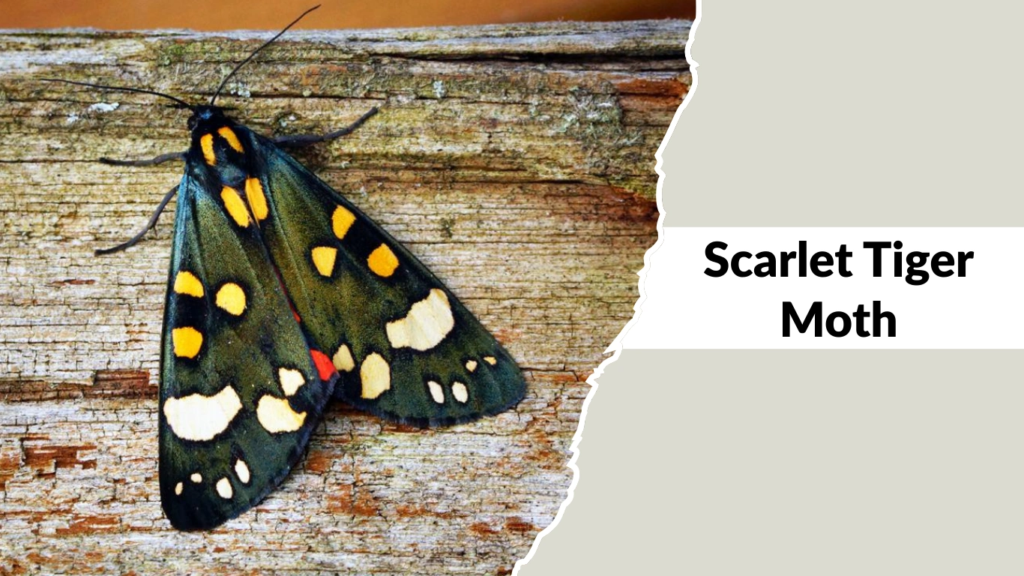
The Scarlet Tiger Moth (Callimorpha dominula) is a brilliantly colored moth known for its glossy wings and vibrant red hindwings. Though mainly nocturnal, it may fly during daylight, making it easier to spot than many other tiger moths.
Identification
- Wingspan of 1.6–2 inches
- Black, glossy forewings with bold white or yellow spots
- Bright red or orange hindwings with black patches
- Furry black body with bright markings
- Caterpillars are dark with yellow stripes and bristly hairs
Habitat
Scarlet Tiger Moths inhabit wet meadows, marshes, riverbanks, gardens, and woodlands across Europe. They prefer damp environments with lush vegetation where larvae can feed and develop.
Behaviors
These moths are primarily nocturnal, but may fly in the daytime when disturbed. Their bright hindwings act as a warning to predators, signaling toxicity. Caterpillars are solitary feeders and often bask in the sun to regulate their body temperature.
Diet and Lifecycle
Caterpillars feed on plants such as comfrey, nettle, bramble, and honeysuckle. They overwinter as small larvae and pupate in silk cocoons among leaf litter. Adults emerge in early summer, mate, and lay eggs, completing their yearly cycle.
30. Snowberry Clearwing Moth
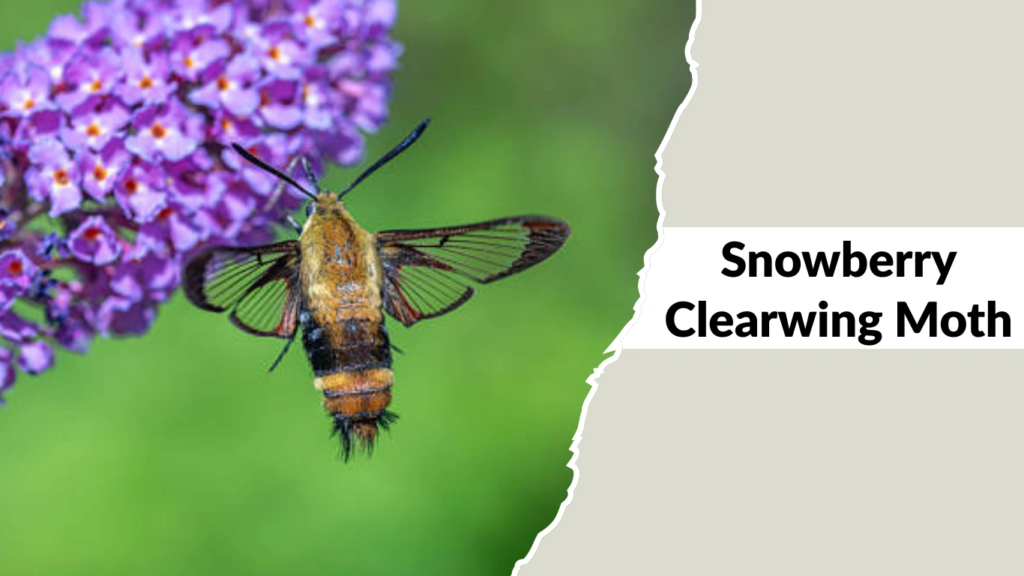
The Snowberry Clearwing Moth (Hemaris diffinis) is a day-flying hummingbird moth known for its transparent wings and rapid, hovering flight. Its bee-like appearance makes it easy to mistake for a bumblebee.
Identification
- Wingspan of 1.5–2 inches
- Transparent wings with dark borders
- Fuzzy yellow or olive body with black banding
- Long proboscis for hovering nectar feeding
- Caterpillars are green with a tail horn
Habitat
Snowberry Clearwings inhabit gardens, meadows, forest edges, and suburban landscapes across North America. They prefer sunny areas rich in nectar plants and larval host shrubs such as honeysuckle.
Behaviors
These moths are diurnal, flying during the day with fast, darting movements. They hover at flowers like hummingbirds and produce a soft buzzing sound. Their coloration mimics bees, giving them protection from predators. Adults frequently visit garden flowers.
Diet and Lifecycle
Caterpillars feed on snowberry, honeysuckle, dogbane, and buckbrush. After maturing, they pupate in loose cocoons in leaf litter or shallow soil. Adults emerge in late spring through summer, producing one or two generations per year depending on climate.
31. Indian Moon Moth
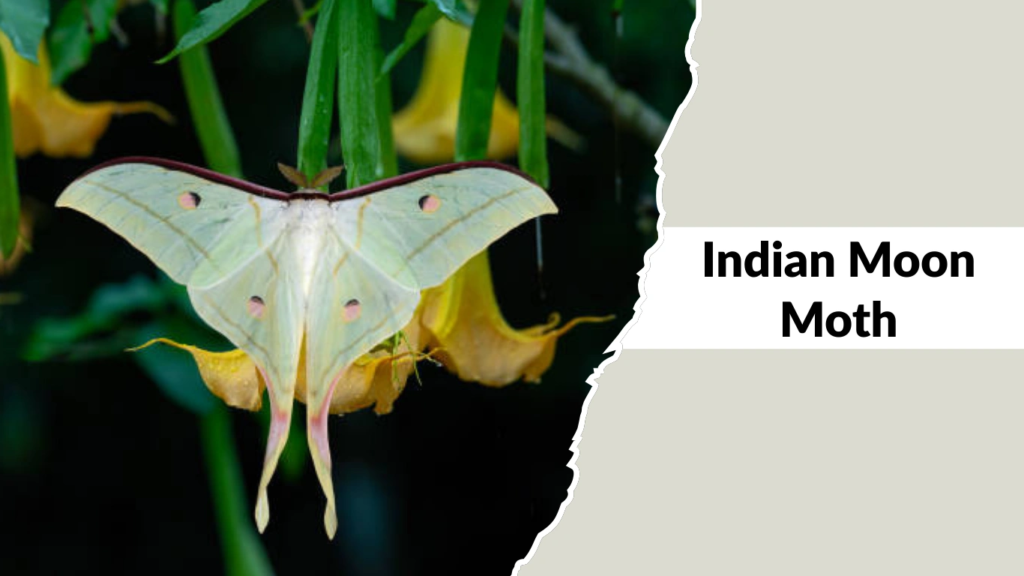
The Indian Moon Moth (Actias selene) is a stunning species known for its long, elegant tail streamers and pale green wings. Closely related to the Luna Moth, it is one of Asia’s most beautiful silk moths.
Identification
- Wingspan of 4–6 inches
- Pale green wings with long, delicate hindwing tails
- Transparent eyespots on each wing
- Fuzzy white or pale green body
- Caterpillars are green with yellow rings and small tubercles
Habitat
Indian Moon Moths inhabit tropical and subtropical forests, foothills, and wooded valleys across India, Sri Lanka, Nepal, Bhutan, and parts of Southeast Asia. They thrive in warm, humid regions with abundant host trees.
Behaviors
These moths are nocturnal and attracted to lights. Males, equipped with feathery antennae, search for females by detecting pheromones. Adults have no functional mouthparts and live only a short time, focusing solely on reproduction.
Diet and Lifecycle
Caterpillars feed on chestnut, walnut, mango, persimmon, and cinnamon trees. After growing through several stages, they spin a papery cocoon attached to foliage. Adults emerge in late spring or summer, mate, lay eggs, and complete the cycle.
32. Atlas Silk Moth

The Atlas Silk Moth (Attacus atlas) is one of the world’s largest and most spectacular moths, celebrated for its immense wingspan and rich, patterned colors. Often confused with the Atlas Moth, this term highlights individuals bred for silk production in some regions.
Identification
- Wingspan can reach 10–12 inches, among the largest of any moth
- Rusty brown wings with cream-lined patterns and semi-transparent panels
- Wing tips shaped like a snake’s head for predator deterrence
- Thick, fuzzy body with short antennae (males have feathery antennae)
- Caterpillars are pale green with waxy, knobby spines
Habitat
Atlas Silk Moths inhabit tropical and subtropical forests across South and Southeast Asia, including India, Sri Lanka, Malaysia, Indonesia, and southern China. They thrive in warm climates with dense vegetation and abundant host trees.
Behaviors
These moths are nocturnal and slow, graceful fliers. Adults do not feed due to reduced mouthparts, surviving only a week or so. Their snake-head wing tips serve as a visual defense, and males travel long distances to locate females using pheromones.
Diet and Lifecycle
Caterpillars feed on citrus, guava, cinnamon, evergreen trees, jackfruit, and other tropical plants. They spin large, tough cocoons that can be harvested for fagara silk, a coarse form of wild silk. Adults emerge in summer, mate, lay eggs, and complete the lifecycle.
FAQs
1. What is the largest moth species in the world?
The Atlas Moth and Atlas Silk Moth are often considered the largest moths by wingspan, reaching up to 10–12 inches. The White Witch Moth holds the record for the largest wingspan ever recorded in a moth. Size varies by region, but these giants dominate globally.
2. Why do some moths have eyespots on their wings?
Many moths, such as the Io Moth and Polyphemus Moth, have large eyespots to startle predators like birds or small mammals. When the moth suddenly flashes its hindwings, predators may hesitate or flee, mistaking the eyespots for a larger animal.
3. Do adult moths eat?
Some moths, especially giant silk moths like the Luna Moth, Cecropia Moth, and Atlas Moth, do not eat as adults. They emerge with reduced mouthparts and rely entirely on energy stored from their caterpillar stage. Their short adult lives focus solely on reproduction.
4. Are moth caterpillars dangerous?
Most caterpillars are harmless, but some, like the Io Moth or Pine Processionary Moth, have stinging hairs that can irritate skin or cause allergic reactions. It’s best to avoid touching unknown caterpillars to prevent discomfort or injury.
5. Why are some moths active during the day?
While most moths are nocturnal, species like the Hummingbird Hawk-Moth and Six-spot Burnet Moth are diurnal. These moths have evolved to feed on daytime flowers, avoid nighttime predators, or take advantage of warm, sunny habitats where they thrive.
