

The black stink bug is a common pest known for its pungent odor and distinctive shield-shaped body. Found across North America, Asia, and parts of Australia, these insects often invade gardens and homes during warm months. They feed on fruits, vegetables, and ornamental plants, sometimes causing damage to crops. Their name comes from the foul smell they release when threatened or crushed, a natural defense against predators.
Identification
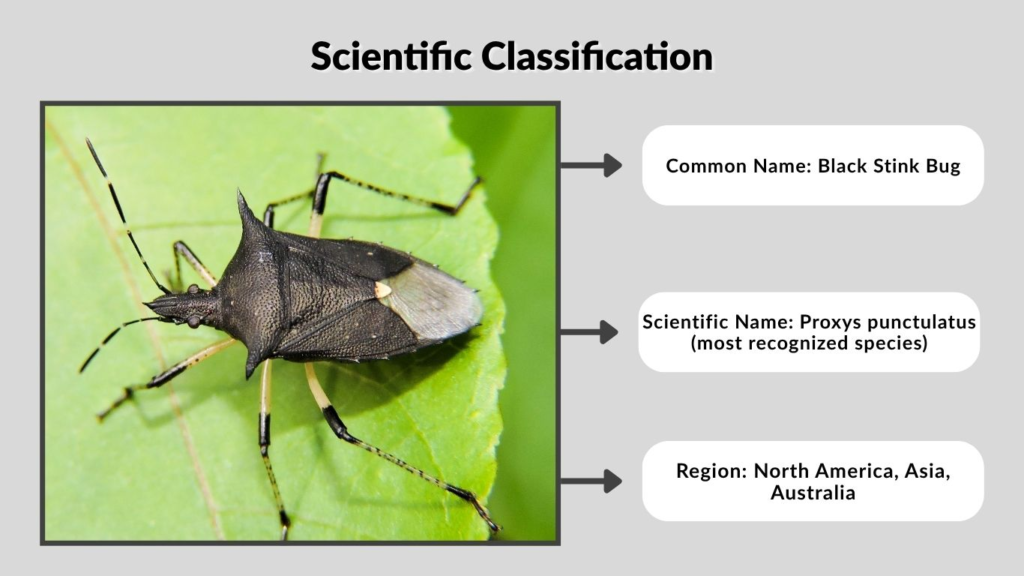
Physical Appearance
Black stink bugs are typically 12–18 millimeters long, with a shield-like body shape common to members of the Pentatomidae family. Most species are jet black, though many display red, orange, or white markings along the abdomen, legs, or antennae. Some have orange or red dots on their backs, while others feature yellow or white bands along the edges. The texture of their exoskeleton is smooth and glossy, offering camouflage on dark surfaces like tree bark or soil.
Scientific Classification
| Category | Details |
| Common Name | Black Stink Bug |
| Scientific Name | Proxys punctulatus (most recognized species) |
| Family | Pentatomidae |
| Order | Hemiptera |
| Region | North America, Asia, Australia |
Similar Species
Several bugs are commonly mistaken for black stink bugs. The Black Marmorated Stink Bug (Halyomorpha halys) is brownish-black with pale bands on its antennae. The Red and Black Stink Bug (Cosmopepla lintneriana) is smaller but has vibrant red stripes or spots on its body. Other similar insects include green and black stink bugs, and even some black beetles that emit a defensive odor when disturbed.
Habitat and Distribution
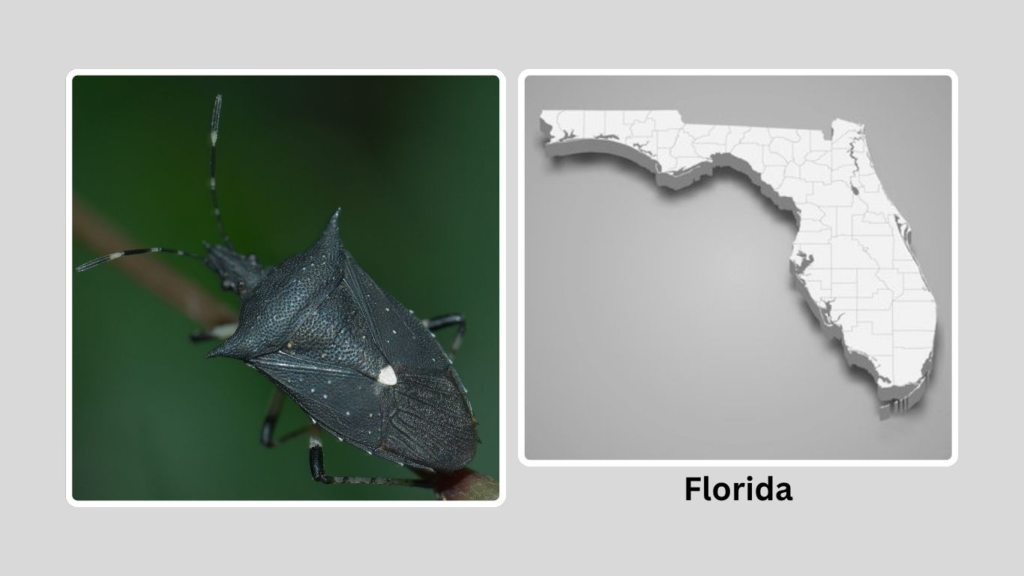
Black stink bugs thrive in gardens, forests, fields, and orchards, particularly in warm, dry regions. They are abundant in California, Texas, Arizona, Florida, and the southeastern United States, but also appear in parts of Asia, including the Philippines and Australia. During autumn, adults often migrate indoors, hiding behind curtains, furniture, and window frames to overwinter until temperatures rise again.
These insects prefer areas with dense vegetation and moisture, often nesting near food sources. They are also drawn to fruit-bearing trees such as citrus, apples, and peaches, as well as soybeans and cornfields. In suburban areas, homeowners often find them clustering on the sides of houses warmed by the sun.
Behavior and Diet
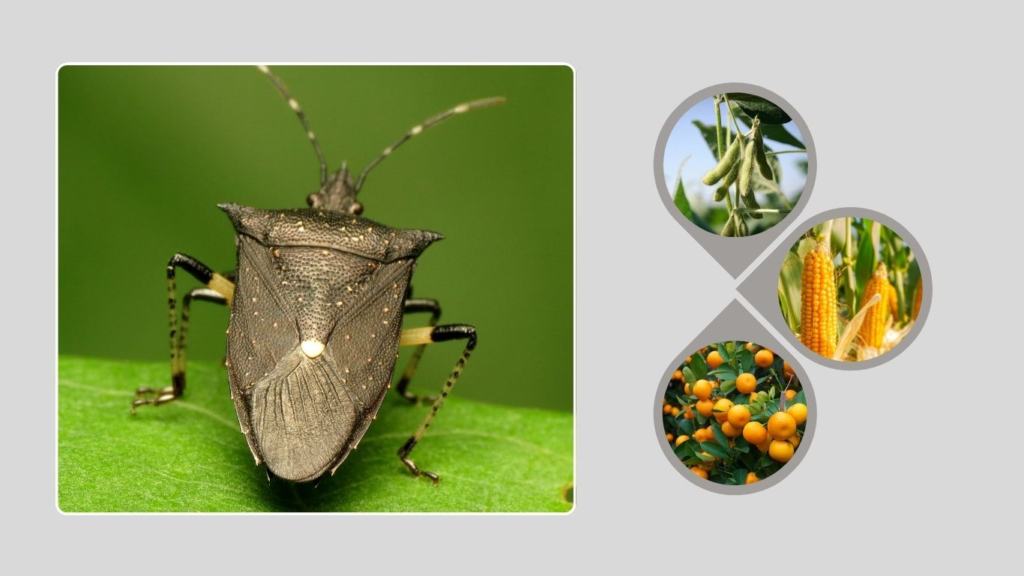
Black stink bugs are sap-feeding insects that use their needle-like mouthparts to pierce plants and suck out juices. They primarily target fruits, vegetables, legumes, and ornamental plants. Common host plants include tomatoes, beans, soy, corn, and citrus crops. Their feeding leaves discolored patches, dimpled fruits, and wilted leaves, all signs of nutrient loss.
When disturbed or crushed, they release a sharp, pungent odor — a mix of aldehyde compounds that act as a warning to predators like birds and spiders. This smell can linger for hours, especially indoors. Despite their alarming scent, black stink bugs are harmless to humans, though their secretions may cause mild skin irritation for sensitive individuals.
Life Cycle
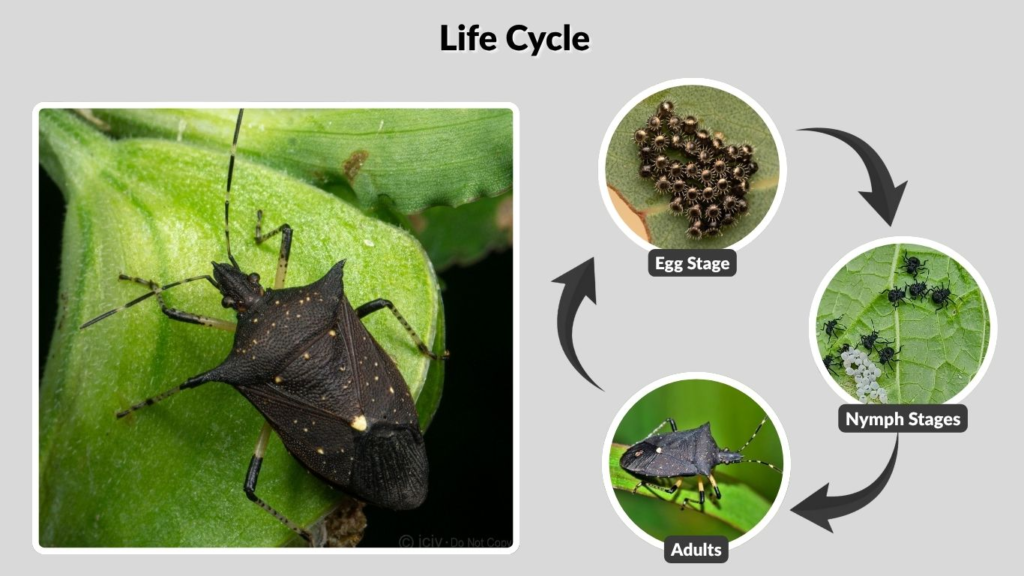
Eggs
Female black stink bugs lay clusters of pale or cream-colored eggs on the undersides of leaves. As they mature, the eggs darken, turning gray or black before hatching. Depending on temperature and humidity, eggs hatch within 5–10 days.
Nymph Stages
The nymphs, or immature bugs, start out reddish-orange or yellow with black spots, gradually darkening through five molting stages. By their final stage, they resemble smaller, wingless adults with orange or red markings and black bodies. During warm months, nymphs feed continuously, growing into adults within 6–8 weeks.
Adults
Fully developed black stink bugs have functional wings and are capable of short-distance flight. They are active from spring through late fall, feeding and reproducing during the warm months. Adults live for around 6–8 months, with females laying hundreds of eggs in their lifetime. When temperatures drop, they enter diapause, a dormant phase that allows them to survive winter inside homes, sheds, or beneath leaf litter.
Stink Bug Bite and Safety
Black stink bugs do not bite or sting humans. They rely on their odor for defense rather than aggression. However, when handled or crushed, they may release a secretion that can cause mild irritation on sensitive skin. These insects do not transmit diseases and are not venomous. Their presence is more of a nuisance than a health threat, particularly when they enter homes in large numbers.
Damage to Plants
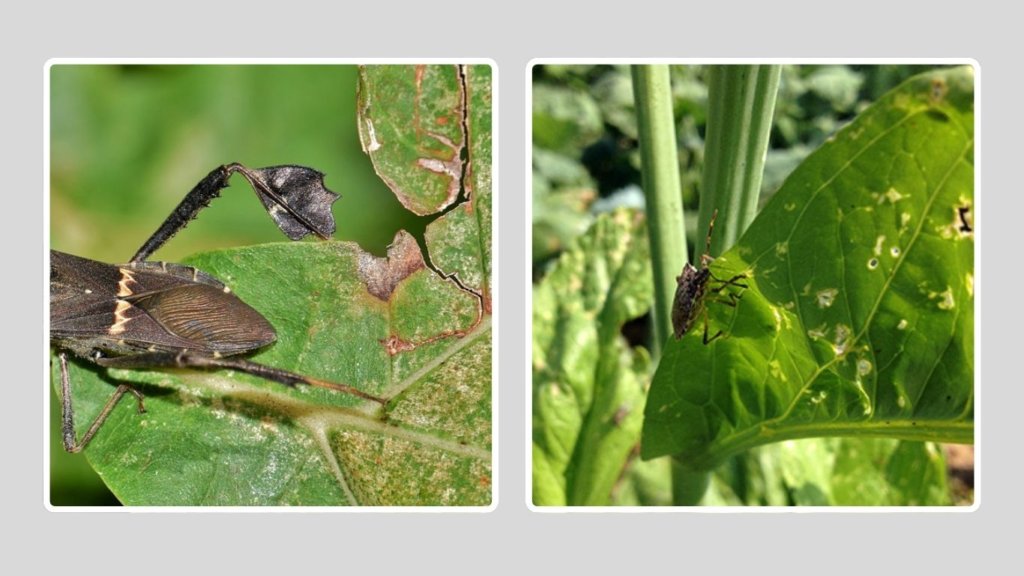
Though harmless to people, black stink bugs can inflict serious damage on crops. Their feeding punctures cause sunken spots and discoloration on fruits, vegetables, and seeds. In citrus trees, their sap-sucking can lead to early fruit drop and deformed seeds. Gardeners often notice wilted leaves or misshapen fruits, especially during dry seasons when infestations peak. Continuous feeding weakens plants, reducing both growth and yield.
Prevention and Control
Natural Methods
Encouraging natural predators such as praying mantises, assassin bugs, and parasitic wasps can help control stink bug populations. Removing egg clusters from leaves and trimming overgrown vegetation can also reduce breeding sites. Birds and spiders are natural allies that keep their numbers in check.
Home Remedies
Homemade soapy water sprays are effective for killing stink bugs on contact. Neem oil or garlic-based sprays can deter them from plants without harming beneficial insects. To prevent indoor infestations, seal cracks, vents, and window gaps, and install fine mesh screens to block entry points.
Chemical Control
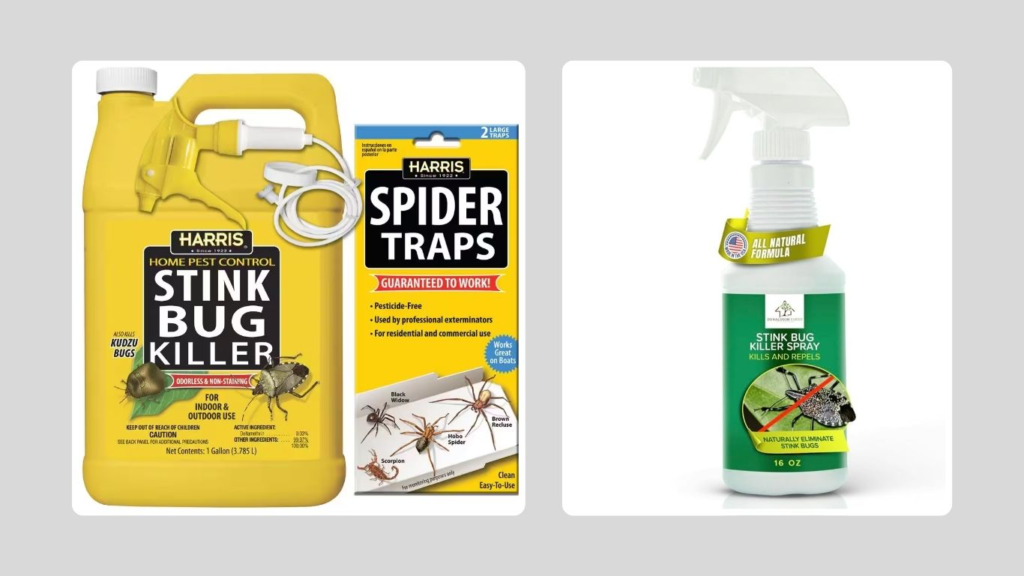
For large-scale or agricultural infestations, pyrethrin or bifenthrin-based insecticides are effective. However, these should be used carefully, as overuse can harm pollinators and aquatic life. Always apply sprays in the evening when bees are inactive and follow local pesticide safety regulations.
Interesting Facts
- The black stink bug’s odor comes from trans-2-decenal and trans-2-octenal, chemicals also found in coriander and cilantro.
- Some species feed on other insects, making them beneficial in small numbers.
- They are attracted to light and warmth, explaining their tendency to gather around windows and lamps.
- Birds, lizards, and even spiders prey on them, helping maintain ecological balance.
- In folklore, seeing a stink bug indoors symbolizes resilience and protection.
FAQs
What is a black stink bug?
A black stink bug is an insect from the Pentatomidae family, known for its dark, shield-shaped body and foul odor. Most species, such as Proxys punctulatus, feed on plants and fruits. They release a strong smell when threatened, which serves as a defense against predators.
Are black stink bugs dangerous?
No, black stink bugs are harmless to humans. They don’t bite, sting, or carry diseases. The worst effect they cause is a foul odor when crushed or handled. While their smell can linger indoors, it poses no health risk to people or pets.
Why do black stink bugs smell so bad?
Their strong scent comes from chemical compounds called aldehydes, released from glands on their abdomen. These compounds act as a warning signal to predators and a defense mechanism. The smell helps the insect survive by deterring animals that might otherwise eat it.
How can I get rid of black and red stink bugs in my house?
Seal gaps, doors, and window frames to prevent entry. Use a vacuum to remove visible bugs and dispose of the bag outdoors. For prevention, apply natural repellents like neem or soapy water spray. Avoid crushing them indoors to prevent odor release.
Where are black stink bugs most common?
Black stink bugs are widely found in North America, especially in California, Texas, and the southeastern U.S., as well as parts of Asia and Australia. They prefer warm, dry climates and often invade homes or gardens during autumn while seeking shelter for winter.
