

Most wasp stings heal within a few days, with the pain and swelling going down quickly. But sometimes, the area stays itchy, swollen, or irritated even a week later. If that’s happening to you, don’t worry—it could be a delayed reaction or a small infection. In this guide, we’ll explain why this happens, what to watch for, and how to treat it safely at home.
Is It Normal for a Wasp Sting to Itch or Swell After a Week?
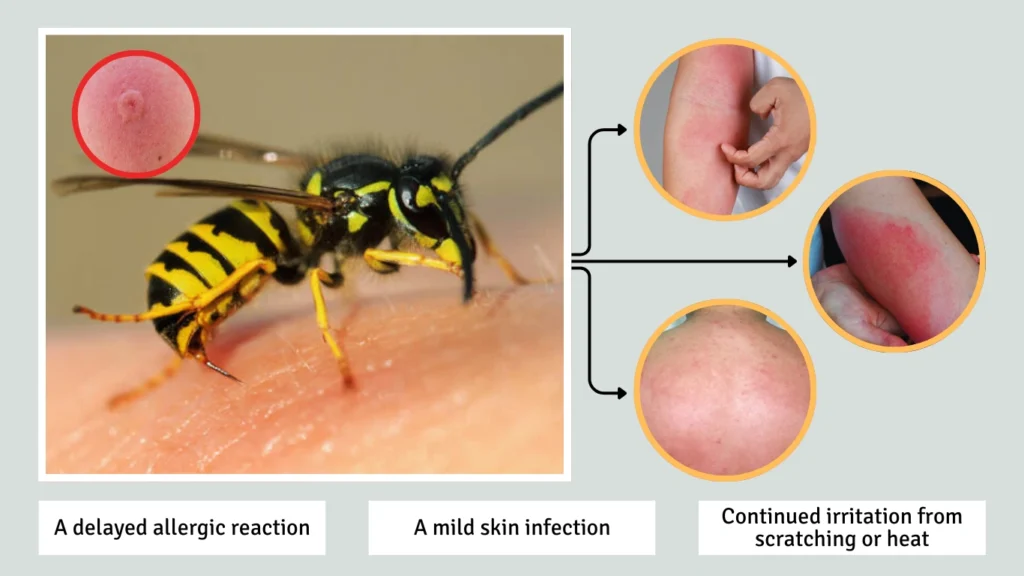
In most cases, a wasp sting causes pain, redness, and mild swelling that fades within a few hours to a couple of days. But sometimes, symptoms stick around longer than expected—especially itching and swelling. Let’s look at what’s normal and what’s not.
What Usually Happens After a Sting
Right after a wasp sting, it’s normal to feel a sharp pain followed by redness and swelling. It may itch within the first few hours, and the area can remain slightly sore or irritated for a couple of days. Most people recover fully in 2 to 3 days.
When Does Healing Normally Occur?
- Pain and swelling usually go down within 24–72 hours.
- Mild itching might continue for up to 3–5 days.
- The sting mark may leave a small red bump for a week or so, but it shouldn’t be itchy or swollen the entire time.
How Long Is Too Long?
If your wasp sting is still itchy or swollen after 7 days, it may not be a typical healing process. This can be due to:
- A delayed allergic reaction
- A mild skin infection
- Continued irritation from scratching or heat
It’s not always dangerous, but it’s worth watching closely—especially if symptoms start getting worse instead of better.
Possible Reasons for Prolonged Itching and Swelling

If your wasp sting is still itchy or swollen a week later, there could be a few different reasons. While most aren’t serious, understanding the cause can help you treat it properly and avoid further irritation.
Delayed Allergic Reaction
Some people don’t react right away. Instead, they develop a delayed allergic response, which can cause itching, swelling, or a rash several days after the sting. This is more common in people with sensitive immune systems or a history of insect allergies.
Localized Skin Infection
If bacteria got into the sting site—often from scratching—it could cause a minor skin infection. Signs include:
- Increased redness
- Warmth to the touch
- Swelling that spreads
- Pus or yellow discharge
This needs attention. In some cases, antibiotics might be necessary.
Hypersensitivity Reaction
Some bodies overreact to even small amounts of venom. This immune system over-response may keep the area itchy, red, or swollen longer than usual. It isn’t dangerous, but it’s uncomfortable.
Scratching and Skin Irritation
Scratching the sting—even just a little—can keep the skin inflamed or even break it open. This leads to delayed healing and more itching. The more you scratch, the longer it takes to heal.
Heat or Sun Exposure
Exposure to hot showers, sunburn, or friction on the sting site (like from tight clothes) can re-stimulate the area and cause it to swell again. Try to keep the area cool and avoid direct sunlight.
Warning Signs to Watch For
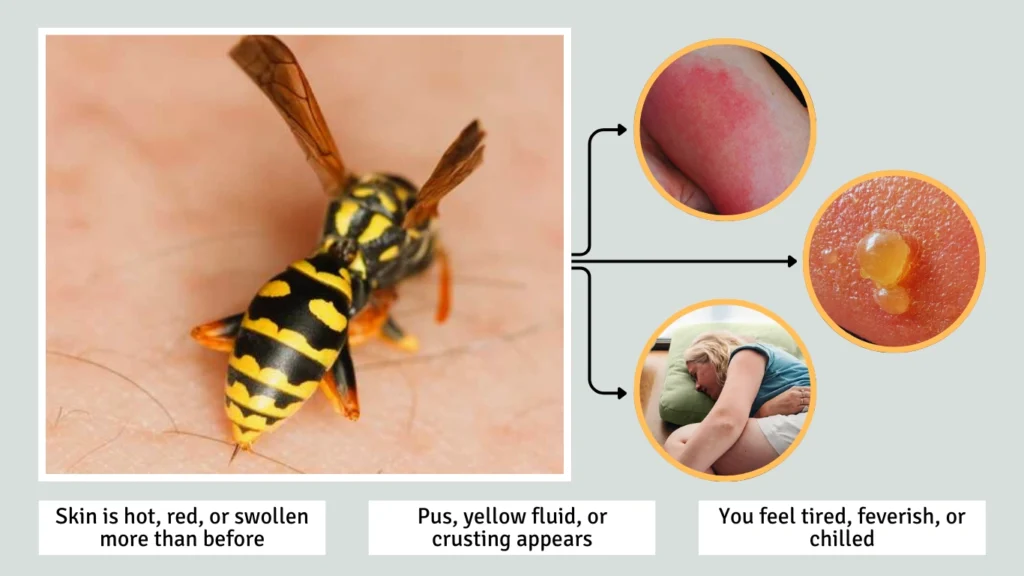
In most cases, the sting will go away on its own—but not always. If it’s been a week and you’re feeling worse instead of better, watch out for these warning signs.
Signs of Infection
- Skin is hot, red, or swollen more than before
- Pus, yellow fluid, or crusting appears
- The area smells bad
- You feel tired, feverish, or chilled
These are clear signs of infection and should be checked by a doctor.
Signs of a Delayed Allergic Reaction
- A rash that appears elsewhere on your body
- Ongoing itching beyond the sting site
- Hives or blotchy skin
- General discomfort or fatigue
If symptoms spread or worsen, even days later, it could still be your immune system reacting to the venom.
How to Treat Long-Lasting Itching and Swelling
If the sting site is still bothering you after a week, don’t worry—there are several ways to soothe the area and support healing. Here are some effective treatments you can try at home.
Cold Compresses
Apply a cold pack or clean cloth with ice to the area for 10–15 minutes at a time. This helps reduce both swelling and itching, especially if the skin feels warm or inflamed. Avoid placing ice directly on the skin—always wrap it in a thin cloth or towel.
Hydrocortisone Cream or Antihistamine Gel
Use 1% hydrocortisone cream or an antihistamine gel like diphenhydramine to relieve itchiness and redness. Apply a small amount 2–3 times a day, but avoid overusing it, especially if the skin is broken.
Oral Antihistamines
If the itch is bothering you throughout the day or night, a non-drowsy antihistamine like cetirizine (Zyrtec) or loratadine (Claritin) can help calm the immune response. Take it once a day as directed on the label.
Gentle Skin Care
- Avoid scratching as much as possible
- Wash the area with mild soap and lukewarm water once daily
- Pat dry—don’t rub with a towel
- Wear loose, breathable clothing to avoid friction
Natural Remedies (Optional)
- Aloe vera gel – Soothes inflammation and speeds up healing
- Oatmeal bath – Helps calm itchy, irritated skin
- Honey – Has natural antibacterial properties if infection is suspected
When to See a Doctor

Sometimes, home remedies aren’t enough. If your symptoms aren’t improving or are getting worse, it’s best to get medical advice. Delaying care could lead to further irritation or even infection.
Worsening Pain or Swelling After 7 Days
If the swelling keeps growing, becomes hard, or spreads beyond the original sting area, it’s time to get checked. It could be a deeper skin infection or a reaction that needs stronger treatment.
New Symptoms Developing
If you suddenly get a fever, headache, or body aches a week after the sting, that could mean your body is fighting off an infection or reacting to the venom. These symptoms shouldn’t be ignored.
No Improvement with Home Treatment
If you’ve tried cold packs, antihistamines, and skin care with no change after 2–3 days, a doctor may recommend a prescription cream or antibiotics.
History of Allergic Reactions
If you’ve had allergic reactions to stings in the past—or have other allergies—it’s smart to check in with your doctor, even for mild symptoms. They may recommend an allergy test or an epinephrine auto-injector for future safety.
How to Prevent Long-Term Reactions to Future Stings
If you’ve had a wasp sting that stayed itchy or swollen for days, you’re likely wondering how to avoid the same problem next time. While you can’t always avoid getting stung, you can take steps to reduce your body’s reaction and speed up healing if it happens again.
Clean the Sting Site Immediately
Right after being stung, wash the area with soap and water. This helps remove any dirt or bacteria and lowers the risk of infection, which can lead to long-term irritation.
Avoid Scratching the Area
Scratching feels good in the moment, but it damages the skin, slows healing, and can introduce germs. Pat or tap the skin instead if it’s itchy, and apply anti-itch cream or a cold compress to help.
Use Antihistamines Early
If you’re prone to itching or swelling, take an oral antihistamine soon after the sting. This can prevent the reaction from getting worse or lasting longer. Keep one handy if you’re often outdoors.
Apply Cold Packs Right Away
Cold reduces inflammation. Applying a cold compress within minutes of the sting can help control swelling and reduce the severity of symptoms in the days that follow.
Talk to a Doctor If You’ve Had Strong Reactions
If your sting symptoms lasted a week or longer—or if you’ve had multiple stings with strong reactions—ask your doctor about preventive care. You may need an allergy test or a prescription cream for future stings.
Carry an EpiPen if Needed
If you’ve ever had a serious allergic reaction to a sting (trouble breathing, face swelling, etc.), your doctor might prescribe an epinephrine auto-injector (EpiPen). It can save your life in case of a severe allergic reaction.
FAQs
Can a wasp sting become infected after several days?
Yes, a wasp sting can become infected even days after the initial sting—especially if you’ve scratched the area. Signs of infection include increasing redness, warmth, pus, and swelling. The skin might feel hard or tender, and you could develop a low fever. If you notice any of these signs, it’s best to see a doctor for treatment.
Is it normal to itch one week after a sting?
While not typical, it’s still possible to itch a week later—especially if you have sensitive skin or experienced a delayed allergic reaction. Lingering itchiness can also happen if the sting site became irritated or was exposed to heat, sun, or friction. Using antihistamines and soothing creams can help manage the itch and support healing.
How long do allergic reactions to wasp stings last?
Mild allergic reactions may last a few hours to several days, while more sensitive individuals may experience symptoms like swelling, itching, or hives for a week or more. Severe allergic reactions usually happen quickly (within minutes), but delayed responses can occur days later. Always monitor your body and consult a doctor if symptoms get worse.
