
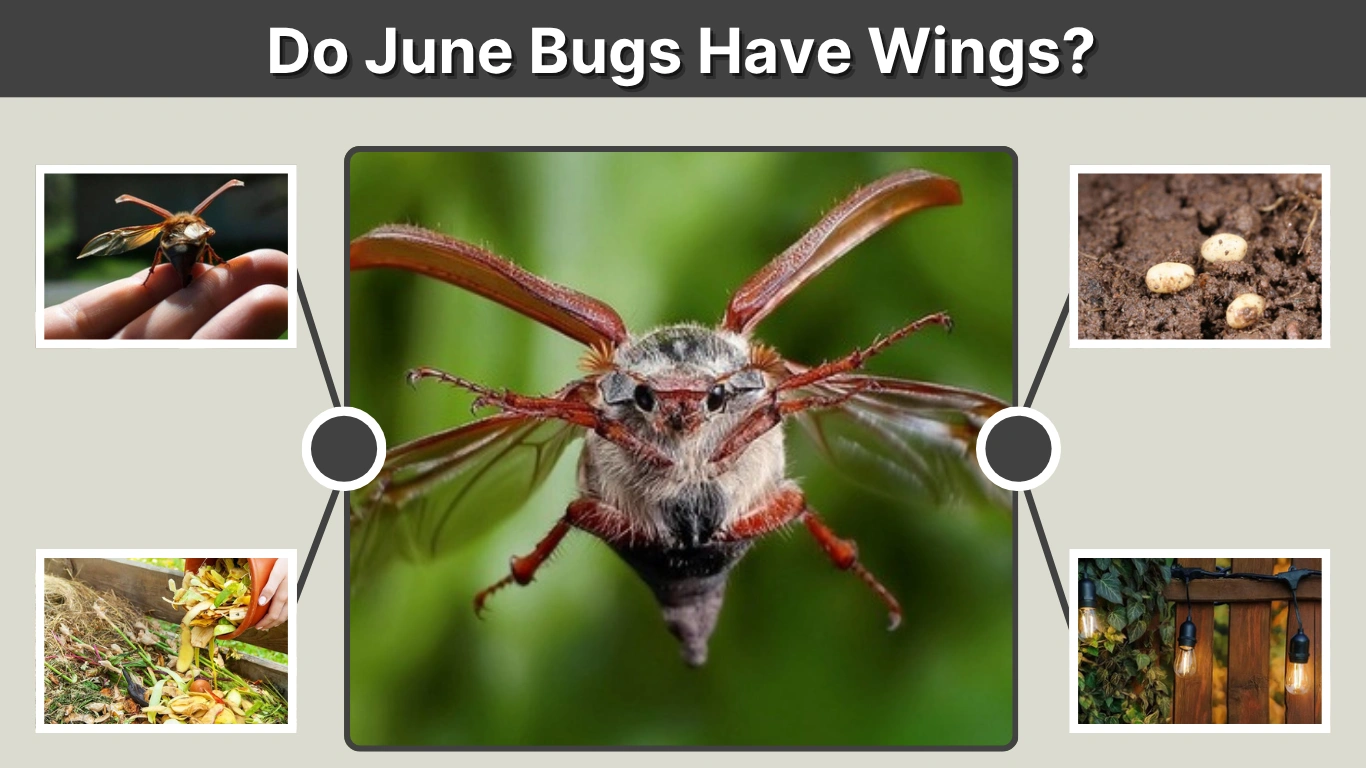
Every summer evening, as porch lights glow and the air hums with sound, you might see a clumsy brown beetle flying in circles — the June bug. Known for its heavy body and loud buzzing, this beetle often crashes into walls, windows, or even people. But do June bugs really have wings? The answer is yes — not just one, but two pairs of wings. Let’s explore how these wings work, why their flight seems so awkward, and what makes them unique among beetles.
Understanding June Bug Anatomy
What Exactly Is a June Bug?
June bugs are members of the scarab beetle family (Scarabaeidae), a group that includes hundreds of beetle species found across North America. They are most active during warm months, particularly from May through July, and are attracted to bright light at night. These beetles go by different names — in some regions, they’re called May beetles or June beetles.
June bugs are easy to recognize: they have oval, rounded bodies, short antennae, and a hard outer shell that shines reddish-brown or green. Their slow, buzzing flight and tendency to bump into objects make them one of summer’s most recognizable insects.
Body Overview
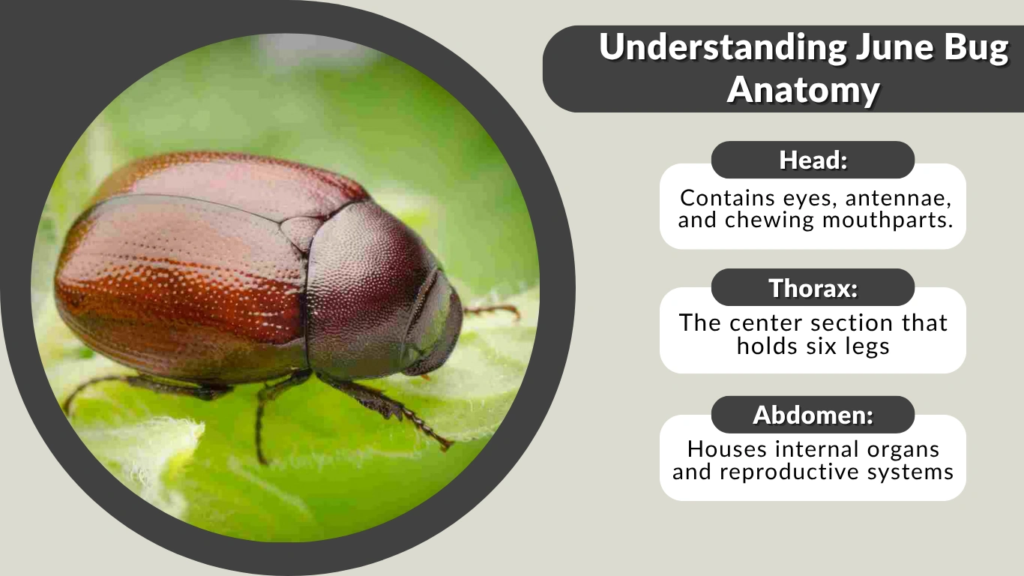
Like all beetles, June bugs have three main body sections:
- Head: Contains eyes, antennae, and chewing mouthparts.
- Thorax: The center section that holds six legs and two pairs of wings.
- Abdomen: Houses internal organs and reproductive systems.
Their wings are attached to the thorax, protected under hard shell-like covers called elytra when not in use.
Do June Bugs Have Wings?
Yes — Two Pairs of Wings
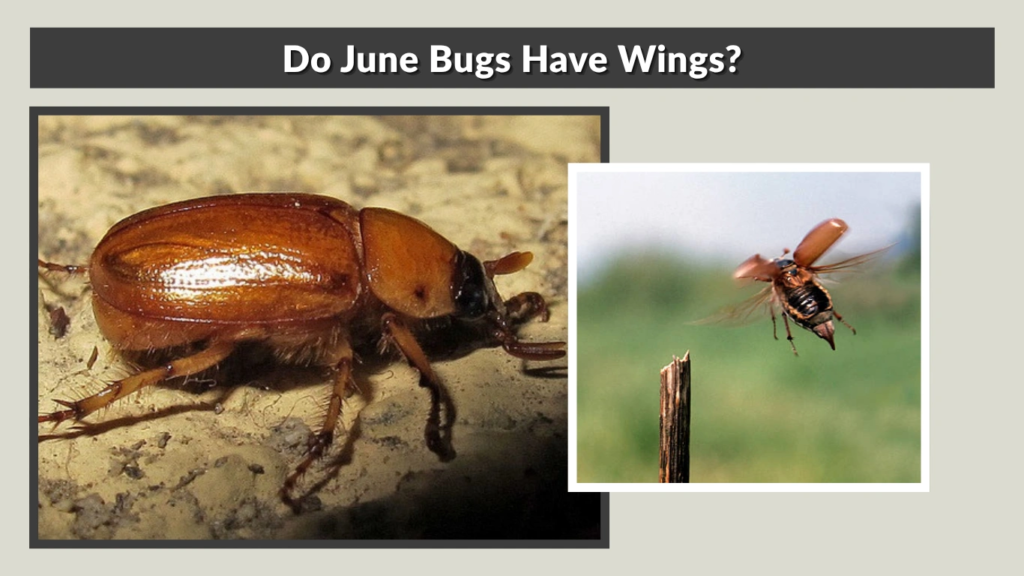
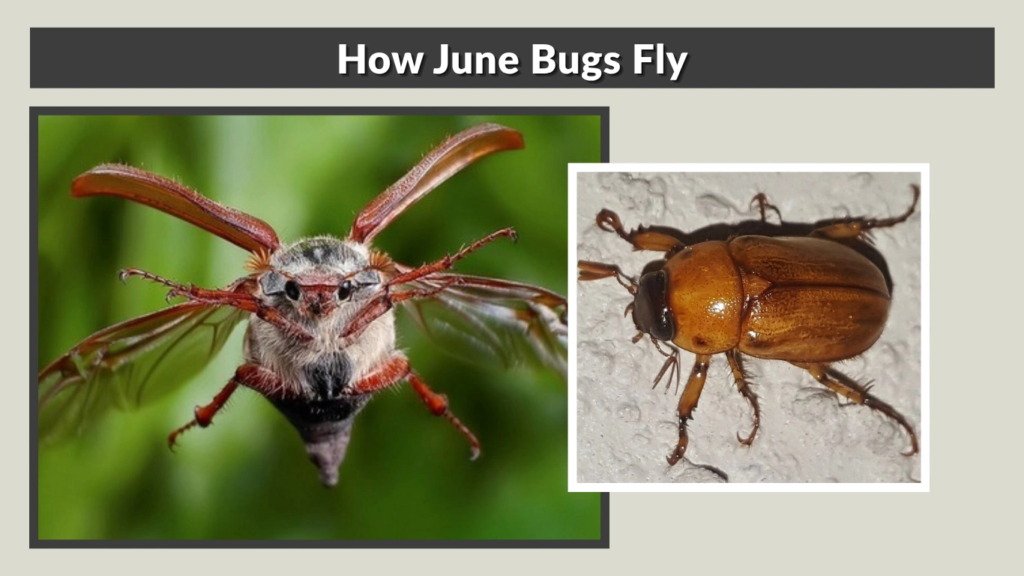
All June bugs have four wings, divided into two functional pairs. The front pair are tough, shell-like wings known as elytra, and the back pair are thin, flexible wings used for flying. This two-wing system is a key feature that all beetles share.
The elytra give June bugs their armored appearance and are not used for flight. Instead, they act like protective covers for the softer, more delicate flight wings beneath. When a June bug prepares to fly, the elytra lift upward, exposing the second pair of wings underneath.
The hind wings unfold and expand, ready to flap rapidly and lift the heavy beetle off the ground. These wings are almost transparent, covered with fine veins that help control air movement and balance.
So, while it may not look like it at first glance, the June bug’s heavy shell actually hides a sophisticated flying system.
The Function of Each Wing Set
The Elytra: The Protective Armor
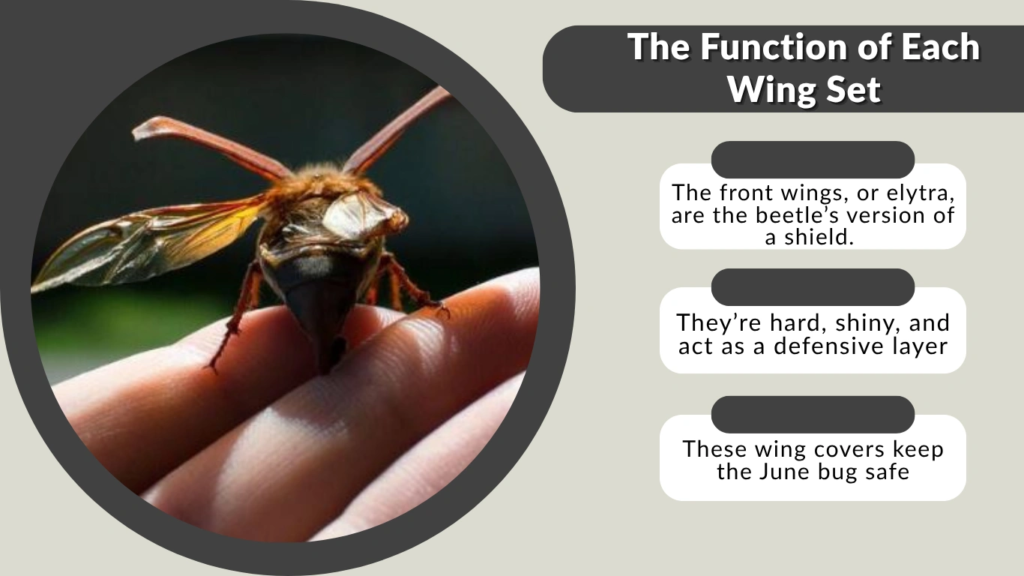
The front wings, or elytra, are the beetle’s version of a shield. They’re hard, shiny, and act as a defensive layer to protect the hind wings and the beetle’s body when it’s not flying. These wing covers keep the June bug safe from predators, dust, and damage while it crawls through soil or vegetation.
When a June bug takes flight, it first raises its elytra. Unlike most insects that flap both wings, June bugs hold their elytra open and fixed while their hind wings do all the work. This design gives them protection even while airborne, though it also adds weight — which explains why their flight is often slow and clumsy.
The Hind Wings: The True Flyers
The hind wings are the ones that actually make the June bug fly. They are large, soft, and flexible, folded neatly under the elytra when not in use. When extended, these wings beat rapidly — around 20 flaps per second — generating enough lift to support the beetle’s heavy body.
These wings are thin and veined, resembling plastic sheets rather than feathers. Because June bugs are heavy-bodied insects, their flight takes a lot of energy. They can fly short distances to find food, mates, or light sources but rarely stay in the air for long.
How June Bugs Fly
Step 1: Takeoff
When preparing for takeoff, a June bug first lifts its elytra to uncover its hind wings. The hind wings then unfold and extend outward. Within moments, they begin flapping at high speed, pushing air beneath them to create lift. The sound produced during this stage is the familiar low “buzz” that signals a June bug is on the move.
Step 2: Flight
Once airborne, the beetle’s wings continue flapping at a steady rhythm — typically 20 to 25 times per second. However, because the June bug’s wings are short and its body heavy, the flight tends to be unsteady and loud. This explains why they often collide with windows or lights.
They can fly up to 200 feet at a time, though most flights are shorter. June bugs rely heavily on their sense of smell and light sensitivity to navigate, which is why they frequently fly toward porch lights or street lamps on summer nights.
Step 3: Landing
When it’s time to land, the June bug stops flapping abruptly and drops toward the ground. It then folds its hind wings carefully under its elytra, snapping the covers shut. This process happens quickly and keeps the fragile flight wings safe from tearing or dirt.
Why June Bugs Fly So Clumsily
June bugs are strong fliers but not agile ones. Their flight pattern is best described as unsteady, loud, and wobbly, mainly due to their body shape and weight.
- Heavy Exoskeleton: Their thick outer shell offers protection but adds significant weight.
- Short, Stiff Wings: Their hind wings aren’t long enough for smooth gliding, leading to sudden drops and jerky movements.
- Slow Wingbeat: At only 20 flaps per second, June bugs generate lift but struggle to maneuver.
- Attracted to Light: Their attraction to bright light disorients them, causing collisions with walls and windows.
In short, June bugs can fly, but they’re not built for elegance or speed. Their clumsy flight is one of their most recognizable — and often amusing — traits.
Wing Development in the June Bug Life Cycle
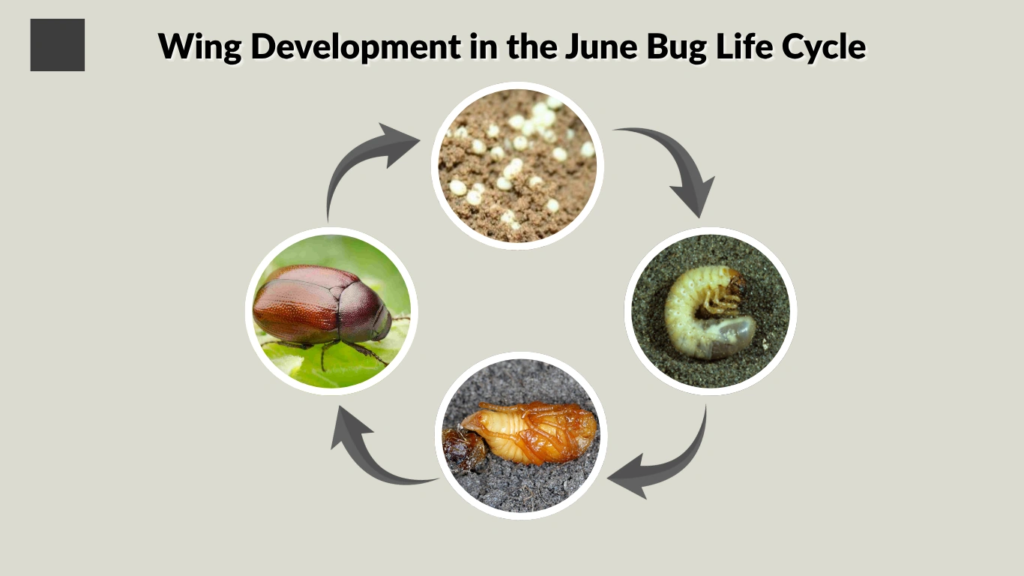
Larval Stage (Grubs)
In their larval stage, June bugs are wingless white grubs that live underground for one to three years. During this time, they feed on the roots of grass and plants, growing larger as they molt. The absence of wings allows them to burrow and move through the soil easily. Their energy is focused entirely on feeding and growth until it’s time to pupate.
Pupal Stage
When fully grown, the grub enters the pupal stage — a transitional phase where wings begin to form. Inside this cocoon-like casing, hidden beneath the soil, the insect’s body transforms dramatically. Over several weeks, it develops adult traits: legs, antennae, and fully formed wings folded tightly under its future shell. By the end of this process, a winged adult June bug is ready to emerge.
Adult Stage
Once they emerge from the soil in late spring, adult June bugs already have two pairs of functional wings. Their short adult lives revolve around reproduction and dispersal. Using their wings, they travel to find mates, food, and suitable sites for egg-laying. After completing this cycle, they die within four to six weeks, leaving behind the next generation underground.
Interesting Facts About June Bug Wings
Buzzing Sound Explained
That distinct buzzing you hear when a June bug is nearby isn’t just from its size — it’s the sound of air vibrating beneath its raised elytra. As the hind wings beat rapidly, they create a low-frequency drone amplified by the hard shell. This sound warns predators and helps other beetles locate one another during the mating season.
Wing Strength vs. Speed
June bugs are strong enough to lift their heavy bodies but aren’t built for speed. Their wing muscles are powerful, yet their broad, compact design sacrifices agility. While flies or bees might flap hundreds of times per second, June bugs average just 20 wingbeats per second, allowing slow but steady flight.
Flight Distance
Despite their clumsy reputation, June bugs can cover surprisingly long distances. Some adults have been observed flying up to 200–300 feet in a single trip, though most flights are much shorter. Their stamina depends on humidity, temperature, and body condition.
Wing Damage and Survival
Can June Bugs Fly with One Wing?
A June bug with a torn or missing wing struggles to fly properly. Because both hind wings must flap in sync to maintain balance, damage to one wing causes the beetle to spin or crash. They can still crawl, feed, and even mate on the ground, but their mobility becomes limited.
Can You Fix a June Bug’s Wing?
Keywords: how to fix a June bug’s wing, pulling wings off a June bug.
Injured June bugs can’t regenerate or repair wings once they’ve been torn. Attempting to “fix” or pull damaged wings may harm them. If you find one grounded, it’s best to release it outdoors in a safe, shaded spot. They can still survive briefly, even without flight.
Wing Lifespan
A June bug’s wings last as long as its adult phase — usually two to four weeks. After reproduction, the beetle dies naturally, completing its annual summer cycle.
Beetles That Look Like June Bugs
Common Winged Look-Alikes
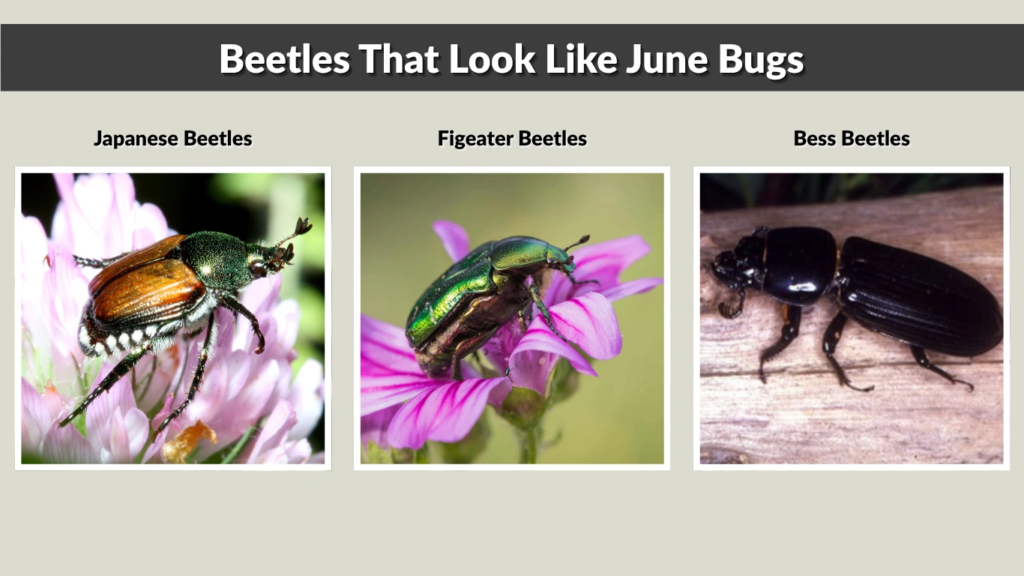
Many beetles are mistaken for June bugs because of their size and shiny wings.
- Japanese Beetles: Smaller, metallic green, and more agile flyers.
- Figeater Beetles: Actually a green June bug species, larger and louder.
- Bess Beetles: Glossy black, with stronger shells and deeper tones.
How to Tell Them Apart
June bugs are rounder and heavier, with matte brown or dull green shells. Their flight is louder and less controlled than most beetles. The sound of a June bug’s wings is deeper and slower than the high-pitched hum of faster species.
Symbolism and Curiosities
“20 Flaps of a June Bug’s Wings”
The saying “20 flaps of a June bug’s wings” refers to effort that seems small but steady. It’s inspired by the beetle’s slow, determined flight — not graceful, but persistent. This phrase symbolizes perseverance, patience, and progress despite difficulty. Like the beetle itself, it reminds us that persistence matters more than speed.
Cultural Mentions
In folklore, June bugs are seen as symbols of summer and renewal. Their flight marks the change of seasons, and their emergence from the ground is often compared to transformation or rebirth. The hum of their wings at dusk has even inspired lines in poetry and songs about summer nights.
FAQs
Do June bugs really have wings?
Yes. They have two pairs of wings — the hard protective elytra on top and soft inner flight wings underneath.
How many wings does a June bug have?
June bugs have four wings total, two in each set. The front pair shields the body; the back pair provides flight.
Why do June bugs fly so clumsily?
Their heavy shells and short wings make it hard to maneuver. They flap slowly, about 20 times per second, which limits their control and speed.
Can a June bug survive without wings?
They can crawl and feed, but flight is essential for reproduction and dispersal, so they usually survive only a few days.
What makes the buzzing sound when they fly?
The buzzing comes from their hind wings flapping under the lifted elytra, creating air vibrations that amplify through the shell.
