
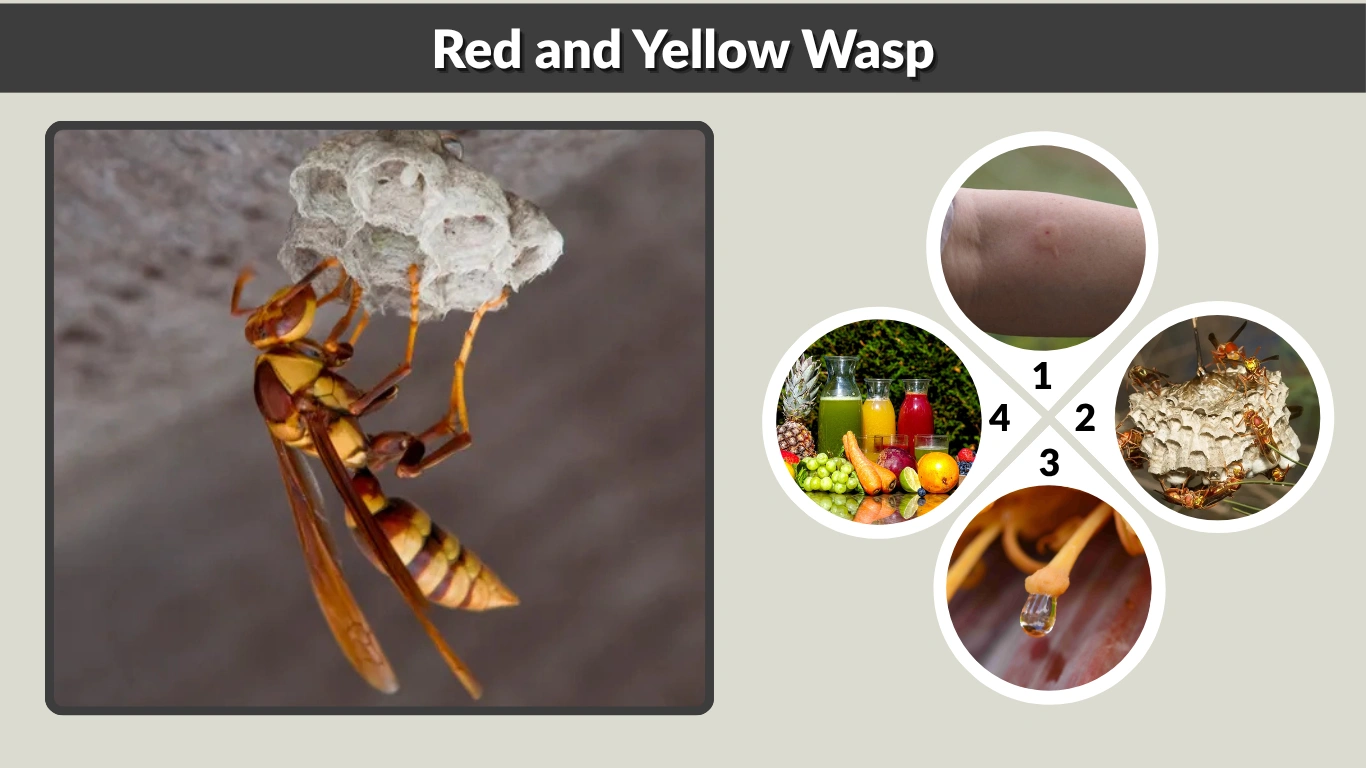
The red and yellow wasp is one of the most visually striking insects in the wasp family, known for its bold colors and distinctive paper-like nests. Often mistaken for yellow jackets or hornets, this wasp is both beneficial and feared — a natural pest controller but also capable of delivering a painful sting. Found mostly in warm regions like Texas, Florida, and Georgia, the red and yellow wasp plays an important role in maintaining ecological balance while posing occasional challenges to homeowners.
Understanding the Red and Yellow Wasp
What Is a Red and Yellow Wasp?
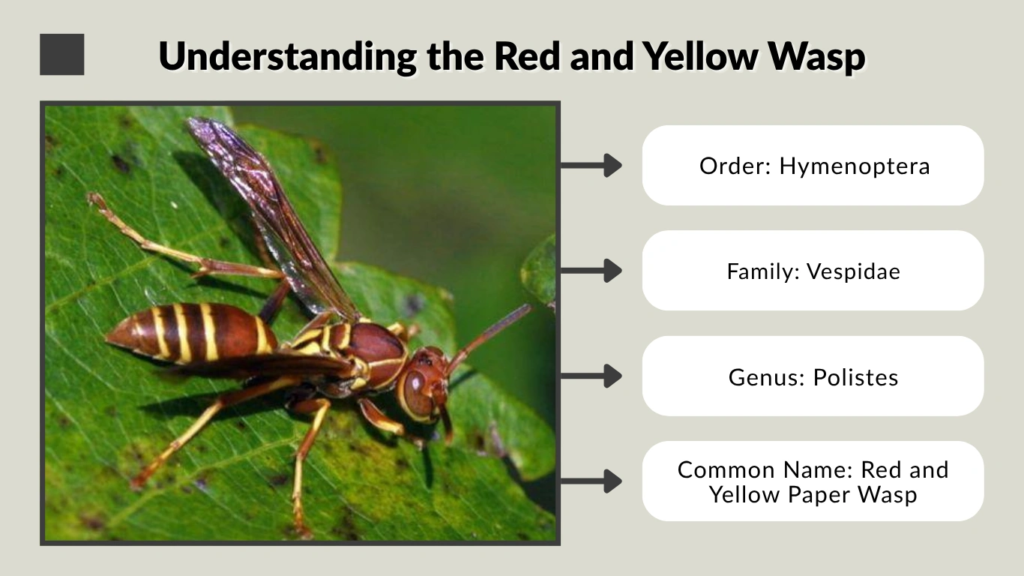
The term red and yellow wasp doesn’t refer to a single species but rather to a group of wasps in the Polistes genus — commonly known as paper wasps. These wasps get their name from the papery nests they build out of chewed wood pulp and saliva. Their bodies feature a striking mix of red, yellow, and black, giving them a warning appearance to predators and making them easy to confuse with more aggressive species like yellow jackets.
The most common red and yellow paper wasp in the U.S. is Polistes carolina, found across southern states. Its bright body, long legs, and smooth flight pattern make it one of the most recognizable paper wasps in North America.
Scientific Classification
- Kingdom: Animalia
- Order: Hymenoptera
- Family: Vespidae
- Genus: Polistes
- Common Name: Red and Yellow Paper Wasp
These wasps are social insects that live in small colonies, building open nests under sheltered areas such as eaves, porches, and tree branches.
Identification and Appearance
Color and Markings
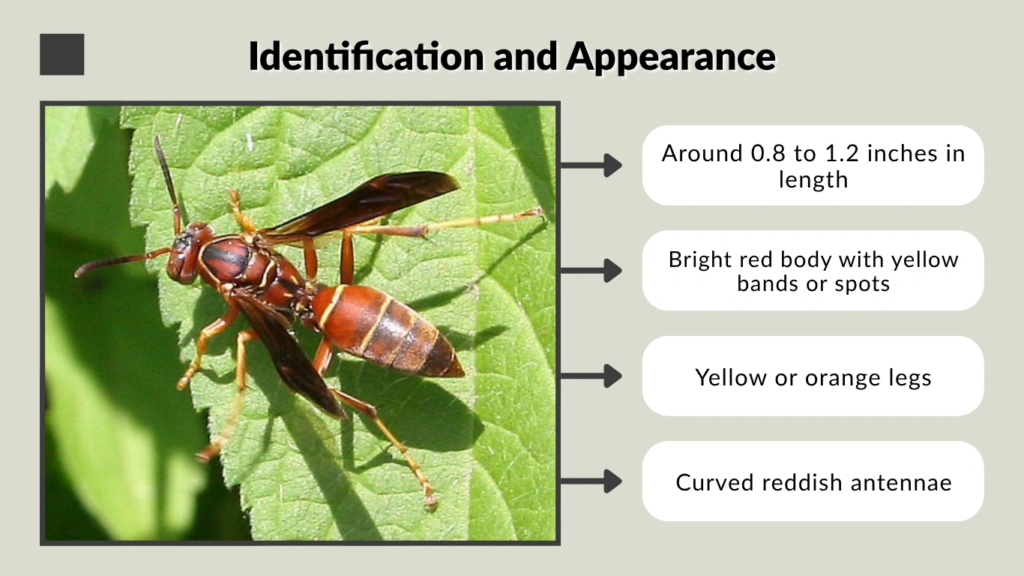
Red and yellow wasps are known for their vibrant color contrast. They usually have a reddish thorax with yellow stripes on the abdomen, often bordered with black. Their bodies are long and slender, measuring around 0.8 to 1.2 inches in length, with females being slightly larger. The wings are translucent brown or smoky black, folding lengthwise when the wasp is at rest.
Key Identification Features:
- Bright red body with yellow bands or spots
- Yellow or orange legs
- Curved reddish antennae
- Narrow “waist” between thorax and abdomen
- Long legs that hang below the body in flight
Their coloration is not just for show — it acts as aposematic signaling, warning predators of their ability to sting.
Regional Variations
Red and yellow wasps occur in multiple regions, displaying slight color differences depending on climate and environment:
- Texas: Home to large red-yellow paper wasps with yellow legs and faces.
- Florida & Georgia: Smaller wasps with brighter yellow stripes and orange legs.
- California: Red and yellow species adapted to drier climates.
- Europe (Greece & Italy): Red-yellow wasps often mistaken for hornets due to their thicker bodies and darker wings.
These variations reflect regional adaptations in color intensity and size, allowing wasps to blend better with local environments.
Distribution and Habitat
Where They Are Found
The red and yellow wasp thrives in warm and humid climates, making it especially common in the southern United States. It is widely found in:
- Texas, Alabama, Georgia, and Florida
- Tennessee, Missouri, and the Carolinas
- Occasionally seen in California, Italy, and China
In northern areas, these wasps appear mostly during late spring and summer when temperatures are suitable for nest building and foraging.
Preferred Nesting Sites
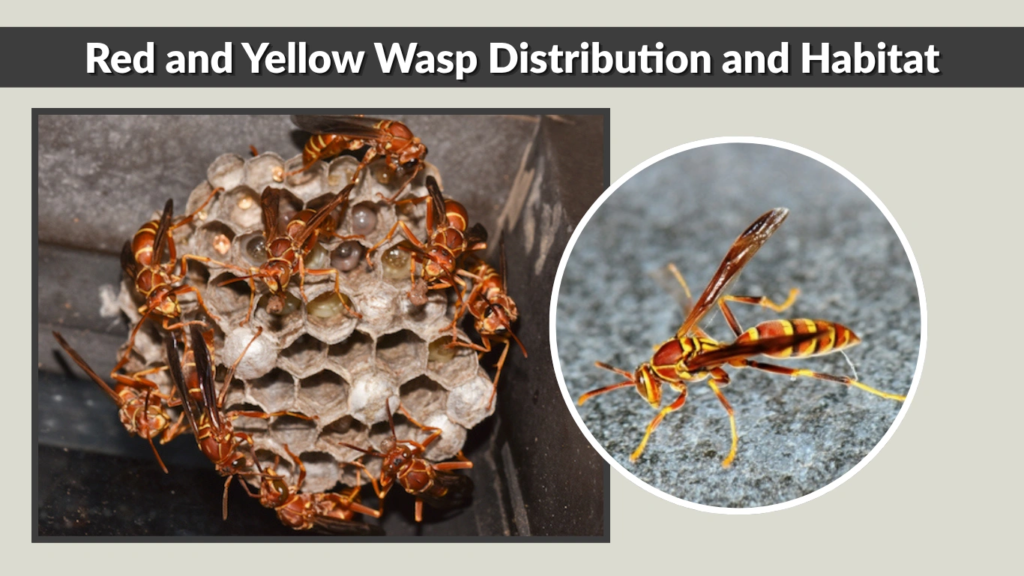
Red and yellow paper wasps prefer sheltered outdoor spaces that protect their nests from wind and rain. Common nesting areas include:
- Roof eaves and porch ceilings
- Barn rafters and shed interiors
- Tree branches and shrubs
- Attics, overhangs, and fence corners
Their nests are typically positioned high off the ground, away from predators and moisture. Since these areas are often near human dwellings, red and yellow wasps can unintentionally come into close contact with people.
Life Cycle and Nesting Behavior
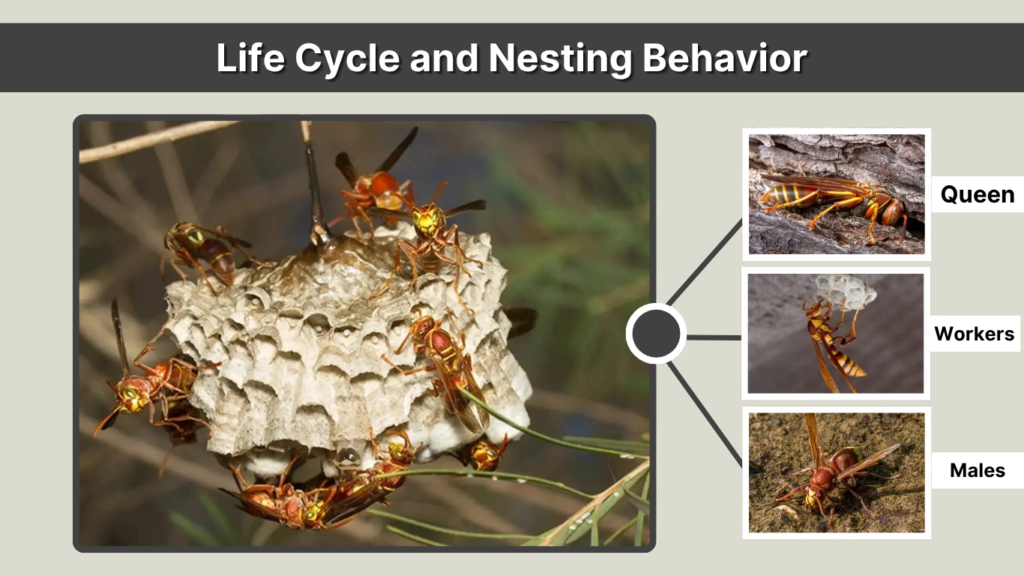
Colony Structure
Like other social wasps, the red and yellow wasp’s colony is built around a hierarchy:
- Queen: The founder and main egg layer.
- Workers: Female wasps that build nests, gather food, and protect the colony.
- Males (Drones): Appear later in the season for mating and die soon afterward.
A typical colony starts small — one queen beginning a new nest — and can grow to house 20–100 individuals by late summer.
Nest Description
Red and yellow wasps are famous for their umbrella-shaped nests made from a mix of chewed wood fibers and saliva. The nests have open hexagonal cells, unlike the enclosed ball-like nests of hornets.
Each nest is anchored by a thin stalk known as a pedicel, which helps prevent ants and predators from reaching the cells.
Nests are typically grayish-brown and can measure up to 6 inches across in mature colonies.
Life Cycle Stages
- Spring: Overwintered queens emerge and begin constructing small nests.
- Early Summer: Eggs hatch into larvae, which are fed chewed insects by the queen.
- Mid-Summer: Workers take over nest duties as the queen focuses on laying eggs.
- Late Summer/Fall: New queens and males are produced.
- Winter: Males die, and fertilized queens hibernate until the next spring.
Red and Yellow Wasp Lifespan
- Workers: 4–6 weeks
- Males: 1–2 weeks after mating
- Queens: Up to 1 year
Each year, a new generation of queens ensures the survival of the species.
Behavior and Temperament
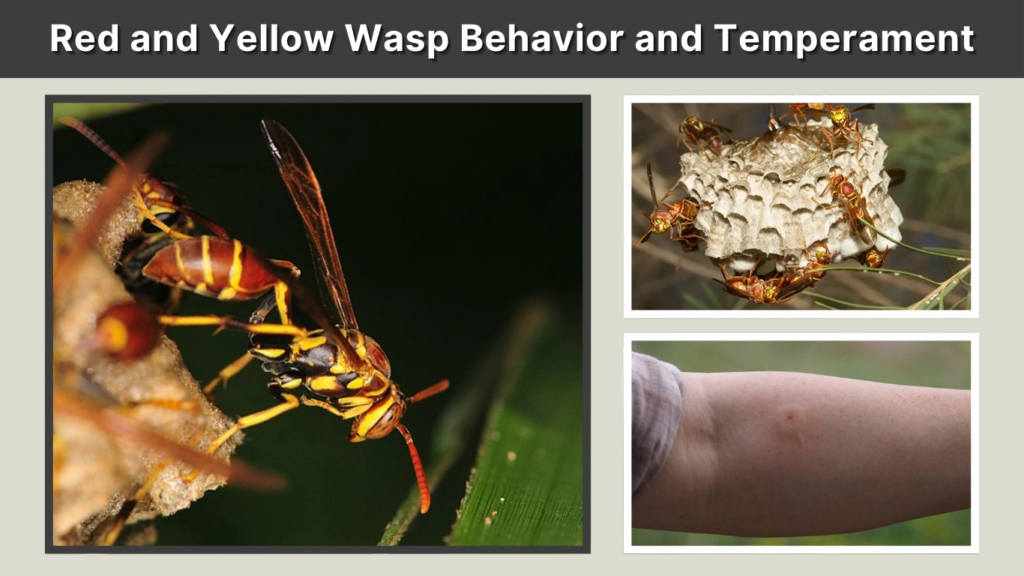
Are Red and Yellow Wasps Aggressive?
Red and yellow wasps are not naturally aggressive but can become defensive if their nest is disturbed. They are territorial and will sting to protect their colony, especially in late summer when the population peaks. These wasps typically give warning flights or loud buzzing before attacking.
Defensive Behavior
When threatened, a single wasp releases alarm pheromones to alert others. This can quickly lead to a swarm-like defense response if a nest is directly threatened. However, away from their nests, red and yellow wasps usually ignore humans and continue foraging peacefully.
Diet and Ecological Importance
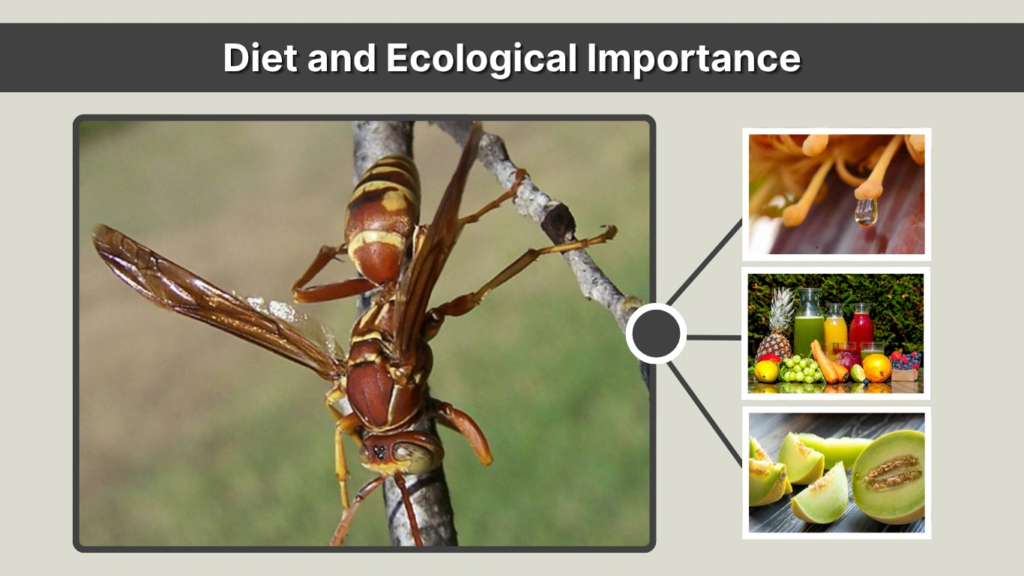
What Do Red and Yellow Wasps Eat?
Adult red and yellow wasps primarily feed on nectar, fruit juices, and honeydew, making them helpful pollinators. Their larvae, on the other hand, are fed chewed-up insects, including caterpillars, beetles, and flies. This makes them beneficial for natural pest control in gardens and farms.
Predators
Despite their stings, red and yellow wasps are preyed upon by:
- Birds (flycatchers and sparrows)
- Reptiles (frogs and lizards)
- Insects (praying mantises and spiders)
Humans also play a major role in reducing populations through pesticide use and nest removal.
Red and Yellow Wasp Sting
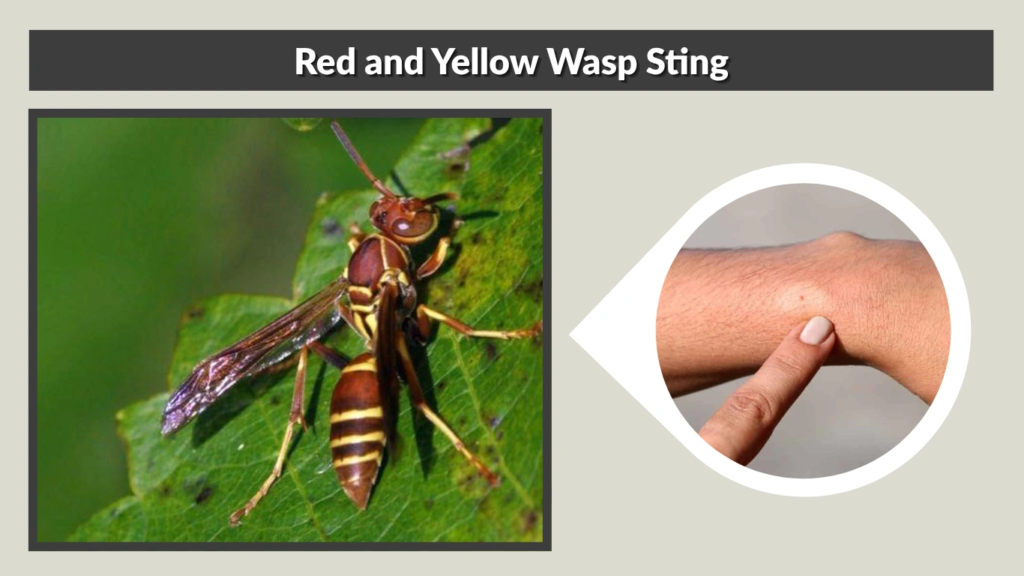
Pain and Reaction
A red and yellow wasp sting is sharp, burning, and immediate — described by many as a quick electric shock. On the Schmidt Pain Index, it scores between 2.0 and 2.5, similar to a yellow jacket’s sting but less persistent.
Typical symptoms include:
- Instant pain and redness
- Localized swelling or a raised bump
- Warmth and tenderness around the sting site
- Mild itching or irritation that lasts a few hours
Most stings are not serious, but those allergic to wasp venom may experience severe reactions requiring immediate medical care.
Allergic Reactions and When to Seek Help
Some individuals develop an allergic response to the venom’s proteins. Symptoms may include:
- Difficulty breathing or swallowing
- Swelling of the face, tongue, or throat
- Rapid heartbeat and dizziness
- Hives or widespread itching
If any of these occur, call emergency services immediately. People with known allergies should carry an EpiPen or prescribed antihistamine for emergencies.
Treatment and First Aid
For most people, home treatment is sufficient to manage pain and swelling.
Follow these steps:
- Clean the area with soap and warm water to remove surface venom.
- Apply ice or a cold pack for 10–15 minutes to reduce swelling.
- Take oral antihistamines such as Benadryl to minimize itching.
- Apply a topical cream like hydrocortisone for inflammation.
- Avoid scratching the sting site to prevent infection.
If swelling or pain worsens after 24 hours, seek medical attention.
Home Remedies for Relief
Several natural remedies can provide soothing relief:
- Baking Soda Paste: Neutralizes the venom and reduces pain.
- Aloe Vera Gel: Cools the skin and promotes healing.
- Honey: Acts as a natural antibacterial agent.
- Vinegar or Lemon Juice: Helps neutralize venom acids.
- Cucumber Slices or Potato Juice: Naturally draw out heat and swelling.
Use these remedies several times a day for comfort and faster recovery.
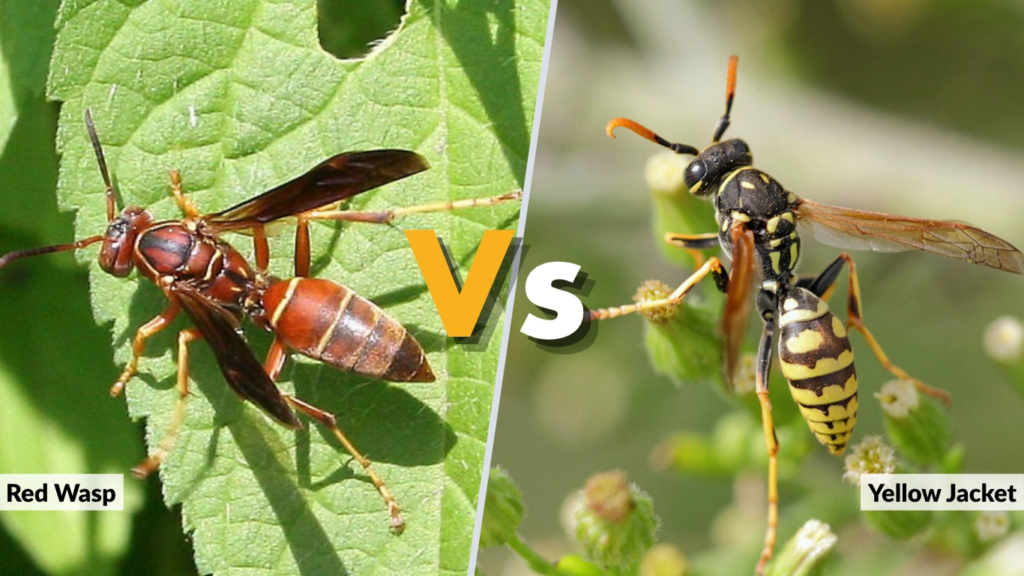
Comparison: Red Wasp vs Yellow Jacket
Physical Differences
Although both have bold color patterns, red wasps and yellow jackets are easy to tell apart upon closer inspection.
| Feature | Red Wasp | Yellow Jacket |
| Color | Reddish thorax with yellow bands | Bright yellow with black stripes |
| Body Type | Long, slender, narrow waist | Short, compact body |
| Nest Type | Open paper nest under eaves | Enclosed nest underground or in walls |
| Aggression Level | Moderate | High |
| Common Locations | Roofs, attics, porches | Ground burrows, wall cavities |
Aggression and Sting
Red and yellow wasps are defensive, not aggressive, while yellow jackets are highly aggressive and sting repeatedly when provoked. Red wasps usually sting once and retreat, while yellow jackets attack in groups, making their stings more dangerous in numbers.
Which Is Worse?
- Pain: Both are painful, but yellow jackets deliver multiple stings in quick succession.
- Danger: Red wasp stings are usually mild unless allergic; yellow jacket stings pose a greater medical risk.
- Behavior: Red wasps prefer to avoid humans, while yellow jackets often hover near food and trash, increasing conflict risk.
Conclusion: Yellow jackets are generally more aggressive and harmful, but red wasps can still cause painful stings if disturbed.
Control and Prevention
How to Get Rid of Red and Yellow Wasps
Preventing infestation is easier than removing active nests. To manage red and yellow wasps safely:
- Inspect eaves, attics, and decks in early spring when queens begin nesting.
- Remove small nests before colonies grow larger.
- Use a long-range wasp spray at night when wasps are inactive.
- Wait 24 hours after spraying before removing the nest with a broom or stick.
- Always wear protective clothing (long sleeves, gloves, goggles).
For large infestations or hard-to-reach nests, contact a licensed pest control professional.
Natural Repellents
If you prefer chemical-free options, use natural deterrents to keep wasps away:
- Peppermint Oil: A few drops mixed with water and dish soap works as a natural repellent.
- Vinegar Spray: Equal parts vinegar and water sprayed around nests or entryways deters wasps.
- Citrus Peels: Placing lemon or orange peels around patios keeps wasps away.
- Fake Wasp Nests: Wasps are territorial; decoy nests prevent them from settling nearby.
Preventing Nests
- Seal cracks and holes around rooflines, vents, and attic spaces.
- Keep garbage lids tightly closed.
- Remove fallen fruit or food scraps from your yard.
- Check porches and sheds frequently during early summer for nest formation.
Ecological Benefits and Risks
Benefits
Despite their painful sting, red and yellow wasps are beneficial insects.
- Pollination: Feed on nectar, aiding in plant reproduction.
- Pest Control: Hunt caterpillars and flies that damage crops.
- Ecosystem Balance: Provide food for birds, spiders, and other predators.
Risks
- Can sting humans or pets near nests.
- Trigger allergic reactions in sensitive individuals.
- Nesting in home structures may create safety hazards.
When managed properly, these wasps are more friend than foe, contributing positively to the environment.
Interesting Facts
- Red and yellow wasps are capable of recognizing individual faces, helping them identify colony members.
- Only female wasps can sting; males are harmless.
- Their nests are made from wood pulp, giving them a thin, papery texture.
- They release chemical pheromones to alert the colony during danger.
- Despite their aggressive reputation, they are vital pollinators in many ecosystems.
FAQs
Are red and yellow wasps aggressive?
Not typically. They only sting when their nest is disturbed or they feel threatened.
How painful is a red and yellow wasp sting?
Moderately painful — similar to a bee sting, but the burning sensation fades within an hour.
Do red and yellow wasps live in Texas and Florida?
Yes, they are common in southern U.S. states with warm climates, especially in residential areas.
How can I prevent them from nesting near my home?
Seal small openings, remove old nests in spring, and use peppermint or vinegar-based repellents.
Are red and yellow wasps beneficial?
Yes. They help control pest populations and pollinate plants, making them ecologically valuable.
