
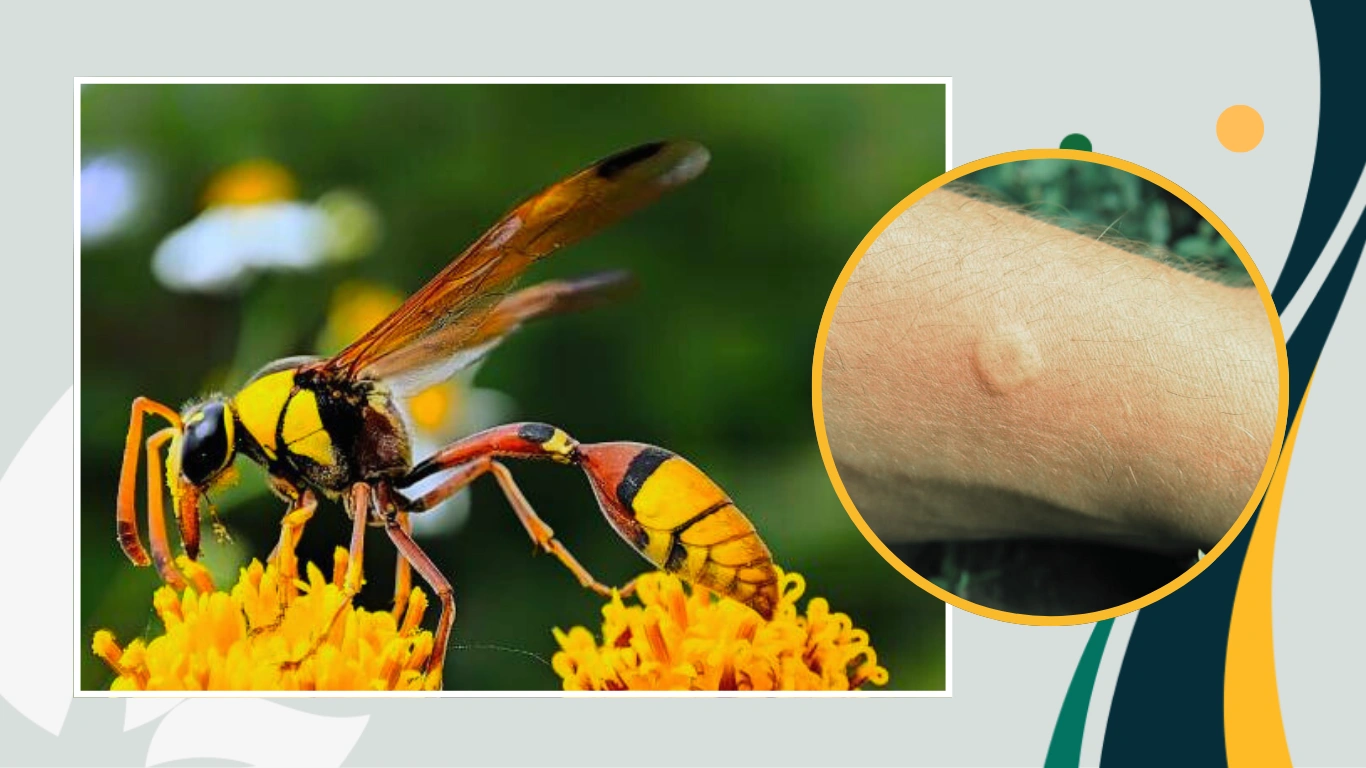
Potter wasps are often spotted in gardens, fields, and wooded areas, crafting delicate mud nests and hunting small insects. Their wasp-like appearance and bold colors—sometimes red or yellow—can make them seem threatening. But are potter wasps truly dangerous to humans? The short answer is no.
These solitary insects are rarely aggressive and only sting under specific conditions. In this detailed guide, we’ll explain how dangerous potter wasps really are, whether they sting, how painful their sting is, and how to stay safe around them.
What Are Potter Wasps?

Potter wasps belong to the subfamily Eumeninae, part of the Vespidae family, which also includes paper wasps and hornets. However, unlike their social cousins, potter wasps are solitary insects. They get their name from the beautiful, pot-shaped nests they construct out of mud, often attached to walls, tree branches, or rocks.
Are Potter Wasps Dangerous to Humans?

Despite their intimidating appearance, potter wasps are not dangerous to humans. They are non-aggressive and only sting when physically handled, stepped on, or cornered. Unlike hornets or yellowjackets, potter wasps do not defend their nests aggressively and are not territorial.
Why They’re Considered Safe:
- Do not form swarms or attack in groups
- Rarely sting unless provoked
- Focus on hunting prey for their larvae
- Not defensive of their nests
In essence, potter wasps mind their own business. You can often observe them up close without any threat, especially when they’re collecting nectar or building a nest.
Do Potter Wasps Sting?
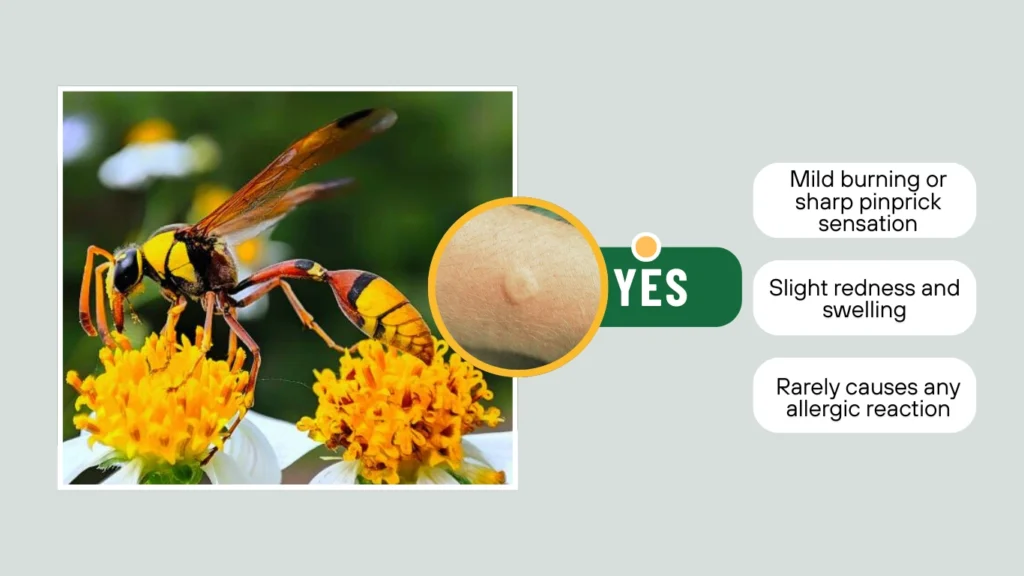
Yes, female potter wasps can sting, but it’s very unlikely unless you try to grab or squash them. The primary purpose of their sting is to paralyze prey, not for self-defense.
Sting Details:
- Used for hunting, not aggression
- Males cannot sting at all
- Pain level is mild—much less than a bee or hornet sting
Symptoms of a Potter Wasp Sting:
- Mild burning or sharp pinprick sensation
- Slight redness and swelling
- Rarely causes any allergic reaction
Most people recover from a sting quickly with no treatment needed beyond basic care.
Are Potter Wasps Aggressive?

No, potter wasps are extremely non-aggressive. Unlike paper wasps or hornets, which defend their communal nests with stinging attacks, potter wasps live alone and have no instinct to guard territory.
Typical Behavior:
- Shy and solitary
- Will fly away when approached
- Unlikely to sting even near their nest
- Do not hover aggressively like some wasps
Even when disturbed near their nests, potter wasps will almost always retreat rather than attack.
Are Red and Yellow Potter Wasps More Dangerous?
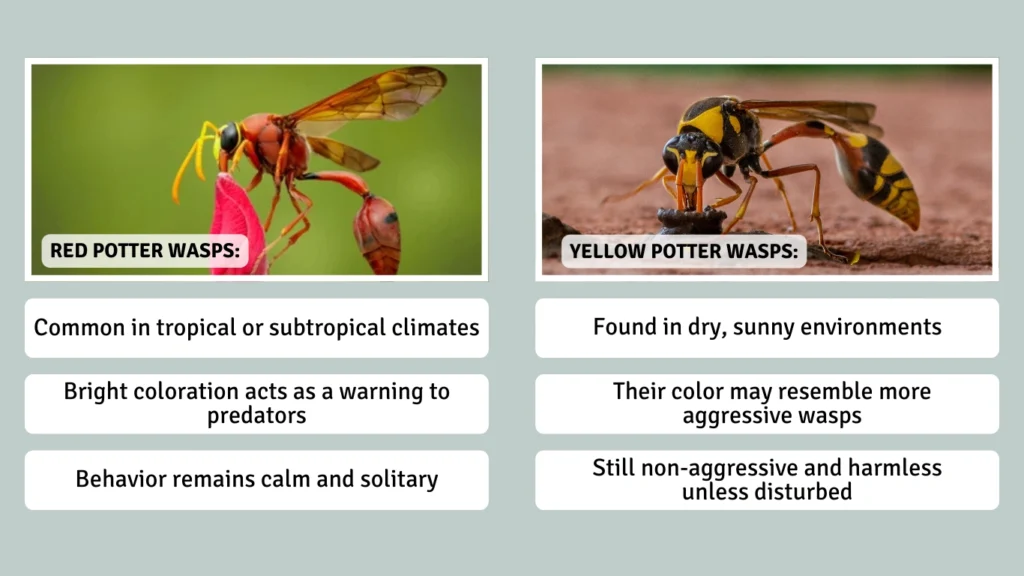
Many people fear red or yellow wasps more due to their bright coloration, which often serves as a warning in nature. However, color does not indicate aggression or danger in potter wasps.
Red Potter Wasps:
- Common in tropical or subtropical climates
- Bright coloration acts as a warning to predators
- Behavior remains calm and solitary
Yellow Potter Wasps:
- Found in dry, sunny environments
- Their color may resemble more aggressive wasps
- Still non-aggressive and harmless unless disturbed
Whether black, red, or yellow, potter wasps of all types follow the same peaceful behavior and should not be feared.
How Dangerous Are Potter Wasps Compared to Other Wasps?
Let’s compare potter wasps with other common wasps:
| Wasp Type | Aggression Level | Sting Pain | Nest Behavior |
| Potter Wasp | Low | Mild | Solitary mud nests |
| Paper Wasp | Medium | Moderate | Defend communal nests |
| Yellowjacket | High | Strong | Highly territorial |
| Hornet | High | Very Painful | Swarm when threatened |
As shown in the table, potter wasps are the least dangerous among commonly seen wasp types.
How to Stay Safe Around Potter Wasps
Even though they are not dangerous, here are some simple safety tips when you notice potter wasps in your surroundings:
- Do not swat or wave at them – this can provoke a sting.
- Avoid disturbing their mud nests, especially while they are actively building.
- Observe from a safe distance if you’re curious about their behavior.
- Be cautious while gardening – potter wasps may be flying low or resting on plants.
If you give them space, they’ll continue their important work without any interaction.
What Should You Do If You’re Stung by a Potter Wasp?
While potter wasp stings are rare and usually mild, here’s what to do if one happens to sting you:
First Aid for Potter Wasp Stings:
- Wash the area with soap and water to reduce the chance of infection.
- Apply a cold compress to reduce swelling and relieve discomfort.
- Use antihistamine cream or calamine lotion for itchiness.
- Take ibuprofen or acetaminophen if the area is sore.
Seek medical help if:
- You experience severe allergic reactions (trouble breathing, dizziness, rapid swelling).
- The sting site becomes infected or worsens over time.
For most people, a potter wasp sting is no worse than a mosquito bite.
FAQs
Do potter wasps chase people?
No, potter wasps don’t chase people. They are solitary and non-aggressive. Even if you walk near their nest, they usually fly away rather than attack. Unlike hornets or yellowjackets, they don’t defend territory or swarm humans.
Can potter wasps sting multiple times?
Yes, potter wasps can sting more than once because their stingers are smooth. However, they rarely sting unless physically threatened. Their sting is mainly used for paralyzing prey, not for defending themselves or attacking humans.
Are potter wasps good for gardens?
Yes, potter wasps are beneficial in gardens. They hunt caterpillars and harmful larvae, reducing plant damage. They also feed on flower nectar, helping with light pollination. Their presence helps maintain a healthy garden ecosystem naturally.
What happens if you destroy a potter wasp nest?
If their nest is destroyed, potter wasps won’t retaliate or become aggressive. Instead, they usually leave the area and rebuild elsewhere. Since they don’t live in colonies, they have no reason to defend their nests aggressively.
How do I identify a potter wasp nest?
Potter wasp nests look like tiny mud pots or vases. They’re smooth, round, and often attached to walls, tree branches, or rocks. Each nest contains one wasp egg and several paralyzed caterpillars for the larva to eat.
