
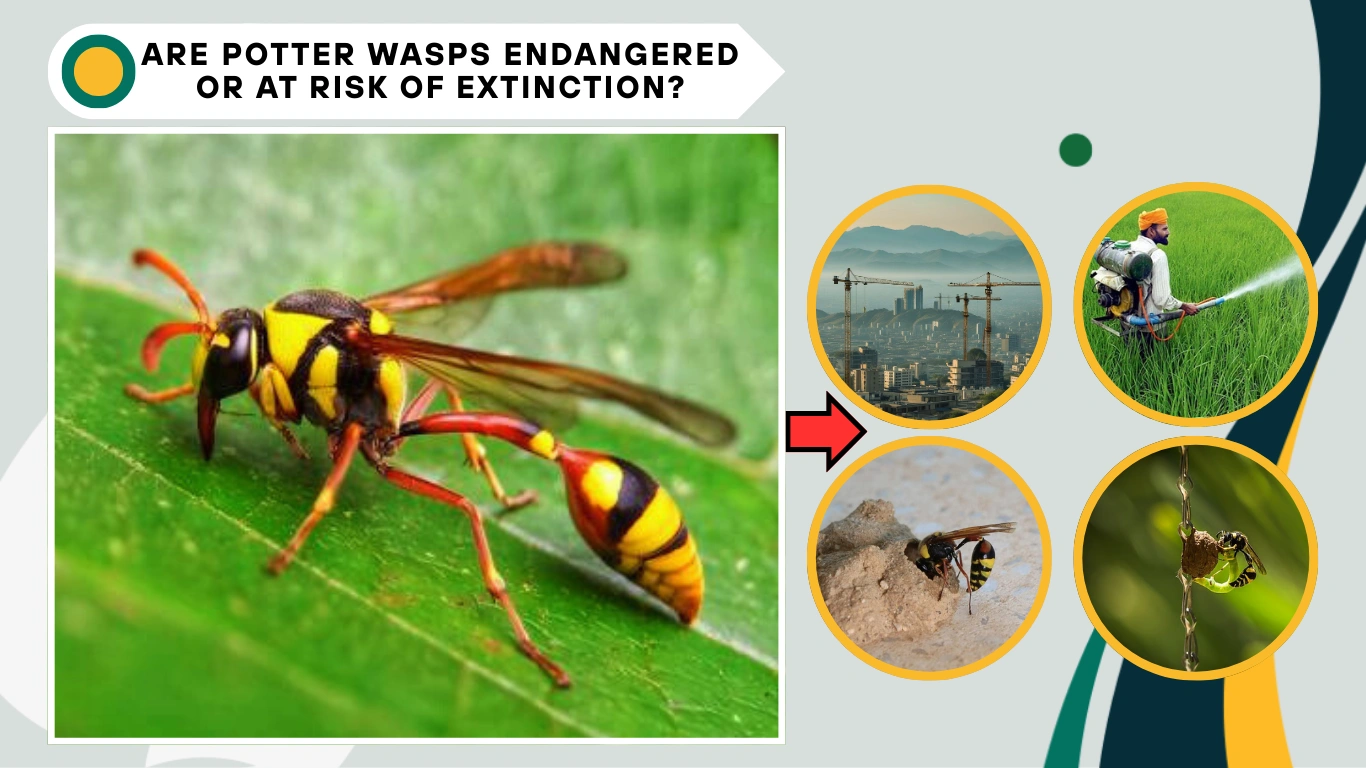
Potter wasps are often admired for their delicate mud-pot nests and quiet behavior, especially among gardeners and insect lovers. These solitary wasps play an important ecological role, especially in pest control and pollination. But as we lose green spaces and increase pesticide use, a common question arises: Are potter wasps endangered? In this article, we’ll take a close look at their current conservation status, major threats, and whether their population is at risk of extinction.
What Are Potter Wasps?
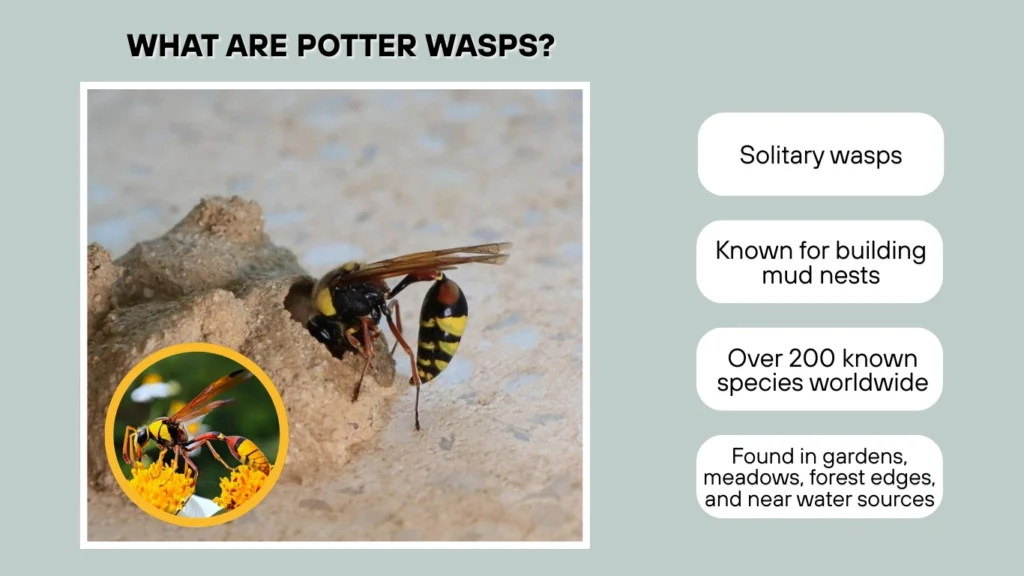
Potter wasps belong to the subfamily Eumeninae, under the family Vespidae. Unlike social wasps, they live and work alone, constructing their nests from mud. The shape of these nests often resembles small clay pots, giving them their name.
Key Characteristics:
- Solitary wasps
- Known for building mud nests
- Over 200 known species worldwide
- Found in gardens, meadows, forest edges, and near water sources
Potter wasps are non-aggressive and are rarely a threat to humans. Instead, they help control pests by hunting caterpillars and other soft-bodied insects to feed their larvae.
Are Potter Wasps Endangered?

As of now, potter wasps are not globally classified as endangered species. Most species within the Eumeninae subfamily are widespread and considered stable. However, it’s essential to note that many insect populations are declining across the globe due to habitat loss, pollution, and climate change—and potter wasps are not immune to these pressures.
Conservation Status:
- Not listed on the IUCN Red List as endangered
- No specific legal protections in most countries
- Some rare species with narrow geographic ranges may be at local risk
Though potter wasps are not officially endangered, environmental changes are affecting their habitats and food sources, which may lead to population decline in certain regions.
Regional Variations in Population
Potter wasp populations vary widely depending on the region:
- In Urban Areas: These wasps are less common due to concrete landscapes, lack of flowers, and heavy pesticide use.
- In Rural and Natural Areas: Populations remain stronger where wildflowers, mud, and prey are more abundant.
- In Agricultural Zones: Intensive farming practices can drastically reduce numbers due to chemical use and habitat disturbance.
Thus, while global extinction is not currently a concern, local extinction or population drops are a real possibility, especially in regions undergoing rapid environmental changes.
Threats to Potter Wasps
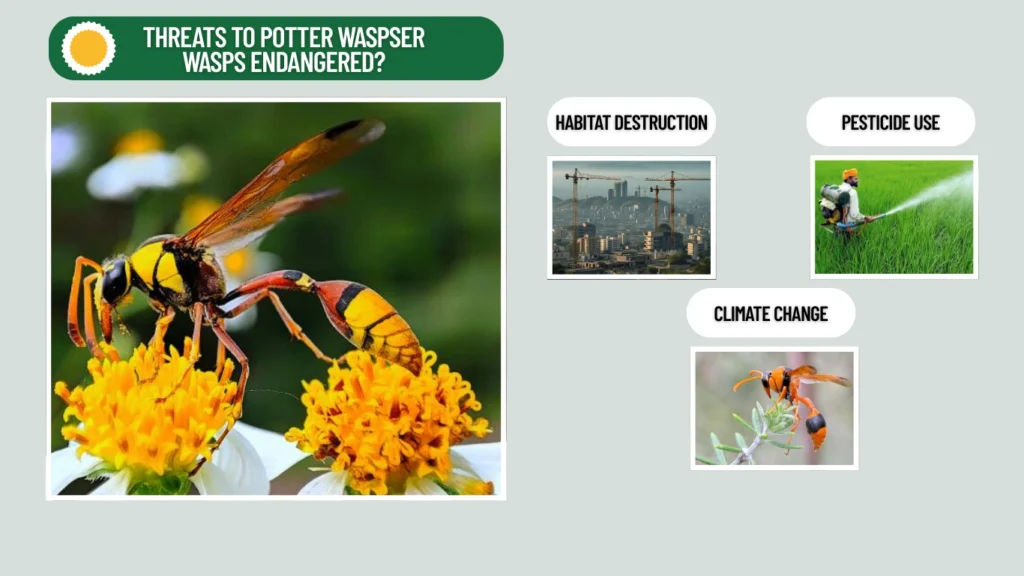
Several threats contribute to the potential decline in potter wasp numbers:
1. Habitat Destruction
- Urban development reduces natural nesting areas.
- Loss of flowering plants limits food sources for adults.
- Removal of moist, clay-rich soil makes nest-building harder.
2. Pesticide Use
- Insecticides and herbicides are highly toxic to potter wasps.
- Prey insects are also eliminated, depriving larvae of food.
- Even low exposure can impact reproductive success.
3. Climate Change
- Shifts in weather patterns affect prey availability.
- Temperature extremes can shorten the wasps’ active season.
- Droughts reduce access to mud for nest building.
4. Predation and Competition
- Invasive species may outcompete them for food or nesting spots.
- Parasitic wasps may target their nests and offspring.
These combined pressures can lead to localized declines, especially if suitable conditions are no longer available.
Are Any Specific Potter Wasp Species at Risk?

While most potter wasps are not endangered, some lesser-known or isolated species might face higher risks:
- Island populations or species with narrow habitats may be more vulnerable.
- Data on many potter wasp species is limited, making it difficult to assess their true conservation status.
- Some species may already be under pressure without formal monitoring.
There’s a clear need for more insect-specific conservation research to understand which species may require protection.
Conservation and How You Can Help
Although there are no global conservation programs focused specifically on potter wasps, general pollinator and insect-friendly initiatives can support their survival.
Global and Local Conservation Actions:
- Pollinator-friendly garden campaigns
- Organic farming and pesticide reduction programs
- Insect biodiversity monitoring and citizen science projects
What You Can Do:
- Avoid using chemical pesticides or herbicides.
- Plant native flowering plants to provide nectar for adults.
- Leave patches of bare, moist soil where they can gather mud for nests.
- Protect existing mud nests when you find them—don’t destroy them.
- Support conservation organizations that promote insect diversity.
These small actions can make a big difference in ensuring potter wasps continue to thrive in your area.
FAQs
Are potter wasps protected by law?
Currently, no specific legal protections exist for potter wasps in most regions. However, broader pollinator protection policies indirectly benefit them.
Can I report potter wasp sightings for research?
Yes! Many citizen science platforms like iNaturalist accept reports of insect sightings, helping researchers track populations and biodiversity.
Will the extinction of potter wasps affect the ecosystem?
Yes. Potter wasps help control caterpillar pests and also assist in pollination. Their loss could lead to imbalanced insect populations and reduced plant diversity.
Do any labs or zoos protect or study potter wasps?
While not common in zoos, potter wasps are sometimes studied in academic research labs, especially in studies on parasitic behavior, insect evolution, and biological pest control.
Are potter wasps included in pollinator protection acts?
Most pollinator acts focus on bees and butterflies, but potter wasps benefit from these initiatives through habitat conservation and pesticide reduction.
Final Thoughts
Potter wasps are not currently listed as endangered species, but that doesn’t mean their survival is guaranteed. Like many beneficial insects, their numbers can decline rapidly under environmental pressure. By understanding their importance and supporting eco-friendly practices, we can help ensure these quiet garden protectors continue to thrive in the wild. Their presence is a sign of a healthy, balanced ecosystem—and one that’s worth preserving.
