

Potter wasps are solitary hunters known for their beautifully sculpted mud nests and sharp hunting skills. But their intricate behavior doesn’t end there—these tiny predators have a fascinating diet that supports both their survival and the development of their young. In this detailed guide, you’ll discover exactly what potter wasps eat, how they hunt, and where they prefer to live.
We’ll also cover 12 specific food sources they love and how they find and prepare them. Whether you’re a gardener, student, or nature enthusiast, this article offers an up-close look into the life of potter wasps.
What Do Adult Potter Wasps Eat?

While the name “wasp” may suggest a fearsome stinger, adult potter wasps are mostly peaceful nectar feeders.
1. Nectar
The main food source for adult potter wasps is flower nectar. This sugary liquid fuels their energy for flight, hunting, and nest building. You’ll often spot them hovering around wildflowers or garden plants.
2. Honeydew
Potter wasps are also attracted to honeydew, a sticky substance secreted by aphids and other plant-sucking insects. It serves as a secondary sugar source, especially when flowers are scarce.
3. Overripe Fruit
In some cases, adults feed on juice from rotting or overripe fruits, such as fallen apples or plums in a garden.
Though adults consume sweet liquids, their hunting instincts are triggered mainly for provisioning their offspring.
What Do Potter Wasp Larvae Eat?

Potter wasps are not just gatherers—they’re skilled predators. Their young (larvae) require a protein-rich diet to grow, and adults ensure this by hunting and storing live prey inside their nests.
Larval Diet Highlights:
- Paralyzed Caterpillars: The top choice, usually from moth species.
- Beetle Larvae: Soft-bodied and easy to subdue.
- Leafrollers and Sawfly Larvae: Found in trees and garden shrubs.
The prey is always paralyzed, not killed, so that it stays fresh when the wasp larvae begin feeding.
12 Foods Potter Wasps Eat or Hunt
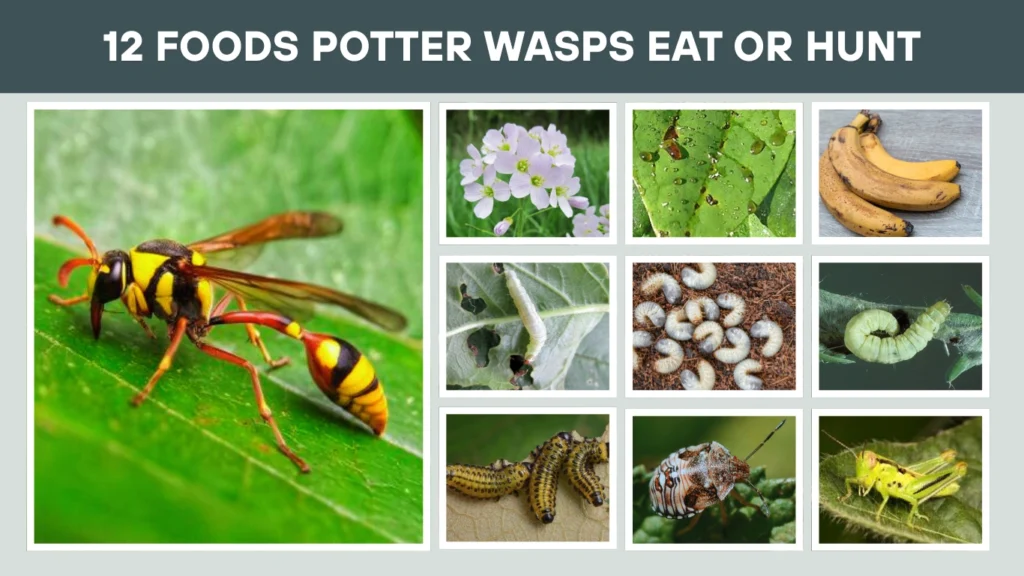
Below is a detailed list of their food sources and preferred prey, categorized by adult and larval diets:
| # | Food Source | Target Stage | Notes |
| 1 | Nectar from wildflowers | Adult | Primary energy source |
| 2 | Aphid honeydew | Adult | Sourced from infested plants |
| 3 | Overripe fruit juice | Adult | Secondary sugar intake |
| 4 | Caterpillars (moth species) | Larvae | Most frequently hunted prey |
| 5 | Beetle larvae | Larvae | Found under leaves and logs |
| 6 | Leafroller larvae | Larvae | Common in orchards |
| 7 | Sawfly larvae | Larvae | Present on ornamental trees |
| 8 | True bug nymphs | Larvae | Soft-bodied and small-sized prey |
| 9 | Grasshopper nymphs (rare) | Larvae | Occasionally hunted, harder to subdue |
| 10 | Spiderlings (tiny spiders) | Larvae | Found under leaf litter or bark |
| 11 | Moth larvae | Larvae | Preferred for ease of capture |
| 12 | Soft-bodied pests | Larvae | Generalist targets in gardens |
These food sources support both the survival of adults and the growth of larvae during the nesting season.
How Do Potter Wasps Hunt?
Potter wasps use a remarkable strategy to capture prey for their larvae. Here’s a look at how they do it:
Hunting Technique
- Potter wasps locate soft-bodied insects, mostly caterpillars.
- They sting the prey, injecting venom that paralyzes but does not kill.
- The paralyzed insect is dragged or flown back to the nest.
Nest Provisioning
- The prey is placed into a mud pot nest, where the wasp lays a single egg.
- After sealing the pot, the larva hatches and begins feeding on the fresh, paralyzed prey.
- The food is consumed gradually, allowing the larva to grow before pupation.
This method keeps the food fresh and reduces the risk of decay or contamination inside the nest.
Hunting Style of Potter Wasps
Potter wasps are solitary hunters and rely on visual cues to find suitable prey. They don’t operate in groups and are not aggressive toward humans unless threatened.
Characteristics of Their Hunting Style:
- Precise stingers that paralyze without killing.
- Hovering and scanning plants for larvae and soft-bodied insects.
- Quick flight for catching and transporting prey.
Unlike social wasps that work in colonies, potter wasps handle every stage of hunting and nest-building alone.
Where Do Potter Wasps Live?
Potter wasps are adaptable and can be found in various habitats as long as there’s mud to build nests and prey to hunt.
Common Habitats:
- Gardens and orchards
- Forest edges and meadows
- Near water sources like ponds or streams
- Around buildings, fences, and rocky areas
Nesting Preferences:
- Prefer sunny, warm, and sheltered spots
- Use clay-rich soil to build their signature mud pot nests
- Common places include tree branches, under leaves, wall cracks, or even man-made structures
Their nests resemble tiny clay urns or jugs—giving them the name “potter” wasps.
FAQs About Potter Wasp Diet
1. What is the main food source for potter wasp larvae?
Potter wasp larvae primarily feed on paralyzed caterpillars or beetle larvae. The adult wasp stores these inside the mud nest, where the larva feeds until it pupates.
2. Do adult potter wasps eat insects too?
No, adult potter wasps do not consume insects. Instead, they feed on flower nectar, aphid honeydew, and other sugary plant liquids for energy.
3. How do potter wasps find their food?
Potter wasps rely on keen vision and flight agility to locate soft-bodied insect prey in gardens, shrubs, and meadows. Adults forage for nectar during the day.
4. Can potter wasps survive without insects?
Adult potter wasps can survive on nectar alone, but their larvae depend on a steady supply of insect prey. Without it, reproduction and survival of the next generation would fail.
5. Do potter wasps prefer any specific insect species?
Yes, they mainly target soft-bodied caterpillars, especially those of moths and butterflies, as well as beetle larvae. These are easy to paralyze and nutritious for developing larvae.
