

Warm nights and outdoor lights often attract large, buzzing beetles that seem to appear out of nowhere. These are June bugs, sometimes called June beetles, common throughout the United States during late spring and early summer. Though harmless to people, they can quickly become a problem when they invade lawns, gardens, and porches. Their larvae, known as grubs, cause major damage to turf and roots, while adults feed on foliage and ripe fruits. Learning how to get rid of June bugs naturally and effectively helps you protect your plants and restore balance to your yard.
Understanding June Bugs
June bugs are part of the scarab beetle family and include several species, with green June bugs (Cotinis nitida) and brown June bugs (Phyllophaga spp.) being the most common. They are nocturnal and drawn to bright lights, often flying around porches, windows, or garden lamps. Adults are active for about two months, but their underground larvae live nearly a year, feeding on roots and decaying vegetation before emerging the following summer.
They are not aggressive and do not bite or sting, but their large numbers can cause noticeable damage to plants and grass.
Signs of a June Bug Infestation

Detecting June bugs early prevents them from spreading. Key signs include:
- Dead or patchy grass: Caused by larvae eating turf roots.
- Increased wildlife activity: Birds, skunks, and raccoons dig up lawns looking for grubs.
- Damaged fruit or leaves: Adult beetles feed on peaches, grapes, and roses.
- Buzzing near lights: Heavy nighttime activity around outdoor bulbs.
If you see these symptoms, you may have both adult beetles and larvae nearby.
Why June Bugs Are a Problem
Adult June bugs feed on fruit, flowers, and leaves, but their larvae cause the most harm. Grubs chew through roots underground, creating dry, loose patches that peel up easily. Damaged lawns become prone to weeds and erosion.
They also attract predators like moles and raccoons that dig into the soil to find grubs, worsening lawn damage. Because their life cycle repeats annually, controlling them requires addressing both adult beetles and their underground larvae.
How to Get Rid of June Bugs Naturally

Natural control methods are the most sustainable way to manage June bugs. These techniques target the pests without harming pets, beneficial insects, or soil health.
Beneficial Nematodes
Beneficial nematodes are microscopic worms that naturally parasitize June bug grubs in the soil. Once applied to moist soil, they seek out larvae, enter their bodies, and release bacteria that kill them within days. They’re best applied during early morning or late afternoon when soil temperatures are cooler.
Milky Spore Powder
Milky spore is a biological control agent that infects June bug larvae and prevents them from reaching adulthood. It works gradually but provides protection for up to 10 years as the bacteria spread through the soil. Apply in late summer when larvae are near the surface.
Diatomaceous Earth
A natural powder made from fossilized algae, diatomaceous earth damages beetles’ exoskeletons, drying them out. Spread it around garden beds, porch areas, and soil surfaces where beetles land or crawl. Reapply after rainfall for best results.
Neem Oil Spray
Neem oil acts as both a repellent and a growth inhibitor. Mix with water and apply to leaves, stems, and soil near fruit trees and shrubs in the evening. It disrupts the beetles’ hormones and deters egg-laying females.
These natural remedies are effective without introducing harmful chemicals into your yard.
How to Get Rid of June Bugs in the House

While they usually stay outdoors, June bugs sometimes fly inside through open windows or doors. Removing them is simple:
- Turn off indoor and outdoor lights to make your home less attractive.
- Trap them gently using a glass or jar and release outside.
- Seal gaps around doors, screens, and vents.
- Keep porch lights off during peak activity at dusk.
Because June bugs are harmless, avoid crushing them indoors—doing so can produce an unpleasant odor and attract ants.
How to Get Rid of June Bugs Outside
June bugs thrive outdoors, especially in warm, moist environments. To control them effectively, focus on disrupting their habits and reducing breeding areas.
- Reduce lighting: Swap bright white bulbs for yellow or LED “bug lights” that attract fewer insects.
- Collect adults manually: In the early morning, when beetles are sluggish, shake them from plants and dispose of them in a bucket of soapy water.
- Encourage natural predators: Birds, bats, frogs, and toads feed on adult beetles and grubs.
- Avoid overwatering: Female June bugs prefer damp soil to lay eggs, so keeping lawns moderately dry helps deter them.
By combining these strategies, you can lower both adult and larval populations naturally.
How to Get Rid of June Bug Larvae
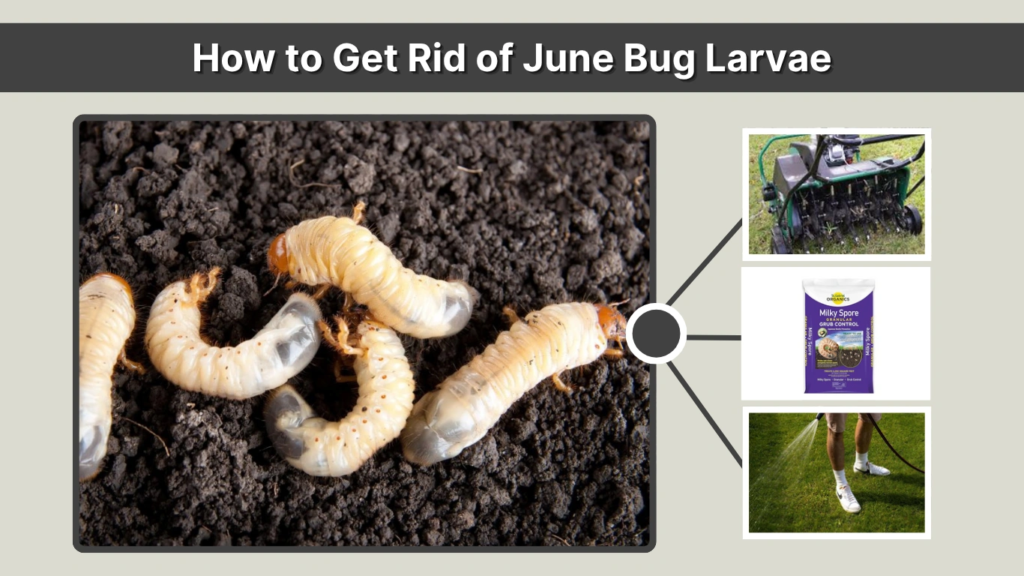
June bug larvae, or white grubs, live underground for months feeding on plant roots. They’re the most damaging stage of the insect’s life cycle.
Aerate the Lawn
Aeration improves oxygen and water flow to roots while disturbing grubs’ tunnels. This makes it harder for larvae to survive and easier for predators like birds to find them.
Apply Biological Controls
Both nematodes and milky spore work best against larvae. Use them when soil temperatures are mild, and moisture levels are consistent.
Reduce Thatch and Moisture
Thick thatch layers protect larvae from predators and chemicals. Dethatching in late spring exposes them to sunlight and dryness, which they can’t survive.
How to Get Rid of June Bugs at Night
June bugs are most active at night and are strongly attracted to light sources. Managing outdoor lighting is one of the simplest ways to control them.
Light Management Tips
- Turn off unnecessary porch or garden lights after sunset.
- Replace bulbs with yellow, sodium vapor, or LED lights that emit less UV.
- Use a light trap by hanging a white sheet with a bulb above a bucket of soapy water; the beetles will fly toward the light and fall into the water.
These methods are cost-effective and reduce nightly swarms around windows, patios, and pools.
June Bugs on Trees and Plants
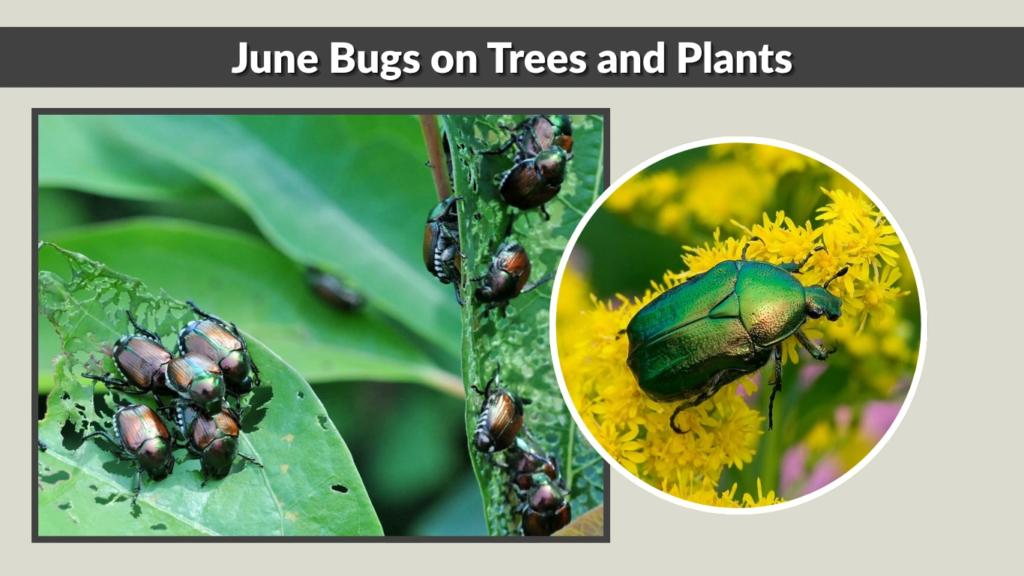
Adult June bugs sometimes chew leaves, flowers, or soft fruit. They target plants like peaches, figs, grapes, and roses. To protect your vegetation:
- Spray leaves with neem oil or garlic water to repel them.
- Collect beetles by hand early in the morning when they’re inactive.
- Cover fruit trees and plants with netting during peak activity hours.
- Trim dense branches to expose hiding areas to light and wind.
These preventive steps help safeguard gardens naturally while supporting healthy plant growth.
How to Get Rid of June Bugs Without Killing Them
If you prefer to repel June bugs rather than destroy them, there are several humane methods that work well. These options focus on discouraging them from gathering around your home while allowing them to continue their natural role in the environment.
Turn off outdoor lights early in the evening or replace them with yellow LED bulbs that are less visible to insects. Set up gentle capture traps using light and shallow containers to catch and relocate beetles away from your property. Maintain dry compost piles and cover decaying fruit since both attract egg-laying females. You can also plant natural deterrents such as lavender, mint, or rosemary near porches and garden edges to keep June bugs at a distance.
Brown vs Green June Bugs in Control
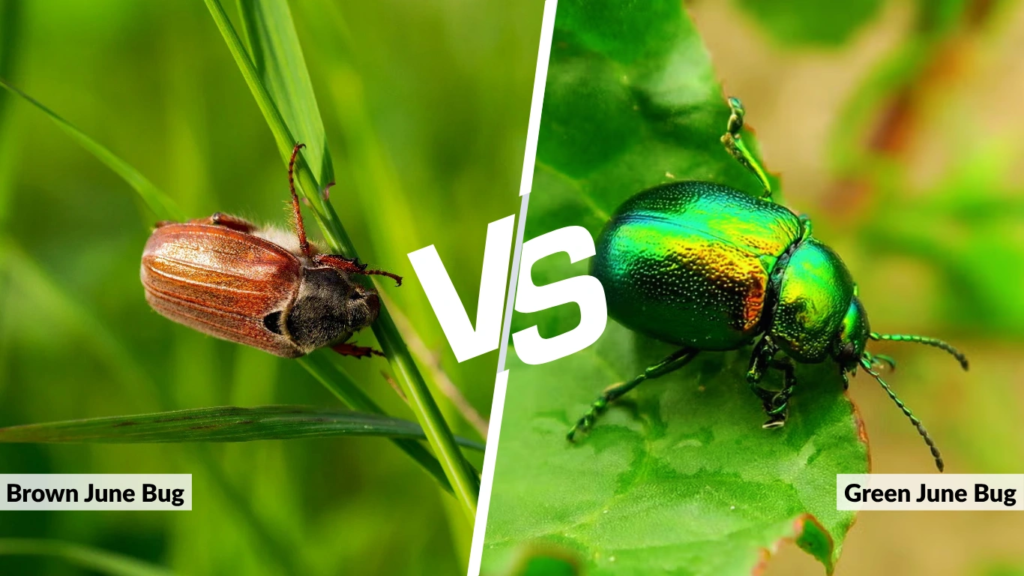
While both brown and green June bugs cause similar issues, knowing the difference helps you choose the most effective control strategy.
| Feature | Brown June Bug (Phyllophaga spp.) | Green June Bug (Cotinis nitida) |
| Active Time | Night | Day and dusk |
| Habitat | Lawns, turf, and garden soil | Fruit trees, compost, and decaying vegetation |
| Diet | Roots and leaves | Ripe fruit and organic matter |
| Damage Type | Root loss and turf browning | Surface feeding and fruit damage |
| Best Control | Nematodes, aeration, and soil drying | Fruit removal and light management |
Understanding whether you’re dealing with green or brown June bugs ensures you target the correct stage of infestation—root level for brown species, and fruit level for green species.
Home Remedies for June Bugs
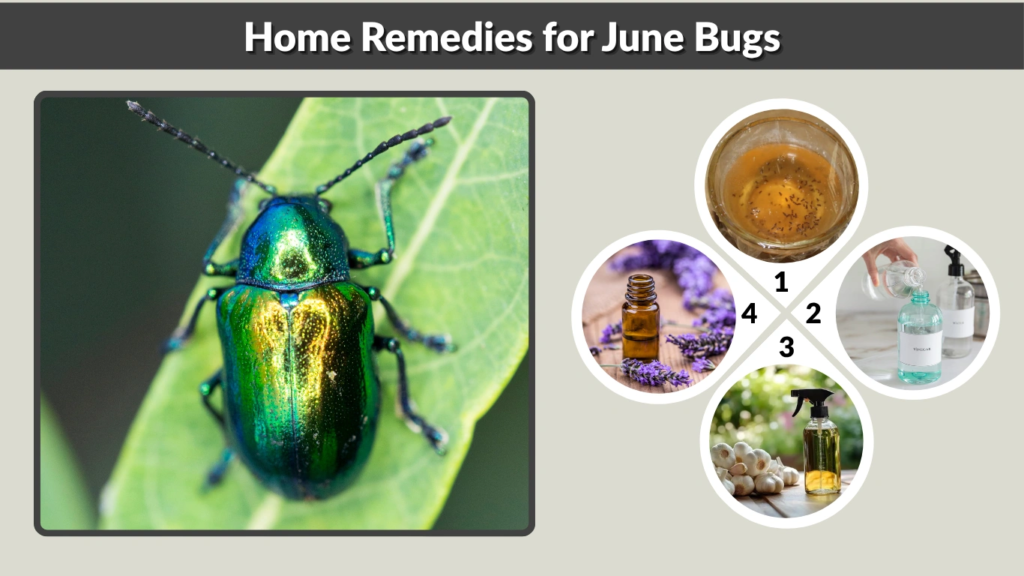
Home remedies are inexpensive, safe, and effective for mild infestations. They can be used in combination with natural soil treatments for stronger results.
- Dish Soap Trap: Mix water and dish soap in a wide, shallow pan and place it near light sources. The soap breaks surface tension, causing beetles to sink.
- Vinegar Spray: Blend equal parts vinegar and water in a spray bottle and mist it over leaves or soil where beetles gather.
- Garlic Spray: Blend several garlic cloves with water, strain the mixture, and spray it on fruit trees or ornamental plants. The strong scent repels beetles naturally.
- Essential Oils: Lightly spray peppermint or eucalyptus oil near doorways or porch areas to keep beetles from flying indoors.
These homemade remedies are environmentally friendly and can be repeated safely throughout the season.
How to Get Rid of June Bugs in the Garden
June bugs are most destructive in gardens because they target soft fruits and flowers. Adults feed on ripe fruit, while larvae attack roots beneath the soil. Begin by cleaning the garden of fallen fruit and dead vegetation that can attract beetles. Regular pruning reduces shaded spots where they hide during the day.
Apply neem oil or diatomaceous earth around the base of plants to deter adult beetles. For heavy infestations, beneficial nematodes in the soil eliminate larvae naturally over time. Consistent watering and healthy soil balance also strengthen plants against minor feeding damage.
How to Get Rid of June Bugs in the Yard
Yards with rich, moist soil are ideal breeding grounds for June bugs. Keeping your lawn dry and well-maintained prevents eggs from hatching successfully.
Mow grass regularly to expose soil and reduce egg-laying areas. Aerate compacted areas to improve drainage and discourage larvae development. When dealing with severe grub infestations, biological treatments like milky spore or nematodes can be applied in late summer or early spring. These methods are safe for grass and beneficial insects but highly effective against larvae populations.
How to Get Rid of June Bugs on Trees and Plants
Trees and ornamental plants attract green June bugs that feed on fruit and soft foliage. Protecting them early prevents extensive feeding damage.
Spray neem oil or diluted garlic water on leaves and fruit every few days during active months. Remove infested fruit before it rots to discourage repeat visits. Installing light traps away from trees can redirect beetles and reduce their presence. Covering trees with netting at night also provides a barrier that prevents feeding and egg laying.
How to Get Rid of June Bugs Around Porches and Lights
Porches and lighted areas are prime gathering spots for adult beetles at night. To minimize their attraction, switch bright bulbs for softer yellow ones or LED lights that emit less UV. Place light traps away from sitting areas so beetles are drawn elsewhere. Keep porch floors and nearby soil clean from fruit, leaves, and moisture since these encourage breeding. If beetles persist, use a fan or light breeze—June bugs are poor fliers and struggle against moving air.
How to Get Rid of June Bugs in Pools and Water Areas
Pools attract June bugs because of their reflections and lights. Floating beetles are harmless but unpleasant. Reduce their presence by covering pools at night and turning off nearby lights. Installing pool skimmers or mesh covers helps collect fallen beetles each morning. Keeping the water’s surface clean also discourages further attraction.
How to Get Rid of June Bugs in the Garage
Garages with bright lighting and open doors can easily attract June bugs. To remove them, keep lights off when possible and seal entry gaps under doors. Sweep beetles out gently or vacuum them without crushing. Applying natural deterrents such as peppermint spray or cedar oil near doors and vents helps keep them away.
June Bug Prevention Tips
Long-term prevention is more effective than temporary removal. Keep your yard and garden unattractive to June bugs through consistent care.
- Aerate soil every spring to disturb larvae and improve drainage.
- Turn off or reduce lighting during peak activity hours.
- Clean up fallen fruits, leaves, and mulch piles regularly.
- Use natural lawn treatments each year to disrupt the grub life cycle.
- Maintain a balance of healthy predators such as birds and frogs.
These proactive habits reduce June bug populations and protect your property naturally year after year.
FAQs
How Do I Permanently Get Rid of June Bugs?
Target their larvae underground with beneficial nematodes or milky spore treatments and reduce lights, moisture, and organic debris to break the breeding cycle permanently.
What Kills June Bugs Instantly?
A mixture of water and dish soap kills adult June bugs on contact by dissolving their waxy coating, leading to dehydration. It’s a quick solution for visible beetles.
How Do I Stop June Bugs from Coming Back?
Consistent lawn care, dry soil, and annual aeration prevent larvae from developing. Reducing lights and keeping fruit trees clean deters returning adults.
What Naturally Repels June Bugs?
Neem oil, garlic spray, and diatomaceous earth all repel adult beetles effectively. These are non-toxic options safe for humans, pets, and plants.
When Should I Treat My Yard for June Bugs?
Treat in early spring or late summer, when larvae are small and near the soil surface. This ensures biological treatments reach them effectively before they mature.
