
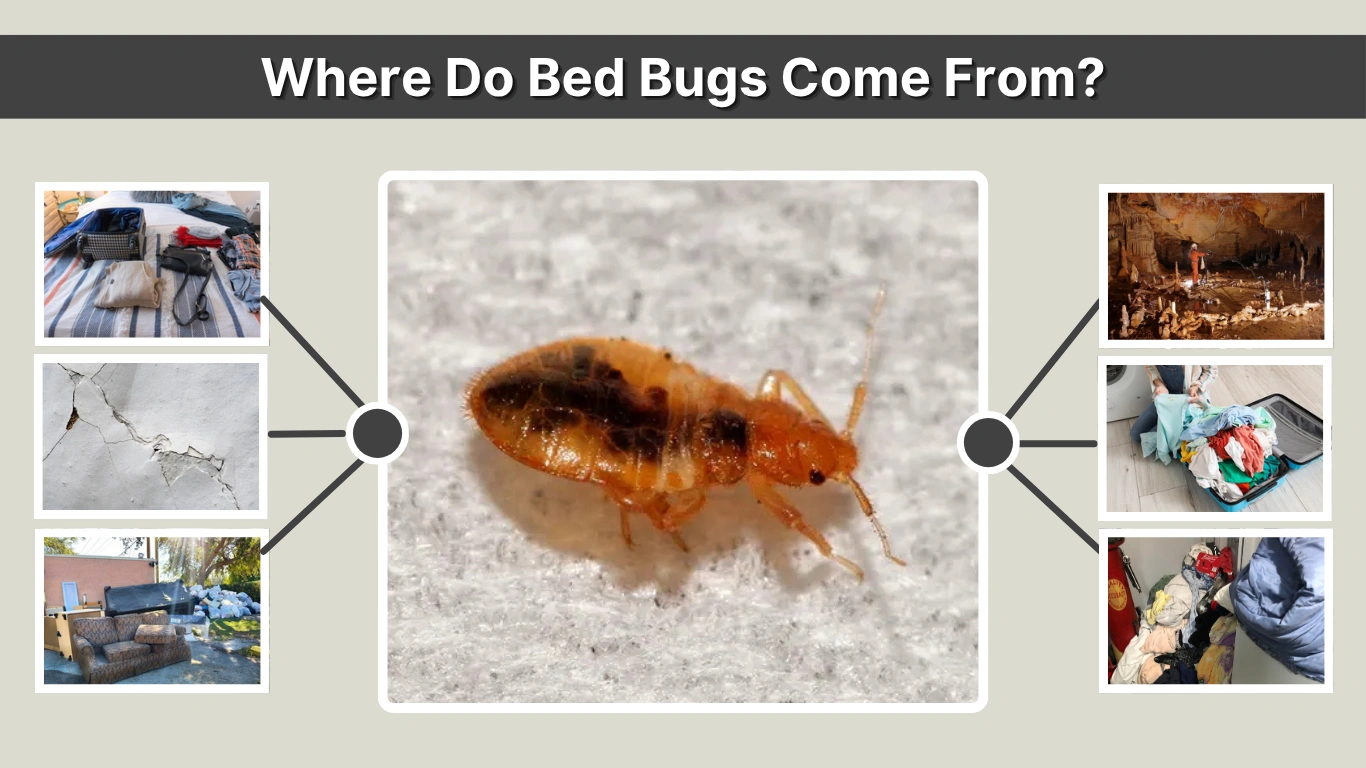
Bed bugs are among the most persistent and frustrating pests in the world. They can appear out of nowhere, multiply quickly, and infest even the cleanest homes. Many people wonder — where do bed bugs come from, and what causes them to invade? Understanding their origins, habits, and travel patterns is the key to preventing future infestations.
What Are Bed Bugs?
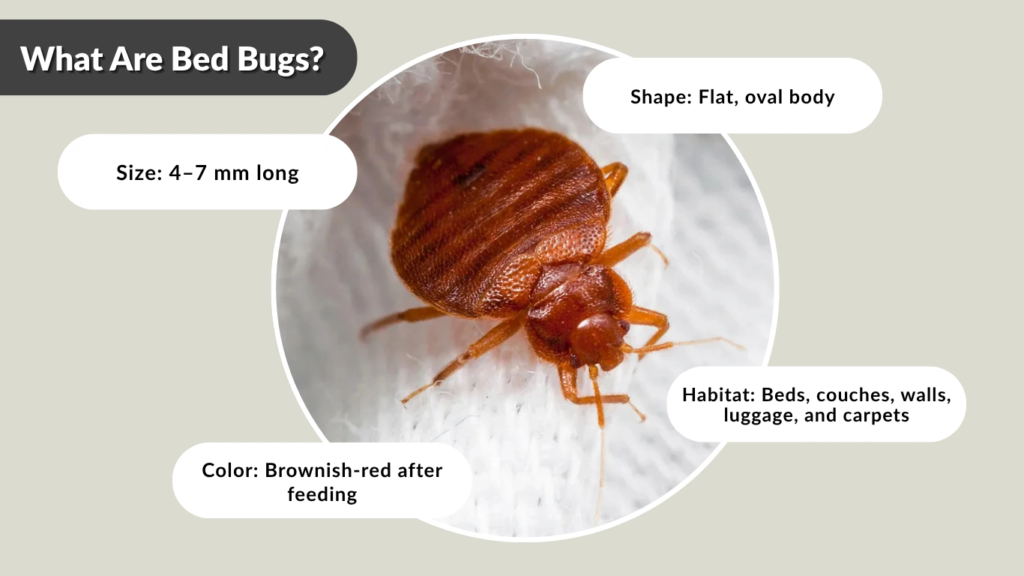
Bed bugs (Cimex lectularius) are tiny, wingless insects that survive solely on the blood of humans and animals. These pests are flat, oval-shaped, and about the size of an apple seed. Their color ranges from light brown to deep reddish-brown after feeding.
Although they don’t transmit diseases, bed bugs cause discomfort, sleeplessness, and allergic reactions through their bites. They’re nocturnal by nature, feeding mostly at night and hiding during the day in cracks, seams, and fabrics near sleeping areas.
Key Features of Bed Bugs
- Size: 4–7 mm long
- Shape: Flat, oval body
- Color: Brownish-red after feeding
- Habitat: Beds, couches, walls, luggage, and carpets
Their small size and secretive habits make them hard to detect, especially during the early stages of infestation.
Where Do Bed Bugs Come From Originally?

Bed bugs have a long evolutionary history. They didn’t suddenly appear in modern homes — they’ve been living alongside humans for thousands of years.
Natural Origin Story
Scientists believe bed bugs evolved from bat bugs, a closely related species that fed on bats in caves. When humans began sleeping in caves or enclosed spaces, these insects switched hosts, adapting to feed on people instead of bats.
Over time, bed bugs followed human migration across the world. Ancient Egyptian tombs even contained traces of them, proving that infestations are as old as civilization itself.
Modern Presence
Today, bed bugs are found worldwide and thrive in temperate climates. They survive best in indoor environments, which protect them from extreme temperatures. Whether you live in a city apartment, a suburban home, or a rural area — bed bugs can appear anywhere humans rest or travel.
Where Do Bed Bugs Come From in Nature?
In the wild, bed bugs are not commonly found outdoors because they depend on consistent warmth and human blood. However, their ancestors — bat and bird bugs — still exist in natural habitats like:
- Caves and old attics
- Abandoned animal nests
- Wooden barns or structures housing bats or birds
When humans disturb these environments or bring in infested items like old furniture, bed bugs can transfer indoors and start new colonies.
Once they find a warm, enclosed space, they rarely return to the outdoors. Their natural environment has effectively become human homes.
What Causes Bed Bugs and Where Do They Come From?

Contrary to popular belief, bed bugs don’t come from dirt or poor hygiene. They’re not attracted to filth — they’re drawn to warmth, body heat, and the carbon dioxide we exhale while sleeping.
The Main Causes of Bed Bug Infestations
- Travel and Hotels – Bed bugs often hide in hotel mattresses, carpets, or curtains. They climb into luggage and return home with travelers.
- Used Furniture – Secondhand couches, wooden frames, and mattresses are major sources of bed bug eggs or adults.
- Visitors and Guests – Friends or relatives from infested homes can unknowingly carry bugs in clothing or bags.
- Apartments and Shared Walls – Bed bugs move easily through small cracks, pipes, or electrical outlets between connected units.
- Public Transportation – Trains, buses, taxis, and even office chairs can temporarily host bed bugs that hitchhike to new locations.
Because they’re expert hitchhikers, bed bugs can move from one location to another undetected — and a single fertilized female can start a full-blown infestation in just a few weeks.
Where Do Bed Bugs Come From in the House?
Once inside, bed bugs spread throughout your home in search of safe, dark hiding places near where people sleep. They crawl through tiny gaps, cling to fabrics, and hide in furniture crevices during the day.
Common Household Entry Points
- Luggage and backpacks brought home after travel
- Used mattresses, couches, or chairs
- Laundry or clothing piles from infested areas
- Electrical outlets or floor cracks in apartments
- Visitors’ bags placed near beds or sofas
Bed bugs don’t live on humans, but they stay close to their food source — usually the bed, couch, or recliner. Once settled, they start laying eggs immediately, often within the first few days of arrival.
Where Do Bed Bugs Come From on a Mattress?
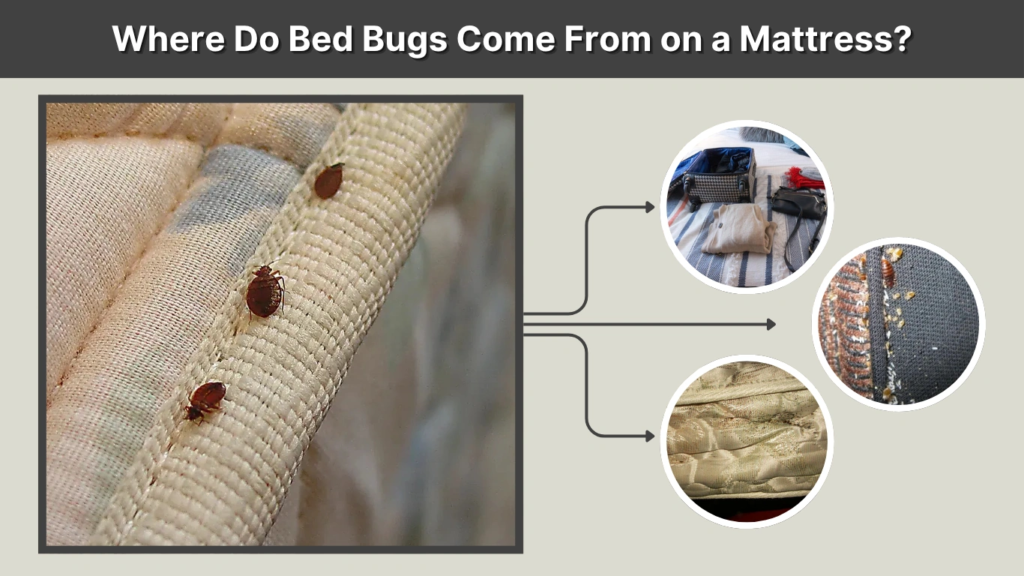
Your mattress is the most inviting place for bed bugs. It’s warm, close to your body, and filled with small seams perfect for hiding.
How They Get There
- From travel luggage left on the bed after a trip
- Through used or refurbished mattresses carrying hidden eggs
- From infested furniture or bedding near the sleeping area
- Crawling from walls or carpets toward the warmth of a human sleeper
Where They Hide on Mattresses
- Along seams, corners, and tags
- Beneath mattress handles and buttons
- Inside box springs or under bed frames
- Behind headboards or nearby wall cracks
Because they feed at night, most people never see bed bugs in action. Instead, they notice tiny blood stains or black spots on sheets — an early clue of infestation.
Where Do Bed Bugs Come From in Apartments?
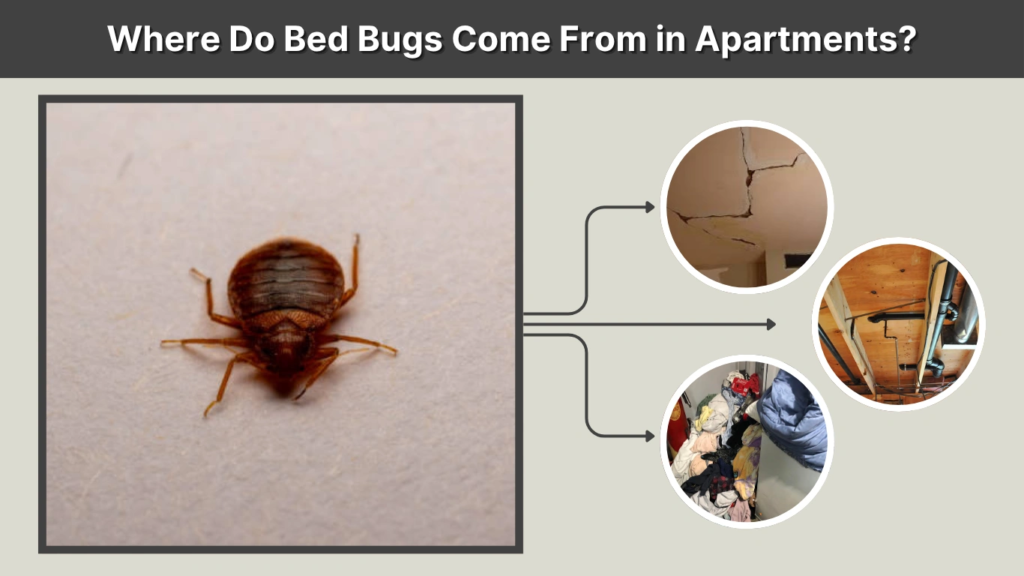
Bed bugs are notorious for spreading through apartment buildings and shared housing. Since they’re flat and resilient, they can move between units easily.
How They Spread in Apartments
- Through cracks in walls and ceilings
- Along plumbing lines, vents, or baseboards
- In shared laundry or trash areas
- By traveling on people’s belongings between units
Even if only one apartment is infested, nearby units can quickly develop problems. That’s why apartment-wide inspections are often required when bed bugs are found.
Where Do Bed Bugs Come From Outside?

Bed bugs are indoor insects by nature, but they can survive outdoors for short periods when hiding on or inside objects.
Common Outdoor Sources
- Used furniture left outside — bed bugs can cling to sofas, chairs, or mattresses dumped outdoors.
- Storage boxes or luggage — they may stay dormant in garages or sheds for weeks.
- Wood piles, fences, or cracks in exterior walls — temporary shelter until they find their way indoors.
However, they rarely thrive outdoors for long. Bed bugs cannot handle extreme temperatures, direct sunlight, or rain. They depend on human warmth and blood meals, making homes their ideal permanent environment.
Where Do Bed Bugs Come From in Clean Houses?
Cleanliness does not determine whether bed bugs enter your home. These pests are attracted to people — not to dirt. Even the most spotless home can get infested after one brief exposure.
Why Bed Bugs Infest Clean Homes
- Hitchhiking: They travel on luggage, coats, or used furniture.
- Visiting Guests: Someone unknowingly brings them from an infested location.
- Apartments and Shared Buildings: They crawl between walls, outlets, or pipes.
- Hotels or Public Areas: A single night in an infested place can bring them home.
Regular cleaning can help you spot bed bugs early, but it doesn’t prevent their arrival.
Where Do Bed Bugs Come From During the Day?

Bed bugs are nocturnal feeders, but they remain close to their hosts even in daylight. During the day, they hide in:
- Mattress seams and headboards
- Cracks in walls or baseboards
- Inside electrical outlets
- Behind wallpaper or picture frames
They emerge at night when you’re still and exhaling carbon dioxide — their cue that a blood meal is nearby. If disturbed or hungry, they can bite during the day too, especially in dark rooms or hidden furniture.
Where Do Bed Bugs Come From in Hotels and Travel?
Travel is the #1 cause of modern bed bug infestations. Hotels, motels, and even airplanes can harbor bugs in beds, carpets, or curtains.
How They Spread While Traveling
- They crawl into suitcases or clothing while you sleep.
- They cling to fabric surfaces or luggage seams.
- After returning home, they move from your luggage to your bed or furniture.
Prevention Tip: Keep your suitcase on a hard surface or luggage rack, not the floor or bed. Always inspect hotel sheets and headboards before sleeping.
Where Do Bed Bugs Come From in Different Countries?
Bed bugs are found worldwide and can thrive anywhere humans live.
- North America & Europe: Common in hotels, dorms, and apartments due to frequent travel.
- Asia & Africa: Found in dense urban areas and transportation hubs.
- Australia & New Zealand: Spread through imported furniture or global travelers.
- Cold regions: Bed bugs survive indoors all year because central heating keeps conditions ideal.
Wherever humans travel, bed bugs follow — they’re true global hitchhikers.
How Bed Bugs Spread Between People
Bed bugs don’t live on your skin like lice or fleas. Instead, they hide in personal belongings and move discreetly from place to place.
Ways They Transfer
- Luggage and backpacks placed on infested surfaces
- Clothing stored near infested beds or couches
- Furniture and vehicles shared with others
- Visitors’ belongings accidentally dropped near sleeping areas
Even one pregnant female can start a new colony, laying up to 500 eggs in her lifetime. This is why infestations seem to “appear overnight.”
Where Do Baby Bed Bugs Come From?
Baby bed bugs, known as nymphs, hatch from eggs laid by adult females. Eggs are laid in small clusters along mattress seams, furniture joints, or wall cracks.
Development Stages
- Egg: Tiny, white, and oval-shaped (1 mm).
- Nymph: Translucent and pale yellow until fed.
- Adult: Reddish-brown and about 5–7 mm long.
Each nymph stage requires a blood meal before molting. Within five weeks, they become adults ready to reproduce — so fast action after spotting eggs is crucial.
Where Do Bed Bugs Come From on Clothes?
Bed bugs don’t live permanently on clothes, but they cling to them to move between locations. They hide in seams, cuffs, or folds until they reach a new environment.
To prevent spreading:
- Wash clothes immediately after travel using hot water (above 120°F).
- Dry on high heat for at least 30 minutes to kill all life stages.
- Avoid leaving worn clothes near beds or carpets.
If you find small black dots or light flakes on clothing seams, they could be signs of eggs or droppings.
How to Prevent Bed Bugs from Entering Your Home
During Travel
- Inspect hotel beds and furniture before unpacking.
- Keep your suitcase on a hard rack or tiled floor.
- Wash and heat-dry travel clothes as soon as you return.
At Home
- Check secondhand furniture carefully before bringing it indoors.
- Use bed bug-proof encasements for mattresses and pillows.
- Vacuum frequently, especially around beds and couches.
- Seal cracks in walls, baseboards, and outlets to block movement.
Proactive prevention is far easier than extermination after an infestation begins.
What to Do If Bed Bugs Appear
If you notice bed bugs, act fast.
- Wash and heat-dry all bedding, curtains, and clothing.
- Vacuum mattresses, sofas, and carpets daily for a week.
- Apply diatomaceous earth along seams and baseboards.
- Use steam treatment on mattresses and furniture.
- Call a pest control professional if the infestation spreads.
Early intervention can stop bed bugs from multiplying and protect your furniture from long-term damage.
FAQs
Where do bed bugs come from originally?
They evolved from bat-feeding insects thousands of years ago and adapted to human environments when people began sleeping in enclosed shelters.
Can bed bugs live outdoors?
Only temporarily. They can survive in cracks or furniture outside but die quickly from heat, cold, or lack of food.
Do bed bugs come from dirty houses?
No. They are drawn to body warmth and carbon dioxide, not dirt. Even spotless homes can become infested.
How do bed bugs travel between rooms or apartments?
They crawl through wall gaps, plumbing lines, and vents, or move via furniture, clothing, or shared laundry.
Can one bed bug start an infestation?
Yes. A single fertilized female can lay hundreds of eggs, creating a full infestation within weeks if left untreated.
