
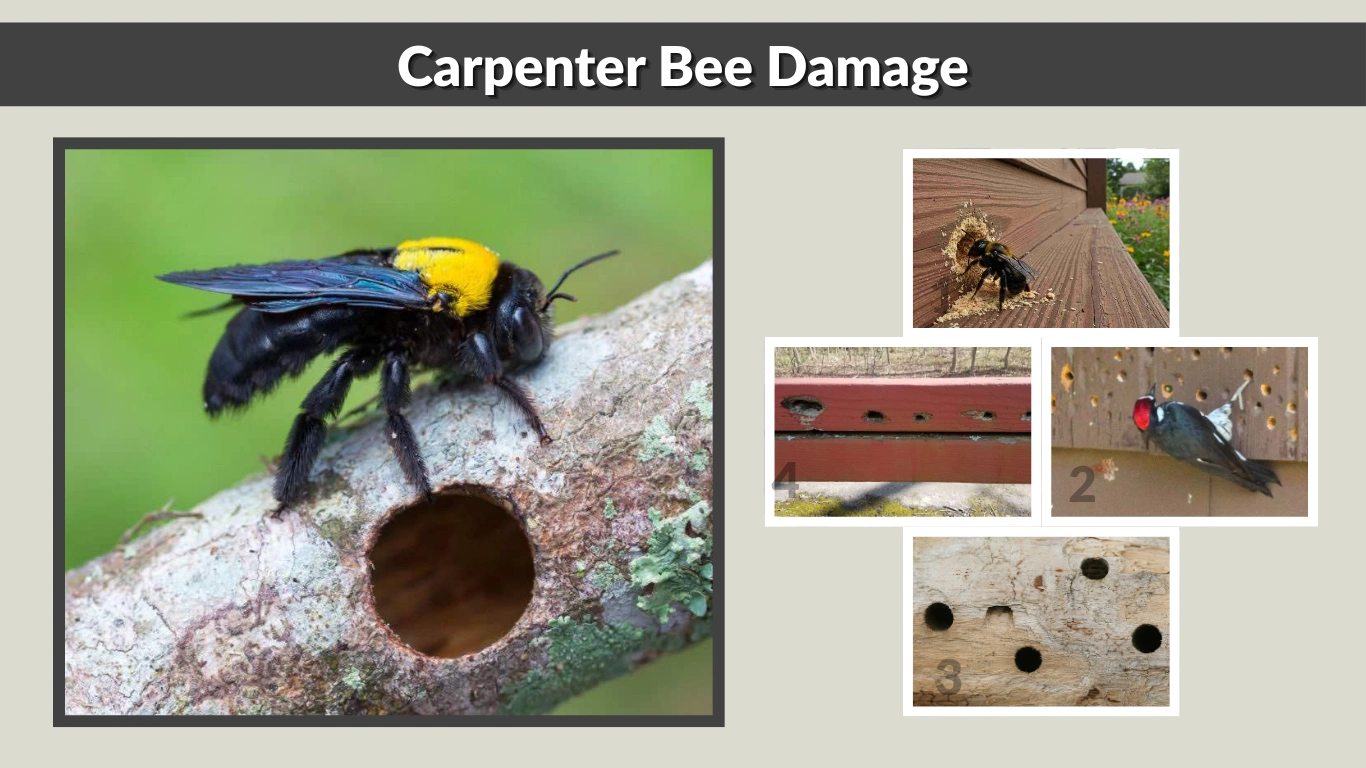
Carpenter bees are solitary insects that often generate mixed feelings. While they are valuable pollinators, their nesting habits can cause headaches for homeowners. Instead of hives, female carpenter bees bore tunnels into untreated or weathered wood, creating homes for their offspring. Over time, this activity can weaken structures and lead to costly repairs.
Understanding what carpenter bee damage looks like, how it happens, and its risks to people helps homeowners take the right steps to protect their property. This article covers the main types of damage, signs of infestation, human risks, and treatment methods.
What is Carpenter Bee Damage?

Carpenter bee damage results from the female bee’s nesting process. Unlike termites, carpenter bees don’t eat wood. Instead, they drill perfectly round holes about half an inch wide into wooden surfaces. These holes lead to tunnels, where eggs are laid and pollen is stored for larvae.
The damage can vary:
- Cosmetic: Small holes or minor surface wear.
- Structural: Larger or multiple tunnels that weaken beams, decks, or siding.
- Secondary damage: Attracting predators like woodpeckers, who enlarge holes searching for larvae.
Carpenter bee activity is seasonal, with the most damage occurring in spring and summer during nesting.
Types of Carpenter Bee Damage

1. Damage to Houses
Houses with exposed wooden siding, fascia boards, or eaves are common targets. Carpenter bees often return to the same site year after year, enlarging old tunnels or boring new ones. Over time, this weakens boards and creates unsightly holes.
- Signs: Perfectly round entry holes, often with sawdust piles nearby.
- Long-term risk: Multiple tunnels can compromise wood strength, requiring replacement.
2. Damage to Wood and Decks
Outdoor structures like decks, porches, and fences are especially vulnerable. Weathered, untreated wood is attractive to female carpenter bees. Even a small infestation can lead to visible damage within a few seasons.
- Furniture risk: Wooden outdoor furniture may also be targeted, leading to both cosmetic and functional damage.
- Recurring issue: Females may reuse or expand tunnels, increasing the extent of damage over the years.
3. Comparison with Termite Damage
Carpenter bee damage is often confused with termite activity, but there are clear differences:
- Carpenter bee holes: Clean, round openings about ½ inch wide, with smooth tunnels inside.
- Termite damage: Rough, irregular galleries filled with soil or mud tubes; wood often appears hollowed out.
- Surface clues: Carpenter bees leave visible piles of sawdust, while termites do not.
Identifying the difference ensures correct treatment and avoids unnecessary costs.
Risks and Impact on Humans
Do Carpenter Bees Sting?
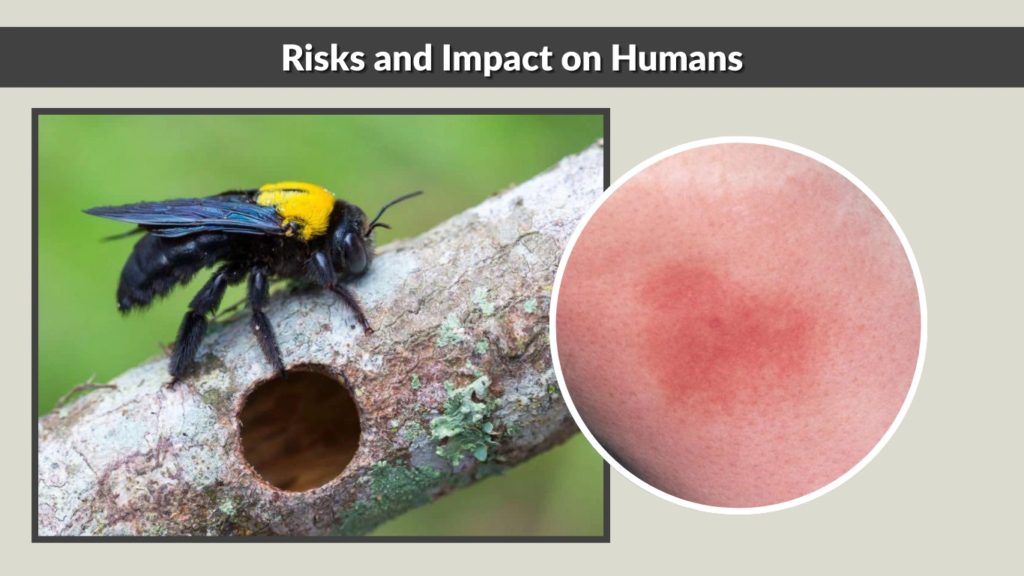
Carpenter bees are generally not aggressive. Male carpenter bees, which are often seen hovering near nests, cannot sting at all. Females are capable of stinging but usually only do so when provoked or handled.
- Pain level: The sting can be painful, similar to other bee stings.
- Allergic reactions: Rare, but possible for sensitive individuals.
Indirect Risks
While direct stings are uncommon, carpenter bee damage can create secondary risks:
- Woodpecker damage: Predators such as woodpeckers attack tunnels to reach larvae, enlarging the holes and significantly worsening damage.
- Structural concerns: Over time, multiple tunnels weaken beams, especially in decks and outdoor furniture.
- Cosmetic issues: Visible holes and sawdust reduce the aesthetic value of wood surfaces.
Impact on Humans
Though carpenter bees aren’t dangerous like termites, their presence causes worry because:
- They can damage valuable wooden structures.
- They return to the same nesting spots annually, leading to recurring issues.
- Their hovering flight near humans creates fear, especially for those with bee sting allergies.
By recognizing these risks early, homeowners can manage carpenter bee problems before they escalate into serious repairs.
Treatment and Repair Options
Once carpenter bees have drilled into wood, treating the damage quickly prevents further problems.
Short-Term Fixes
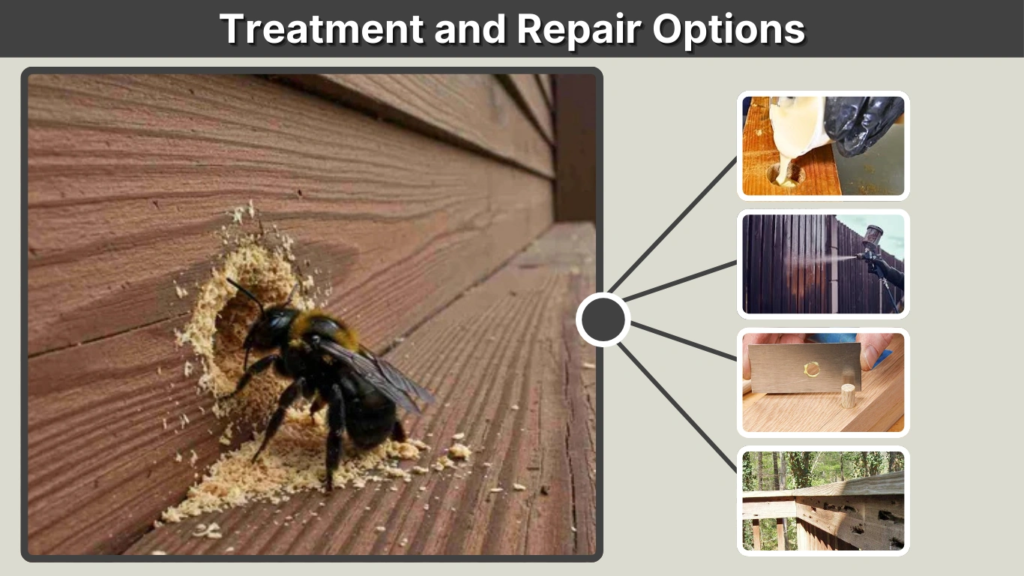
- Filling holes: Apply caulk, putty, or wood filler to entry points. This blocks tunnels and deters reuse.
- Painting over repairs: Painting or staining repaired areas adds a protective layer, reducing future infestations.
- Plugging tunnels: Steel wool or wooden dowels inserted before sealing strengthens the repair.
Long-Term Solutions
- Replacing damaged boards: Severely infested wood may need replacement.
- Structural reinforcement: For decks or beams, professional carpenters may recommend reinforcements if integrity is compromised.
- Professional repair: Contractors often provide combined repair and pest management services, ensuring both damage and infestation are handled.
Cost Considerations
Minor repairs may cost little if done with DIY methods, but extensive carpenter bee damage—especially when combined with woodpecker activity—can lead to expensive replacements.
Prevention Methods
Prevention is the most effective way to avoid carpenter bee damage.
Protect Wood Surfaces
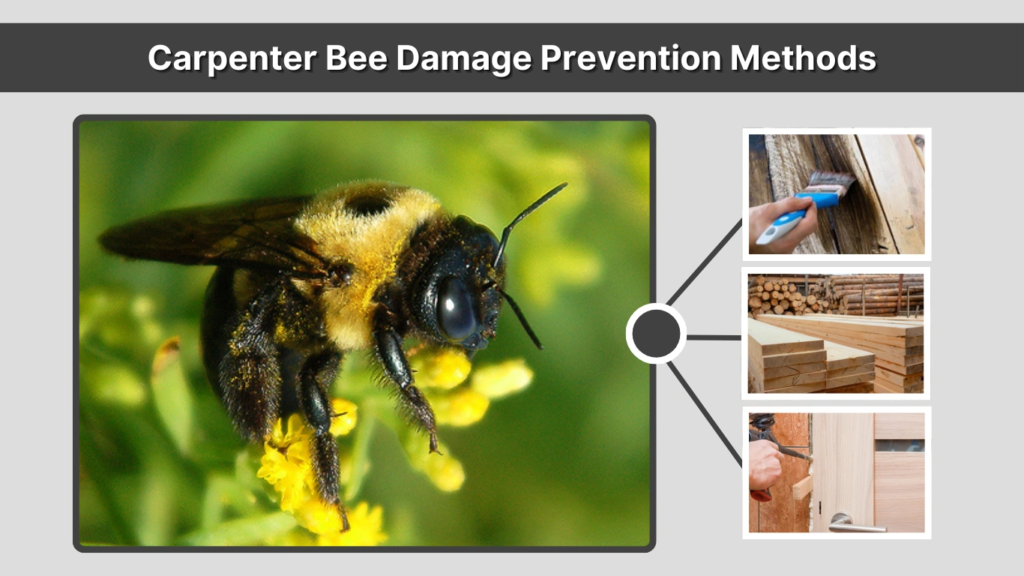
- Paint or stain: Carpenter bees prefer bare, untreated wood. Painted or stained surfaces are far less attractive.
- Use hardwoods: Treated or dense hardwoods like oak resist drilling better than softwoods such as pine or cedar.
- Seal cracks: Filling small gaps eliminates potential entry points.
Seasonal Prevention
In early spring, check for new activity. Filling or sealing tunnels before nesting season starts helps prevent egg-laying. Applying repellents like citrus oil or almond oil around vulnerable areas can also discourage bees from boring.
How to Get Rid of Carpenter Bees
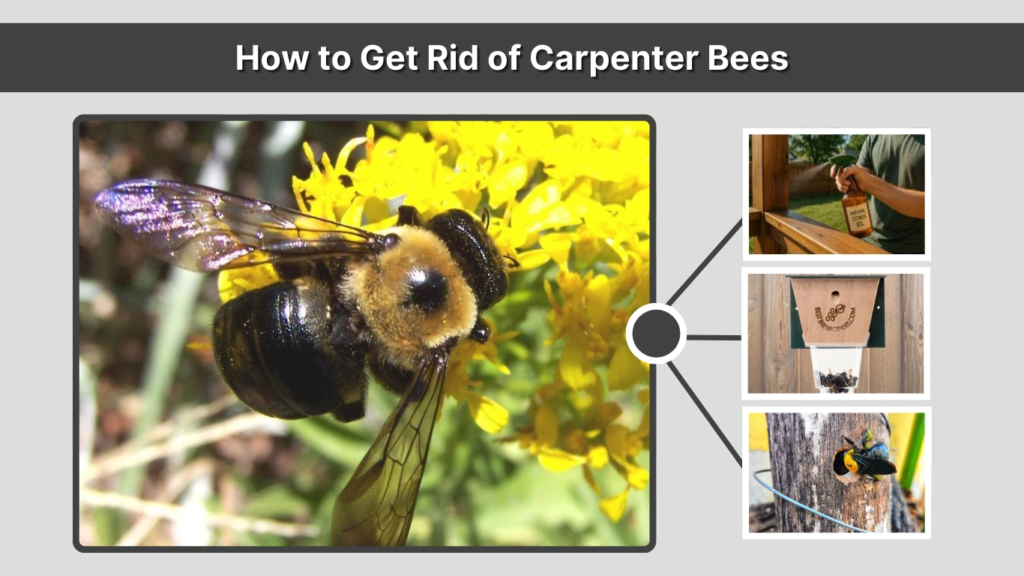
When infestations occur, several removal strategies are available:
Natural Methods
- Citrus or almond oil sprays: Natural deterrents that repel bees from wood.
- Carpenter bee traps: Wooden trap boxes lure bees into a chamber from which they cannot escape.
- Relocation: In rare cases, nests can be relocated, though this requires expertise.
Chemical Methods
- Insecticidal dusts: Applied inside tunnels to kill adult bees and larvae.
- Sprays: Effective for direct application, but less reliable for deep tunnels.
- Residual treatments: Leave behind chemical barriers, discouraging future nesting.
Professional Extermination
For large infestations, calling a licensed pest control service ensures safe, effective removal while minimizing risk to people and pets.
What Kills Carpenter Bees Instantly?
Instant-kill solutions typically involve chemical insecticides applied directly to the bee. Aerosol sprays or foams designed for bees and wasps can kill on contact. However, caution is required:
- Spraying near entrances can agitate bees, increasing sting risk.
- Overuse of chemicals may harm pollinators and the environment.
For this reason, “instant kill” methods should be a last resort compared to preventive or deterrent strategies.
Carpenter Bee Damage Pictures and Identification
Visual signs help confirm carpenter bee damage:
- Round holes: Clean, smooth openings about ½ inch in diameter.
- Sawdust: Fresh piles of coarse sawdust beneath entry points.
- Buzzing: Loud buzzing near tunnels, often males hovering defensively.
- Secondary holes: Larger, irregular holes caused by woodpeckers targeting larvae.
Pictures or examples can help homeowners distinguish carpenter bee damage from termite or ant infestations, ensuring the correct treatment.
Conclusion
Carpenter bees may not be as destructive as termites, but their tunneling habits can cause significant structural and cosmetic damage over time. From houses and decks to fences and furniture, untreated wood remains their primary target.
