
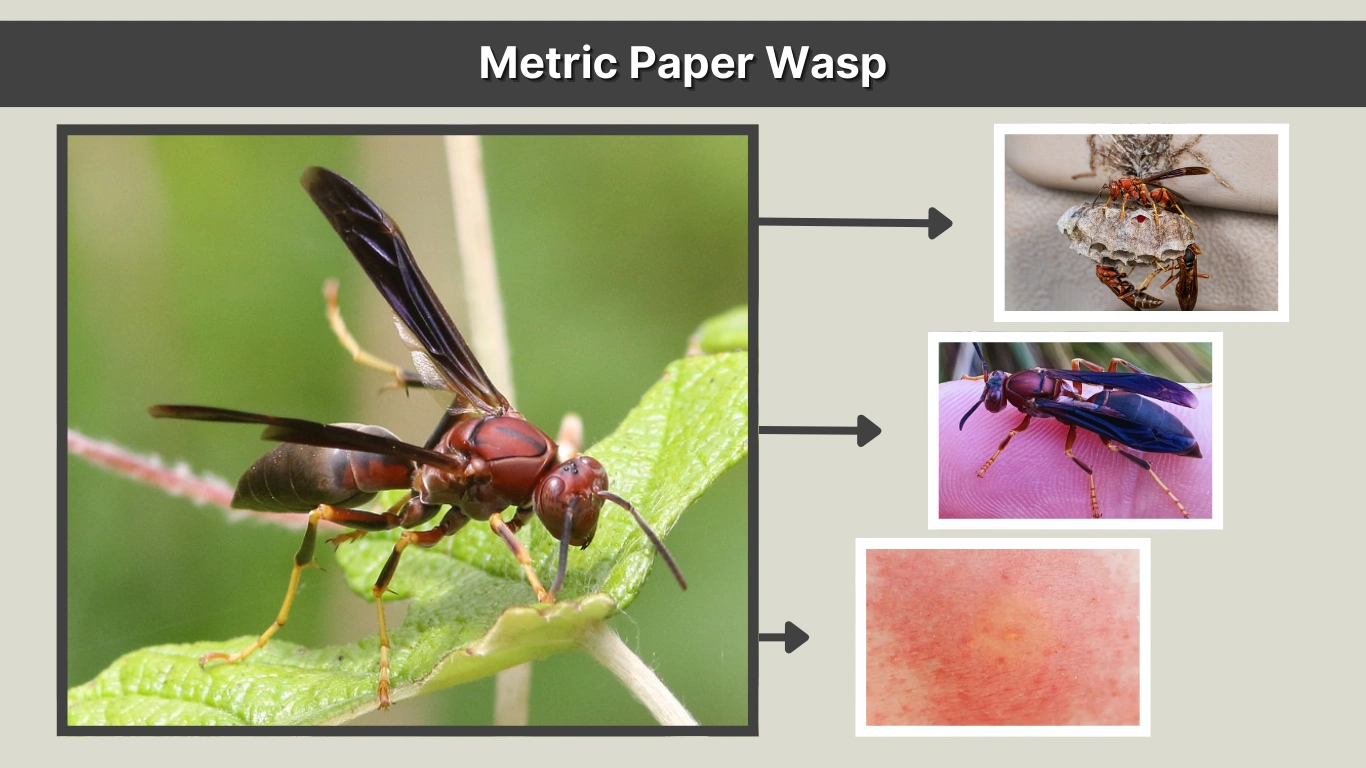
Paper wasps are a diverse group of insects recognized for their unique nest-building techniques and significant ecological roles. Among them, the metric paper wasp (Polistes metricus) is a fascinating species found primarily in North America. Known for its distinct behavior and ecological importance, this wasp often sparks both curiosity and caution. While it contributes to natural pest control, its sting and aggressive defense of its nest make it a common concern around human habitats.
Understanding the biology, habits, and ecological role of Polistes metricus is essential for appreciating its benefits while minimizing the risks associated with close contact. This article explores its identification, nesting behavior, aggressiveness, and sting, providing a balanced overview of this remarkable insect.
Taxonomy and Identification

The metric paper wasp belongs to the genus Polistes, which is the largest genus of social wasps. Its scientific name is Polistes metricus, and it is commonly called the metric paper wasp.
Key Features:
- Size: Adults typically measure between 15–20 mm in length.
- Coloration: They display a reddish-brown to dark brown body with lighter markings, distinguishing them from species like the bright red paper wasp (Polistes carolina) or the darker European paper wasp (Polistes dominula).
- Wings: Narrow and smoky-colored wings, which fold lengthwise when at rest.
- Shape: Slender body with a noticeably thin “waist” connecting the thorax and abdomen.
These features make it possible to distinguish P. metricus from similar species, though expert identification may be necessary in some cases due to overlap in appearance with other Polistes wasps.
Habitat and Nesting

The metric paper wasp is found mainly in the eastern and central United States, thriving in temperate climates. It prefers open woodlands, grasslands, and suburban areas where food resources and nesting sites are readily available.
Nesting Behavior:
One of the most recognizable traits of paper wasps is their nest construction. Polistes metricus builds small, umbrella-shaped nests made from chewed wood fibers mixed with saliva, forming a papery texture. These nests:
- Are usually attached to sheltered areas such as tree branches, shrubs, eaves, or sheds.
- Contain open cells where the queen lays eggs and larvae develop.
- Expand gradually as the colony grows during the summer.
Colonies are relatively small compared to those of hornets or yellowjackets, often housing fewer than 50 individuals at peak population. This smaller colony size, however, does not reduce their willingness to defend the nest when threatened.
Behavior and Aggressiveness

Metric paper wasps are generally not aggressive when away from their nests, often ignoring humans and animals unless provoked. They spend much of their time foraging for food, including caterpillars, beetle larvae, and nectar.
However, when their nest is disturbed, they can become highly defensive. Disturbance triggers the release of alarm pheromones, alerting other colony members to attack in unison. This defensive behavior is why they are often perceived as aggressive.
Compared to the European paper wasp (Polistes dominula), which adapts well to human environments and is often more invasive, P. metricus tends to be less bold but still poses a risk if its nest is near human activity.
Sting and Venom

Like other paper wasps, the metric paper wasp delivers a painful sting used for both hunting prey and defending the colony. The sting injects venom containing a mix of toxins, peptides, and enzymes.
Effects of the Sting:
- Pain and swelling: The sting is sharp and immediate, followed by redness and localized swelling.
- Allergic reactions: Some individuals may experience more severe symptoms such as hives, dizziness, or difficulty breathing. In rare cases, systemic allergic reactions (anaphylaxis) can occur, requiring immediate medical attention.
- Venom function: In addition to defense, the venom helps immobilize caterpillars and other prey, making them easier to transport back to the nest as food for larvae.
First Aid Tips:
- Wash the area with soap and water.
- Apply a cold compress to reduce swelling.
- Use over-the-counter antihistamines or pain relievers if necessary.
- Seek medical care if symptoms worsen or signs of an allergic reaction appear.
While the sting is not usually life-threatening for most people, repeated stings or allergies can pose significant health risks, making it important to exercise caution around nests.
Role in Ecosystem
The metric paper wasp plays a vital ecological role, balancing ecosystems by acting as both predator and pollinator. Their diet centers on caterpillars and other soft-bodied insects, which they capture and feed to developing larvae. This natural predation helps regulate pest populations that could otherwise damage crops and garden plants.
Adult wasps also consume nectar, inadvertently transferring pollen between flowers as they forage. While they are not primary pollinators like bees, their contribution supports biodiversity in flowering plants. This dual role as predator and pollinator makes Polistes metricus an essential component of its environment.
Human Interaction

Living near metric paper wasps can be a mixed experience for people. On one hand, their ability to reduce garden pests makes them beneficial allies for farmers and gardeners. On the other, their defensive behavior near nests creates a risk of painful encounters.
Risks for Humans:
- Nest proximity: Wasps nesting under eaves, decks, or sheds often come into conflict with humans.
- Aggression: They are most defensive in late summer, when colonies reach their peak.
- Stings: Painful stings can be dangerous for those with allergies.
Safe Management:
- Prevention: Seal small openings around homes, and check sheltered areas regularly for early nest construction.
- Relocation: Small nests can sometimes be removed carefully in early stages using protective gear or professional help.
- Coexistence: If nests are in less trafficked areas, leaving them undisturbed allows wasps to control pests without posing direct threats.
Comparison with Other Paper Wasps
Understanding Polistes metricus is easier when compared to related species:
- Red Paper Wasp (Polistes carolina): Bright reddish body, more common in the southeastern U.S. and often more visible due to size and coloration.
- Northern Paper Wasp (Polistes fuscatus): Distributed across northern regions; shows a wider variety in coloration and is studied for its complex social behavior.
- European Paper Wasp (Polistes dominula): An invasive species in North America; more adaptable to urban areas and sometimes more aggressive toward humans.
These comparisons highlight that while P. metricus is not the most aggressive of paper wasps, its sting and defensive nature still require caution.
Conservation and Research
Unlike bees, paper wasps have not faced the same level of conservation concern, but they remain important study subjects in entomology. Research on Polistes metricus provides insights into:
- Social structure: Division of labor between queens, workers, and males.
- Communication: Use of pheromones to coordinate defense and reproduction.
- Evolution: How paper wasps balance solitary and social traits.
Currently, P. metricus is not considered endangered. However, like many insects, its population can be influenced by habitat loss, pesticide use, and climate changes. Preserving ecological balance indirectly supports their continued presence.
Conclusion
The metric paper wasp (Polistes metricus) is a species that embodies both the benefits and risks of living close to nature. As natural pest controllers and occasional pollinators, they play an indispensable role in ecosystems. Yet, their defensive instincts and painful sting mean that humans must approach them with respect and caution.
