

Stingless honey bees, belonging to the tribe Meliponini, are a diverse group of over 500 species found mainly in tropical and subtropical regions. Unlike the common honey bee, they cannot sting but play an equally vital role in pollination and honey production. From Tetragonula in Asia to Melipona in Latin America, each genus has unique traits, behaviors, and habitats that make them essential for biodiversity, agriculture, and sustainable beekeeping.
1. Tetragonula (Stingless Honey Bee)

Tetragonula is one of the most common genera of stingless honey bees, widely distributed across Asia and parts of Australia. These small, black bees are highly valued for their pollination services and medicinal honey, often referred to as “pot-honey.” They play an important role in tropical ecosystems and are increasingly used in sustainable beekeeping practices.
Identification
Tetragonula bees can be identified by several key features:
- Small body size, usually 3–5 mm long.
- Black, shiny coloration with little or no yellow markings.
- Reduced or absent stinger, relying on biting for defense.
- Wings proportionally larger than body size, giving quick flight.
- Nest entrances often small, with tube-like resin structures.
Habitat
Tetragonula species thrive in tropical and subtropical regions, especially in India, Southeast Asia, and Northern Australia. They typically nest in tree hollows, wall crevices, or underground cavities. Their colonies are smaller than those of honey bees, usually containing a few hundred to a few thousand workers.
Behavior
These bees are highly social, living in structured colonies with a queen, workers, and drones. Though stingless, they defend their nests by biting intruders and applying sticky resins. They are excellent pollinators, often visiting crops like mango, coconut, and coffee. Unlike Apis bees, Tetragonula store honey in small wax and resin pots rather than honeycomb cells.
Economic and Ecological Importance
Tetragonula honey, though produced in small quantities, is prized for its strong flavor and medicinal value. Farmers use these bees for crop pollination, making them vital for agriculture. Their resilience and gentle nature make them a preferred choice for stingless beekeeping in Asia.
2. Melipona (Stingless Honey Bee)

Melipona is one of the largest and most studied genera of stingless bees, native to Central and South America. These bees are larger than many other stingless species and produce significant amounts of honey, often called “Melipona honey,” which is highly valued for its medicinal properties.
Identification
Melipona bees can be recognized by:
- Medium to large size, often 8–12 mm long.
- Dark brown or black coloration with occasional yellow markings.
- Strong, robust body compared to smaller stingless bees.
- Shorter wings relative to their body size.
- Nest entrances usually wide and less elaborate than other genera.
Habitat
Melipona bees are found in tropical forests of Central and South America, particularly in Brazil, Mexico, and Guatemala. They build nests inside hollow trees, fallen logs, or underground cavities, often with intricate storage pots made of wax and resin.
Behavior
These bees are eusocial, living in well-organized colonies that may contain thousands of individuals. Though stingless, they can bite strongly and secrete sticky substances for defense. They are efficient pollinators of many native plants and crops, including tomatoes, peppers, and orchids.
Economic and Ecological Importance
Melipona honey is a traditional product in Latin America, known for its distinctive taste and medicinal qualities. It is often used in folk medicine for eye and respiratory conditions. Melipona bees are also critical pollinators, maintaining biodiversity and supporting agriculture. Their management, known as meliponiculture, is a growing sustainable practice in many regions.
3. Trigona (Stingless Honey Bee)
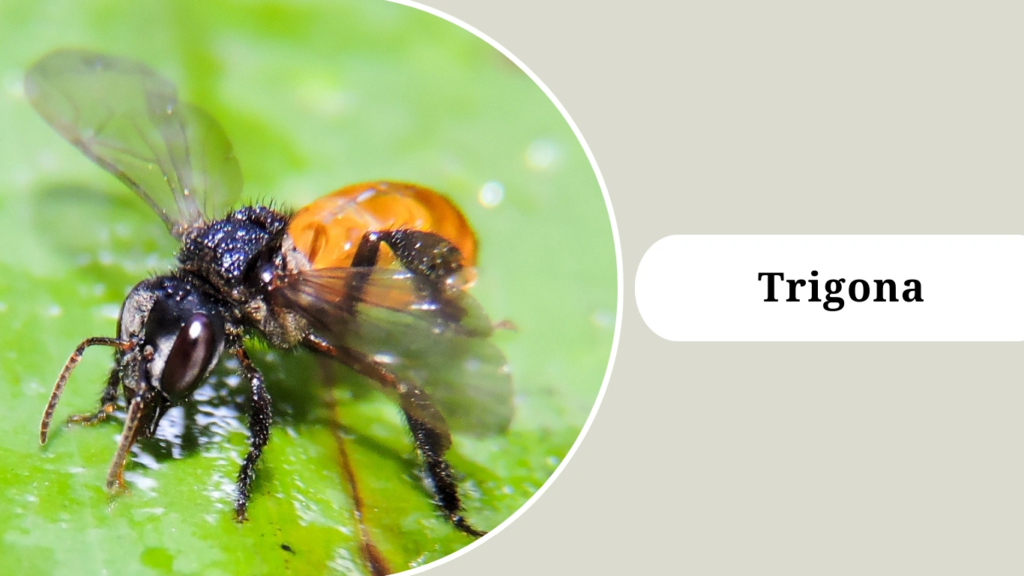
Trigona is a diverse genus of stingless bees found in Asia, Africa, and the Americas. It includes some of the smallest stingless bees and is known for its wide adaptability. These bees are crucial for pollination and are among the most commonly encountered stingless bees worldwide.
Identification
- Small body size, typically 3–6 mm long.
- Black or dark brown coloration, sometimes with faint yellow bands.
- Reduced stinger, replaced by strong mandibles for defense.
- Narrow wings in proportion to body size.
- Nest entrances often made of plant resin, forming small tubes or tunnels.
Habitat
Trigona species thrive in tropical and subtropical climates, nesting in tree cavities, ground burrows, or even wall crevices. Their colonies vary in size but are usually smaller than those of honey bees, ranging from a few hundred to several thousand individuals.
Behavior
These bees are highly social and cooperative. Some species are known for aggressive nest defense, biting and entangling intruders with sticky resins. They forage actively, visiting a wide variety of flowers, and are important pollinators for crops and wild plants.
Economic and Ecological Importance
Trigona honey production is modest, but their role in crop pollination is invaluable. In many rural areas, Trigona species are used to pollinate fruit trees and medicinal plants. Their ability to adapt to varied environments makes them essential for maintaining ecological balance.
4. Heterotrigona (Stingless Honey Bee)
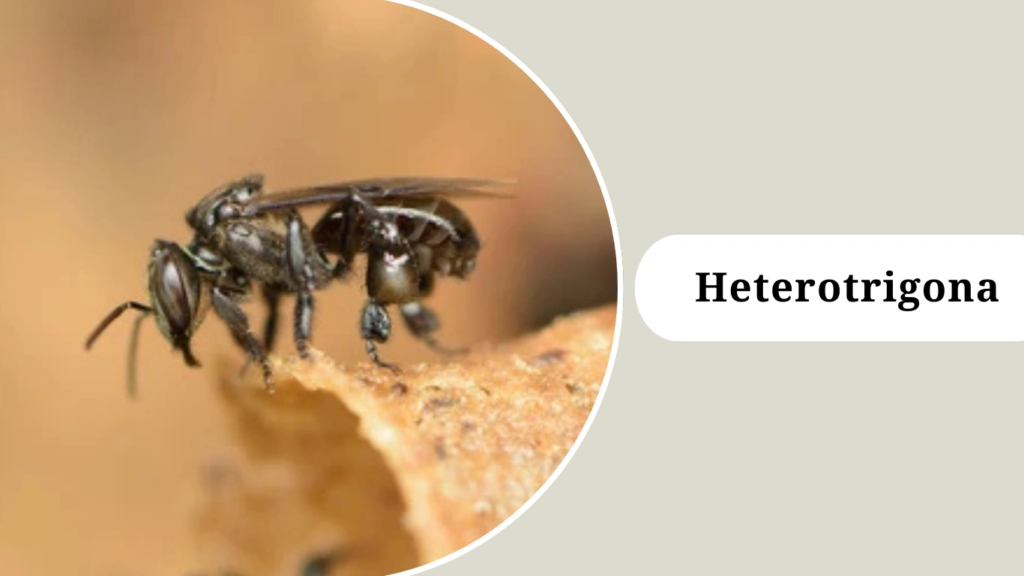
Heterotrigona is a genus primarily found in Southeast Asia, particularly in Malaysia, Thailand, and Indonesia. They are popular in stingless beekeeping due to their docile nature and efficient pollination abilities.
Identification
- Small to medium size, around 4–6 mm long.
- Dark black coloration, sometimes with brownish tones.
- Slender body with relatively large wings.
- Smooth exoskeleton with fine hairs.
- Narrow resinous entrance tubes for nests.
Habitat
These bees commonly inhabit tropical forests and farmlands. They prefer hollow logs, tree cavities, and artificial hive boxes provided by beekeepers. Colonies can range from hundreds to several thousand individuals.
Behavior
Heterotrigona bees are gentle and rarely aggressive. They defend their nests mainly by blocking entrances with resin or biting when disturbed. They forage widely and are efficient pollinators of fruit crops like mango, rambutan, and durian.
Economic and Ecological Importance
The honey produced by Heterotrigona is sought after for its tangy taste and medicinal qualities. Their docile behavior makes them ideal for stingless beekeeping in Southeast Asia. They also play a vital role in boosting fruit crop yields and sustaining local biodiversity.
5. Plebeia (Stingless Honey Bee)

Plebeia is a genus of small stingless bees native to Central and South America. Often called “little bees,” they are among the tiniest stingless species, but they play an important role in pollination, especially of wildflowers and small crops.
Identification
- Very small size, often 3–4 mm long.
- Dark brown or black coloration, sometimes with light markings.
- Compact body with proportionally short wings.
- Small, inconspicuous nest entrances.
- Colonies usually smaller than other genera.
Habitat
Plebeia bees are distributed mainly in Brazil, Mexico, and surrounding countries. They nest in tree cavities, wall crevices, and occasionally underground. Their colonies are modest in population, often numbering a few hundred individuals.
Behavior
These bees are peaceful and rarely defensive. They live in eusocial colonies with a clear division of labor between queen, workers, and drones. Their foraging range is relatively small, focusing on nearby flowers.
Economic and Ecological Importance
Plebeia produce small amounts of honey, but their real importance lies in pollination. They are especially valuable for pollinating small flowering plants and maintaining biodiversity in forests and farmlands.
6. Scaptotrigona (Stingless Honey Bee)
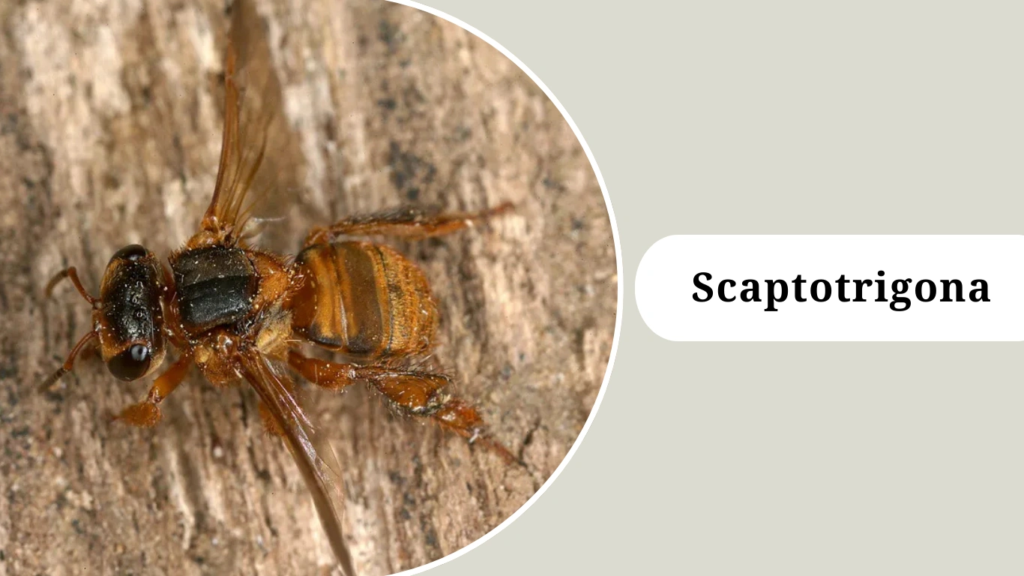
Scaptotrigona is a genus widely distributed in South and Central America. They are medium-sized stingless bees known for producing aromatic honey and for their importance in agriculture.
Identification
- Medium size, around 6–8 mm long.
- Dark black coloration with shiny exoskeleton.
- Elongated body with proportionally longer wings.
- Nest entrances built from resin, often tubular in shape.
- Colonies relatively large compared to smaller stingless bees.
Habitat
Scaptotrigona bees inhabit tropical and subtropical forests in Brazil, Colombia, and nearby countries. They usually nest in hollow logs, tree trunks, and occasionally in artificial hive boxes.
Behavior
These bees are social and moderately defensive. While stingless, they may bite or secrete sticky substances to deter threats. They are active foragers, often seen visiting fruit trees, legumes, and flowering shrubs.
Economic and Ecological Importance
The honey of Scaptotrigona is well known for its distinctive aroma and medicinal qualities. Beekeepers across Latin America manage these bees for both honey and pollination. Their contribution to sustaining forest ecosystems and crop productivity makes them highly valuable in biodiversity conservation.
7. Austroplebeia (Stingless Honey Bee)
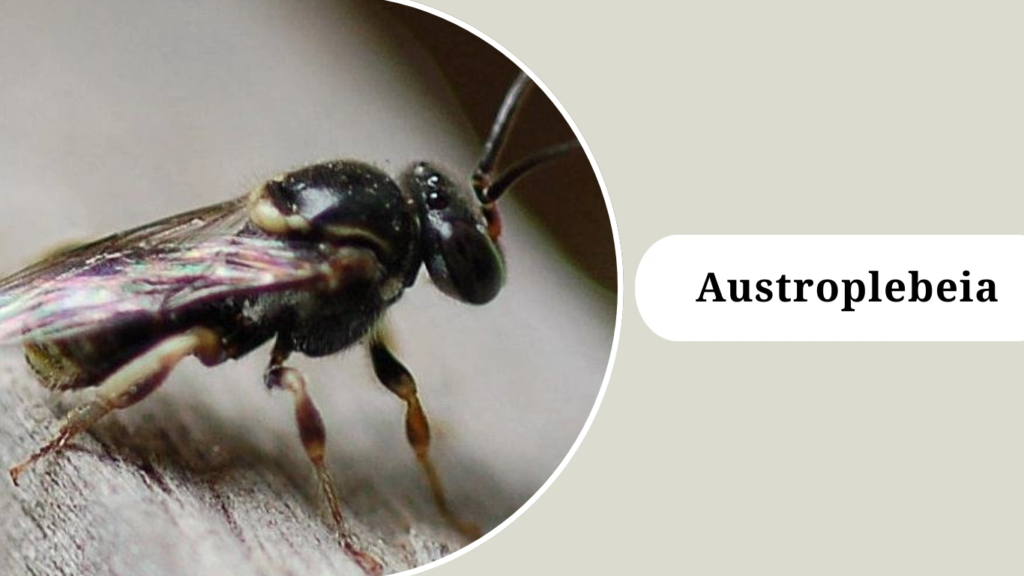
Austroplebeia is a small genus of stingless bees native to Australia and Papua New Guinea. Known for their gentle nature, they are often kept as companion pollinators in home gardens and farms.
Identification
- Small body size, about 3–4 mm long.
- Light brown to dark coloration with pale markings.
- Slender body with fine hairs across thorax and abdomen.
- Small, round nest entrances lined with wax and resin.
- Colonies are generally smaller than other stingless bee genera.
Habitat
Austroplebeia species are found mainly in northern and eastern Australia. They nest in hollow tree trunks, rock crevices, and artificial hives provided by keepers. Their colonies usually house a few hundred to a few thousand individuals.
Behavior
These bees are among the most docile of all stingless bees. They rarely bite and do not use resin aggressively for defense. Colonies are highly organized, with workers actively foraging close to their nests. They are efficient pollinators for native Australian plants and some crops.
Economic and Ecological Importance
Although Austroplebeia produce only small amounts of honey, their calm temperament and pollination abilities make them excellent for hobby beekeeping. They are also vital for conserving Australia’s native ecosystems, supporting the reproduction of many wildflowers and shrubs.
8. Lestrimelitta (Stingless Honey Bee)

Lestrimelitta is a unique genus of stingless bees found mainly in Central and South America. Unlike most stingless bees, they are obligate robbers, meaning they do not collect nectar directly but instead raid other bee colonies for resources.
Identification
- Medium size, 6–8 mm long.
- Generally dark brown to black body.
- Strong mandibles adapted for breaking into other colonies.
- Reduced pollen-carrying structures since they do not forage in flowers.
- Colonies often smaller and less productive compared to honey-producing genera.
Habitat
These bees live in tropical forests across Brazil, Costa Rica, and nearby regions. They nest in hollow logs or tree cavities, often near other stingless bee colonies they exploit.
Behavior
Lestrimelitta bees are known as “cleptobiotic bees” because they raid nests of other stingless species to steal honey, pollen, and resin. They are aggressive toward other bees but generally non-threatening to humans. Their colonies rely heavily on this raiding strategy for survival.
Economic and Ecological Importance
Unlike other stingless bees, Lestrimelitta are not used in beekeeping due to their robbing behavior and low honey production. However, they play an unusual ecological role by influencing the population dynamics of other bee species and maintaining balance in tropical ecosystems.
