
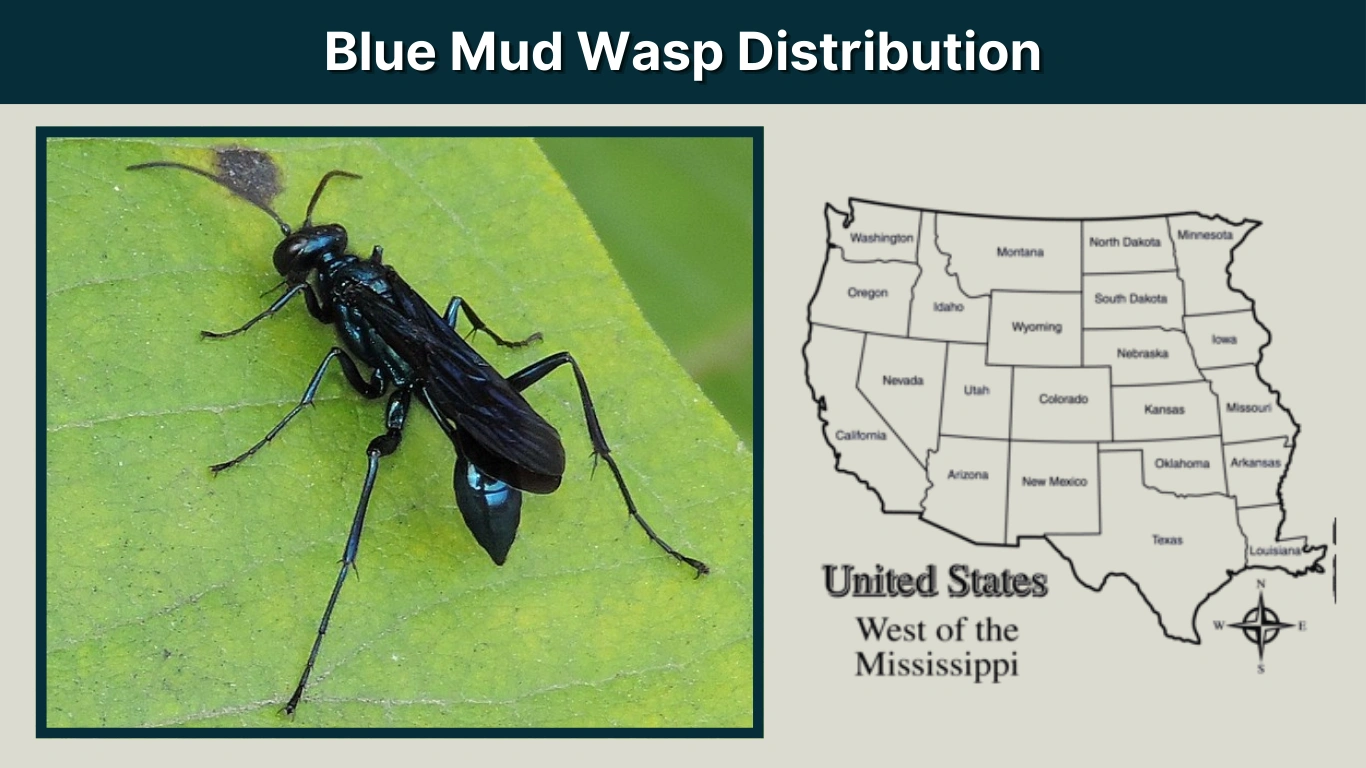
The blue mud wasp, also known as the blue mud dauber (Chalybion californicum), is one of the most widely distributed solitary wasps in North America. Recognized for its metallic blue body and beneficial role in controlling spider populations, this species thrives in a range of climates, from the humid South to the colder Northeast. Beyond biology, cultural symbolism also gives this insect meaning, representing persistence and protection in many traditions.
Regional Distribution in the United States
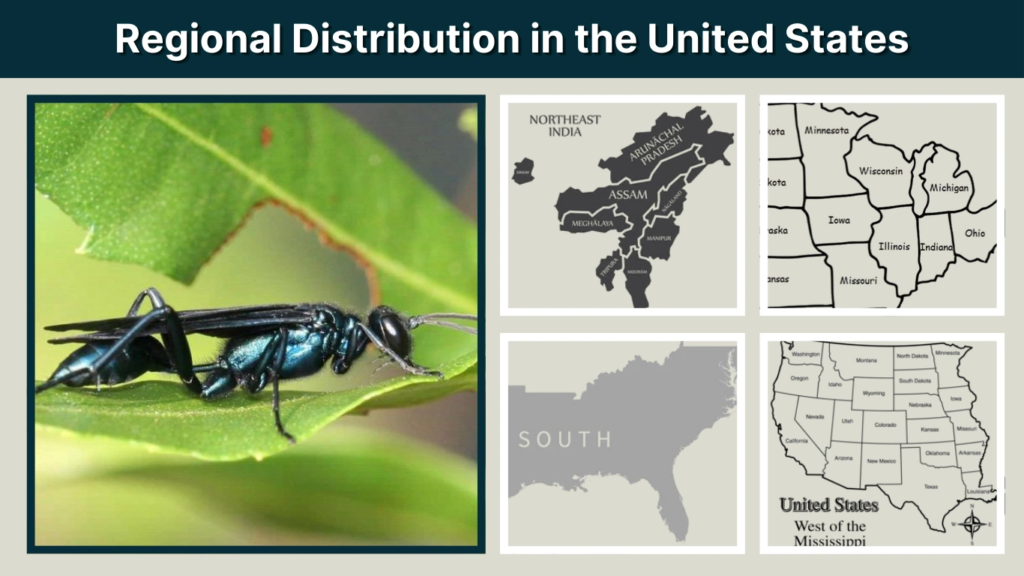
Blue mud wasps are found across nearly every U.S. state, adapting to both urban and rural environments. Their ability to reuse nests and hunt spiders allows them to survive in diverse conditions.
Northeast States
In states like New York, New Jersey, Massachusetts, Pennsylvania, Vermont, and Maine, blue mud wasps are active mainly in the summer months. They are often seen nesting under eaves of houses, in barns, or near gardens where spiders are abundant.
Midwestern States
Michigan, Ohio, Illinois, Wisconsin, and Missouri host large populations of these wasps, especially in rural and suburban areas. They flourish near farmlands and homes, where they help reduce spider numbers. Cold winters shorten their active season, but they return reliably each year.
Southern States
In warmer states such as Texas, Florida, Georgia, North Carolina, and Maryland, blue mud wasps enjoy longer active periods. Mild winters allow some to remain visible year-round. They are especially common in gardens and structures where shelter and prey are easy to find.
Western States
In California, Colorado, Oregon, and Arizona, these wasps adapt to both coastal and desert environments. Hawaii is another hotspot, where the species thrives in tropical climates with abundant spiders. Their adaptability explains their success in so many habitats.
Canada and International Presence
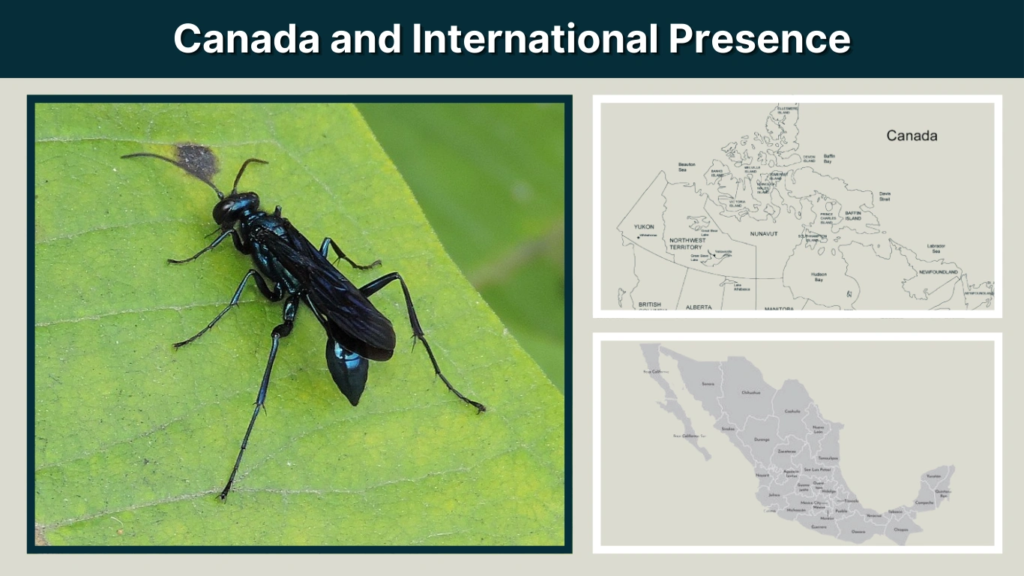
Blue mud wasps are not limited to the United States. Their range extends into Canada and beyond, though their activity changes with climate.
Canada (Ontario Focus)
In Canada, especially Ontario and the southern provinces, blue mud wasps are active during the warmer months. The cold winters push them into dormancy, limiting their visible season to late spring through early fall.
Mexico and Beyond
Southward, their range continues into Mexico, where the warmer climate supports year-round activity. These regions provide ample spider populations, making them ideal habitats.
Global Records
Though primarily Nearctic, occasional accidental introductions have been reported in parts of Europe or Australia. These cases are rare and usually linked to human travel or transport of goods.
Habitat Preferences Across Regions
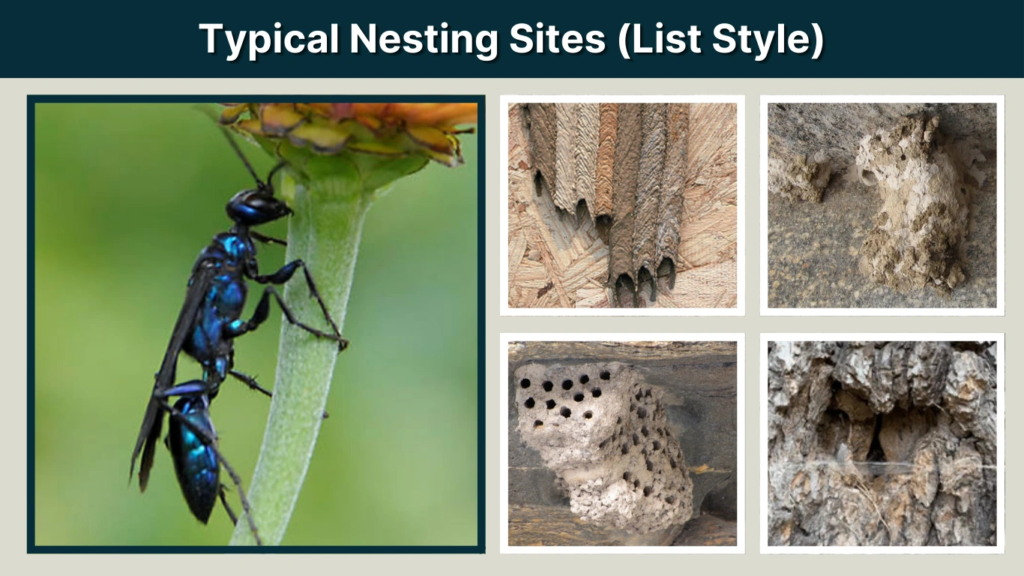
The adaptability of the blue mud wasp allows it to succeed in urban areas as well as natural environments.
Urban and Suburban Areas
They often nest under eaves of houses, in barns, or in garages. Human-made structures provide shelter and protection, while gardens and nearby woodlands supply food sources.
Natural Environments
In the wild, they choose sheltered areas near water, forests, or meadows. Hollow stems, tree cavities, and shaded rock crevices make excellent nesting sites.
Typical Nesting Sites (List Style)
- Under building eaves and porch roofs
- Inside abandoned mud nests from other wasps
- Barn rafters and attic corners
- Tree hollows and plant stems
- Protected areas near ponds or streams
Adaptability to Climate
The wide distribution of the blue mud wasp is closely tied to its ability to adjust to different climates. Whether in freezing northern states or tropical regions, this insect adapts its life cycle and activity levels.
Cold Climates
In northern states like Michigan, Vermont, and across Canada, blue mud wasps have a short active season. They emerge in late spring, build nests through summer, and disappear by fall. Overwintering occurs in the pupal stage, protected inside sealed mud chambers until warm weather returns.
Warm Climates
In southern states such as Texas, Florida, and Arizona, the wasp’s activity period is much longer. In regions with mild winters, sightings may occur year-round. Hawaii offers an ideal habitat, where tropical conditions allow continual hunting and nesting cycles.
Symbolism and Spiritual Meaning
Beyond science, the blue mud wasp carries symbolic importance in various cultural and spiritual traditions.
Cultural Symbolism
The wasp is often seen as a symbol of persistence and determination. Its tireless effort in hunting spiders and preparing nests reflects hard work and focus. Many cultures interpret its solitary lifestyle as independence and self-reliance.
Spiritual Meaning
Spiritually, the blue mud wasp is sometimes viewed as a protective figure. Its role in hunting harmful spiders can be seen as symbolic of clearing away negativity or hidden threats. Its transformation from larva to adult also represents renewal, growth, and resilience.
Coexisting with Regional Populations
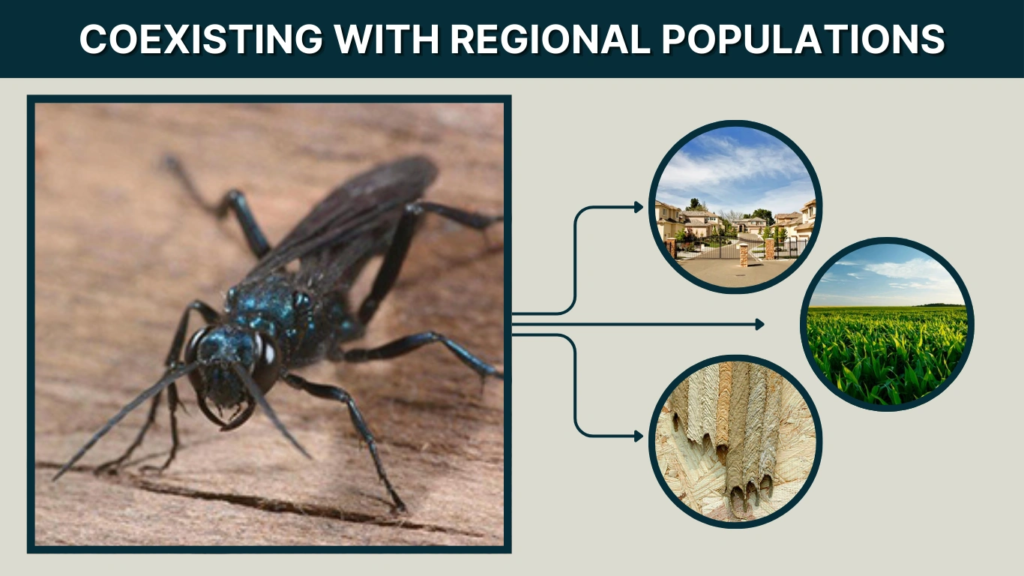
Humans and blue mud wasps share many spaces, especially in suburban and agricultural regions. Understanding their habits makes coexistence easy and beneficial.
Urban Coexistence
These wasps occasionally enter homes or build nests under roofs but are rarely aggressive. Safely guiding them outside or leaving their nests undisturbed allows them to continue their pest-control role without conflict.
Environmental Role by Region
In every region, their ecological role remains the same—controlling spider populations and assisting with pollination. Their presence in diverse climates demonstrates their adaptability and continued importance to local ecosystems.
Conclusion
The blue mud wasp’s ability to thrive across regions highlights its resilience and adaptability. From cold northern states to tropical islands, it adjusts its life cycle to fit the environment. Beyond biology, it carries symbolic meanings of persistence, transformation, and protection. Far from being a pest, this solitary wasp is both a natural ally against spiders and a symbol of focus and strength. Appreciating its role allows for peaceful coexistence across diverse landscapes.
Frequently Asked Questions (FAQs)
1. Where are blue mud wasps most commonly found in the U.S.?
They are found in nearly every state, including the Northeast, Midwest, South, and West. Populations are especially strong in warmer areas such as Florida, Texas, and California, but they also appear in colder states during summer.
2. Do blue mud wasps survive in cold climates like Canada?
Yes. In Canada and northern states, they are active only in warm months. During winter, they survive in the pupal stage inside mud nests, emerging again when temperatures rise in spring.
3. Are blue mud wasps active year-round in states like Florida or Texas?
In warm southern states, blue mud wasps may remain active most of the year. Florida, Texas, and Hawaii often report sightings across all seasons because their mild winters allow for longer nesting and hunting cycles.
4. What does the blue mud wasp symbolize spiritually?
Spiritually, the blue mud wasp represents persistence, focus, and transformation. Its habit of hunting spiders symbolizes protection and clearing negativity, while its metamorphosis reflects renewal and growth.
5. Why are blue mud wasps more common near houses and barns?
They prefer sheltered nesting sites such as eaves, rafters, and corners of buildings. Human structures provide safety for their nests and proximity to spider prey, making houses and barns convenient habitats.
