

Wasps often cause unease, mostly due to their sharp stingers and reputation for aggression. Yet not all wasps behave the same. The blue mud wasp, also known as the blue mud dauber (Chalybion californicum), is a solitary species that looks intimidating but is very different from hornets or yellowjackets. While questions about their sting and potential danger are common, the truth is far less alarming.
Do Blue Mud Wasps Sting?

Blue mud wasps can sting, but unlike hornets, they rarely do. Their sting is a defense mechanism, not a weapon they use aggressively. Because they are solitary and lack colonies to protect, they have little reason to attack humans.
Sting vs. Bite Explained
Blue mud wasps sting, they do not bite. Their stinger is used to paralyze spider prey and occasionally for self-defense. When humans interact with them, stings happen only if the wasp feels trapped or threatened.
When Stings Occur
Encounters leading to stings are uncommon. Most happen when:
- A wasp is accidentally handled or crushed.
- It becomes trapped against skin or clothing.
- Its nesting site is disturbed during maintenance or cleaning.
Pain & Medical Impact of a Sting
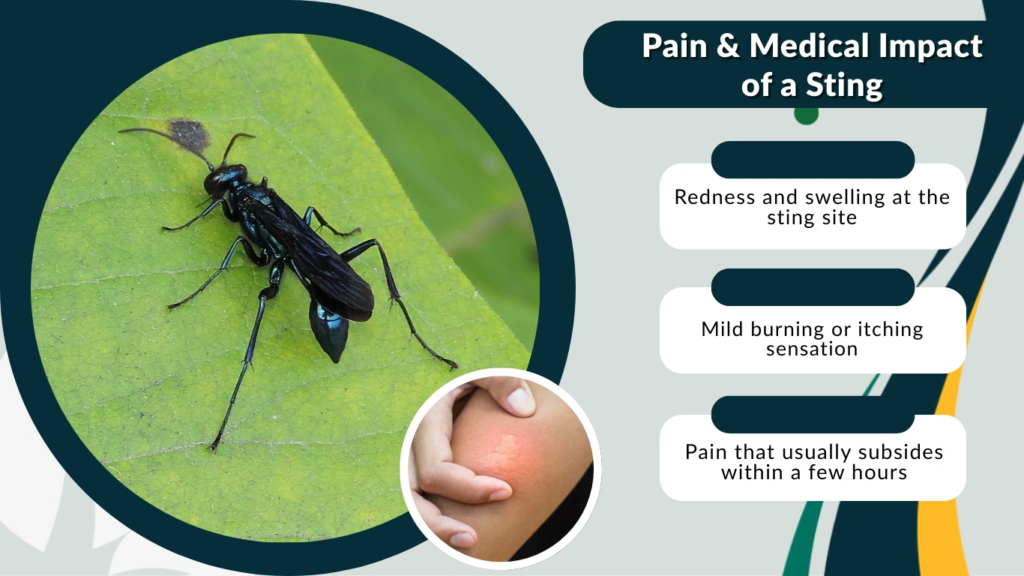
Compared to hornets or yellowjackets, blue mud wasp stings are relatively mild. For most people, they are no more severe than a bee sting and often less painful.
Sting Pain Index
On the Schmidt Pain Index, which ranks insect stings, mud daubers rate much lower than hornets or bullet ants. Their sting is typically described as sharp but short-lived, with discomfort fading within hours.
Symptoms in Humans
- Redness and swelling at the sting site
- Mild burning or itching sensation
- Pain that usually subsides within a few hours
- Rare allergic responses such as hives or difficulty breathing
Impact on Pets
Dogs and cats may also be stung if they disturb a wasp. Reactions are usually mild, with swelling or irritation around the area. However, veterinary care is recommended if pets show signs of an allergic response, such as excessive swelling or breathing difficulties.
Aggression, Poison, and Misconceptions
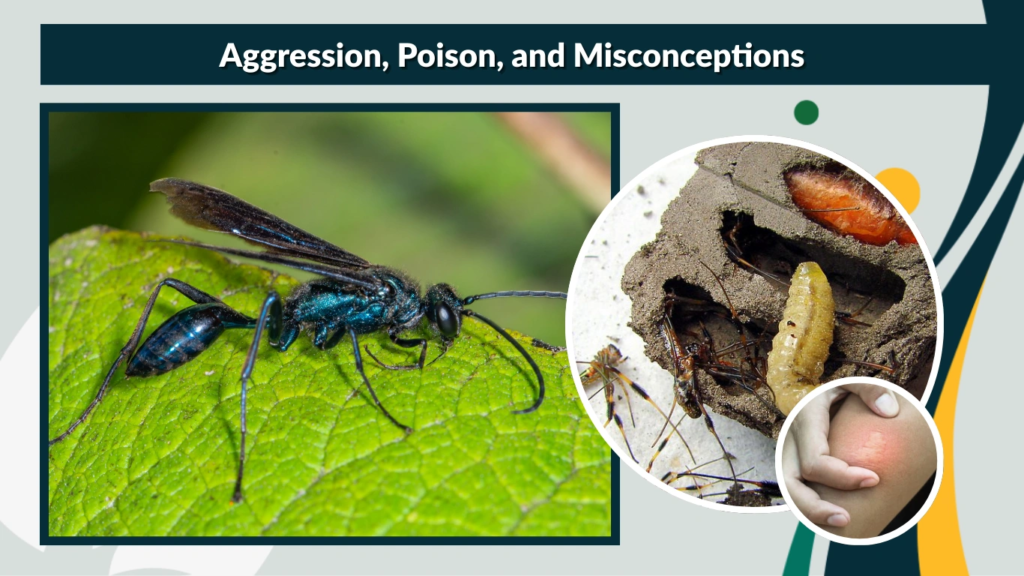
Despite their appearance, blue mud wasps are not aggressive. They do not swarm, chase, or sting without provocation. Most fears arise from misconceptions and confusion with other, more aggressive wasp species.
Temperament
Blue mud wasps live solitary lives and avoid conflict. Without colonies to protect, they have no instinct to attack humans. Their calm nature often surprises people who expect wasps to be defensive.
Poisonous or Not?
The venom in their sting is designed to paralyze spiders, not to harm humans. It is not considered poisonous or medically significant to people. For humans, the venom causes only mild irritation unless an allergy exists.
Comparison with Aggressive Wasps
Hornets and yellowjackets are social insects that aggressively defend their nests, often stinging multiple times. In contrast, blue mud wasps are solitary and sting only once, and only when provoked. This makes them far less of a danger in backyards or gardens.
Can a Blue Mud Wasp Kill You?

One of the most persistent myths about wasps is that they can be deadly to humans. The blue mud wasp, however, does not pose such a risk for healthy individuals.
Myth vs. Reality
Blue mud wasps cannot kill a person under normal circumstances. Their sting is mild, short-lived, and not medically significant. They are far less dangerous than hornets, bees, or even fire ants.
Allergic Reactions
The only real risk comes from people who are allergic to insect stings. In rare cases, a sting may trigger anaphylaxis, a severe allergic reaction requiring immediate medical attention. Carrying an epinephrine injector (EpiPen) is advised for those with known allergies.
Medical Perspective
Doctors classify mud dauber wasps as low-risk insects. For most people, a sting is only a minor inconvenience. Emergency treatment is only necessary for allergic reactions or unusual symptoms.
Human Interaction & Prevention
Although harmless, blue mud wasps sometimes make their presence felt around homes. Knowing why they appear and how to manage them helps prevent unnecessary fear.
Why They Enter Houses
These wasps occasionally fly indoors by accident, usually through open windows or doors. They are drawn by light or seeking shelter but do not nest inside homes in large numbers.
Safe Removal & Prevention
If a blue mud wasp enters your home, avoid swatting it. Instead, guide it out with an open window or a container. To prevent entry, seal small cracks, repair screens, and limit open lights at night.
How to Get Rid of Nests
Nests are usually found under eaves, in garages, or barns. Unless a nest poses a direct problem, it is best left alone because these wasps reduce spider populations. If removal is necessary, do it at night when the wasp is inactive, or call a professional for safe handling.
Conclusion
The blue mud wasp’s glossy metallic color may look intimidating, but appearances can be deceiving. Unlike aggressive hornets or yellowjackets, this solitary wasp is calm, rarely stings, and poses little risk to humans or pets. Its venom is mild, and its primary prey—spiders—makes it a helpful natural ally in homes and gardens. While allergy risks exist, most encounters with this insect end harmlessly. By understanding its behavior, people can replace fear with respect for its role in nature.
FAQs
1. Do blue mud wasps sting humans often?
No, stings are rare. These wasps are solitary and not defensive like hornets. They sting only when trapped, handled, or threatened directly. Most people never experience a sting from them, even if nests are nearby.
2. How painful is a blue mud wasp sting compared to a bee?
A blue mud wasp sting is generally milder than a bee sting. It causes short-lived pain, minor swelling, and redness that fades within hours. Unlike bees, they do not leave a stinger behind.
3. Are blue mud wasps poisonous or venomous?
They are venomous to spiders, their primary prey, but their venom is mild to humans. It causes only local irritation unless a person is allergic. They are not considered poisonous or medically significant.
4. What should I do if my dog gets stung by a blue mud wasp?
Most dogs show mild swelling or discomfort, which subsides quickly. Cold compresses can ease irritation. However, if your dog develops breathing problems or severe swelling, seek veterinary care immediately.
5. Can blue mud wasps be safely removed from my home without chemicals?
Yes. They can usually be guided outside with a container or by opening a window. Prevent entry by sealing gaps and using screens. Chemical sprays are unnecessary since these wasps are non-aggressive and beneficial.
