

The mantidfly wasp is one of the most fascinating examples of insect mimicry in nature. Although it looks nearly identical to a paper wasp, it is not a wasp at all—it belongs to the insect family Mantispidae, making it more closely related to lacewings than to true wasps. With its mantis-like forelegs, delicate wings, and striped wasp-colored body, this insect combines the appearance of a predator with the disguise of a stinging wasp. This clever mimicry helps it survive in the wild, confusing predators while it hunts for its own prey.
Identification and Appearance

Size and Shape
Mantidfly wasps are medium-sized insects, typically measuring 8–25 millimeters in length. They have long, slender bodies that resemble paper wasps, but their most striking feature is the raptorial forelegs, similar to praying mantises. These forelegs are designed for seizing prey, making them effective hunters.
Color and Markings
Their coloration plays a key role in their mimicry. Most species, especially the brown wasp mantidfly (Climaciella brunnea), display:
- Yellow and black banded abdomens like paper wasps.
- Brown or reddish thorax and head.
- Transparent wings with visible veins.
These markings allow them to blend seamlessly into wasp populations, scaring away predators that might otherwise attack.
Differences from Real Wasps
Though similar in appearance, several traits set them apart:
- No stinger – mantidflies cannot sting.
- Mantis-like head and forelegs, unlike wasps.
- Wings – more fragile and lacewing-like, with net-like venation.
A close look quickly reveals they are not wasps, but casual observers are easily fooled.
Habitat and Distribution

Global Range
Mantidfly wasps are primarily found in the Americas, with many species distributed across North, Central, and South America. One of the most recognized species, Climaciella brunnea, occurs widely in North America.
Preferred Habitats
They thrive in areas where both flowers and insect prey are abundant, such as:
- Woodland edges and meadows.
- Gardens and open fields.
- Near forests where spiders, their larval hosts, are common.
Because they rely on mimicry, they are often spotted flying among true paper wasps, taking advantage of the protection offered by their disguise.
Behavior and Nature

Wasp Mimicry Strategy
The mantidfly’s resemblance to paper wasps is a form of Batesian mimicry, where a harmless species imitates the warning signals of a dangerous one. Predators that avoid stinging wasps also avoid attacking mantidflies. This strategy greatly increases their chances of survival.
Hunting Behavior
Like mantises, adult mantidflies are sit-and-wait predators. They rest on flowers, shrubs, or leaves until unsuspecting prey comes within reach. Then, they strike with lightning speed, using their spined forelegs to capture and hold insects.
Their prey typically includes:
- Mosquitoes
- Small flies
- Bees
- Moths and other soft-bodied insects
This ambush style of hunting makes them effective predators despite their fragile build.
Diet
Adult Mantidfly Wasp
The diet of adults primarily consists of flying insects. They prefer nectar-rich areas where prey insects gather, which is why they are often seen on flowers.
Larval Mantidfly
The diet of larvae is far more unusual. Instead of hunting freely, mantidfly larvae are often parasitic. Some species specialize in crawling into spider egg sacs, where they feed on the developing spiderlings. This unique adaptation ensures they have a secure and protein-rich food supply during early development.
Sting and Danger to Humans
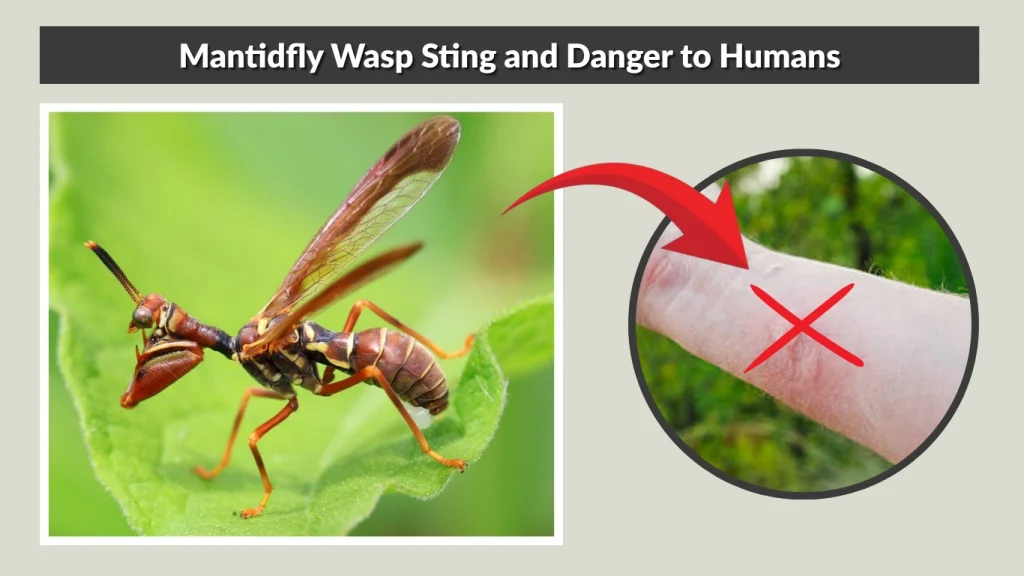
Do Mantidfly Wasps Sting?
Despite their appearance, mantidfly wasps cannot sting. They have no venom apparatus, and their forelegs are only used for catching prey, not defense.
Misidentification Risks
Because they look so much like paper wasps, many people kill them out of fear. However, mantidflies are harmless to humans and should not be considered pests. Instead, they should be admired for their mimicry and ecological role.
Life Cycle of Mantidfly Wasp
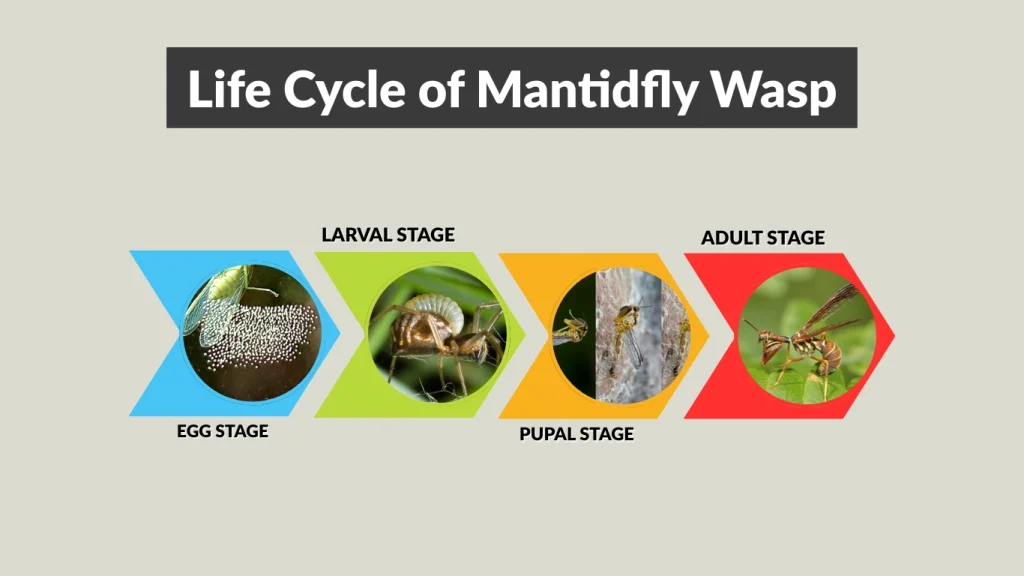
The life cycle of the mantidfly wasp is both fascinating and unusual, especially during the larval stage.
Egg Stage
Female mantidflies lay clusters of eggs on plants, stems, or leaves. Each female can produce hundreds of eggs at once, ensuring that at least some will survive.
Larval Stage
The larvae hatch into highly mobile, long-legged forms. Instead of feeding directly on plants, many species specialize as parasites of spider egg sacs. The larva may climb onto a female spider, hitch a ride, and then slip inside her egg sac. Once inside, it feeds on the developing spiderlings. This behavior makes the mantidfly unique among predators.
Pupal Stage
After consuming enough resources, the larva spins a cocoon-like casing and enters the pupal stage. During this time, it undergoes complete metamorphosis, transforming into the adult mantidfly with its wasp-like appearance and mantis-like forelegs.
Adult Stage
The adult emerges as a winged predator, ready to hunt small insects. Its lifespan as an adult is relatively short—usually a few weeks to a few months, depending on environmental conditions.
Predators and Threats
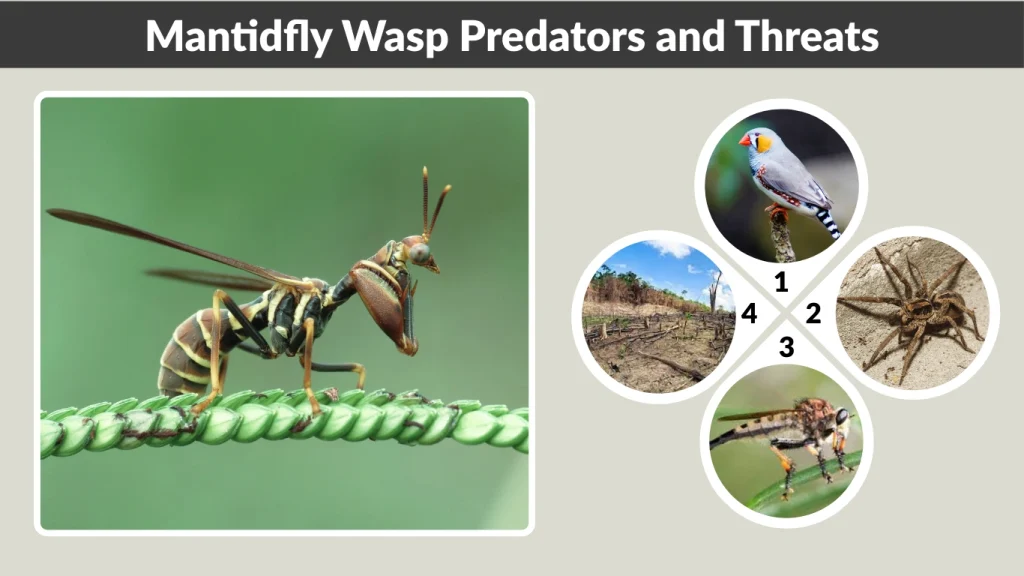
Although mimicry protects them, mantidfly wasps still face natural predators and environmental dangers:
- Birds and lizards – occasionally attack them if mimicry fails.
- Spiders – can trap them in webs.
- Larger insects – including robber flies and predatory wasps.
- Humans – often kill them by mistake, thinking they are stinging wasps.
- Habitat destruction and pesticides – major threats to their populations.
Despite these risks, mimicry allows many mantidflies to avoid predation and thrive.
Wasp Mantidfly in Different Locations
Wasp Mantidfly in Texas
Texas is one of the U.S. states where Climaciella brunnea is frequently spotted. Warm summers and diverse habitats provide ideal conditions for both adults and their spider-hosted larvae.
Wasp Mantidfly in Missouri
In Missouri, mantidflies are commonly recorded near forests and meadows. Citizen science platforms like iNaturalist have multiple records of sightings from this region.
Citizen Science and Records
Platforms such as iNaturalist and BugGuide have helped document sightings across North America. These reports are crucial for tracking their distribution and seasonal patterns.
Mantidfly vs Wasp

Though they look similar, several traits distinguish mantidfly wasps from true wasps:
| Feature | Mantidfly Wasp (Climaciella brunnea) | True Wasp (Paper Wasp) |
| Stinger | No stinger, harmless to humans | Has stinger, can sting |
| Forelegs | Raptorial, mantis-like legs for catching prey | Normal wasp legs |
| Wings | Net-veined, delicate like lacewings | Smooth, membranous |
| Head Shape | Triangular, mantis-like | Rounded, wasp-like |
| Diet | Hunts small insects, larvae parasitize spiders | Hunts insects, feeds larvae chewed prey |
This comparison shows how mimicry can be deceiving, even to experienced insect observers.
Species Example – Climaciella brunnea
One of the most studied mantidflies is Climaciella brunnea, also known as the wasp mantidfly.
- Found widely across North America, especially in the United States.
- Brown and yellow coloration almost identical to paper wasps.
- Larvae parasitize spider egg sacs, particularly wolf spiders.
- Adults frequently rest on flowers or fly near wasps, enhancing their disguise.
This species is often the one most people refer to when they mention the mantidfly wasp.
Role in Ecosystem
Mantidfly wasps serve multiple ecological roles:
- Predators – Adults help control populations of flies, mosquitoes, and other insects.
- Parasites – Larvae regulate spider populations by consuming spider eggs and spiderlings.
- Prey – They are part of the food web, supporting birds and other insectivores.
Their presence adds balance to ecosystems by regulating insect communities.
Fascinating Facts About Mantidfly Wasp
- They are sometimes called “wasp mimic mantidflies” because of their striking resemblance to paper wasps.
- Despite their fearsome appearance, they are completely harmless to humans.
- Their mimicry is so convincing that even predators hesitate to attack them.
- The mantidfly family (Mantispidae) contains species that mimic not only wasps but also ants and beetles.
- Fossil records suggest mantidflies have existed for millions of years, showing how successful their mimicry strategy has been.
FAQs
What is a mantidfly wasp?
It is an insect in the family Mantispidae that mimics paper wasps in appearance but is actually more closely related to lacewings.
Is a wasp mantidfly dangerous?
No, they are completely harmless to humans. They cannot sting or bite people.
Where can I find wasp mantidflies in the U.S.?
They are most commonly found in Texas, Missouri, and other warm regions during summer months.
How does the mantidfly life cycle work?
Females lay eggs, larvae parasitize spider egg sacs, pupae transform into adults, and adults hunt small flying insects.
What insect does the mantidfly mimic?
They mimic paper wasps, adopting the same banded coloration and body shape to scare away predators.
