

Braconid wasps may be small, but they play a huge role in maintaining ecological balance. These tiny parasitoid wasps are nature’s pest controllers, targeting caterpillars, beetle larvae, and aphids. While their name often causes confusion with more aggressive social wasps like hornets or yellowjackets, braconids are completely harmless to humans. Instead of stinging people, they focus on laying eggs inside or on other insects. This fascinating behavior makes them one of the most important natural allies in agriculture and gardening.
What Are Braconid Wasps?
Braconid wasps belong to the family Braconidae, a group within the order Hymenoptera. With more than 17,000 described species worldwide—and potentially many more undiscovered—they represent one of the largest wasp families on Earth.
Unlike social wasps that live in colonies, braconids are solitary parasitoids. This means each female works independently, using her ovipositor (egg-laying tube) to insert eggs into host insects. The larvae develop inside or on the host, eventually consuming it. While this may sound gruesome, it is an essential part of controlling pest populations naturally.
In terms of appearance, braconid wasps are tiny and slender, usually ranging from just a few millimeters up to about 15 mm in length. Their colors vary from black and brown to reddish, sometimes with lighter markings. Due to their small size, they often go unnoticed until gardeners spot their white cocoons on caterpillars like tomato hornworms.
Braconid Wasp Identification
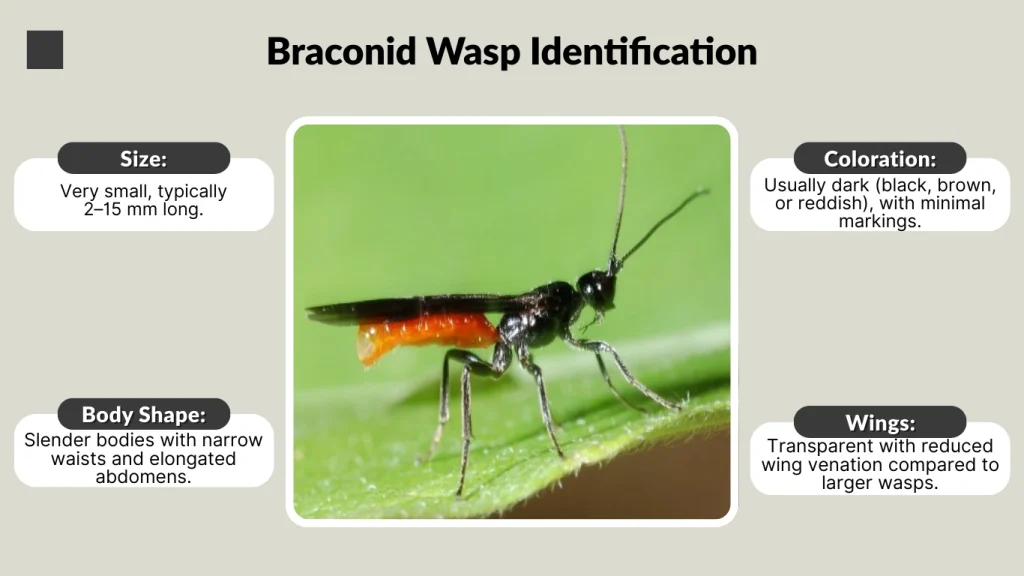
Identifying braconid wasps can be challenging because of their diversity, but several traits are common:
- Size: Very small, typically 2–15 mm long.
- Body Shape: Slender bodies with narrow waists and elongated abdomens.
- Antennae: Long, often with more than 16 segments.
- Coloration: Usually dark (black, brown, or reddish), with minimal markings.
- Wings: Transparent with reduced wing venation compared to larger wasps.
In gardens or fields, braconids are often seen hovering around plants or moving quickly across leaves as they search for hosts. Unlike bees or social wasps, they are not interested in human activity and are completely non-aggressive.
Where Do Braconid Wasps Live?
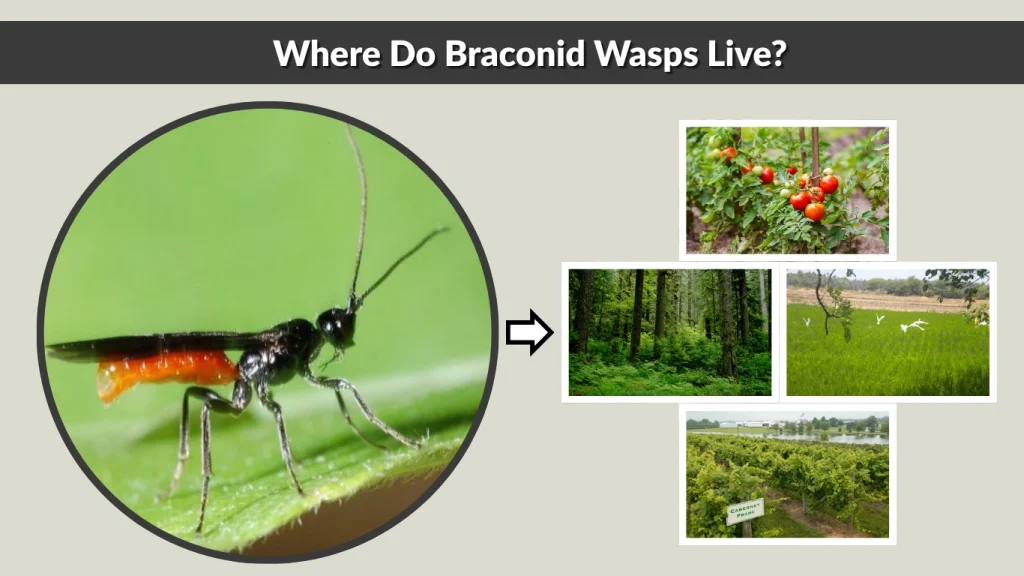
Braconid wasps have an almost global distribution, found on every continent except Antarctica. They thrive in environments where their host insects are abundant. Common habitats include:
- Gardens: where they target caterpillars like tomato hornworms and aphids.
- Crop Fields: especially in agriculture where pest populations can surge.
- Orchards and Vineyards: feeding on pest larvae that damage fruit trees and vines.
- Forests and Grasslands: where they attack a wide range of native insect species.
Because they are so small, braconids are often overlooked in nature. Their presence is usually revealed by the dramatic signs of parasitism, such as a caterpillar covered in white, rice-like cocoons that house developing wasp pupae.
Braconid Wasp Life Cycle

The life cycle of a braconid wasp is one of the most fascinating in the insect world. It begins when a female finds a suitable host insect, often guided by chemical cues released by plants under attack.
Egg Laying
The female inserts her ovipositor into or onto the body of the host insect. Depending on the species, she may lay a single egg or multiple eggs at once. Hosts commonly include caterpillars, beetle larvae, or aphids.
Larval Stage
Once the eggs hatch, the larvae begin feeding on the host. Some species develop internally, consuming non-essential organs first so the host stays alive longer. Others feed externally while attached to the host’s body. This strategy ensures a fresh food supply for the developing wasps.
Pupation
As the larvae mature, they either pupate inside the host’s body or emerge and spin small white cocoons nearby. Gardeners often see these cocoons on the backs of caterpillars, especially tomato hornworms. At this stage, the host insect is weakened or already dead.
Adult Emergence
Fully developed adults emerge from their cocoons, ready to mate and repeat the cycle. Depending on the climate, multiple generations may occur in a single season, especially in warm environments with abundant prey.
This parasitoid lifestyle may seem harsh, but it is crucial for natural pest control. Without braconid wasps, populations of destructive insects like hornworms or aphids could quickly overwhelm crops and gardens.
Braconid Wasp Sting – Do They Sting Humans?
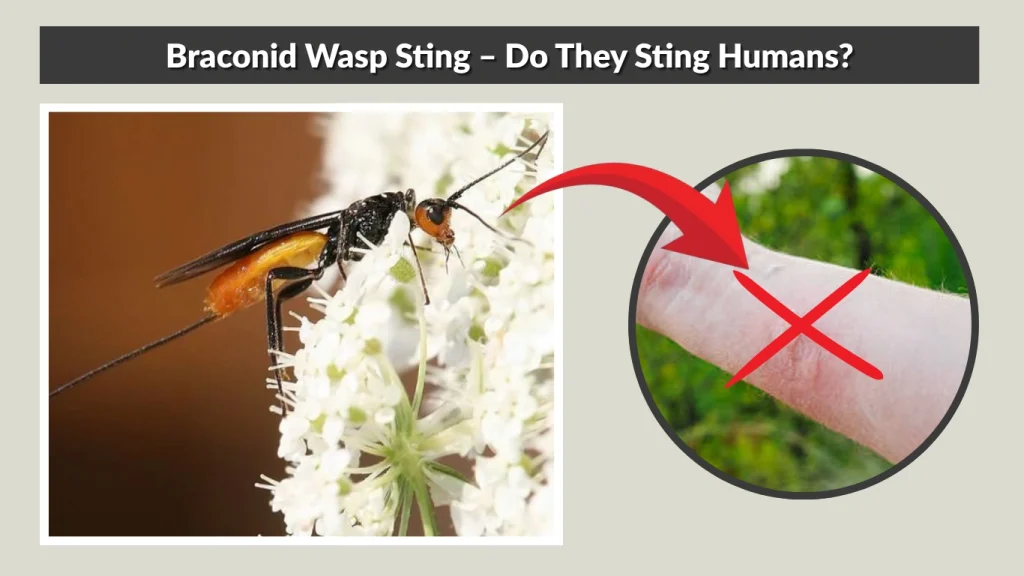
One of the most common questions about braconid wasps is whether they sting. The answer is no. Braconid wasps do not sting humans. While they do possess a structure similar to a stinger, it is actually an ovipositor—a specialized organ used for laying eggs inside or on host insects.
This ovipositor is not designed for defense and cannot harm people or pets. Unlike hornets or yellowjackets, braconid wasps have no colony to defend and no reason to attack. Their entire focus is on finding suitable hosts for their offspring. For humans, they are completely harmless and often go unnoticed.
Are Braconid Wasps Dangerous?
To humans, braconid wasps are not dangerous at all. They do not sting, bite, or cause damage to homes or crops. In fact, their presence should be welcomed.
To insect pests, however, they are lethal. Braconid wasps are among nature’s most effective biological control agents. They specifically target insects that damage plants, weakening or killing them during the larval feeding process. This natural pest suppression helps maintain balance in ecosystems and reduces the need for chemical pesticides.
Host Insects Targeted by Braconid Wasps
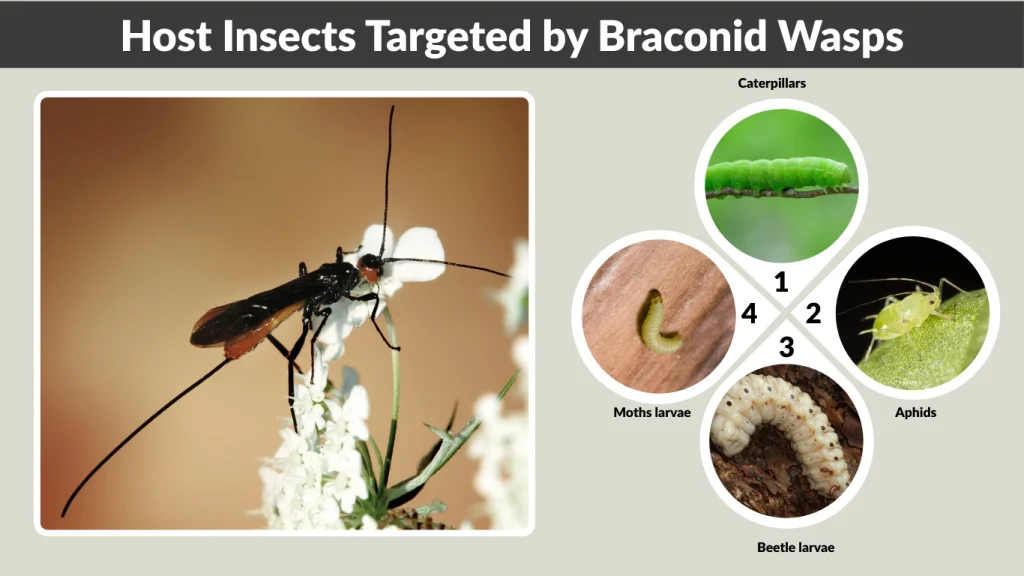
Braconid wasps specialize in parasitizing a wide variety of pest insects, making them incredibly valuable in both agriculture and home gardening. Some of the most common hosts include:
- Caterpillars – such as tomato hornworms, cabbage worms, and cutworms.
- Aphids – small, sap-sucking insects that can devastate gardens and crops.
- Beetle larvae – including pests like the Colorado potato beetle.
- Moths and butterflies (larval stage) – especially agricultural pests like corn borers.
By reducing the numbers of these pests, braconid wasps indirectly protect crops such as tomatoes, corn, potatoes, and cabbage. Farmers often consider them one of the best “free allies” in integrated pest management systems.
Braconid Wasp Size

Compared to more familiar wasps like hornets or paper wasps, braconid wasps are tiny. Their average size ranges between 2 and 15 mm (less than half an inch). Some of the smallest species are barely visible to the naked eye.
This small size makes them less noticeable, which is why many people never realize they are present in their gardens. Their small stature also allows them to parasitize small insects like aphids and beetle larvae that larger wasps could not target.
Braconid Wasp Benefits in Pest Control
Braconid wasps are considered beneficial insects for several reasons:
- Natural Pest Control
- They suppress populations of destructive insects without human intervention.
- One parasitized caterpillar can provide dozens of new wasps that continue the cycle.
- They suppress populations of destructive insects without human intervention.
- Reduced Need for Pesticides
- By keeping pest numbers in check, braconid wasps help reduce reliance on chemical insecticides.
- This benefits both the environment and human health.
- By keeping pest numbers in check, braconid wasps help reduce reliance on chemical insecticides.
- Agricultural Importance
- Certain braconid species are deliberately released in crop fields and greenhouses as part of biological control programs.
- For example, they are used against the emerald ash borer and tomato hornworm, two highly destructive pests.
- Certain braconid species are deliberately released in crop fields and greenhouses as part of biological control programs.
- Support for Organic Farming
- Farmers who avoid chemical pesticides often rely on braconids and other parasitoid wasps as natural protectors of their crops.
- Farmers who avoid chemical pesticides often rely on braconids and other parasitoid wasps as natural protectors of their crops.
Braconid Wasp vs. Other Parasitoid Wasps
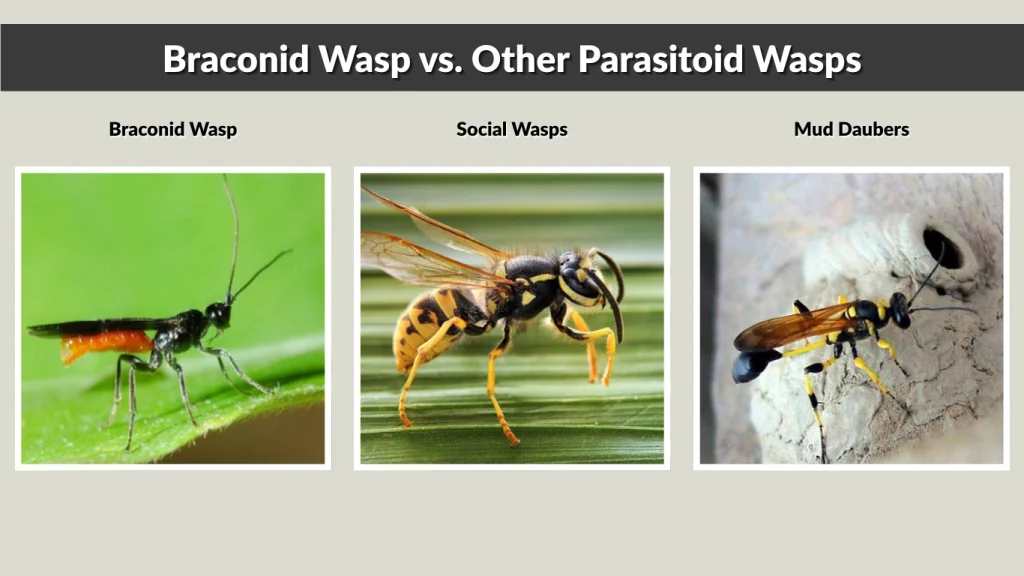
Braconid wasps are part of a larger group of parasitoid wasps, and it’s helpful to distinguish them from others:
- Braconid vs. Ichneumon Wasps
- Ichneumon wasps are usually larger, sometimes over an inch long, while braconids are tiny.
- Both parasitize insects, but ichneumons often target larger hosts.
- Ichneumon wasps are usually larger, sometimes over an inch long, while braconids are tiny.
- Braconid vs. Social Wasps (yellowjackets, hornets, paper wasps)
- Social wasps live in colonies, defend their nests aggressively, and sting humans.
- Braconid wasps are solitary, harmless, and never sting people.
- Social wasps live in colonies, defend their nests aggressively, and sting humans.
- Braconid vs. Mud Daubers
- Mud daubers build mud nests and hunt spiders for their larvae.
- Braconids don’t build nests—they use host insects as “living nurseries” for their young.
- Mud daubers build mud nests and hunt spiders for their larvae.
These differences highlight the unique role braconids play as specialist parasitoids rather than aggressive defenders.
Braconid Wasp in Agriculture and Gardening
Braconid wasps are heavily relied upon in modern agriculture. Farmers and gardeners benefit from their ability to control major crop pests.
- Greenhouse Use: Some braconid species are reared and released in greenhouses to keep aphid populations under control.
- Field Crops: They help manage pests like corn borers, armyworms, and potato beetles.
- Orchards and Vineyards: Braconids parasitize caterpillars that feed on fruit trees and grapevines.
For home gardeners, attracting braconid wasps can be as simple as planting nectar-rich flowers like dill, fennel, and yarrow. These plants provide adults with energy while they search for hosts.
Interesting Facts About Braconid Wasps
- High Species Diversity: With more than 17,000 species, braconids are one of the most diverse wasp families.
- Caterpillar Cocoons: The white “rice grain” cocoons often seen on tomato hornworms are a telltale sign of braconid activity.
- Behavior-Altering Venom: Some species inject venom that changes the behavior of their hosts, preventing them from shedding their skin or pupating.
- Silent Helpers: Most gardeners don’t realize braconids are working in their yard until they see parasitized insects.
- Short Life Span: Adults often live only a few weeks, but their impact on pest populations is long-lasting.
FAQs
Do braconid wasps sting humans?
No, braconid wasps do not sting humans. They have an ovipositor for laying eggs in host insects, not for defense.
What insects do braconid wasps parasitize?
They target a wide range of pests, including caterpillars (like tomato hornworms), aphids, beetle larvae, and moth larvae.
Are braconid wasps beneficial in gardens?
Yes, they are excellent natural pest controllers and help reduce the need for chemical pesticides in gardens and farms.
How big are braconid wasps?
They are very small, usually between 2 and 15 mm long—much smaller than hornets or yellowjackets.
How can I attract braconid wasps to my garden?
Plant nectar-rich flowers such as dill, fennel, and yarrow. Avoid heavy pesticide use, as it harms beneficial wasps.
