

The Asian giant hornet (Vespa mandarinia) is the largest hornet in the world and has earned the nickname “murder hornet” because of its intimidating size, painful sting, and potential danger to humans. Found primarily in Asia but occasionally spotted in other regions, this insect has captured global attention in recent years. Its sting is not only excruciatingly painful but can also trigger severe reactions in some people. Understanding the symptoms, body reactions, and proper treatment methods is essential if you ever encounter this hornet.
Understanding the Asian Giant Hornet

Asian giant hornets can grow up to 2 inches in length, with a distinctive orange head, large eyes, and powerful jaws. Their wingspan can reach over 3 inches, making them easily recognizable. Unlike bees, which sting once and die, hornets have smooth stingers that allow them to sting multiple times without harm to themselves.
They typically build nests in tree hollows or underground burrows and are highly protective of their colonies. While they don’t usually attack humans without provocation, disturbing a nest or threatening their space can result in multiple stings from several hornets at once.
Anatomy of the Sting
The stinger of an Asian giant hornet is longer and more robust than that of most stinging insects. This allows it to penetrate deeper into human skin and even through some thin clothing. The venom contains:
- Peptides and enzymes that damage tissue and spread toxins.
- Neurotransmitters that intensify pain signals.
- Pheromones that alert nearby hornets, potentially leading to group attacks.
This combination makes their sting far more dangerous compared to ordinary bees or wasps.
Symptoms of an Asian Giant Hornet Sting

The effects of a sting vary depending on the victim’s sensitivity, the number of stings received, and how quickly treatment begins.
Localized Symptoms
The first signs are usually concentrated around the sting site:
- Intense burning pain that starts immediately and may last longer than typical insect stings.
- Swelling and redness, often spreading several inches from the point of entry.
- Warmth and tenderness in the affected area.
- Itching or irritation, which may persist for days.
Victims often describe the pain as stabbing, hot, and far worse than bee or wasp stings.
Systemic Symptoms
When the venom enters the bloodstream, it can cause reactions throughout the body:
- Headache and dizziness.
- Fatigue, muscle weakness, or body aches.
- Sweating and fever-like sensations.
- Nausea or vomiting in some cases.
These symptoms may not appear in every person, but they show the venom’s ability to affect more than just the sting site.
Severe Allergic Reactions (Anaphylaxis)
The most dangerous outcome of an Asian giant hornet sting is anaphylaxis, a life-threatening allergic reaction. This condition can develop within minutes and requires immediate medical care. Warning signs include:
- Difficulty breathing, wheezing, or tightness in the chest.
- Swelling of the lips, tongue, or throat.
- Drop in blood pressure leading to dizziness or fainting.
- Fast or irregular heartbeat.
- Loss of consciousness in extreme cases.
Without fast intervention, anaphylaxis can be fatal. People who know they have insect sting allergies are advised to carry an epinephrine auto-injector for emergencies.
Body’s Reaction to the Venom
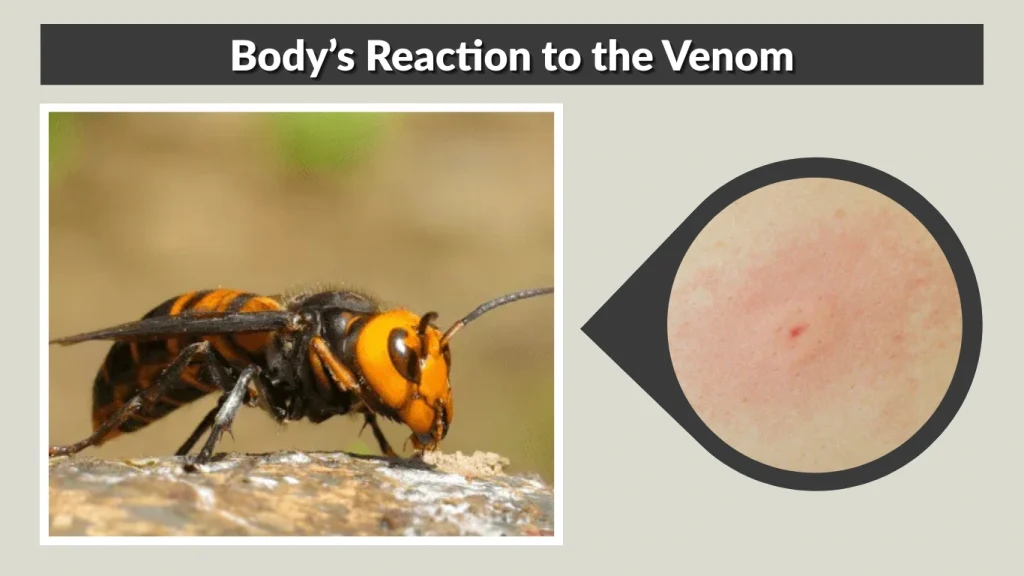
The immune system recognizes hornet venom as a foreign threat, releasing histamines that cause swelling and redness. Meanwhile, the venom itself damages tissue cells and spreads through the bloodstream, which is why pain and swelling are more severe than with smaller stinging insects.
In rare but serious cases—particularly after multiple stings—the venom can overwhelm the body. Medical reports have shown cases where large doses of venom caused kidney damage, tissue necrosis, and organ failure. While uncommon, these outcomes highlight why hornet stings must always be taken seriously.
First Aid for Asian Giant Hornet Stings
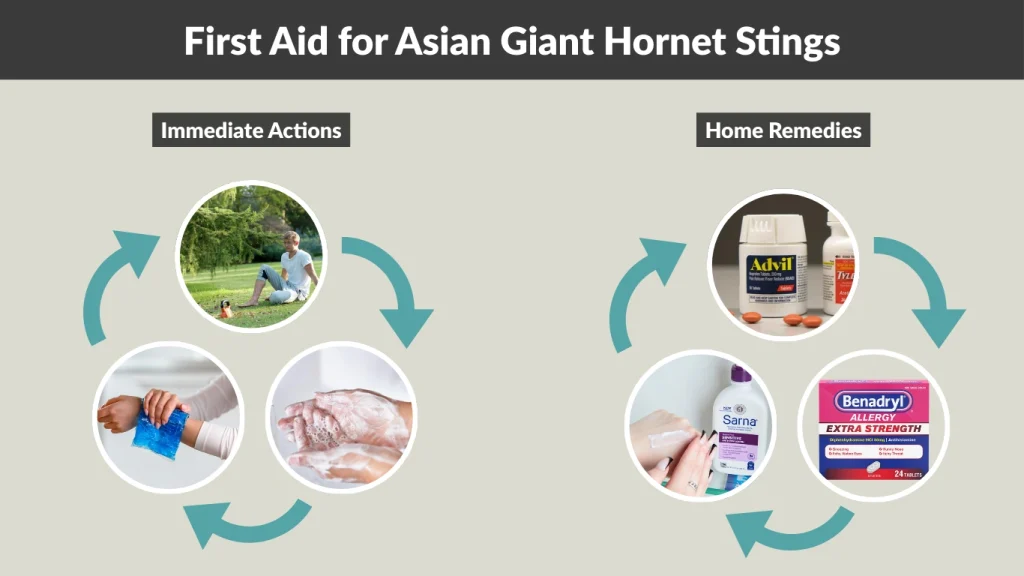
Quick first aid can significantly reduce complications. Here’s what to do immediately after a sting:
Immediate Actions
- Move to safety: Since hornets release alarm pheromones when they sting, nearby hornets may join the attack. Quickly but calmly leave the area.
- Clean the sting site: Wash with soap and water to remove venom traces and reduce infection risk.
- Apply a cold compress: Use an ice pack wrapped in cloth for 10–15 minutes at a time. This reduces pain, swelling, and inflammation.
Home Remedies
If symptoms remain mild, home treatments can ease discomfort:
- Pain relief: Over-the-counter painkillers like ibuprofen or acetaminophen.
- Allergy control: Antihistamines can help reduce itching and swelling.
- Skin soothing: Applying calamine lotion or a paste made from baking soda and water can calm irritation.
These steps are effective for mild cases, but they should never replace professional treatment if symptoms worsen.
Medical Treatment in Severe Cases
While home remedies can provide short-term relief, medical care is essential for moderate to severe reactions. Doctors may recommend:
Epinephrine injection (adrenaline): The most effective emergency treatment for anaphylaxis. It quickly opens airways, raises blood pressure, and stops the allergic reaction from progressing.
Intravenous fluids and oxygen therapy: Used when a patient shows signs of shock or difficulty breathing.
Antihistamine or corticosteroid injections: Help control inflammation, swelling, and itching.
Hospital monitoring: Patients stung multiple times are often observed for 12–24 hours to detect delayed complications.
Immediate medical attention can prevent long-term damage and drastically improve survival chances in severe sting cases.
Long-Term Effects of Asian Giant Hornet Stings
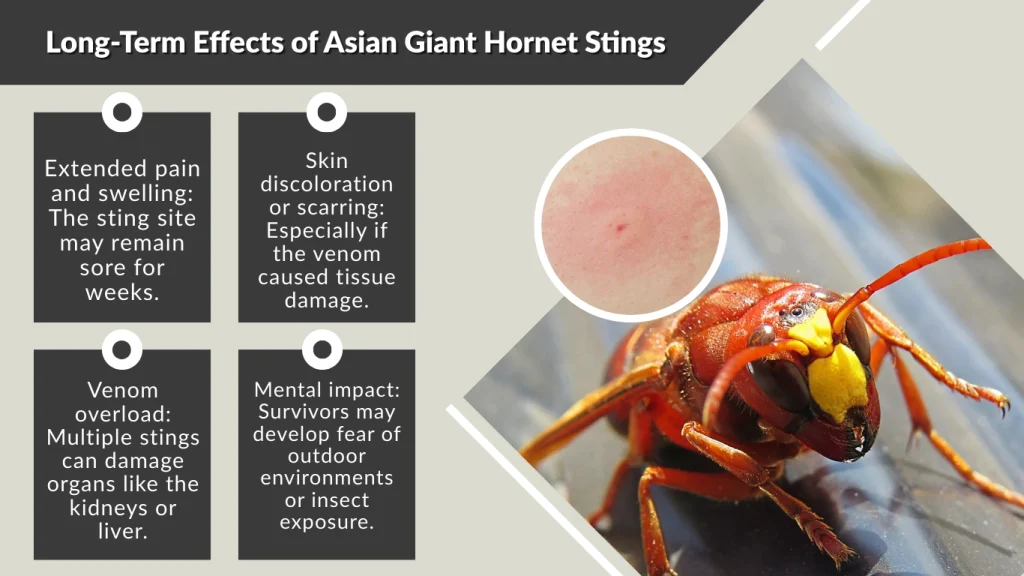
Most people recover within a few days to weeks, but in certain situations, the sting can have lasting impacts:
- Extended pain and swelling: The sting site may remain sore for weeks.
- Skin discoloration or scarring: Especially if the venom caused tissue damage.
- Venom overload: Multiple stings can damage organs like the kidneys or liver.
- Mental impact: Survivors may develop fear of outdoor environments or insect exposure.
Although rare, fatalities have been reported in Asia where multiple hornet stings overwhelmed victims with venom.
Prevention and Safety Tips
The best way to protect yourself is by avoiding situations where hornets may attack.
- Do not disturb nests: Asian giant hornets are highly protective of their colonies and will attack if threatened.
- Wear protective clothing: Long sleeves, pants, and gloves if working outdoors in areas where hornets are active.
- Be mindful of food and drinks outdoors: Sugary foods attract hornets quickly.
- Avoid perfumes and sweet scents: Strong fragrances can make you more appealing to hornets.
- Seek professional help for nests: Never try to remove a hornet nest on your own. Pest control experts have the right equipment and training.
What To Do If You Encounter an Asian Giant Hornet

If you come across one of these hornets:
- Stay calm: Sudden movements may provoke it.
- Back away slowly: Do not swat or wave your arms.
- Find shelter indoors or in a vehicle: If hornets begin swarming, this is the safest option.
- Alert authorities if you spot a nest: Especially in regions where they are invasive.
When to Call a Doctor Immediately
Certain situations require urgent medical care:
- Difficulty breathing, chest tightness, or wheezing.
- Swelling of the lips, throat, or tongue.
- Severe dizziness, confusion, or fainting.
- Multiple stings on different parts of the body.
- History of allergic reactions to bee, wasp, or hornet stings.
Delaying treatment in these cases could be life-threatening.
FAQs
How painful is an Asian giant hornet sting?
The pain is intense, burning, and longer-lasting than most insect stings. Victims often describe it as feeling like a hot nail being driven into the skin.
How long do symptoms last after a sting?
Mild pain and swelling last 2–3 days, while severe cases can linger for over a week. Allergic reactions may worsen within minutes if untreated.
Can the sting kill a healthy adult?
A single sting is unlikely to be fatal for a healthy adult. However, multiple stings or anaphylactic reactions can be deadly without fast medical treatment.
What should I carry if I’m allergic to stings?
Anyone with insect sting allergies should carry an epinephrine auto-injector (EpiPen) and seek medical attention immediately after being stung.
How do hornet stings compare to bee or wasp stings?
Bee stings are sharp but usually short-lived. Wasp stings are painful but less severe. Asian giant hornet stings inject more venom, cause greater swelling, and are among the most painful stings in the insect world.
