

If you’ve ever heard the term “murderous hornets,” it usually refers to the Asian giant hornet (Vespa mandarinia), the world’s largest hornet. Their sting has gained global attention because of the intense pain, venom strength, and the fear they cause. While the name “murderous” might sound exaggerated, there’s no doubt that their stings can be dangerous, especially in cases of multiple stings or allergic reactions. Understanding the symptoms, how the body reacts, and the right treatment steps is crucial if you live in or travel to areas where these hornets are found.
Understanding Murderous Hornets
Murderous hornets are native to parts of Asia but have occasionally been spotted in other regions. They are large, measuring up to 2 inches long, with orange heads and strong mandibles. Unlike bees, which sting once and die, hornets can sting multiple times, injecting venom that affects both the skin and, in severe cases, the internal system. Their sting is not only painful but also potentially life-threatening if left untreated.
Anatomy of the Sting
Hornets use a smooth stinger that can penetrate the skin repeatedly. The venom contains a powerful mix of enzymes, peptides, and neurotransmitters that cause intense pain, break down tissue, and sometimes trigger allergic reactions. Compared to bees or wasps, hornet venom is injected in larger amounts, making the reaction more severe. The stinger also releases pheromones, which can alert nearby hornets to attack, increasing the risk of multiple stings.
Symptoms of a Murderous Hornet Sting

The symptoms vary depending on the number of stings, the victim’s sensitivity, and how quickly treatment begins.
Localized Symptoms
Most people first experience:
- Sharp, burning pain at the sting site. Victims often describe it as far more painful than a bee sting.
- Redness and swelling, which can spread several inches around the sting area.
- Itching and tenderness that may last for days.
Systemic Symptoms
Beyond the sting site, the venom can spread through the bloodstream and cause whole-body reactions:
- Headache and dizziness.
- Fatigue or muscle weakness.
- Sweating and mild fever-like symptoms.
- Nausea or vomiting in some individuals.
Severe Allergic Reactions (Anaphylaxis)
For people with insect sting allergies, the danger is much greater. Signs of a severe reaction include:
- Difficulty breathing or wheezing.
- Swelling of the lips, throat, or tongue.
- Drop in blood pressure leading to dizziness or fainting.
- Rapid or irregular heartbeat.
Without quick medical attention, anaphylaxis can be fatal. That’s why people with known allergies should always carry an epinephrine auto-injector.
Body’s Reaction to the Venom
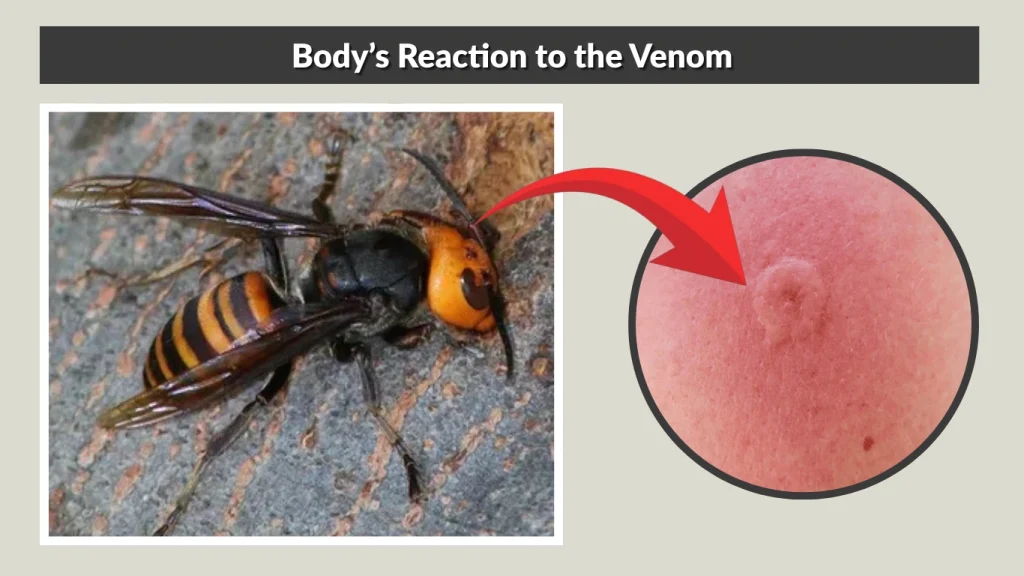
When venom enters the body, the immune system treats it as a threat, triggering inflammation and pain at the sting site. The venom’s peptides damage cell membranes, while enzymes spread the toxins deeper into tissues. This explains why hornet stings often cause longer-lasting pain and swelling than other insect stings.
In rare cases, multiple stings can overwhelm the body. Studies have shown that repeated stings may lead to organ complications such as kidney damage due to muscle breakdown and toxin overload. While this outcome is uncommon, it demonstrates why hornet stings should never be taken lightly.
Comparing Murderous Hornet Stings to Other Insects

Bee Sting: Bees leave their stinger behind, injecting venom once. Pain is sharp but usually subsides within a few hours. Hornets, by contrast, can sting repeatedly, delivering more venom.
Wasp Sting: Wasps sting multiple times, but their venom is generally less potent than hornets. The swelling and pain from hornet stings are more severe and last longer.
Hornet Sting: The Asian giant hornet’s sting is often described as one of the most painful insect stings in the world. Its venom can cause tissue damage, larger swellings, and more dangerous allergic responses.
First Aid Treatment for a Murderous Hornet Sting

Knowing what to do right away can make a big difference in recovery.
Immediate Steps
- Get to safety: Murderous hornets release alarm signals when they sting, which can draw more hornets. Move quickly away from the area.
- Clean the sting site: Wash with soap and water to reduce the risk of infection.
- Apply a cold compress: Use ice or a cold pack for 10–15 minutes to control swelling and numb the pain.
Home Relief
- Pain relievers such as ibuprofen or acetaminophen can ease discomfort.
- Antihistamines help reduce swelling and itching.
- A baking soda paste or calamine lotion can soothe irritation.
Medical Treatment
While home remedies can manage mild cases, medical attention is crucial when symptoms are severe. Doctors may provide:
Epinephrine injection (adrenaline): The first-line treatment for anaphylaxis. It rapidly reverses throat swelling, breathing difficulties, and blood pressure drops.
Intravenous fluids and oxygen therapy: Used if the patient’s condition becomes unstable.
Antihistamine or steroid injections: Reduce inflammation and allergic reactions.
Hospital observation: Patients who suffer multiple stings are often monitored for several hours, as complications can develop later.
Prompt medical treatment significantly reduces the risk of death or long-term health issues.
Long-Term Effects of Murderous Hornet Stings
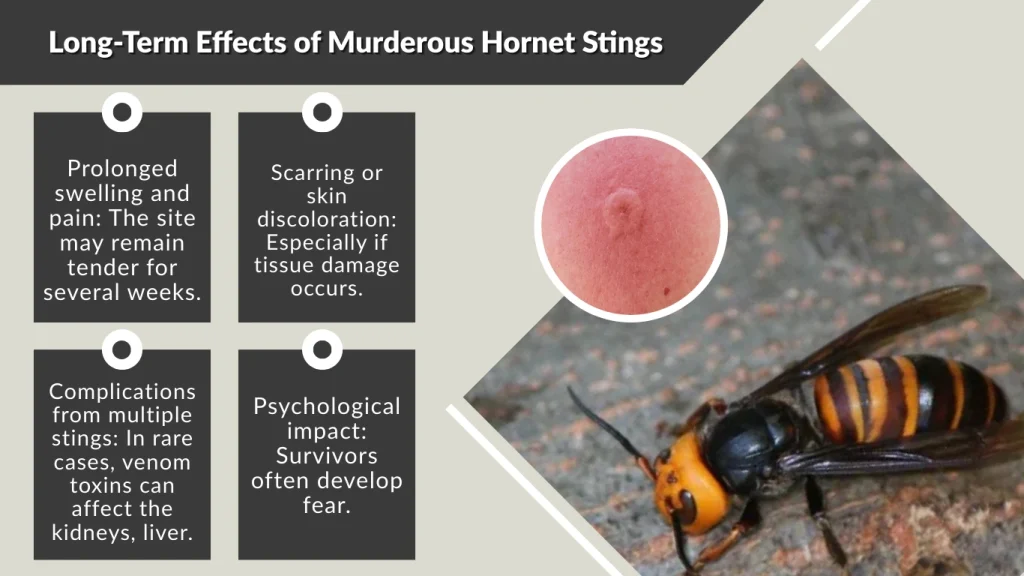
Most sting victims recover within days or weeks. However, some people may experience:
- Prolonged swelling and pain: The site may remain tender for several weeks.
- Scarring or skin discoloration: Especially if tissue damage occurs.
- Complications from multiple stings: In rare cases, venom toxins can affect the kidneys, liver, or heart.
- Psychological impact: Survivors often develop fear or anxiety about outdoor activities where hornets may live.
Prevention and Safety Measures
The best way to avoid a murderous hornet sting is to minimize encounters. Here are some precautions:
- Stay alert in risk areas: Hornets often nest in tree hollows, forested regions, or underground cavities.
- Avoid strong scents: Perfumes, sweet-smelling lotions, and sugary drinks attract hornets.
- Protective clothing: Wear long sleeves, pants, and gloves if working outdoors in hornet-prone areas.
- Do not disturb nests: Hornets are highly aggressive when defending their colony. Always call a professional for removal.
- Keep food covered outdoors: Uncovered food and drinks can attract hornets quickly.
What To Do If You Encounter a Murderous Hornet
Murderous hornets are large and intimidating, but panicking only increases your risk. If one approaches you:
Stay calm: Avoid swatting, as this can provoke an attack.
Move slowly away: Hornets are less likely to sting if you don’t appear threatening.
Seek shelter indoors or in a vehicle: This immediately reduces the chance of multiple stings.
Do not disturb their nest: If you accidentally find one, back away carefully.
When to Call a Doctor Immediately
You should seek medical help right away if:
- You receive multiple stings.
- You experience breathing problems or chest tightness.
- Your face, lips, or throat swell.
- You feel dizzy, faint, or confused.
- You have a history of allergic reactions to insect stings.
FAQs
What should I do immediately after being stung by a murderous hornet?
Clean the sting site with soap and water, apply a cold compress to reduce pain and swelling, and take an antihistamine if available. Move away from the area quickly to avoid more stings.
How long does the pain from a hornet sting last?
The pain is most intense during the first few hours but may linger for up to 24–48 hours. Swelling and tenderness can last several days, depending on the severity.
Can a murderous hornet sting be fatal?
Yes, but fatalities are rare. Death usually occurs from anaphylaxis or multiple stings that overwhelm the body with venom. Fast medical treatment drastically lowers the risk.
How do I know if I’m having an allergic reaction?
If you experience breathing difficulty, throat or tongue swelling, dizziness, or a rapid heartbeat after being stung, you may be having an allergic reaction. Seek emergency medical help immediately.
What is the difference between a wasp sting and a hornet sting?
Wasp stings are painful but generally less severe, while hornet stings inject more venom, causing greater pain, swelling, and a higher risk of dangerous reactions.
